


Antique Brass Fireplace Clock
An antique brass fireplace clock brings weight and steady motion to a mantelpiece, drawing the eye with polished metal and classical form.
Antique Brass Fireplace Clock
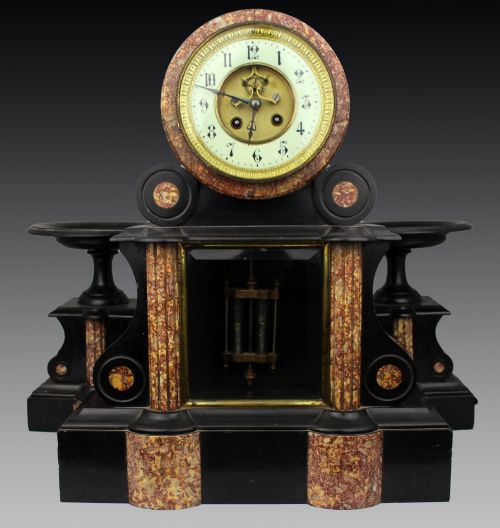
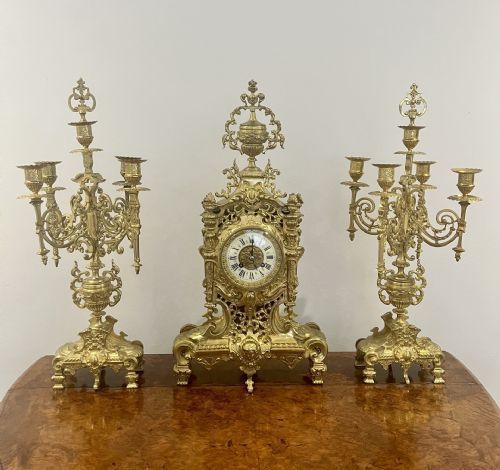
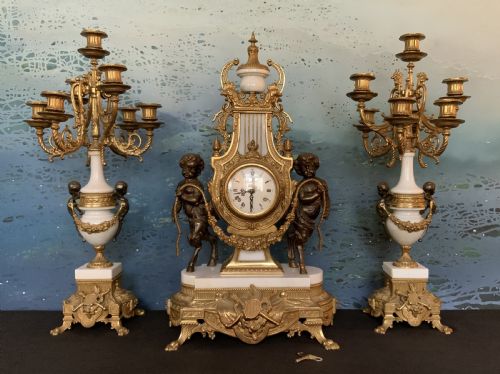
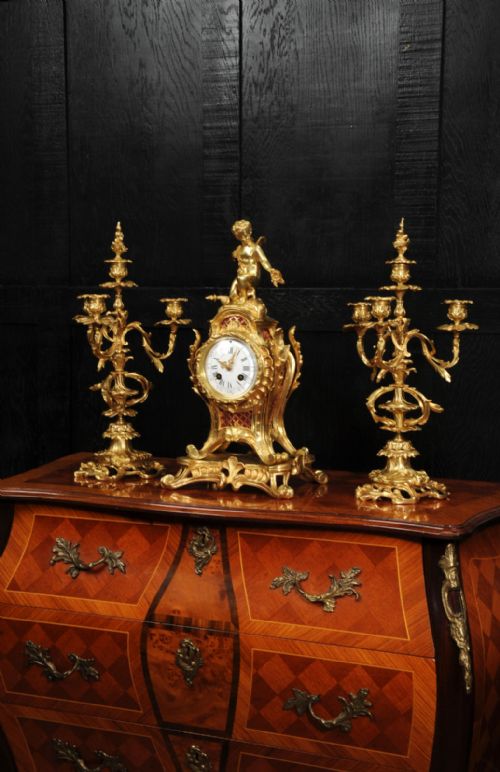
An antique brass fireplace clock is typically housed in a heavy stone or gilt metal case, often accompanied by matching candelabra in a garniture set. You will frequently encounter nineteenth-century French and Victorian examples that sit squarely upon a mantelpiece, combining functional timekeeping with sculptural presence.
The materials span from cast brass and ormolu to black slate, white marble, and gilt bronze. Many pieces incorporate enamel dials and visible pendulums, reflecting Victorian and continental taste from the eighteen-sixties through to the close of the nineteenth century.
How they were made
Maker's workshops combined cast brass and ormolu mounts with heavy stone bodies carved from black slate and white or faux marble. Movements were commonly eight-day designs, housed alongside enamel dials and protected by glass bezels.
Gilding and bronze casting techniques allowed artisans to shape elaborate rococo scrolls, neo-classical columns, and figural details like cherubs and cupids. These components were assembled by hand, matching clock cases with side pieces to form balanced garniture sets.
Makers represented include Japy Frères, Vincenti, and James Ritchie and Son of Edinburgh.
What varies in quality
The distinction between standard production and the finest work lies in the crispness of the bronze casting and the depth of the gilding. Finer pieces display sharply chased surface details on the brass mounts and substantial marble or slate cases that command the room.
Movement quality is marked by signed brass backplates, engraved mechanisms, and makers' stamps such as Japy Frères or Vincenti. The integration of porcelain panels, visible escapements, and complete matched candelabra sets elevates the standing of an individual piece.
Japy Frères·James Ritchie and Son·Vincenti
The Antique Brass Fireplace Clock Glossary
- Garniture set
- A central clock flanked by matching decorative objects such as candelabra or urns designed to sit together on a mantelpiece.
- Ormolu
- Gilded bronze created by applying a mixture of gold and mercury to a bronze base, producing a rich golden finish.
- Drumhead clock
- A timepiece featuring a circular clock head mounted upon a rectangular or stepped stone base.
- Double fusee
- A mechanical movement using a conical pulley and chain to equalise the drive force of the mainspring as it unwinds.
- Visible pendulum
- A dial design incorporating an opening that reveals the swinging pendulum movement within the case.
Antique Brass Fireplace Clock: Frequently Asked Questions
How do I wind an antique mantel clock?
Most mechanical movements require a specialised key inserted into the winding holes on the enamel dial. Turn the key gently until resistance is felt, taking care not to overwind the mainspring.
Ensure you follow the specific rhythm required by the eight-day movement, and avoid forcing the hands backward when setting the time.
What is a clock garniture set?
A garniture set consists of a central clock accompanied by two matching side pieces, such as candelabra or decorative urns. These items were designed to create a balanced display across a fireplace mantel.
They share matching materials, such as marble, slate, and gilt brass, maintaining a unified style across all three pieces.
How do I date a Victorian brass clock?
Dating relies on stylistic clues like neo-classical columns or rococo scrolls, alongside any makers' marks stamped on the brass movement plates. Nineteenth-century pieces frequently use slate, marble, and gilt bronze in distinct Victorian and French revival configurations.
Engraved details on the movement backplate or signature marks can narrow down the decade of production.
Where should I place a heavy marble clock?
Because these pieces combine heavy stone cases with brass and glass components, they require a stable, level surface that can support considerable weight. A sturdy mantelpiece or deep sideboard provides the ideal foundation.
Keep the clock away from direct heat sources and damp walls to protect the internal brass movement and exterior marble finish.