






Victorian Mantle Clock Garniture
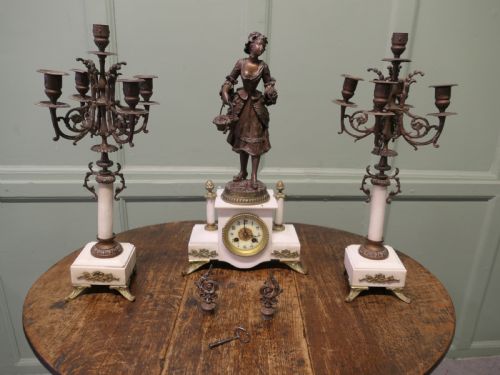
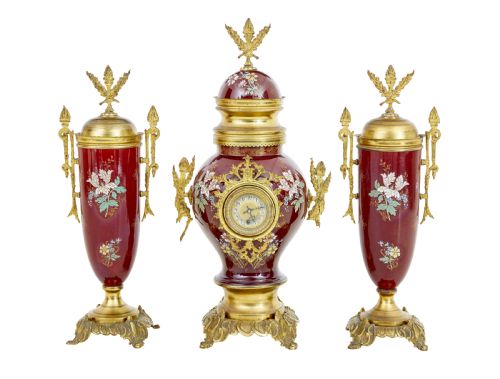
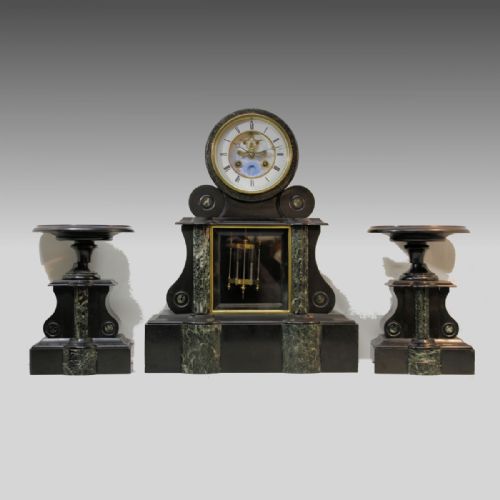
These Victorian mantle clock garniture sets bring heavy marble, ormolu and porcelain presence to a room, matched with flanking side pieces.
Victorian Mantle Clock Garniture
A victorian mantle clock garniture consists of a central timekeeper accompanied by a matching pair of side ornaments such as candelabras or urns. The evidence shows these sets appearing across the nineteenth century, with strong representation from the eighteen sixties and late nineteenth century.
The forms span French mantle clocks, portico clocks, cathedral clocks, and marble blocks, alongside matching garniture sets. Buyers encounter materials ranging from bronze and ormolu to porcelain, marble, and gilt metal.
Origins stretch from English workshops to French makers, executed in styles that include Rococo Revival, Louis XVI Revival, and Neo-Classical. The sets unite timekeeping with symmetrical mantel decoration designed for formal reception rooms.
Materials and Construction
Heavy stone bodies in marble and green onyx form the substantial foundations of many pieces, often paired with cast bronze, spelter, or ormolu mounts. Enamel dials provide the face for movements, while glass domes protect delicate cathedral designs.
Porcelain and toleware introduce painted colour and surface pattern to the sets, complemented by gilded brass and gilt metal details. Makers shaped these diverse elements into unified suites where the clock and flanking pieces share identical decorative motifs.
Judging Quality
The distinction between standard production and superior work lies in the crispness of the cast mounts and the selection of the stone. Richer sets employ dense block marble or fine green onyx alongside deeply chased ormolu and detailed bronze casting.
Finnigan Manchester·Ferdinand Barbedienne
The Victorian Mantle Clock Garniture Glossary
- Garniture
- A matching set of decorative objects designed to be displayed together on a mantelpiece, typically comprising a central clock and two flanking ornaments such as urns or candelabras.
- Ormolu
- Gilt bronze, where a finely ground high-carat gold mercury amalgam is applied to a bronze base and heated to leave a rich golden coating.
- Spelter
- An alloy of zinc and other metals used as a cheaper alternative to bronze for casting decorative figures and mounts, often given a bronze-like finish.
- Portico clock
- A clock housed within a architectural frame supported by four or more columns, popular in classical and revivalist designs.
- Cloisonne
- An ancient technique for decorating metalwork objects using vitrified enamel held within wire compartments.
Victorian Mantle Clock Garniture: Frequently Asked Questions
How do I clean the marble and metal?
Dust marble surfaces gently with a dry, soft cloth and avoid chemical cleaners that can etch the stone or strip the finish.
Metal mounts require a light touch with a dry microfiber cloth to remove dust without disturbing the gilt or bronze patina.
What rooms suit a garniture set?
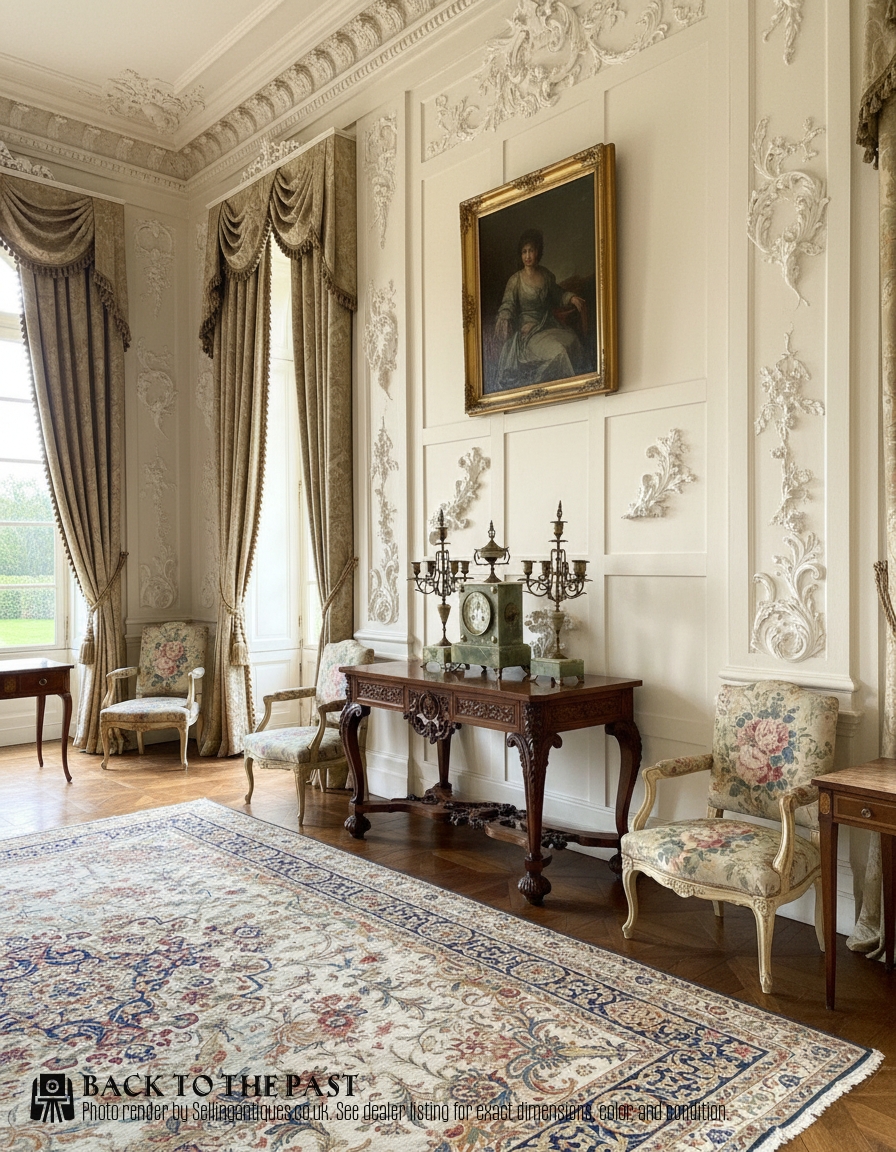
These large, symmetrical sets find a natural home on formal drawing room mantelpieces or grand dining room sideboards where they command visual attention.
The balanced arrangement of clock and side pieces also works well on deep console tables in spacious hallways.
How do French and English sets differ?
French sets frequently showcase ornate cast bronze, ormolu, and painted porcelain in Rococo or Louis XVI revival styles, often marked by sculptural flair.
English interpretations often lean towards architectural block marble, heavy slate, or restrained classical revivalism suited to Victorian interiors.
Are original glass domes common?
Original glass domes appear on specific architectural or delicate models like cathedral clocks to protect the intricate exterior work from dust.
Survival of the original dome intact alongside the clock and garniture pieces adds considerable authenticity to the set.