





French Style Mantle Clock
These pieces for a french style mantle clock range from ornate nineteenth-century ormolu designs to porcelain clock garnitures, offering a decorative timekeeping centrepiece for the home.
French Style Mantle Clock
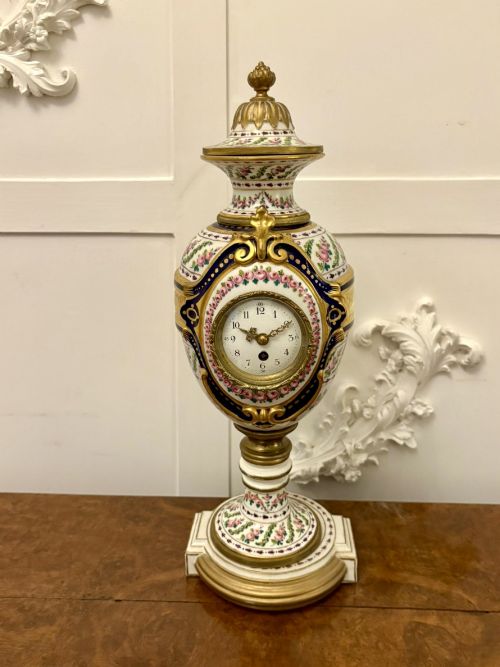
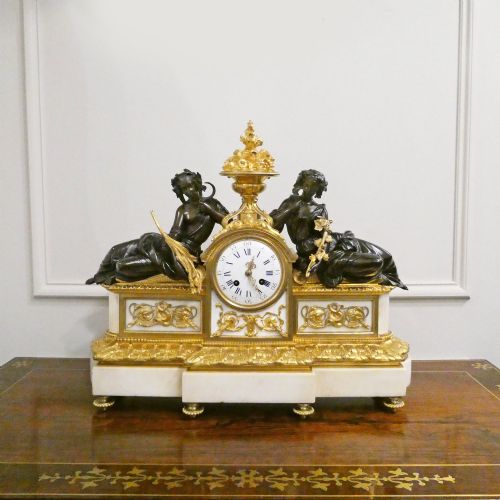
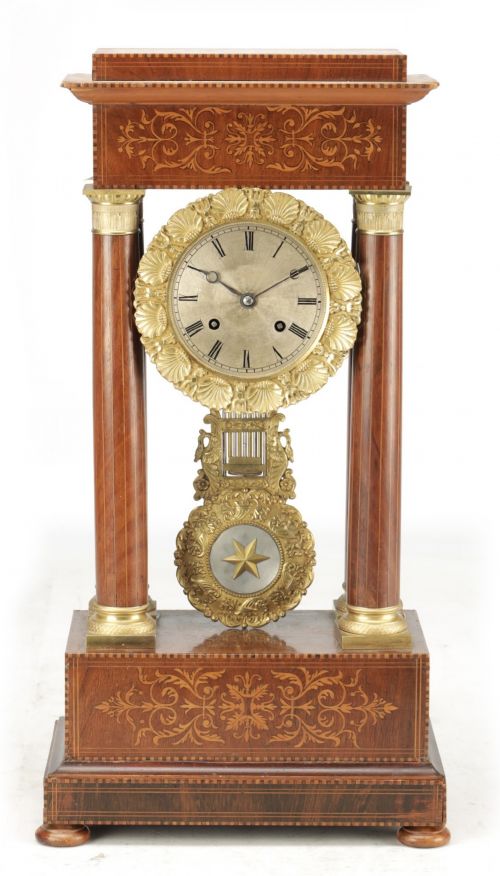
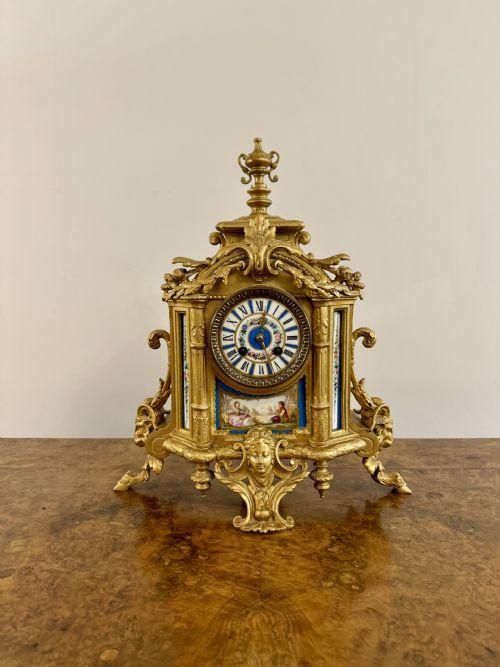
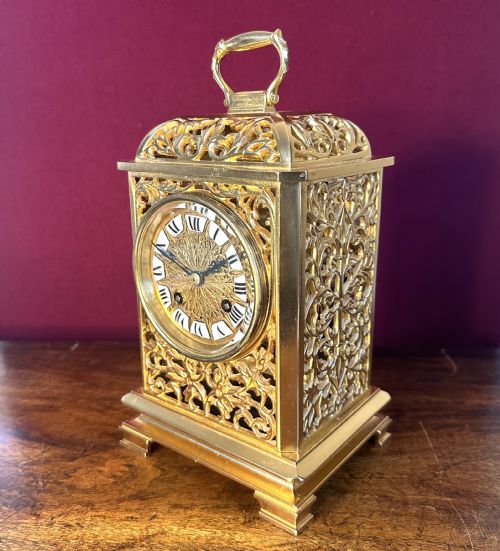
A french style mantle clock brings decorative timekeeping to a room, appearing in forms from urn-shaped porcelain bodies to portico designs and four-glass cases. The examples seen here span the nineteenth century, including Victorian interpretations and specific revivals such as Louis XVI and Rococo styles.
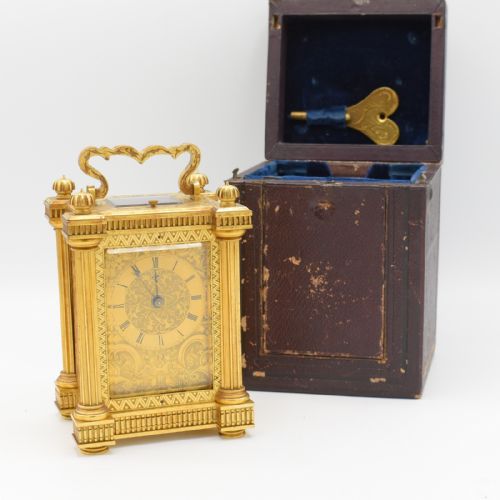
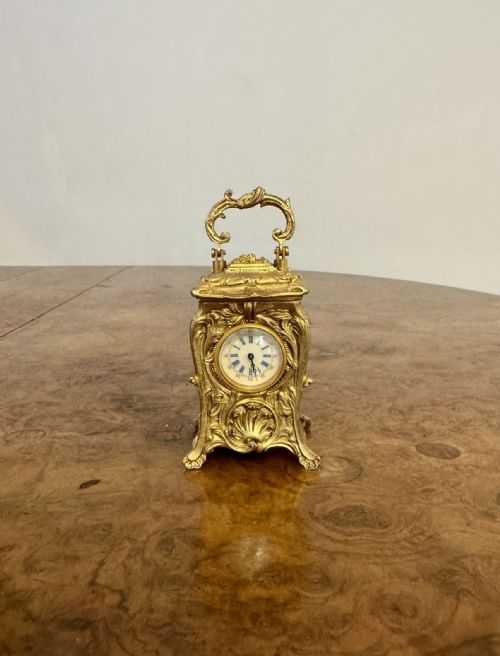
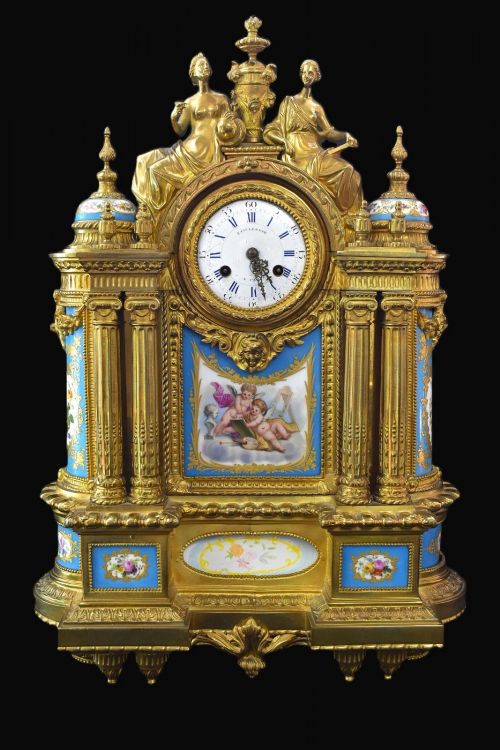
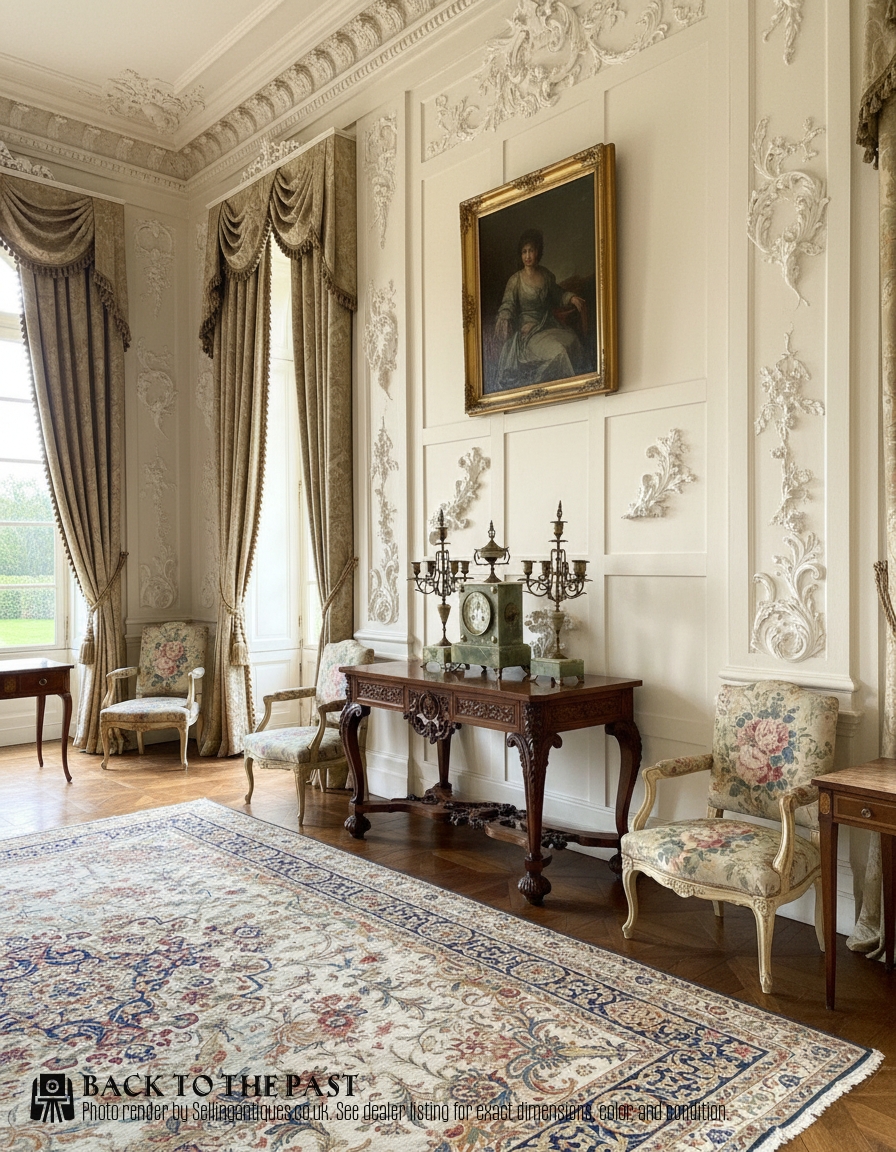
Buyers frequently encounter works incorporating gilt bronze, ormolu, marble, and hand-painted enamel panels, sometimes accompanied by matching side urns in a complete clock garniture set. Carriage clocks and bedside pieces also appear, demonstrating the diverse scale of these items.
The objects combine functional eight-day movements with sculptural metalwork, figures, and architectural framing. These elements reflect the aesthetic preferences of periods ranging from the 1850s through to the turn of the twentieth century.
Materials and construction
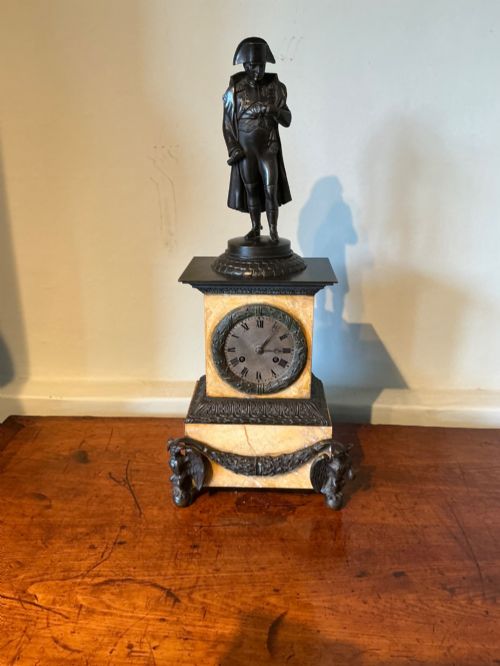
Foundry work and metal casting form the basis of many pieces, utilising ormolu, gilt metal, brass, and bronze to create detailed rococo scrolls, animal figures, and architectural columns. These metallic elements are frequently combined with carved marble bases or fitted with glass panels to reveal the interior mechanism.
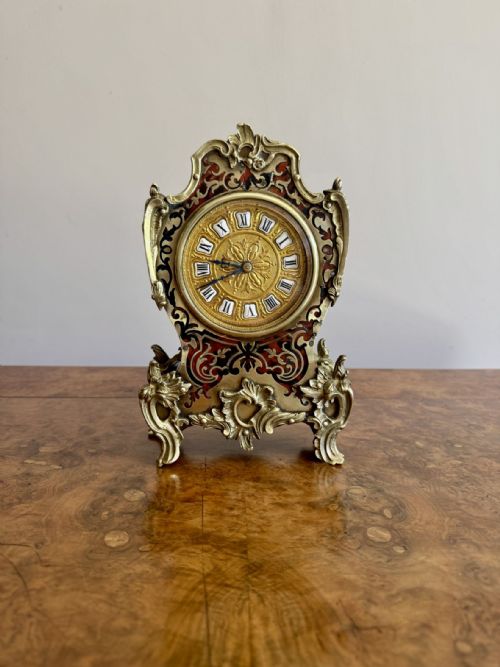
Decorative surfaces rely on hand-painted porcelain panels, enamel dials, and marquetry techniques such as Boulle work using tortoiseshell and brass inlay. The integration of ceramic and glass components with metal mounts requires precise assembly by period clockmakers.
Listings feature items spanning the Victorian era and the late nineteenth century, incorporating materials like Sevres porcelain, white marble, and gilt bronze.
Judging the work
Execution of the cast metalwork separates standard production from finer examples, visible in the crispness of chased ormolu details and the depth of the gilding. Hand-painted ceramic panels and enamel dials with finely rendered numerals indicate superior workshop standards.
The integrity of the matching garniture sets, the retention of original patination, and the complexity of architectural elements such as portico frames or four-glass cases determine the overall standing of the clock.
Vincenti·Howell and James London·Etienne Lenoir·Tiffany·Japy Freres
The French Style Mantle Clock Glossary
- Ormolu
- Gilded bronze, produced by applying a mercury-gilding amalgam to cast bronze. This technique creates a rich golden finish characteristic of nineteenth-century decorative items.
- Clock Garniture
- A set consisting of a central clock flanked by matching decorative objects such as urns or vases. These sets were designed to sit harmoniously on a mantelpiece.
- Boulle
- A method of marquetry using brass and tortoiseshell inlaid in arabesque or geometric patterns. It is named after the cabinetmaker André-Charles Boulle.
- Portico Clock
- A clock housed within an architectural framework supported by columns, resembling a classical portico. These pieces often utilise marble and gilt bronze materials.
- Four-Glass Clock
- A timepiece encased in glass panels on all four sides, allowing the movement and pendulum to be viewed from multiple angles. These often feature fine brass framing.
French Style Mantle Clock: Frequently Asked Questions
What is a french style mantle clock?
A french style mantle clock is a decorative timepiece produced during the nineteenth century, drawing on historical design movements such as Rococo and Louis XVI revivals.
These objects combine mechanical clockwork with sculptural cases made from materials like ormolu, porcelain, marble, and brass.
How do I care for my clock?
Placement on a stable, level surface is essential for the proper operation of the pendulum and the eight-day movement.
Professional servicing helps maintain the internal mechanics, while dusting should be done gently to preserve delicate gilt and enamel surfaces.
What is a clock garniture?
A clock garniture is a matched set comprising a central clock accompanied by matching decorative pieces, such as urns or vases.
These sets were created to provide a balanced, symmetrical display on a mantelpiece or sideboard.
How can I tell the period?
Dating relies on stylistic clues, such as the heavy use of porcelain and gilt metal in Victorian pieces or the specific architectural proportions of Louis XVI revivals.
Maker signatures on the movement backplates or dials also offer precise clues to the origin and decade of production.