





Nineteenth Century Clock Set
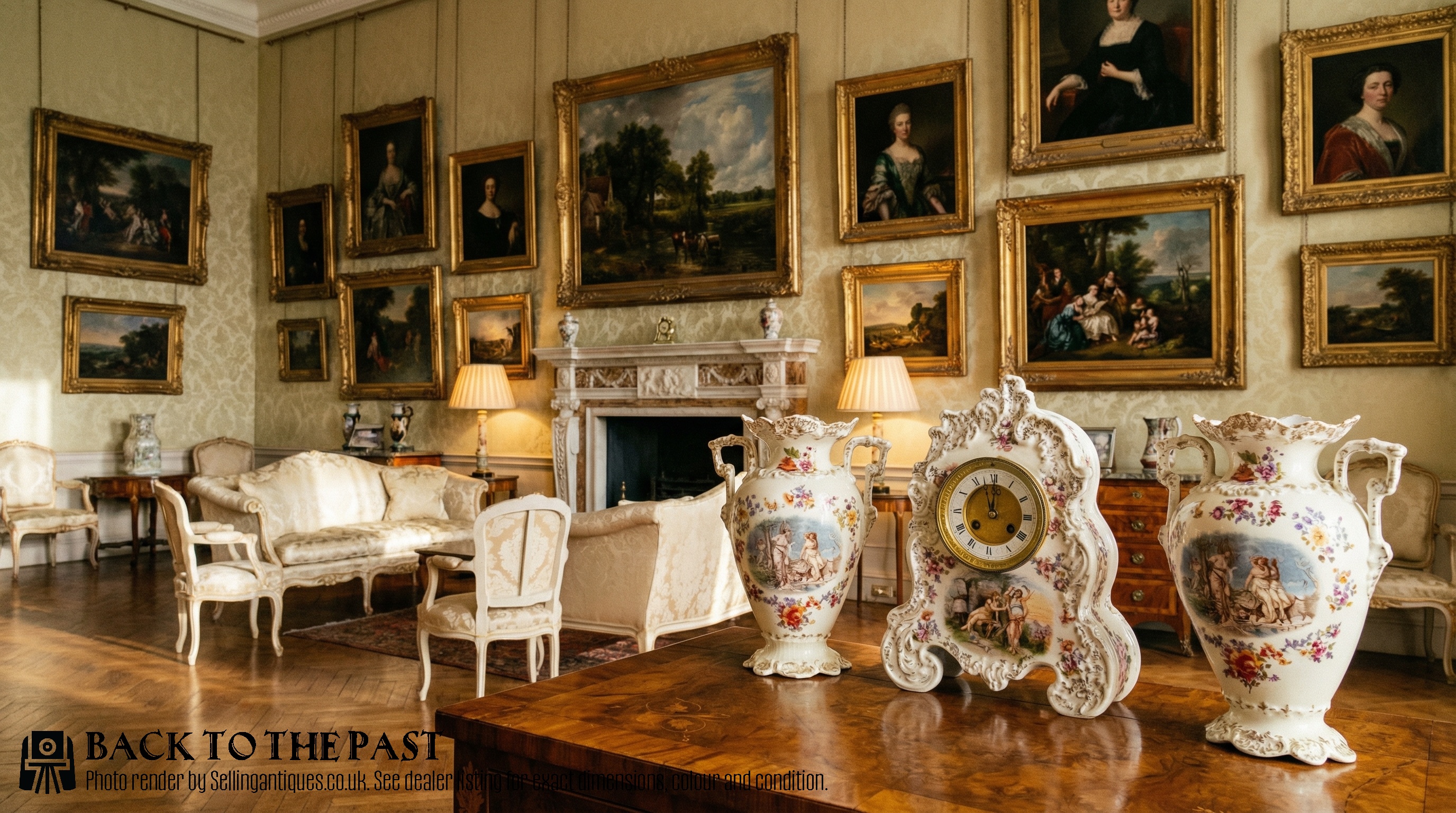
These nineteenth century clock set arrangements bring together a central mantel clock and matching side pieces to anchor a room.
Nineteenth Century Clock Set
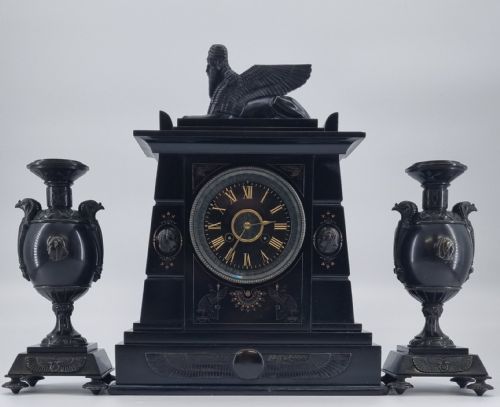
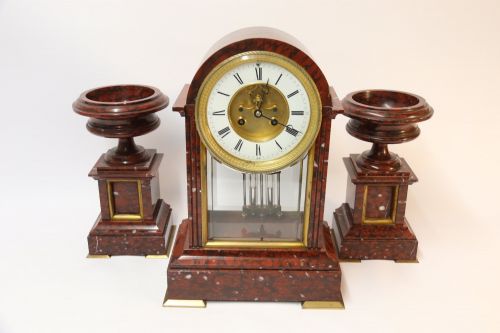
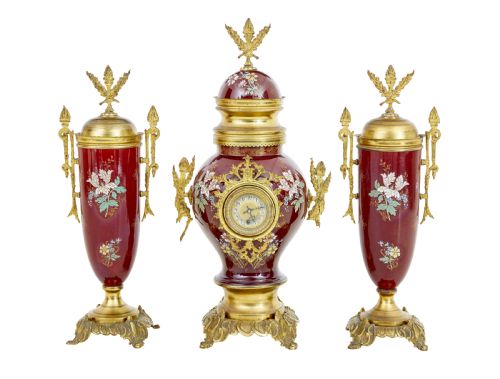
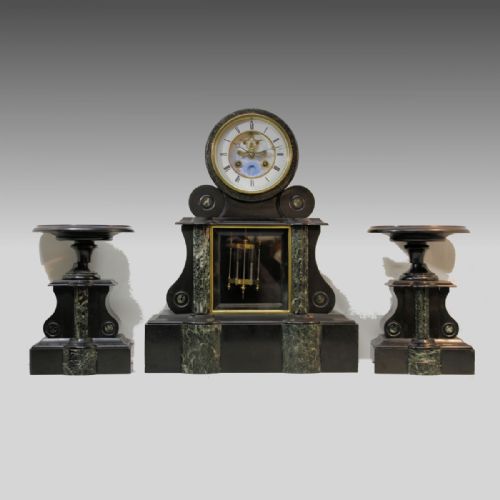
A nineteenth century clock set consists of a central mantel clock accompanied by matching side pieces, commonly known as garnitures, designed to sit together on a fireplace mantel or console table. The pieces found on this page span the Victorian and various revival styles, predominantly originating from French workshops during the 19th century.
Most examples comprise three pieces in total, featuring a main clock flanked by matching urns, candelabra, or vases executed in identical materials and decorative motifs. These groupings were manufactured to create a balanced, symmetrical display that dominated the reception rooms of grand nineteenth-century interiors.
Materials and construction
The construction of a nineteenth century clock set relies heavily on combination materials such as gilt bronze, ormolu, and brass paired with natural stones including marble, onyx, and black slate. Artisans mounted metal castings onto heavy stone bases, incorporating porcelain panels and enamelled dials with delicate hand-painted details.
Foundries utilised casting and chasing techniques for the metallic mounts, often applying fire-gilding or ormolu to brass and bronze elements to achieve a lasting golden lustre. Movements were housed within these heavy architectural or sculptural casings, driven by mechanical gear trains and regulated by pendulum mechanisms.
Nineteenth Century Clock Set Retail Price Guide 2026
Typical asking prices for nineteenth century clock set among the pieces listed under this phrase on Sellingantiques today, from the lower quarter to the upper quarter. They describe what is for sale here now, not the wider market.
Listings feature clock sets spanning the nineteenth century, utilising materials from gilt bronze and ormolu to marble, onyx, and porcelain.
What separates the best from the rest
The distinction in a nineteenth century clock set rests on the crispness of the bronze casting and the depth of the ormolu chasing. Finer sets display sharply detailed figures and foliage without the softening that indicates a worn or secondary mould.
Material selection also dictates standing, with solid marble or onyx casings and heavy fire-gilded mounts representing a higher standard of manufacture than simpler slate or painted toleware alternatives. Signed movements by notable makers add further distinction to the overall execution.
Samuel Marti·H Luppens Paris·Vincenti of Paris
The Nineteenth Century Clock Set Glossary
- Garniture
- Side pieces such as urns, vases, or candelabra designed to match a central clock and complete a decorative set.
- Ormolu
- Finely ground high-carat gold applied to a bronze or brass object using a mercury amalgamation technique, or used more broadly to describe gilt bronze mounts.
- Enamel
- A glassy substance fused to the surface of a metal dial through firing, providing a smooth white ground for painted numerals.
- Movement
- The internal mechanical workings of the clock, comprising gears, springs, and escapements that drive the hands and strike the bell or gong.
Nineteenth Century Clock Set: Frequently Asked Questions
How do I place a clock set on a mantel?
Centre the main clock firmly on the mantelpiece, leaving sufficient space on either side for the matching garniture pieces to sit securely. Arrange the side pieces symmetrically at equal distances from the central clock to achieve the balanced aesthetic intended by the maker.
Ensure the surface is level and sturdy enough to support the considerable weight of marble or bronze assemblies. Keep the set away from direct heat sources and open fires to protect the delicate gilt surfaces and enamel dials.
What is a clock garniture?
A clock garniture refers to the decorative side pieces that accompany a mantel clock, typically forming a matching three-piece set. These companion objects mirror the materials, style, and ornamentation of the central clock.
Common forms include decorative urns, vases, or candelabra designed to create a unified visual display across a fireplace or sideboard.
How do I wind an antique clock?
Locate the winding arbours on the clock face using a key matched to the specific square drive of the movement. Turn the key gently in the correct direction until you feel resistance, avoiding overwinding to prevent damage to the springs.
Take care to support the case with one hand while winding older mechanisms. Regular, careful winding keeps the gear train moving smoothly and maintains accurate timekeeping.
How do I identify French revival styles?
Examine the decorative motifs and architectural lines of the clock case to determine the specific revival period. Louis XVI styles feature neoclassical urns, swags, and symmetry, while Rococo revival pieces showcase asymmetrical scrolls and naturalistic floral elements.
Egyptian revival designs incorporate sphinxes, hieroglyphs, and architectural obelisks inspired by archaeological discoveries of the era. Comparing these distinct ornamental vocabularies reveals the primary stylistic influence behind the manufacture.