


Porcelain Clock and Urns
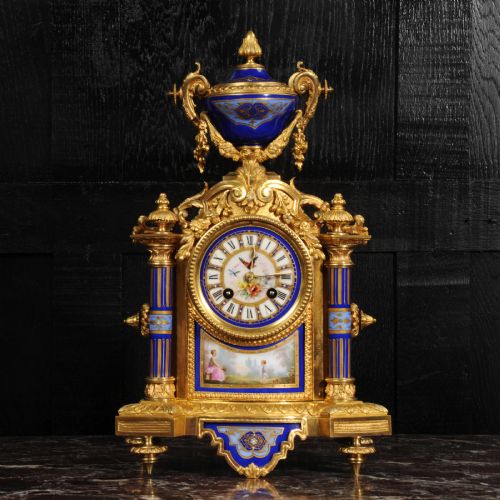
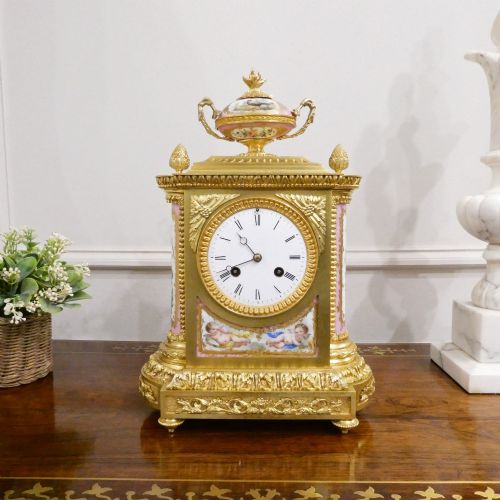
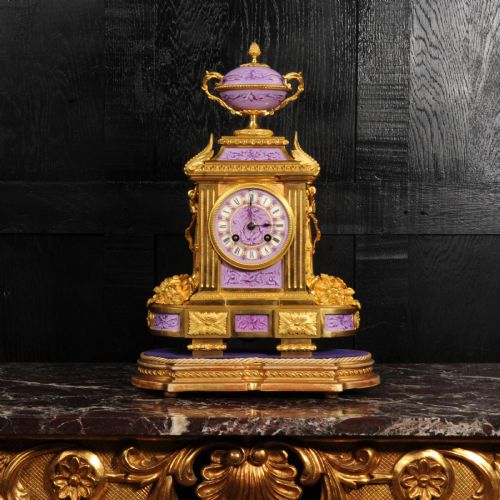
Porcelain clock and urns sets bring grand Victorian and nineteenth-century French drawing rooms into focus with matching gilt bronze mounts and hand-painted panels.
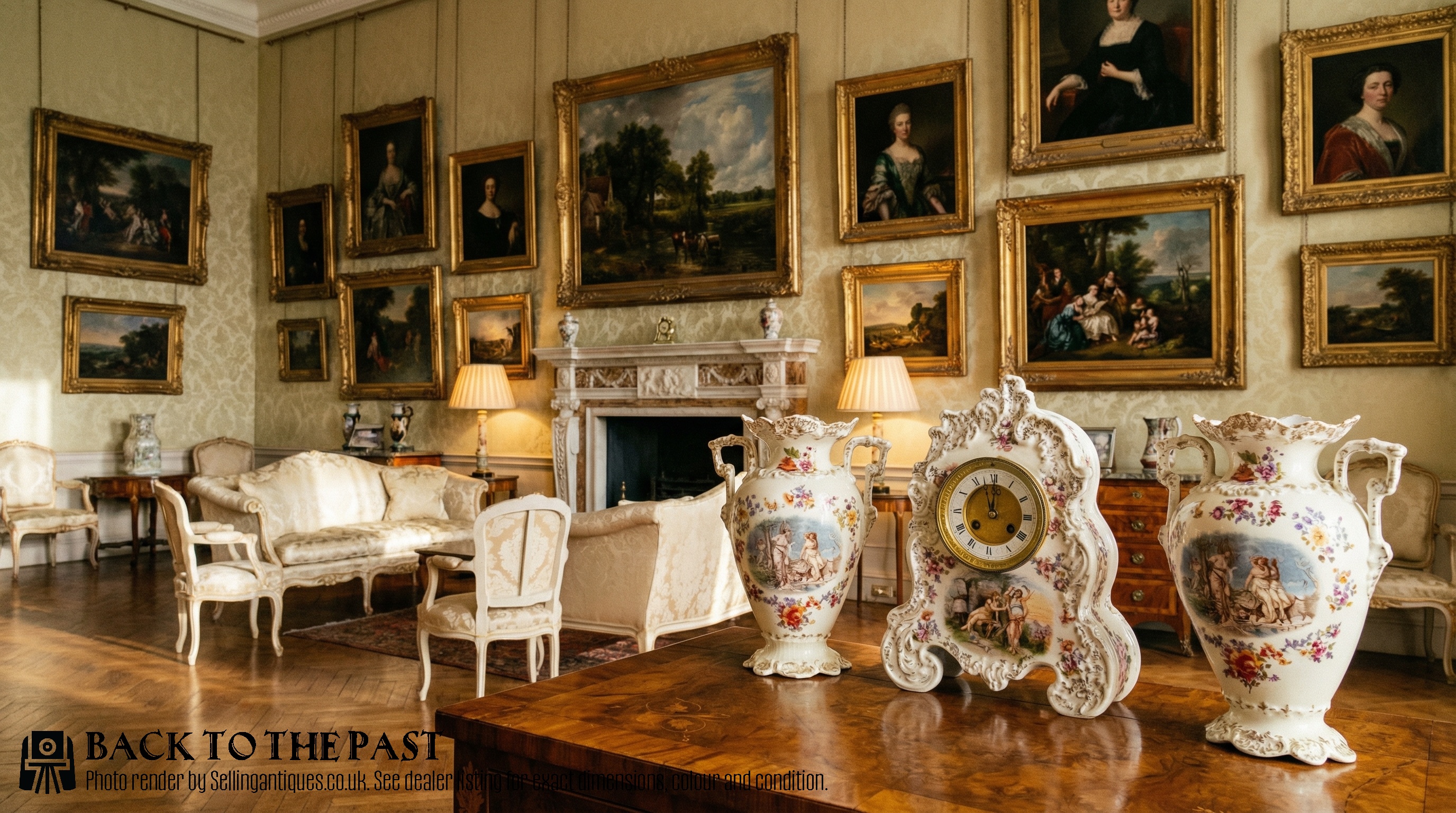
Porcelain Clock and Urns
When you search for porcelain clock and urns, you encounter substantial garniture sets designed as symmetrical mantel displays. These arrangements typically pair a central mantel clock with a matching pair of decorative urns or vases, creating a balanced focal point for a fireplace or sideboard.
The majority of these pieces originate from nineteenth-century France, spanning periods from the eighteen-fifties to nineteen hundred. You also find Victorian examples alongside specific continental works such as German KPM Berlin porcelain and Chinese blue and white ceramics mounted in Europe.
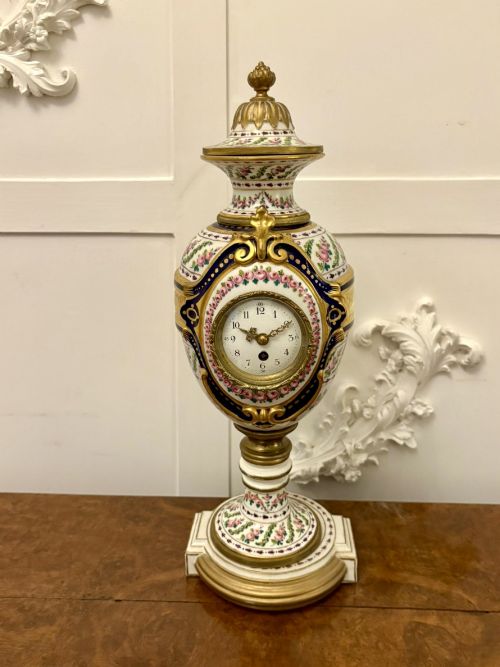
Forms vary from traditional mantel clocks and clock garniture sets to urn-shaped mantle clocks and three-piece sets enclosed beneath glass domes. These objects combine timekeeping with sculptural ceramic display, reflecting the decorative tastes of the Second Empire and Belle Epoque.
Materials and Construction
Makers combined ceramic bodies with cast metal mounts, utilising porcelain, ormolu, gilt bronze, and brass. The porcelain elements frequently feature hand-painted decoration, while the metal components provide structural framing and ornate detailing.
Craftspeople incorporated enamel dials, wood bases, and occasionally glass domes to protect the delicate garniture sets. Ormolu and gilt bronze framing surrounds the porcelain plaques and clock faces, binding the distinct materials into a unified composition.
Materials recorded across these items include porcelain, gilt bronze, ormolu, brass, enamel, wood, onyx, and glass.
Assessing Quality and Execution
The distinction between standard production and top-tier examples lies in the finesse of the hand-painted porcelain panels and the crispness of the gilt bronze or ormolu casting. Finer sets display intricate detail in the floral or figural ceramic scenes and heavier, more deeply chased metal mounts.
Attribution to documented makers such as Japy Freres, Achille Brocot, Jean-Baptiste Delettrez, or Vincenti of Paris elevates the standing of a piece. The integration of the clock movement with the ceramic and bronze housing dictates the overall harmony of the garniture.
Japy Freres·Jean Baptiste Delettrez·Achille Brocot·KPM Berlin·Vincenti of Paris
The Porcelain Clock and Urns Glossary
- Garniture set
- A matching group of ornamental objects, typically comprising a central clock flanked by two matching urns or vases for symmetrical display.
- Ormolu
- Gilt bronze produced by applying a finely ground high-carat gold-mercury amalgam to a bronze object, creating a rich golden surface.
- Sèvres style
- Porcelain painted in the manner of the famous French royal manufactory, often featuring rich blue grounds and pastoral scenes within gilt borders.
- Mantel clock
- A domestic clock designed to sit upon the shelf or mantelpiece above a fireplace.
- Japy Freres
- A prominent nineteenth-century French manufacturing firm known for producing reliable clock movements and complete timepieces.
Porcelain Clock and Urns: Frequently Asked Questions
What is a clock garniture?
A clock garniture is a matching set consisting of a central clock and two corresponding decorative pieces, such as urns or vases. These sets were designed to sit together on a mantelpiece to create a balanced, symmetrical display.
The matching items share the same materials, decorative motifs, and gilding style, ensuring a unified appearance across the entire mantel arrangement.
Where were most porcelain clocks made?
The majority of these pieces originate from nineteenth-century France, produced during periods such as the Victorian era, Napoleon III, and the Belle Epoque. Parisian workshops and factories drove this decorative style.
Alongside French production, you also encounter pieces from German factories like KPM Berlin and occasional Chinese export ceramics mounted with European bronze.
How do I identify the period?
Dating relies on stylistic clues such as Rococo Revival curves, Louis XVI neoclassical symmetry, and the specific characteristics of the gilt bronze mounts and dial construction. Maker signatures on the movements offer precise chronological markers.
Nineteenth-century pieces often display distinct manufacturing stamps on the back plates, linking the clock to specific decades and makers active between eighteen-fifty and nineteen hundred.
Are glass domes original?
Glass domes frequently accompanied nineteenth-century garniture sets to protect delicate hand-painted porcelain and gilt surfaces from dust and damage. Many sets survive with their original blown or drawn glass covers and wood bases.
The presence of a glass dome adds an extra layer of preservation, keeping the intricate ormolu and painted details intact over generations.
How should I care for these sets?
Maintenance involves keeping the porcelain and gilt bronze clean using soft, dry cloths without chemical solvents or abrasive cleaners. Clock movements require professional servicing by a specialist to ensure proper mechanical function.
Positioning the set away from direct sunlight and heat sources protects the hand-painted enamel and porcelain surfaces from fading over time.