
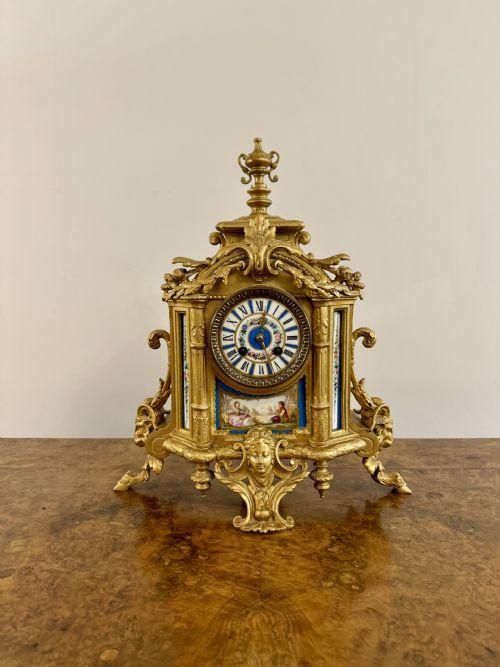


Hand Painted Mantel Clock
A hand painted mantel clock brings decorative porcelain, gilt bronze and intricate enamel into domestic interiors.
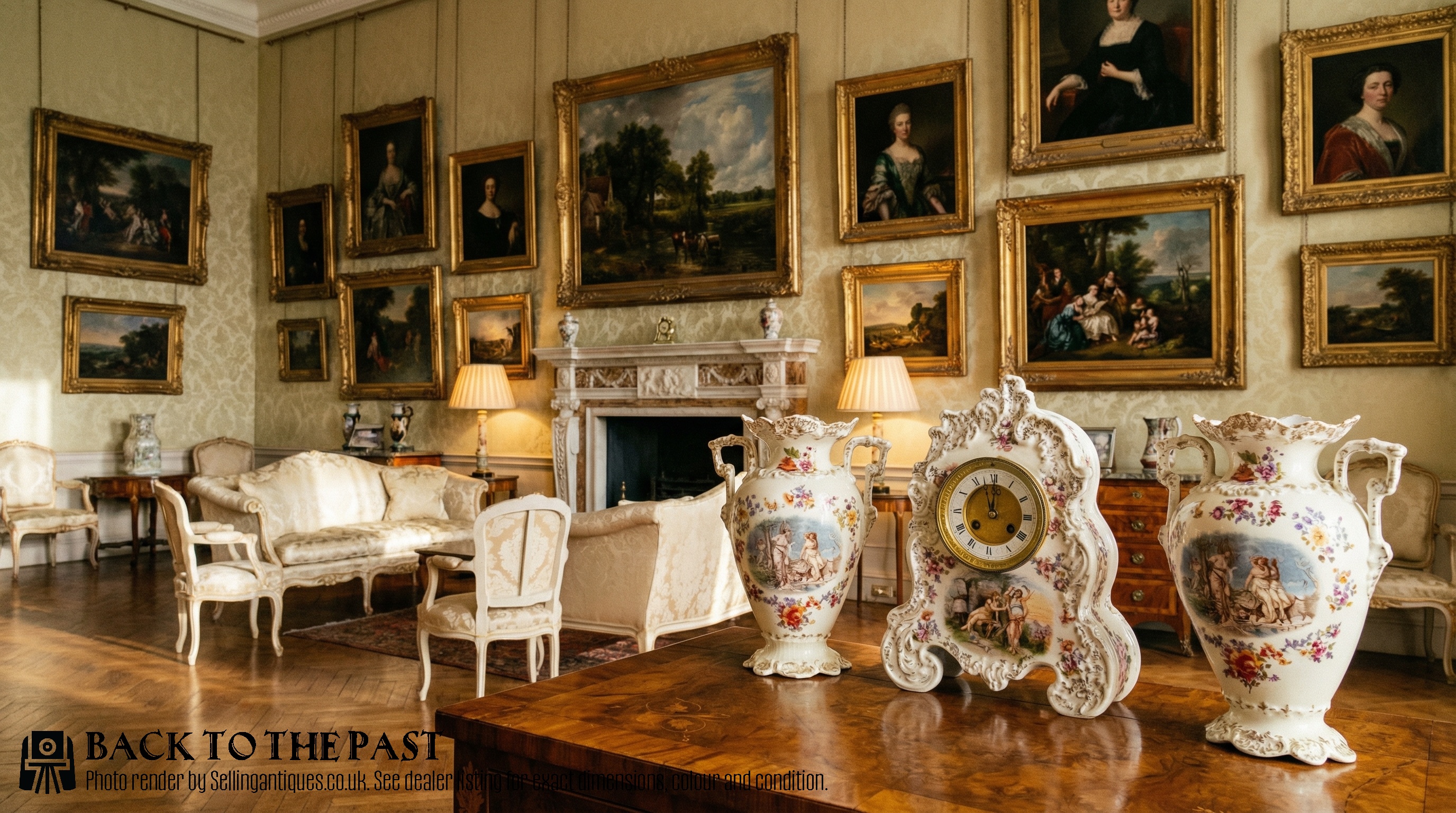
Hand Painted Mantel Clock
A hand painted mantel clock comprises decorative horological objects designed to sit on a shelf or fireplace surround. Buyers searching this phrase encounter nineteenth century French creations alongside later lacquered variations.
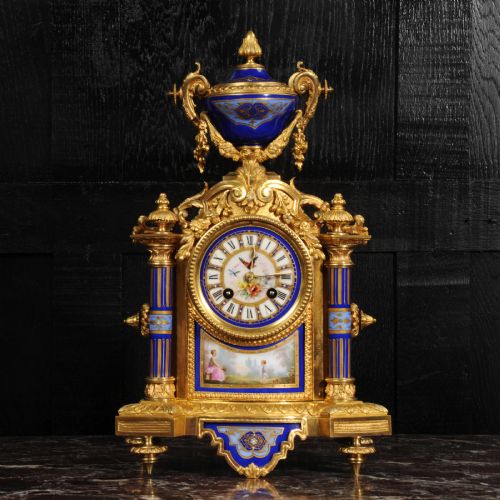
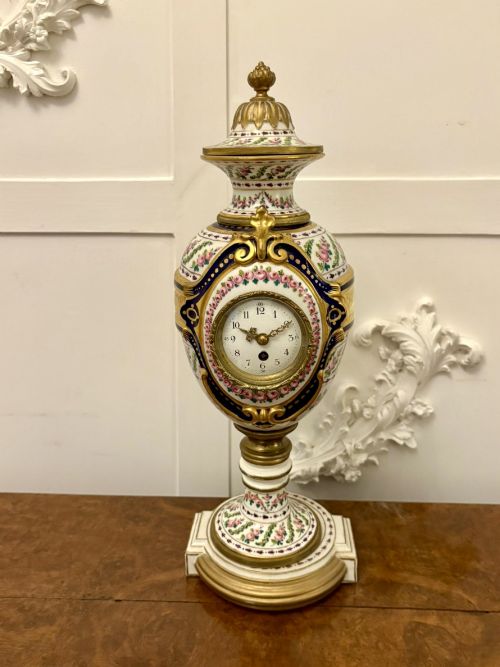
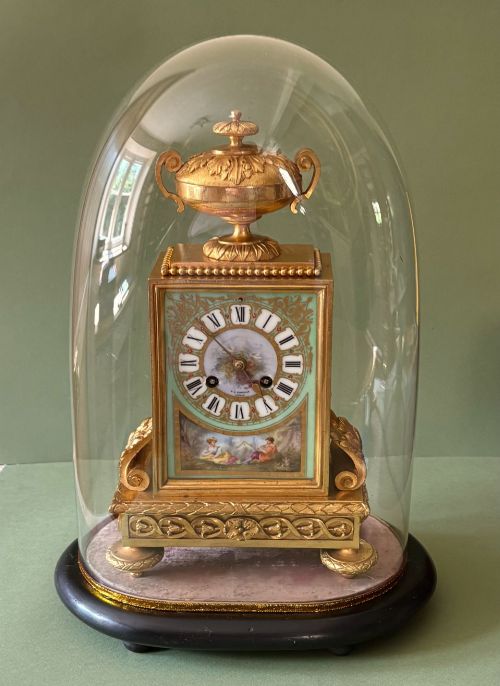
The most common form met here is the French mantel clock mounted with porcelain panels or urn shapes, often accompanied by matching garniture sets. These pieces combine timekeeping with detailed ceramic painting in styles from Rococo Revival to Louis XVI.
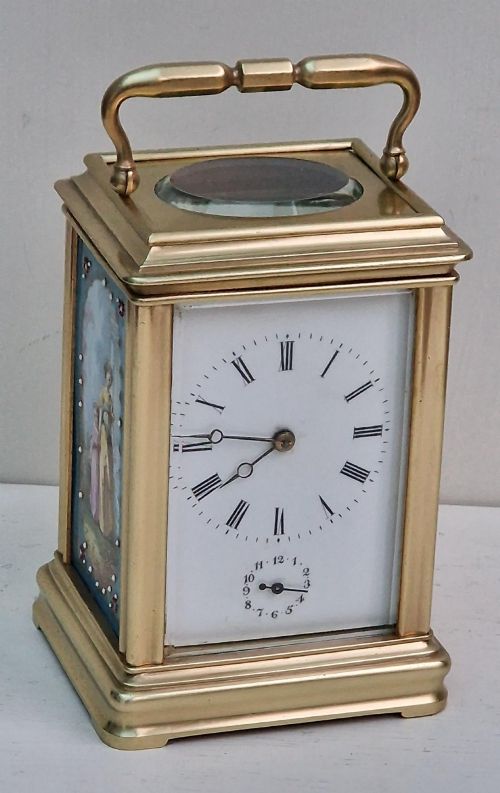
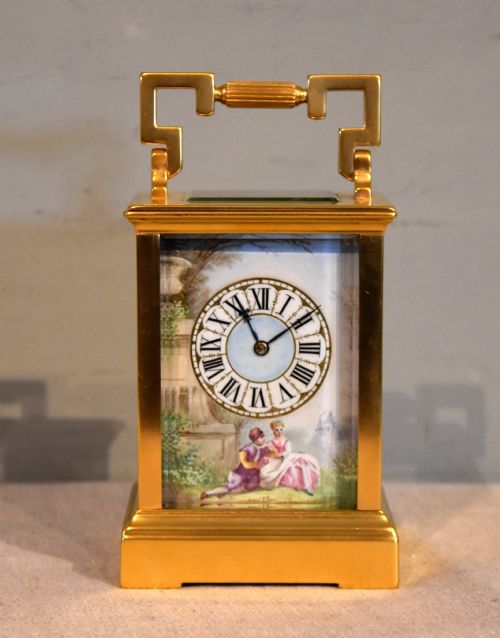
Origins stretch from Victorian Britain to continental workshops, with nineteenth century examples dominating the selection. Pieces range from carriage clocks with enamel paintings to large urn shaped mantel clocks featuring gilt metal mounts.
Materials and construction
Casting and fire gilding produced the ormolu and gilt bronze frames that house these movements. Artisans combined these metallic mounts with porcelain panels, glass crystals and enamel dials, securing them to bronze plinths or wooden bases.
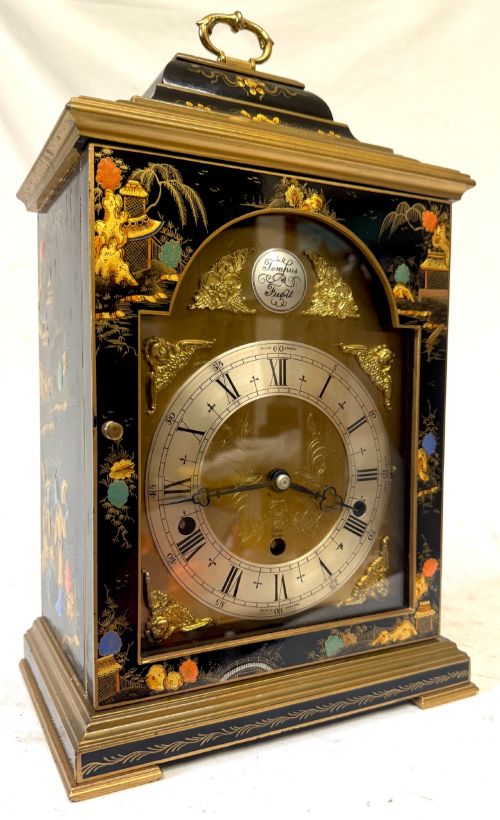
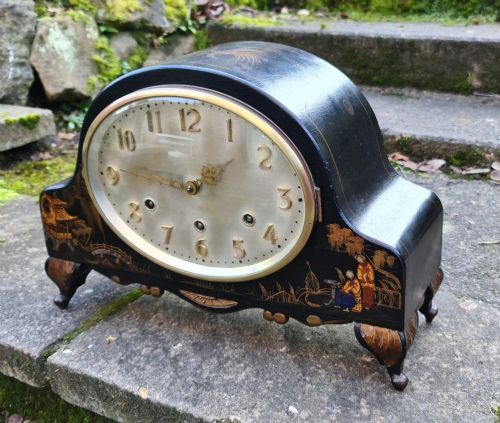
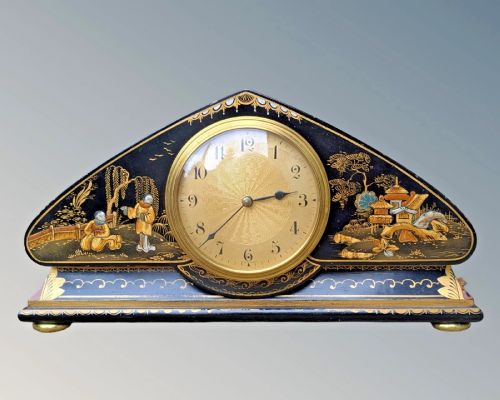
Ceramic painting and hand glazing decorated the porcelain components, featuring scenes or floral motifs fired onto the surface. Lacquered wood structures also appear, finished with painted Chinoiserie designs in various colours.
Several clocks wear their painted panels like polite Victorian ladies attending a very quiet tea party.
Factors affecting quality
The precision of the painted detail and the crispness of the gilt bronze chasing separate standard examples from finer works. Master horologists and porcelain painters produced pieces with superior depth in the enamel work and heavier cast metal components.
The integration between the ceramic elements and the metal mounts determines the overall harmony of the piece. Complete garniture sets and fully restored movements command greater attention from collectors.
Japy Freres·PH Mourey·LE ROY & FILS·KPM Berlin·Miroy Freres
The Hand Painted Mantel Clock Glossary
- Ormolu
- Gilded bronze produced by applying a mercury and gold amalgam to cast bronze before firing. This technique creates a rich golden finish characteristic of French decorative metalwork.
- Garniture
- A set of matching decorative objects, typically comprising a clock flanked by urns or vases. These symmetrical arrangements were designed to decorate a mantelpiece.
- Chinoiserie
- European interpretations of Chinese and East Asian artistic traditions, often expressed through lacquered woodwork and painted decorative motifs. It appears frequently on twentieth century mantel clocks.
- Carriage timepiece
- A portable clock originally designed for travelling, enclosed in a brass and glass case. Examples on this page feature porcelain panels or hand painted dials.
- Crystal regulator
- A clock housed in a glass panelled case that reveals the internal mechanical movement. These pieces often incorporate painted enamel dials or coloured side panels.
Hand Painted Mantel Clock: Frequently Asked Questions
How do I care for my mantel clock?
Keep the clock away from direct sunlight and dramatic temperature fluctuations to protect the painted porcelain and gilt surfaces. Professional mechanical servicing every few years ensures the internal movement continues to run properly.
Dust the exterior gently with a dry, soft cloth, avoiding abrasive cleaning agents on the enamel and ormolu mounts.
Were these clocks used for telling time?
These pieces functioned as practical timekeepers in domestic sitting rooms and formal chambers, often featuring striking mechanisms to announce the hours. Their decorative value meant they also served as prominent ornamental centrepieces on mantelpieces.
Many examples include pendulum movements or spring driven mechanisms requiring regular winding with a matching key.
How do I identify a French period clock?
French pieces from the nineteenth century frequently employ ormolu, Sevres style porcelain panels, and cast gilt bronze mounts adhering to Louis XVI or Rococo Revival styles. Maker signatures stamped on the backplates provide definitive evidence of origin.
Stylistic cues such as urn shapes, bronze plinths and hand painted dial ceramics help distinguish these continental works from later domestic alternatives.
What is a clock garniture?
A clock garniture is a matched set consisting of a central mantel clock accompanied by two flanking decorative objects, such as urns or vases. These sets were manufactured as a cohesive unit to create a balanced display across a fireplace.
They share identical materials, painting styles and metal mounts to maintain visual harmony when arranged together.