






Porcelain Mantle Clock
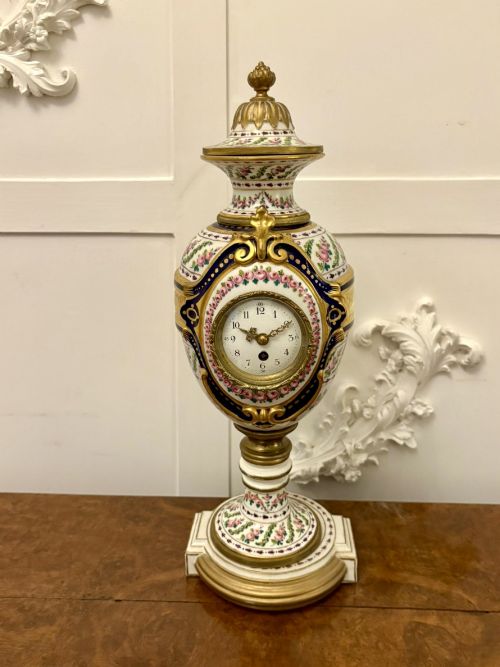
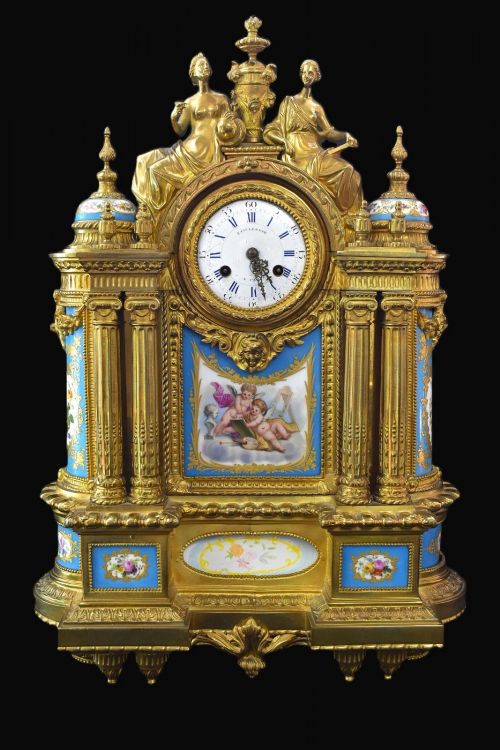
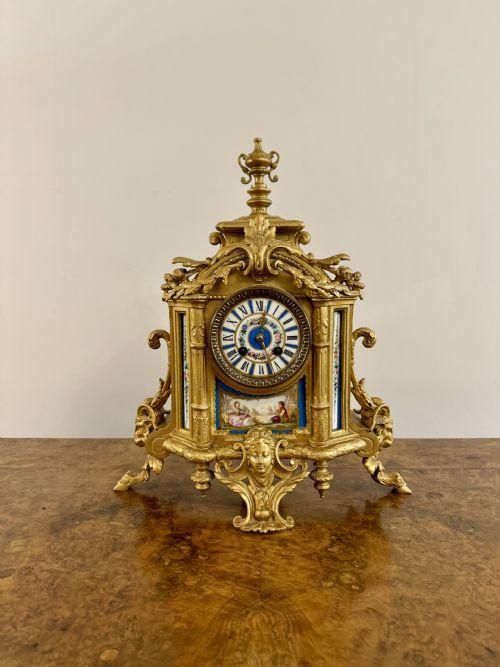
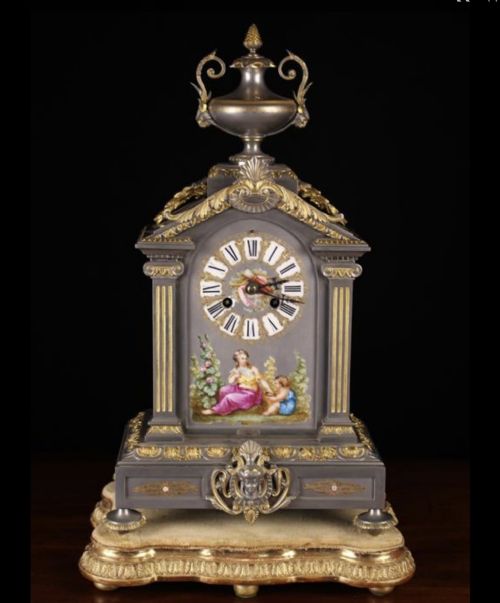
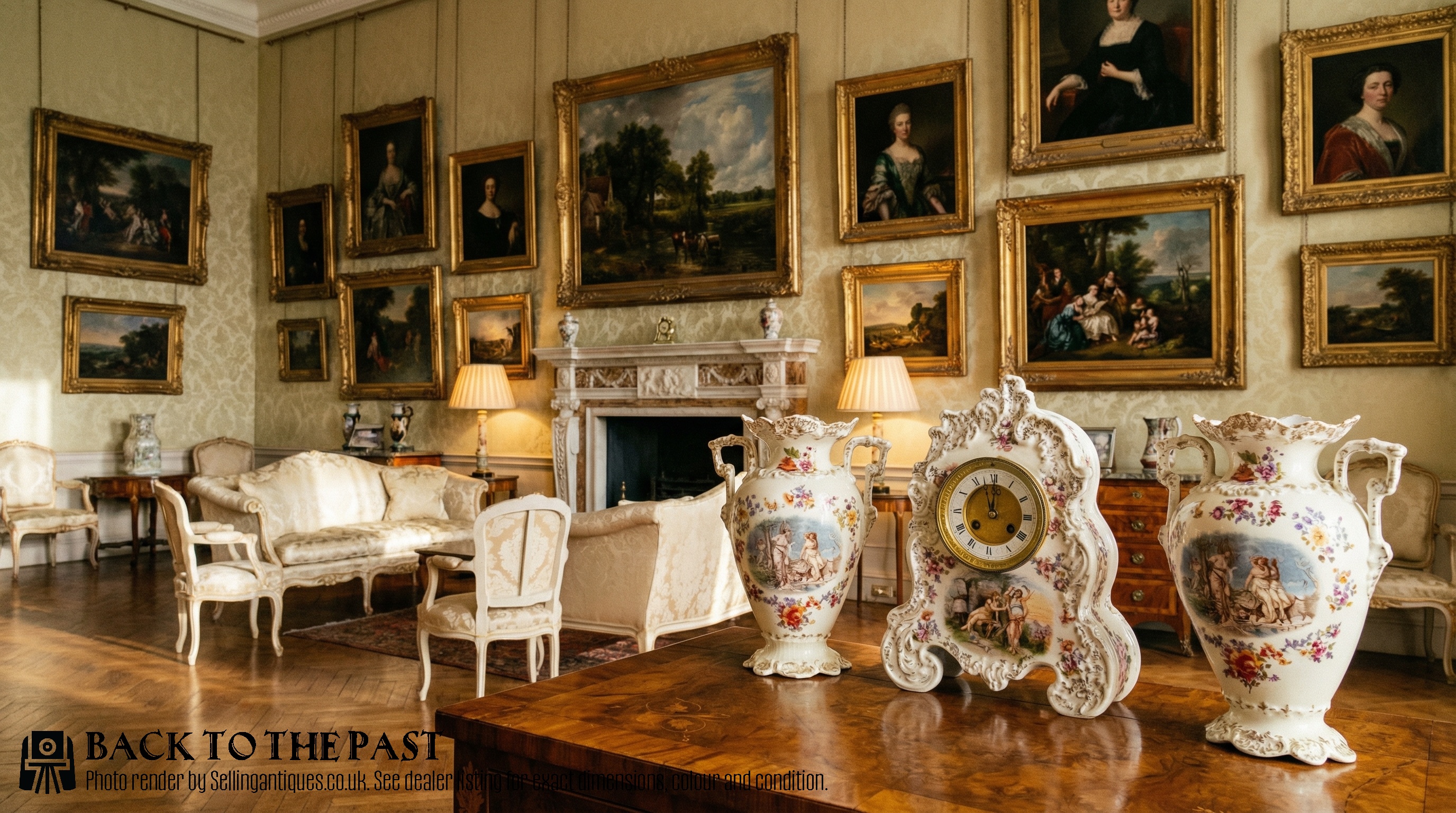
A porcelain mantle clock brings heavy gilt metal and hand-painted ceramic panels together to anchor a room with nineteenth-century French domestic presence.
Porcelain Mantle Clock
A porcelain mantle clock stands as a centrepiece of nineteenth-century interior decoration, combining functional timekeeping with sculptural ceramic arts. The pieces meeting this search phrase span the Victorian era, heavily concentrated in French workshops from the middle to the late decades of the eighteen-hundreds.
Buyers most frequently encounter tall urn shapes, drum head movements, and three-piece garniture sets flanked by matching vases or candelabra. Styles lean toward Rococo Revival, Louis XVI Revival, and Napoleon III designs, where the ceramic body acts as a canvas for painted pastoral scenes or royal portraits.
Origins remain predominantly continental, with many examples originating from Paris or major regional potteries like Meissen. These works range from modest porcelain-columned domestic clocks to monumental architectural cases framed in elaborate gilt bronze.
Materials and Construction
Makers built these clocks by mounting hand-painted porcelain panels or urns into heavy frames of cast ormolu, gilt bronze, and gilt metal. The ceramic components often carried enamel dials and detailed floral or figurative illustrations, sometimes signed by studio artists or stamped with factory marks.
Gilding techniques applied gold layers over bronze or brass bases to catch the flicker of candlelight in nineteenth-century parlours. Interior mechanisms relied on brass gear trains, frequently operating on eight-day movements that required periodic winding with a matching key.
Several Victorian clock designs incorporate sculptural ceramic elephants and cherubs perched casually among the brass gears.
Distinctions in Execution
The division between ordinary production and superior work rests on the crispness of the metal chasing and the artistry of the painted ceramic. Finer pieces display deeply sculpted ormolu mounts with sharp botanical or cherubic motifs, whereas simpler examples rely on routine cast metal fittings.
Hand-painted porcelain panels with delicate brushwork and rich cobalt grounds elevate a clock far above those set with transfer-printed decals. Complete garniture sets surviving with all matching side urns or candelabra represent a higher tier of original assembly than isolated clock bodies.
Etienne Lenoir·Japy Freres·Phillipe H. Mourey·Rollin A Paris
The Porcelain Mantle Clock Glossary
- Ormolu
- Gilded bronze produced by applying a mixture of mercury and gold to a cast bronze base, then firing it to drive off the mercury. This technique creates a durable, warm metallic golden surface characteristic of nineteenth-century French luxury goods.
- Garniture set
- A matched grouping consisting of a central clock flanked by two matching decorative ornaments such as urns, vases, or candelabra. These arrangements were designed to sit symmetrically on a fireplace mantel.
- Drum head clock
- A timepiece featuring a circular, drum-shaped metal housing for the movement mounted prominently within or atop the main body of the case.
- Cloisonne
- A decorative metalwork technique where thin wire partitions are soldered to a metal base to create compartments filled with coloured enamel paste and fired. Pieces using this method display intricate geometric or floral patterns in bright hues.
- Four glass regulator
- A clock encased in glass panels on all four sides supported by a brass or gilt metal framework, allowing a clear view of the mechanical movement and swinging pendulum inside.
Porcelain Mantle Clock: Frequently Asked Questions
How do I wind an antique porcelain clock?
Most mechanical models operate on an eight-day movement requiring a specific winding key inserted into the dial holes.
Care must be taken not to over-wind the mainspring, turning the key gently until resistance signals the spring is fully tensioned.
Were these clocks made only in France?
While French workshops dominated the production of gilt metal and porcelain combinations during the Victorian period, German factories like Meissen also produced notable porcelain clock bodies.
Many French movements were exported and retailed through British houses, bearing dual stamps from continental makers and local distributors.
What is a garniture set?
A garniture set comprises a central timepiece accompanied by two matching side pieces, such as decorative urns or candelabra.
Placed on a mantelpiece, these coordinated groupings created a balanced decorative scheme favoured in nineteenth-century formal interiors.
How do I clean the painted porcelain panels?
Dusting the ceramic surfaces with a dry, soft brush preserves the delicate hand-painted details and gilded highlights without risking moisture damage.
Harsh chemical cleaners should be avoided entirely, as they can strip the overglaze enamel colours and antique gilt finishes.