



Crystal Drop Candelabra
These crystal drop candelabra bring genuine sparkle and period presence to a room, catching the light from every angle.
Crystal Drop Candelabra
When you search for crystal drop candelabra, you are looking at multi-armed candleholders and wall lights dressed with glass or crystal pendants. The versions you are most likely to meet on this page hail from the nineteenth century, with French and Italian origins appearing frequently across the selection.
The forms range from table candelabra and candlesticks to wall sconces and chandeliers fitted with multiple branches. Makers styled these pieces across periods such as Regency, Edwardian, and the 1930s, utilising decorative approaches like French Rococo Revival and Art Nouveau.
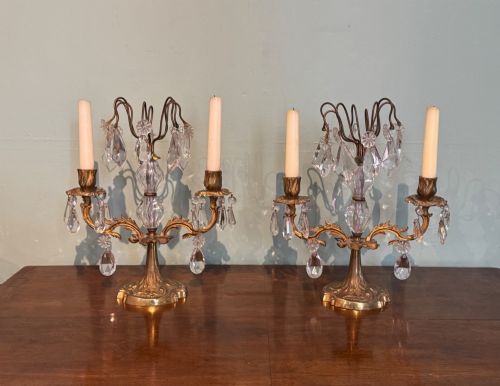
Many examples are designed as pairs, offering symmetrical arrangement for a mantelpiece or sideboard. Their defining characteristic remains the arrangement of hanging drops that amplify the illumination of candles or early electric conversions.
How they were made
Foundations rely on cast metals such as brass, gilt-brass, bronze, ormolu, and silvered metal, providing sturdy armatures for the branches. Artisans then dressed these metal structures with cut glass and crystal drops, hung securely from the nozzles and drip pans.
The metal components often display chased or moulded ornamentation characteristic of styles like Louis XVI and Italian Baroque. Cut crystal elements are faceted to refract candlelight effectively, reflecting the rigorous standards of nineteenth-century metalwork and glass-cutting workshops.
Crystal Drop Candelabra Retail Price Guide 2026
Typical asking prices for crystal drop candelabra among the pieces listed under this phrase on Sellingantiques today, from the lower quarter to the upper quarter. They describe what is for sale here now, not the wider market.
Rococo revival pieces often feature whimsical 'Au Bon Sauvage' figures, bringing a touch of theatrical theatre to nineteenth-century mantelpieces.
What varies in quality
The distinction between standard and superior pieces rests on the weight of the metal chassis and the precision of the glass cutting. Heavier castings in ormolu or gilt-bronze provide better structural integrity for multi-branched designs than lighter, hollow brass alternatives.
The quality of the crystal drops themselves marks the tier of the piece, with hand-cut facets catching the light far more sharply than moulded glass. Completeness of the hanging drops and the matching of the components across a pair or set determine the overall integrity of the survivor.
The Crystal Drop Candelabra Glossary
- Ormolu
- A technique of applying finely ground high-carat gold to a bronze base, creating a rich golden surface that resists tarnish. It was widely used on high-status French lighting during the eighteenth and nineteenth centuries.
- Lustre
- A term describing a candelabra or candlestick hung with glass pendants designed to catch and refract light. These pieces often feature faceted crystal drops suspended from the drip pan or central column.
- Regency
- An English design period spanning the early nineteenth century, noted for its classical restraint combined with bold decorative elements. Pieces from this era often incorporate bronze and ormolu with clean architectural lines.
- Rococo Revival
- A nineteenth-century style drawing on the asymmetrical scrolls, shell motifs, and natural forms of the French eighteenth century. Candelabra in this style feature exuberant, curving branches and ornate cast bases.
- Wall Sconce
- A light fixture fixed to a wall rather than resting on a table or floor, designed to project illumination outward. In antique examples, these often feature multiple candle branches and crystal drops.
Crystal Drop Candelabra: Frequently Asked Questions
How do I clean crystal drop candelabra?
Remove the hanging drops gently and wash them in lukewarm soapy water, drying them immediately with a lint-free cloth to restore their sparkle.
Dust the metal frame with a soft brush, avoiding harsh chemical polishes that can strip gilt or patinated finishes from brass and bronze.
Are these candelabra wired for electricity?
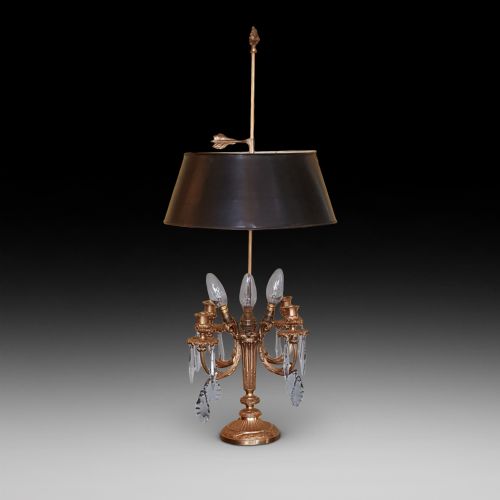
Most antique examples on this page were originally designed for wax candles, though some may carry later conversions. You should inspect the specific listing details to see if the piece retains its candle sockets or holds modern wiring.
If you prefer to use electricity, a professional restorer can often wire them without altering the antique metalwork.
Where should I place a candelabra?
These pieces suit placement on a dining table, a sideboard, or a drawing room mantelpiece where the hanging drops can catch natural or artificial light. Wall sconces require secure fixing to wall studs due to the combined weight of metal and crystal.
Keep them away from direct draughts to ensure any burning candles remain stable.