




Paris Porcelain Urns
Paris porcelain urns are decorative vessels and garniture sets from French workshops that bring hand-painted elegance to a mantelpiece.
Paris Porcelain Urns
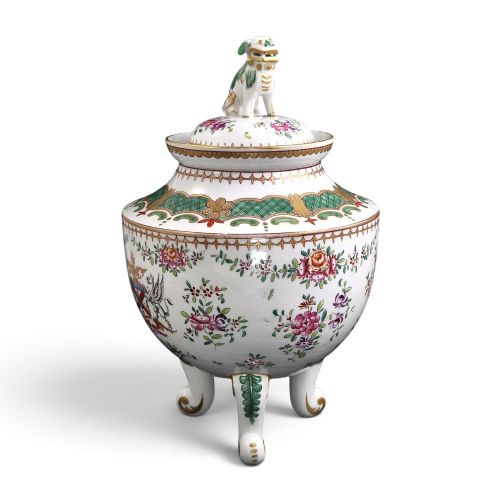
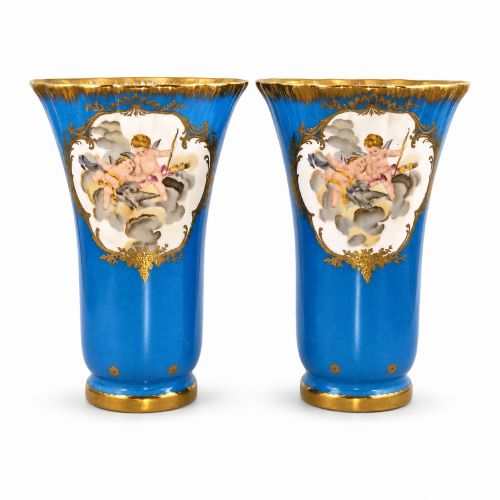
Paris porcelain urns encompass decorative vases, campana shapes, and garniture sets originating from French kilns during the nineteenth century. Buyers exploring this phrase will frequently encounter pairs decorated with hand-painted scenes, floral motifs, or exotic birds.
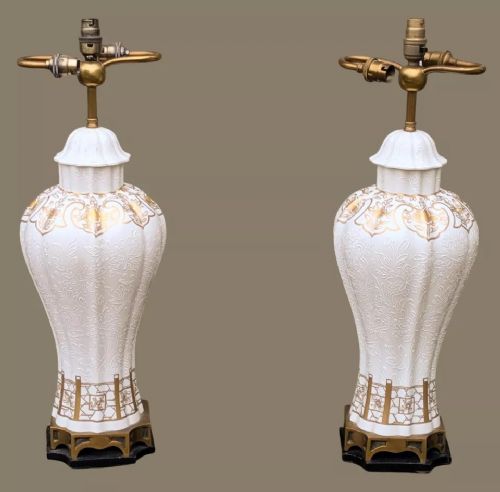
The selection ranges from early nineteenth-century Georgian and French Restoration period pieces to later nineteenth-century styles, including Empire and Rococo Revival forms. Table lamps adapted from these vessels also appear.
Makers such as Samson of Paris produced notable pieces, alongside workshops creating items in the style of Jacob Petit or referencing earlier Chelsea and Qianlong aesthetics.
Judging quality
Quality rests in the precision of the hand-painted brushwork, particularly in floral details, figures, and exotic birds. Crispness in the gilding and the application of enamel define the finer examples.
The integration of ormolu or gilt bronze mounts, alongside the structural balance of urns and garniture sets, separates standard production from exceptional work.
The selection includes table lamps, clock garnitures, campana shapes, and goblet vases spanning the Georgian to Victorian eras.
Samson of Paris·Jacob Petit·Vincenti of Paris
The Paris Porcelain Urns Glossary
- Garniture set
- A matched group of three or more vases or urns designed to be displayed together on a mantelpiece.
- Campana vase
- A bell-shaped vessel with a flaring rim and a pedestal foot, commonly produced in the nineteenth century.
- Bleu céleste
- A bright sky-blue porcelain ground colour popular in French decorative ceramics.
- Ormolu
- Gilded bronze mounts applied to furniture, clocks, and porcelain vessels during the period.
- Hard-paste porcelain
- A durable ceramic material fired at high temperatures, composed of kaolin and petuntse.
Paris Porcelain Urns: Frequently Asked Questions
What are Paris porcelain urns?
Paris porcelain urns are decorative ceramic vessels and garniture sets produced in French workshops during the nineteenth century. They often feature hand-painted floral designs, landscapes, and gilt accents.
These pieces were designed primarily for display on mantelpieces and tables within grand interiors. They reflect stylistic shifts from the Empire period through to Rococo Revival.
How do I identify Empire style pieces?
Empire style Paris porcelain urns display classical proportions, formal symmetry, and neoclassical motifs. They frequently incorporate gilt bronze mounts and restrained ornamentation.
Such vessels draw upon ancient Roman and Greek forms, distinguishing themselves from the more flamboyant curves of later nineteenth-century Rococo Revival designs.
Were these urns used for flowers?
Many Paris porcelain urns served purely as decorative objects rather than functional containers for water and stems. Their primary role was visual embellishment as part of a matched garniture set.
When paired with matching side vases or clock sets, they created a balanced decorative scheme for a drawing room or parlour mantelpiece.
How should I clean my porcelain vase?
Dust Paris porcelain urns gently with a soft, dry brush to avoid disturbing fragile enamel or gilt surfaces. Avoid harsh chemical cleaners and abrasive cloths.
If moisture is necessary, use a damp microfibre cloth only on unpainted ceramic areas, keeping water away from gilded details and ormolu mounts.