

Neoclassical Urn Vases
Neoclassical urn vases bring classical form and academic dignity into a room through enduring bronze, porcelain and marble.

Neoclassical Urn Vases
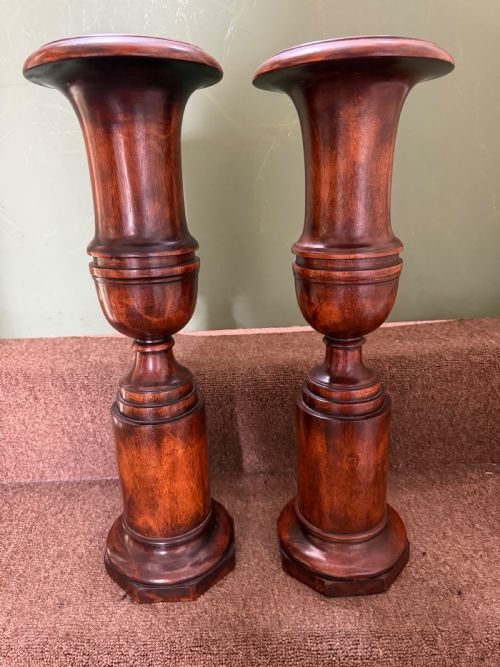
Neoclassical urn vases take inspiration from ancient Greek and Roman vessels, translating antique shapes like the campana and the krater into decorative objects for the home. You will frequently find pairs designed as mantel ornaments or architectural garnitures, often resting upon dedicated plinths or stepped bases.
The selections span the Georgian and Victorian eras, alongside the nineteenth century revival periods that embraced Grand Tour reductions and French Empire aesthetics. These range from porcelain jardinières and painted cabinet pieces to heavy cast iron garden vessels and patinated bronze reductions.
Makers and manufacturers represented include established porcelain works such as Flight & Barr, Royal Worcester, and Sevres, alongside specialised workshops producing Grand Tour bronzes. The form serves as both a classical statement piece and a functional vessel for display.
How they were made
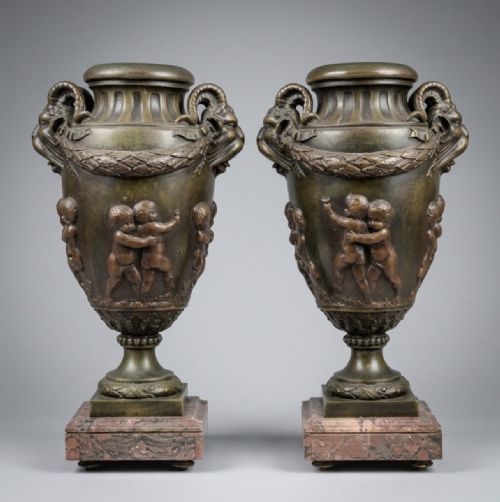
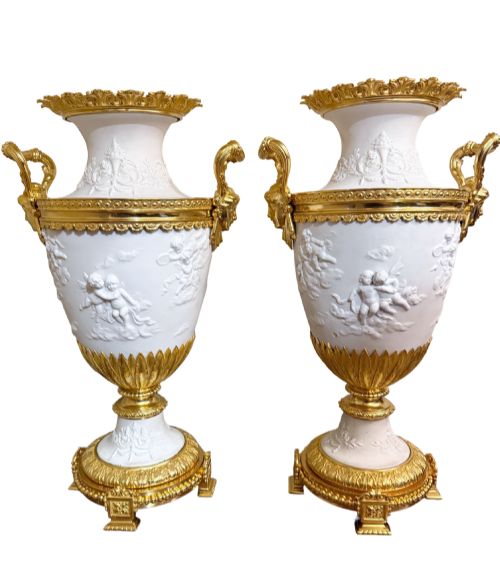
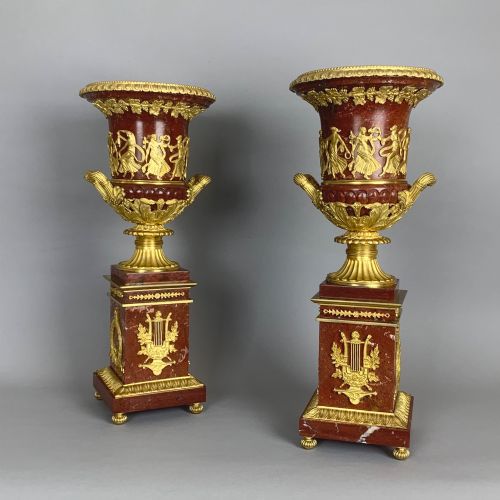
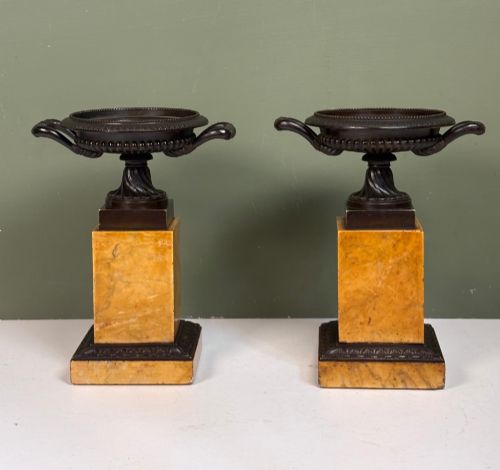
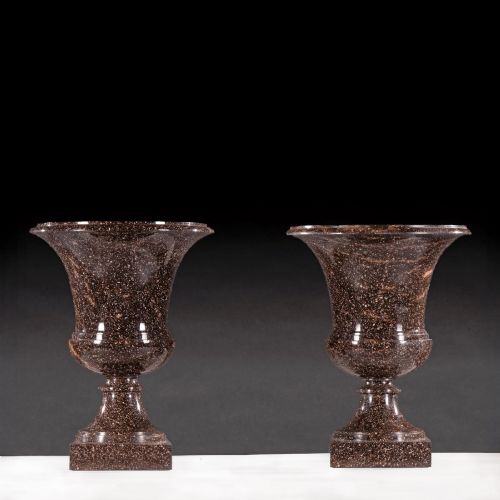
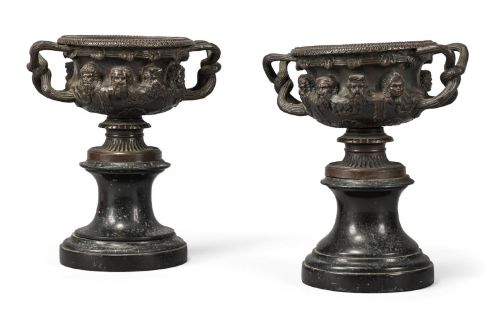
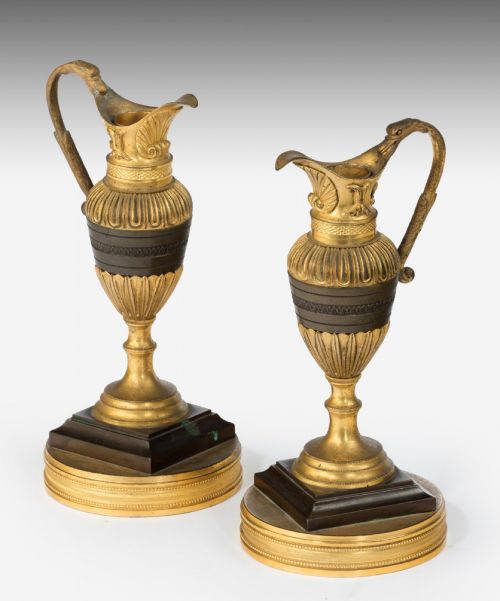
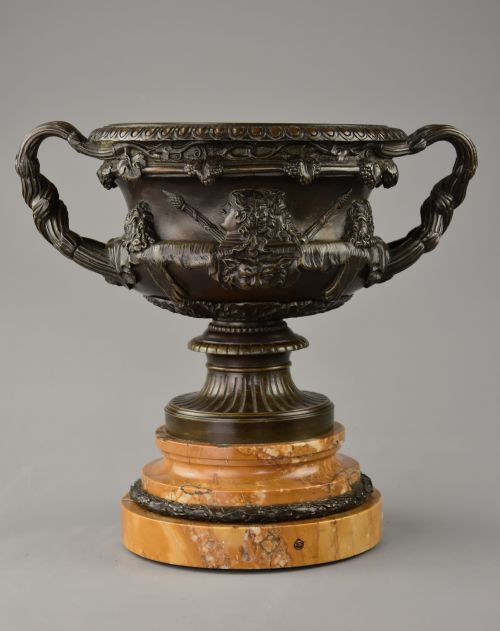
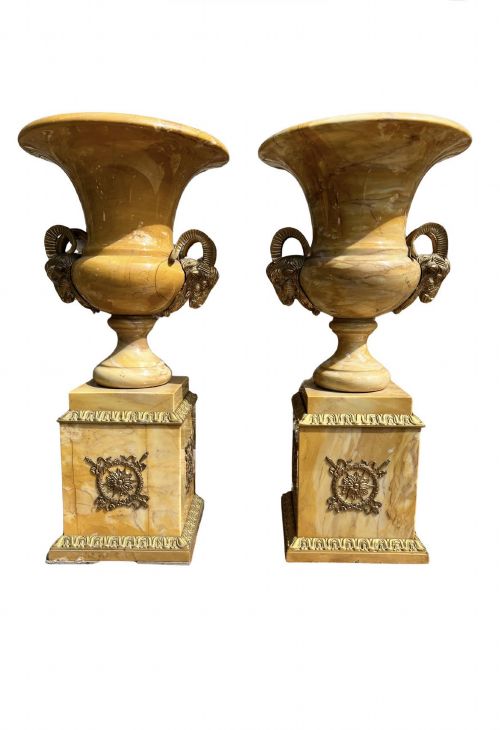
Foundries cast bronze, ormolu and spelter into intricate classical profiles, often combining patinated metals with gilt mounts, brass trim and hand-chased acanthus foliage. These metal components frequently anchor upon bases carved from Sienna marble, white onyx, or porphyry.
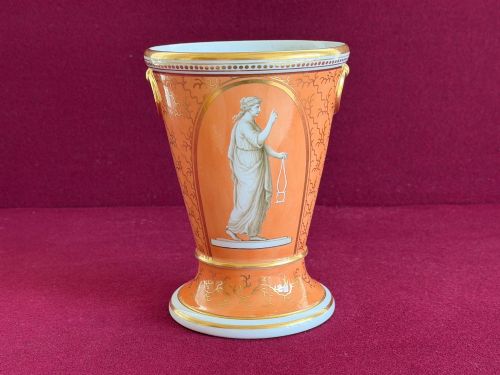
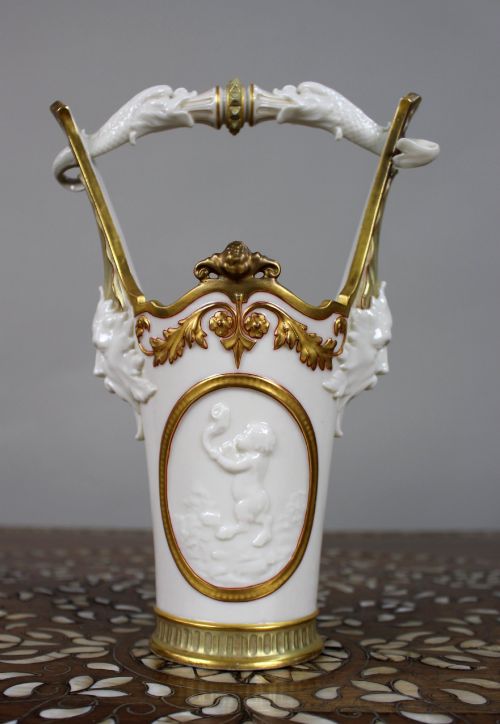
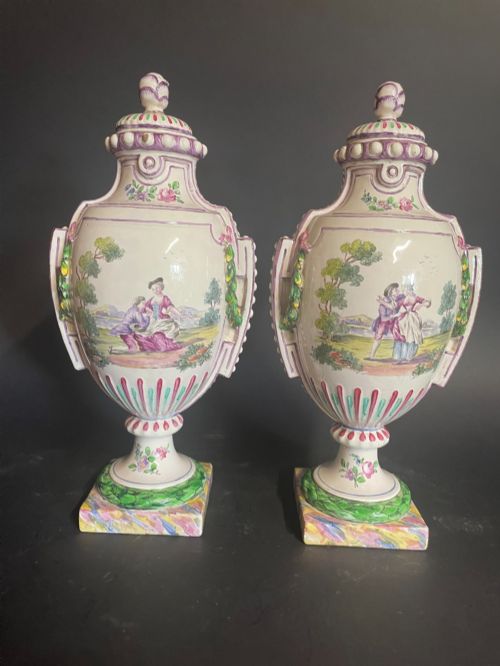
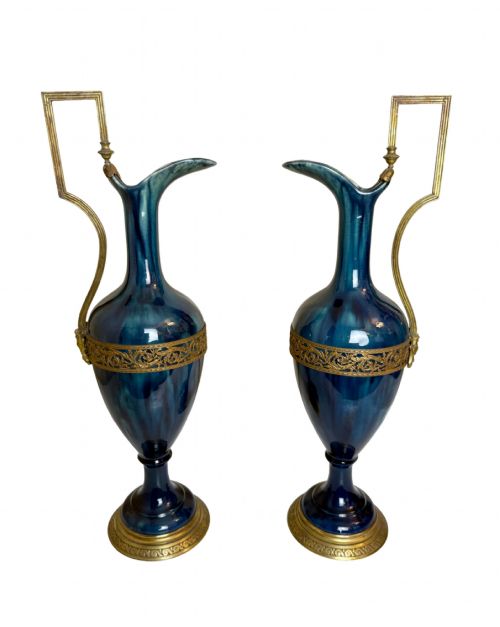
Ceramic examples utilise hard-paste and soft-paste porcelain, earthenware, and faience, decorated with hand-painted scenes, cobalt grounds, and white bas-reliefs in jasperware. Artisans applied gold leaf and enamel highlights by hand before firing or mounting the pieces into metal rims and handles.
Miniature chestnut urns prove that even eighteenth-century dinner tables required decorative classical architecture for their nuts.
What varies in quality
The refinement of the casting and chiselling separates standard decorative foundry work from superior bronze and ormolu reductions. Crisp detail in classical friezes, such as acanthus leaves and classical figures, indicates a higher tier of craftsmanship.
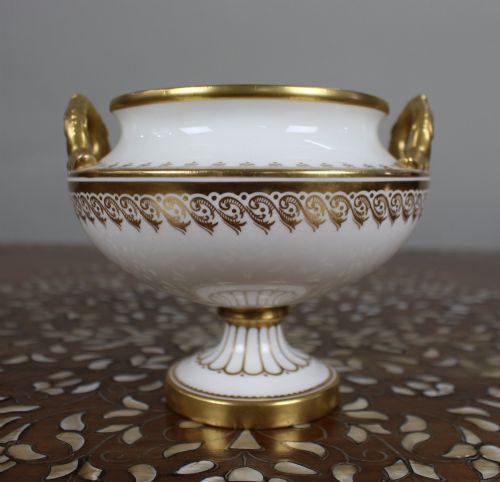
In porcelain and pottery, quality rests upon the clarity of the hand-painted scenes, the depth of the glaze, and the precision of the gilt work. The integration between ceramic bodies and their metal mounts dictates the structural harmony of the piece.
Flight & Barr Worcester·Royal Worcester·Helena Wolfsohn Dresden·Royal Vienna·Wedgwood·Selim Bright
The Neoclassical Urn Vases Glossary
- Campana urn
- An inverted bell-shaped vessel with a flaring rim and a footed base, heavily utilised in classical garden and mantel decoration. This shape forms the basis for many nineteenth century bronze and iron examples.
- Grand Tour
- The nineteenth century tradition where affluent travellers collected classical antiquities and bronze reductions of famous sculptures like the Warwick Vase. These decorative objects brought Italian classical art back to British homes.
- Ormolu
- Finely ground high-carat gold applied to a bronze base using a mercury amalgamation technique, or cast brass finished to a similar bright golden appearance. It provides ornamental mounts for marble and porcelain bodies.
- Jardiniere
- A decorative pot or ornamental stand designed to hold plants or floral arrangements, frequently rendered in porcelain, terracotta or faience within neoclassical designs.
- Jasperware
- A type of fine stoneware developed by Josiah Wedgwood, characterised by a matte coloured body and contrasting white ceramic bas-relief figures in classical styles.
Neoclassical Urn Vases: Frequently Asked Questions
What are neoclassical urn vases?
Neoclassical urn vases are decorative vessels modelled after ancient Greek and Roman forms, reinterpreted during the eighteenth and nineteenth centuries.
They draw on classical architecture and mythology, employing materials like bronze, marble and porcelain to serve as formal interior ornaments.
How were antique urns used?
Historically, these urns functioned primarily as decorative garnitures on mantelpieces, sideboards, and architectural pedestals. Larger iron and terracotta versions were placed in gardens or conservatories as focal points.
Smaller examples, such as chestnut urns or cabinet vases, showcased fine porcelain painting and metalwork craftsmanship.
How do you date nineteenth century bronzes?
Dating relies on the quality of the patination, the crispness of the chasing, and the specific style of the foundry work. Grand Tour bronzes from the mid to late nineteenth century often reflect exact proportions of famous excavated antiquities.
The integration of the metal to marble bases and the wear patterns on the underside offer further clues to their age.
How should I display them?
Pair urn vases symmetrically on matching mantelpieces, side tables, or architectural consoles to maintain their classical balance. Ensure heavy marble and bronze pieces rest on stable, weight-bearing furniture.
Keep them away from direct sunlight if they feature delicate hand-painted porcelain or gilt decoration.