


Empire Style Porcelain
Empire style porcelain brings heavy neoclassical grandeur to interiors through dramatic vases, elaborate clocks, and delicate cabinet cups.
Empire Style Porcelain
Empire style porcelain comprises decorative objects and tableware produced during the nineteenth century, drawing heavily on French neoclassical design motifs. Pieces bearing this aesthetic frequently manifest as vases, urns, mantel clocks, and cabinet cups and saucers.
The objects seen on this page span the nineteenth century, including specific periods such as the Georgian era, Victorian times, and decades like 1800, 1850, 1870, and 1880. Buyers encounter works originating from France, Germany, and Austria, reflecting broader European manufacturing centres.
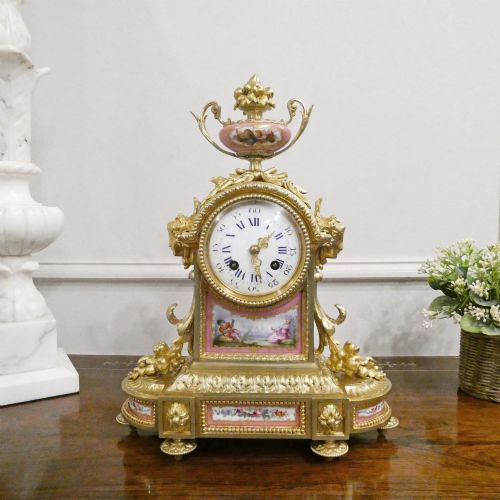
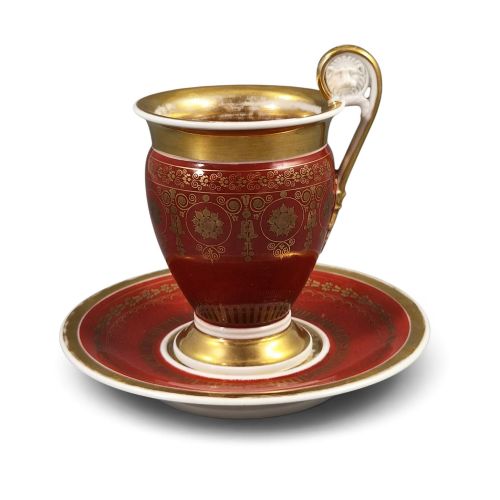
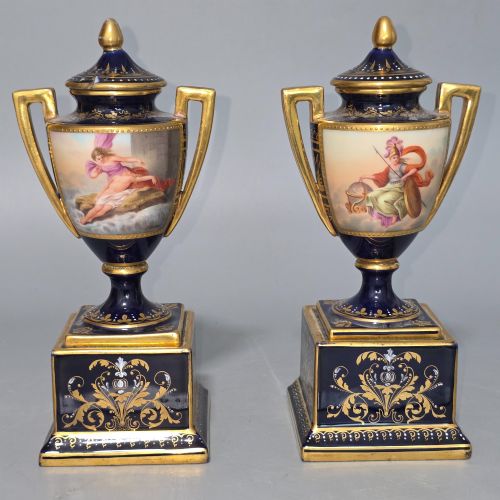
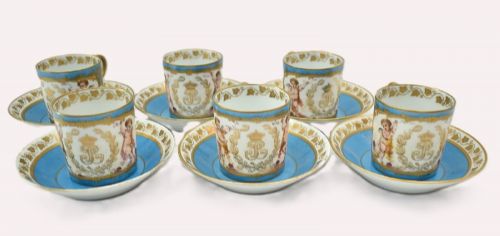
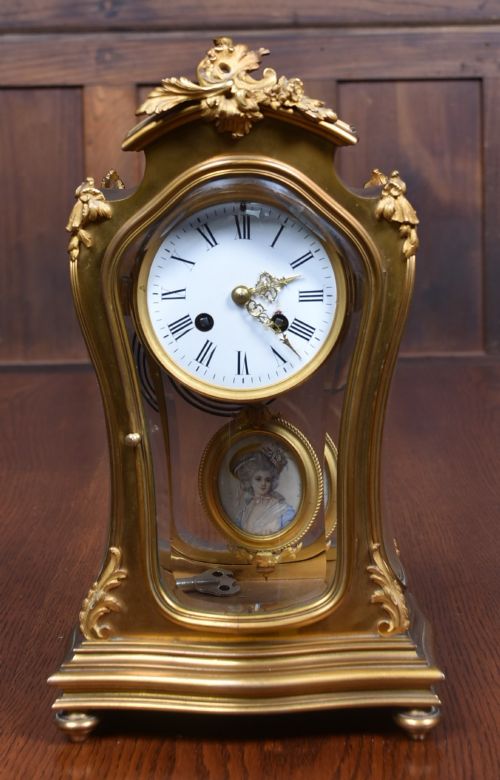
Vases and urns dominate the selection, alongside functional timepieces mounted in gilt bronze and ormolu. Cabinet cups and saucers also appear, often decorated with hand-painted scenes or lion mask handles.
Materials and methods
Makers utilised fine porcelain bodies combined with metal mounts in gilt bronze, ormolu, and brass. Gold leaf and enamel provided surface enrichment, while glass occasionally accompanied these mixed-media decorative objects.
Surface decoration relied heavily on hand-painted scenes and gilding applied directly to the porcelain. Metal components were cast, chased, and gilded to mount the porcelain bodies of clocks, urns, and cabinets.
Napoleon Bonaparte retains his presence here, commemorated centuries later through lidded porcelain vessels.
Judging the range
Quality separates standard production wares from exhibition pieces through the precision of the hand-painted scenes and the crispness of the gilt bronze or ormolu mounts. Finer examples display meticulous brushwork in figurative or landscape panels.
The weight and detail of the metalwork dictate the upper tier of the range. Castings that exhibit deep chasing and secure integration with the porcelain body indicate superior craftsmanship.
Japy Freres·F. Koller·Rodier·Vincenti of Paris·Meissen·KPM Berlin
The Empire Style Porcelain Glossary
- Ormolu
- Gilt bronze mounted on decorative objects, created by applying a mercury-gilding process to cast bronze. This technique produced a rich golden finish seen on nineteenth-century clock mounts and vase bases.
- Medici vase
- A bell-shaped vessel form originating in antiquity, featuring a distinct foot and handles. Nineteenth-century makers reproduced this classical silhouette in porcelain.
- Garniture set
- A matched group of three or more decorative vessels, such as vases and urns, designed to display together on a mantelpiece or cabinet top.
- Demitatasse cup
- A small cup used for serving strong black coffee, frequently produced alongside saucers in fine European porcelain during the early nineteenth century.
- Caryatid
- A sculpted female figure serving as an architectural support, sometimes incorporated into the design of candlesticks and clock shafts within this category.
Empire Style Porcelain: Frequently Asked Questions
How do I identify empire style porcelain?
Look for strong neoclassical forms such as urns and amphorae, combined with rich gilding and classical motifs.
French manufacture and nineteenth-century dates further define this particular visual vocabulary.
Where were these porcelain pieces made?
Manufacturing centres centred around major European kilns, notably in France, Germany, and Austria.
Parisian workshops, Sevres, Meissen, and Berlin produced the bulk of the surviving pieces.
How were mantel clocks and porcelain combined?
Clockmakers housed mechanical movements inside cases constructed from porcelain bodies and gilt bronze mounts.
These pieces functioned as both timekeepers and centrepiece ornaments for nineteenth-century rooms.
What is the difference between old paris and sevres porcelain?
Old Paris refers to the numerous independent workshops operating across Paris during the nineteenth century without royal patronage.
Sevres denotes the output of the famed French state-directed porcelain manufactory.