



Antique Mantelpiece Garniture
An antique mantelpiece garniture is a matched set of decorative objects designed to balance a fireplace, offering classical symmetry and period presence.
Understanding mantelpiece garniture
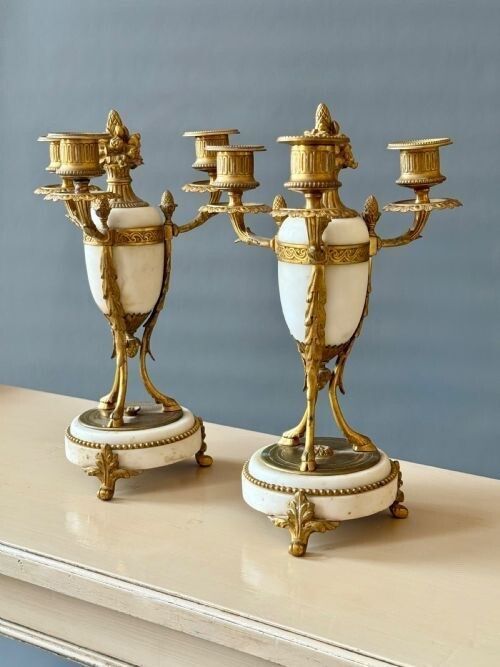
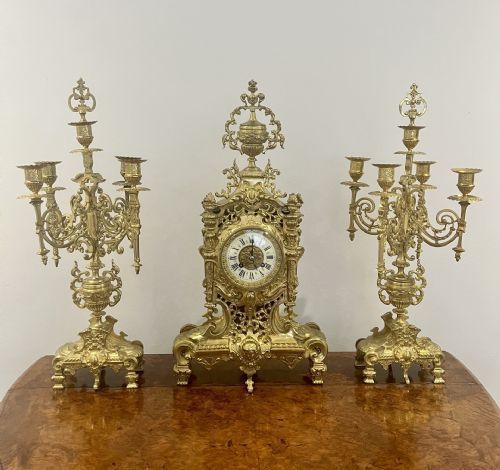
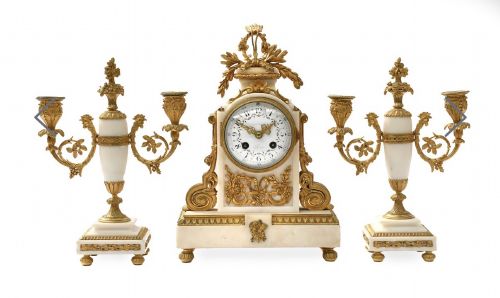
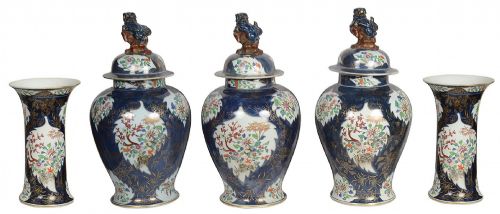
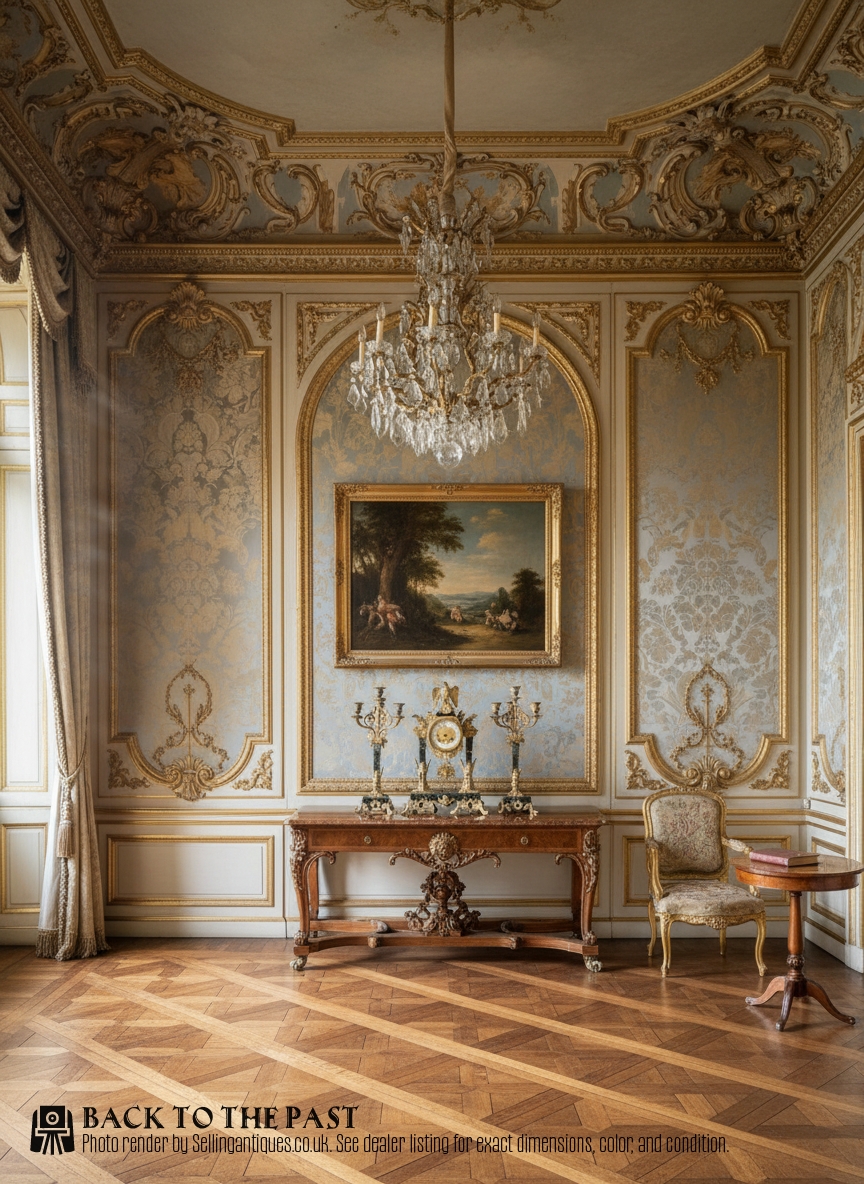
An antique mantelpiece garniture brings together matched decorative objects, most commonly a central clock flanked by matching urns, vases, or candelabra. These sets create a deliberate sense of balance and focal weight across a fireplace shelf, establishing a formal scheme within a room.
The configurations appearing here span the nineteenth century, including specific dates such as eighteen sixty and eighteen ninety alongside broader nineteenth-century examples. Forms range from large lidded vases and ornate clock sets to candelabra and flat back urns.
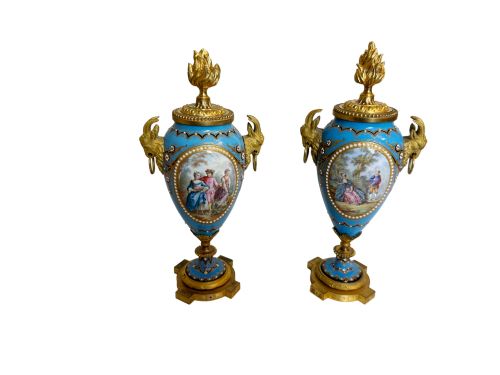
Design influences draw heavily on French Empire, French Rococo Revival, French Neoclassical, and Neoclassical styles, as well as Vienna and Sevres aesthetic traditions. Buyers meet these variations through distinct groupings of three pieces designed to sit together as a unified display.
Materials and construction
The construction of these pieces relies on a rich combination of hardstones and cast metals, featuring marble, sienna marble, and porphyry alongside gilt bronze, ormolu, and brass. Enamel and porcelain provide the primary surfaces for painted decoration and colour.
Makers utilised gold leafing to highlight metallic mounts, creating contrast against polished stone bodies and glossy glazed ceramic surfaces. Complex casting techniques allowed for intricate neoclassical and rococo mounts fixed to heavy stone and porcelain bases.
Retail Price Guide 2026
Typical UK retail prices for mantelpiece garniture, calculated from the Sellingantiques database of over a million retail prices indexed since 2003. This retail price guide relies exclusively on Sellingantiques data; no external sources or auction records are used, so the figures do not describe the wider market.
Flat back urns were cleverly engineered to stand flush against a mirror without scratching the silvering.
Distinctions in quality
Quality rests in the harmony of the set and the crispness of the modelled detail across the metal mounts. Finer examples display deeply chased ormolu and carefully selected marble or porphyry with rich natural veining.
The integrity of the ensemble determines the standing of a garniture, where matching proportions, unified gilding, and consistent stylistic execution across all components elevate the group.
The Antique Mantelpiece Garniture Glossary
- Garniture
- A set of matched decorative objects designed to be displayed together on a mantelpiece or sideboard. They typically consist of three pieces, such as a central clock with two flanking urns or candelabra.
- Ormolu
- Finely ground high-carat gold applied to a bronze base using a mercury amalgamation technique, common in French metalwork. This process produces a rich, warm metallic finish that resists tarnishing.
- Porphyry
- An igneous rock with large crystals embedded in a fine-grained groundmass, often purple or red, prized for decorative carving. Its extreme hardness demands specialist stonework.
- Sienna Marble
- A yellow-hued decorative marble featuring dark purple or grey veining, quarried in Italy. It provides a striking, warm ground for neoclassical clock garnitures.
- Candelabra
- Branched candlesticks designed to hold multiple tapers, frequently included as part of a balanced mantel set. Their height helps frame a central mirror or clock.
Frequently Asked Questions
What pieces make up a garniture?
A standard garniture comprises a central decorative object, such as a clock or large urn, accompanied by two matching side pieces like vases or candelabra.
These sets were conceived to create visual symmetry on a mantelpiece.
How do I date a garniture?
Dating relies on examining the materials, stylistic motifs, and manufacturing techniques, such as nineteenth-century ormolu casting styles.
Comparing the decorative vocabulary to known French and Viennese periods helps narrow the timeframe.
Where should I display a set?
These sets find their traditional home on a fireplace mantelpiece where the balanced arrangement can anchor the room's proportions.
They also sit effectively on large sideboards or pier tables where the full set remains visible.
What styles are most common?
Nineteenth-century pieces frequently draw on Neoclassical, French Empire, and French Rococo Revival aesthetic traditions.
These styles incorporate classical urn forms, gilt bronze mounts, and painted porcelain panels.