

French Neoclassical Clock
A french neoclassical clock brings classical architecture and disciplined symmetry into a room through polished stone and gilded metal.
Understanding the french neoclassical clock
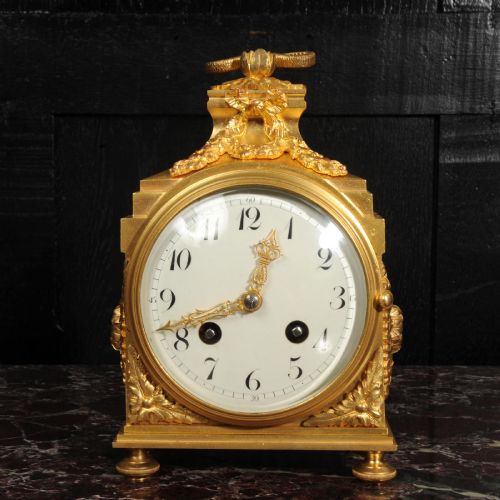
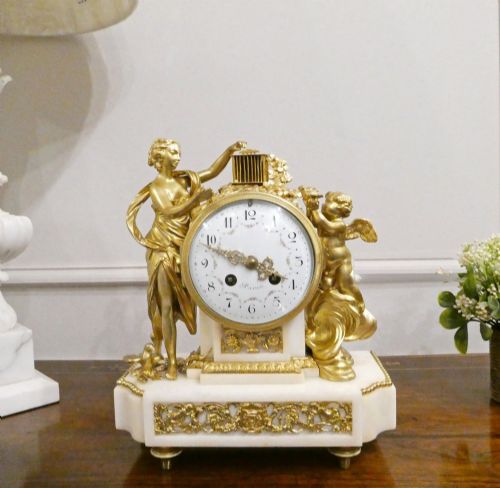
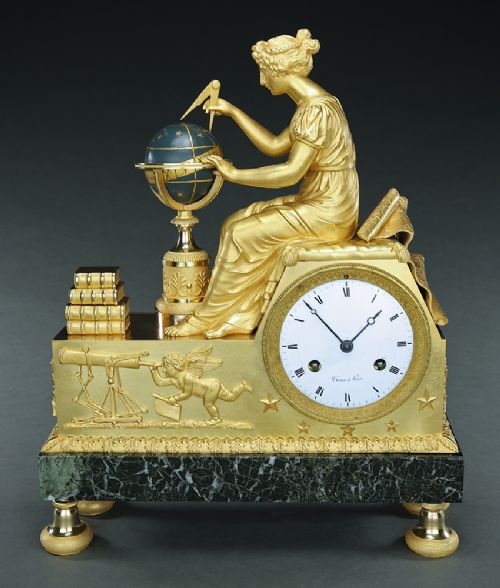
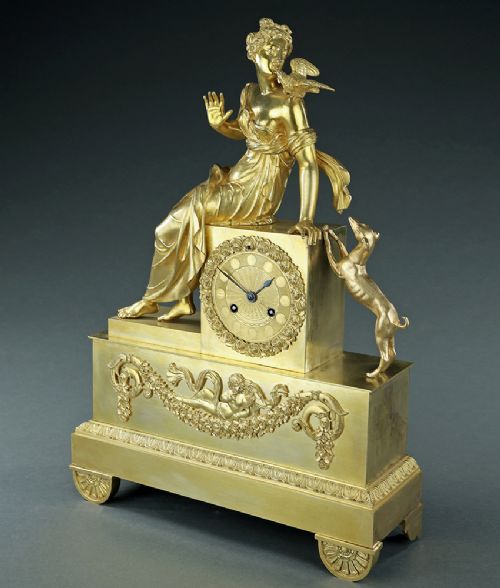
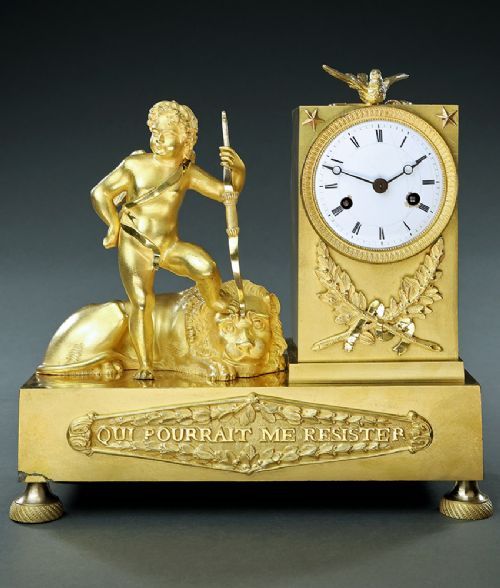
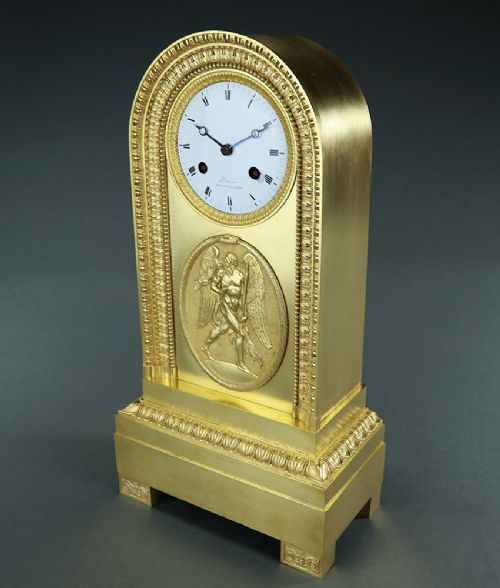
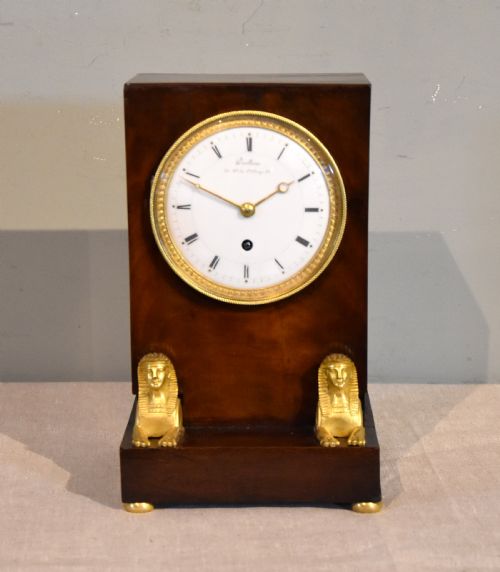
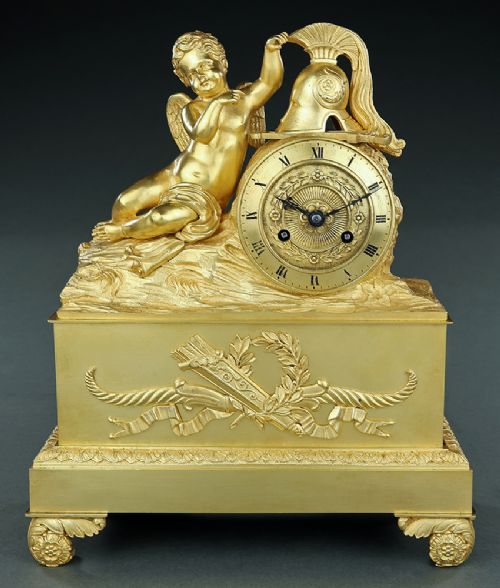
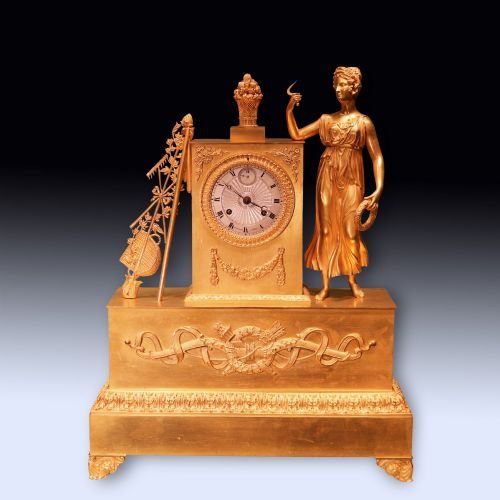
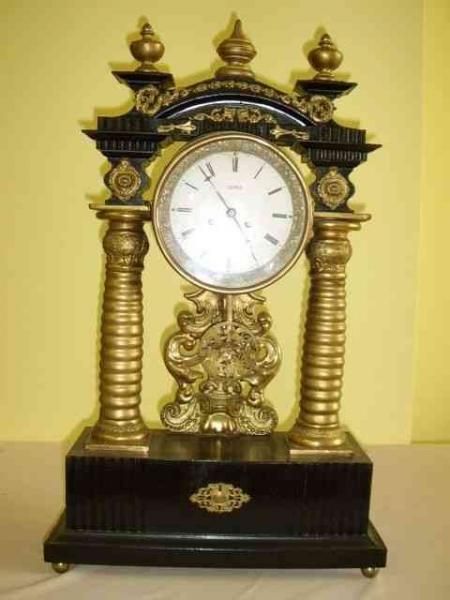
A french neoclassical clock draws directly upon classical antiquity, displaying architectural proportions, urn shapes, and symmetrical facades. These mantel clocks emerge from both the eighteenth and nineteenth centuries, spanning distinct periods such as Louis XVI, Directoire, and French Empire.
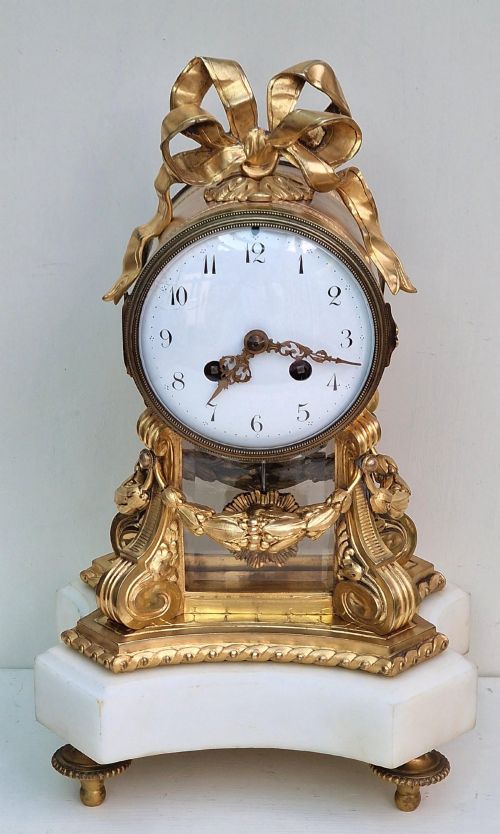
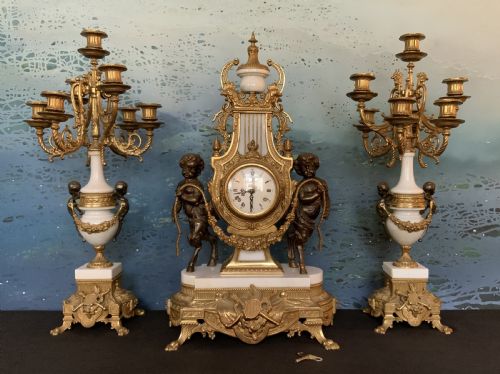
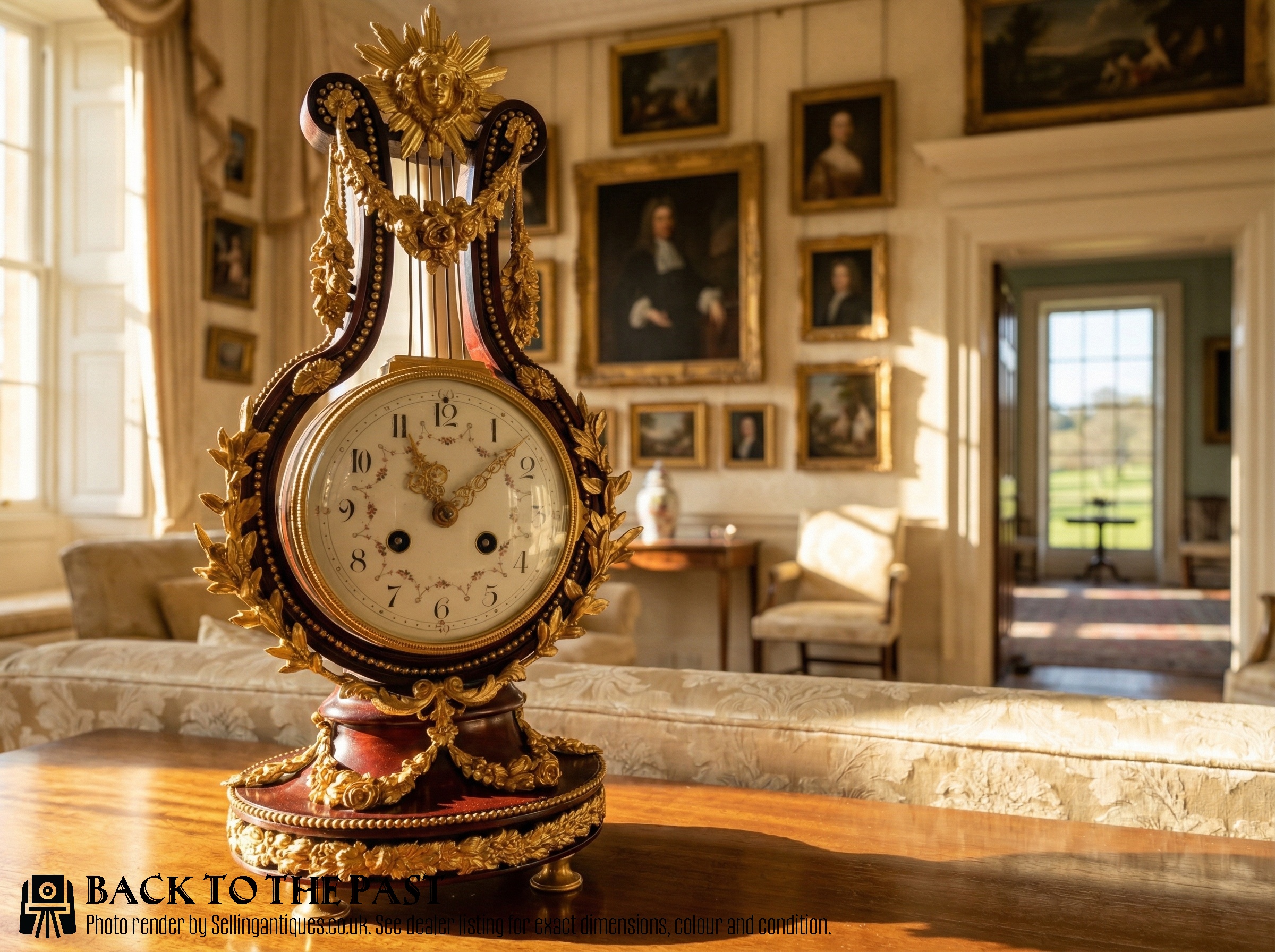
Most pieces encountered on this page take the form of mantel clocks housed in marble cases, often accompanied by matching garnitures. Variations include drum heads, lyre configurations, urn forms, and four-glass architectural housings.
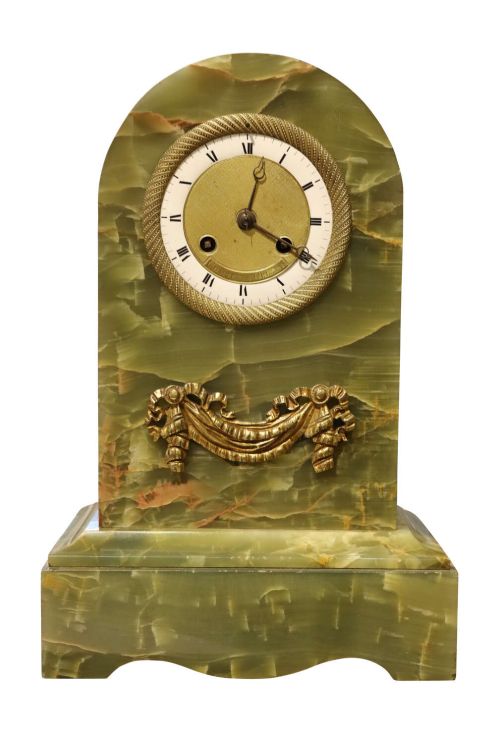
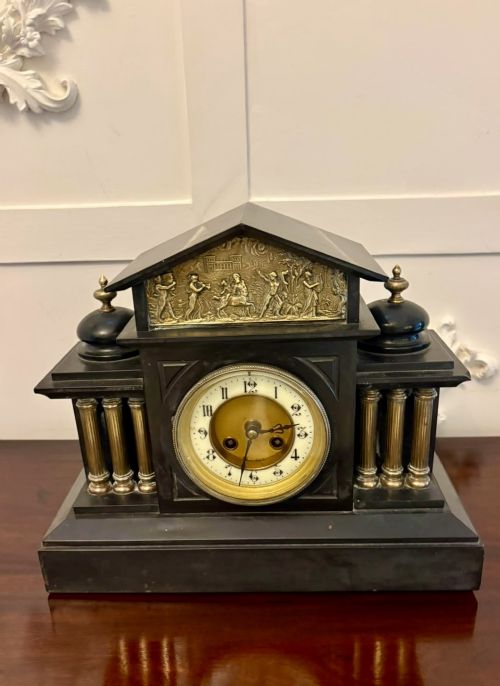
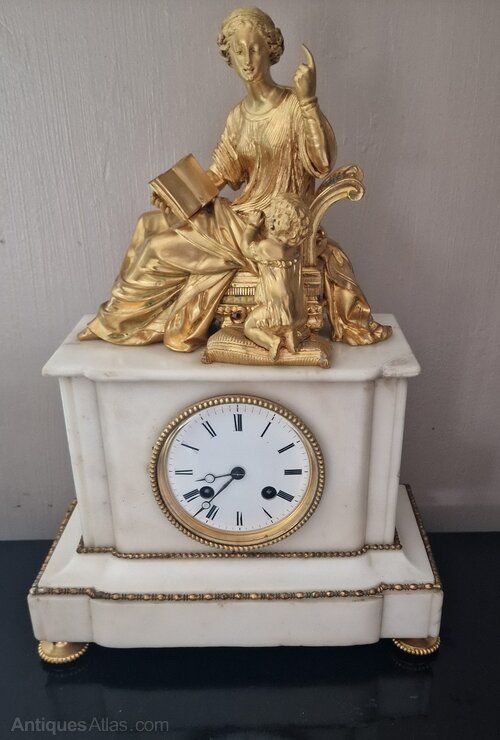
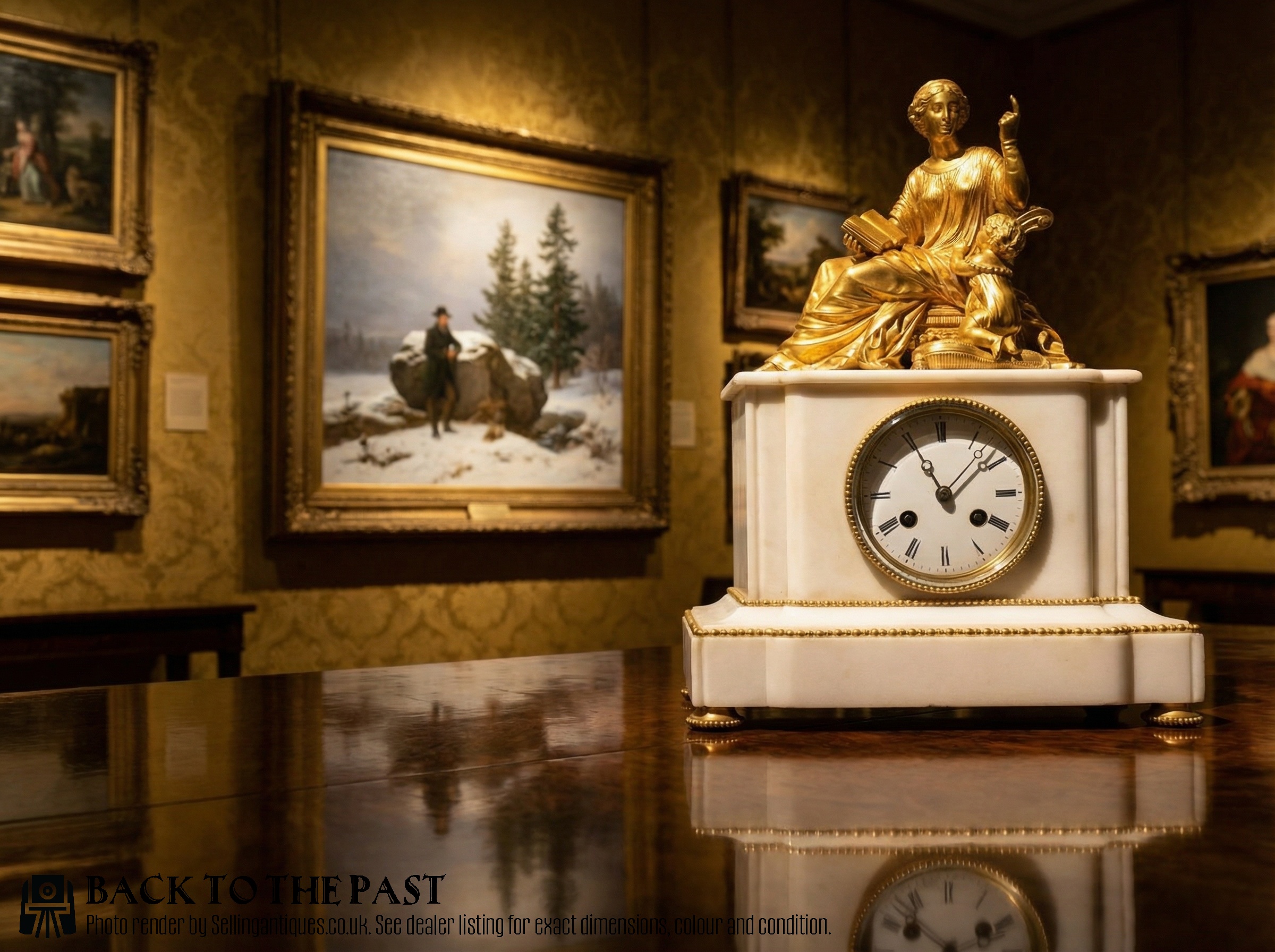
The aesthetic looks back to ancient Greece and Rome through balanced designs, crisp mouldings, and restrained ornamentation. Makers housed these movements in bodies of white marble, sienna marble, grey marble, black slate, and alabaster.
Materials and construction
Construction relies upon heavy natural stones including white, sienna, and grey marble, paired with cast brass and bronze components. Ormolu and gilt finishes apply golden radiance to metal mounts, while enamel dials provide crisp white backdrops for black numerals.
Movements sit within substantial stone or metal housings, sometimes protected behind glass panels that expose the swinging pendulum and mechanical gears. Structural elements combine turned stone urns, classical columns, and finely chased gilt bronze bezels.
Retail Price Guide 2026
Typical UK retail prices for french neoclassical clock, calculated from the Sellingantiques database of over a million retail prices indexed since 2003. This retail price guide relies exclusively on Sellingantiques data; no external sources or auction records are used, so the figures do not describe the wider market.
Listings span the eighteenth and nineteenth centuries, incorporating specific dates from eighteen-fifty to eighteen-sixty alongside broader period designations.
Evaluating quality and execution
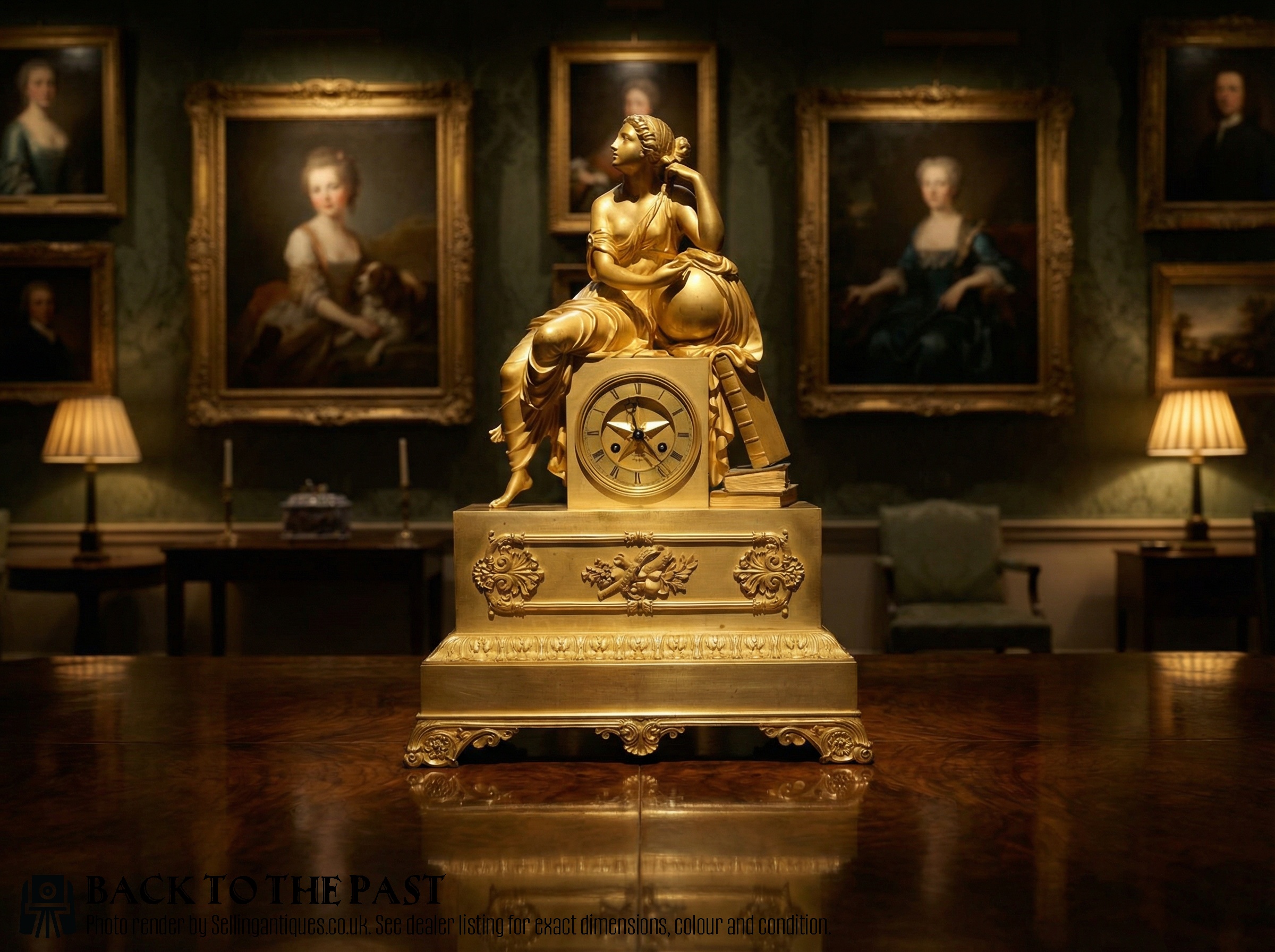
Quality reveals itself through the crispness of the bronze chasing and the depth of the gilding applied to mounts. Finer examples display sharp architectural detailing on the marble or slate casework rather than soft, rounded edges.
The reputation of the maker and the integration of the movement into the decorative case dictate the standing of a piece. Superior clocks feature signed movements by established Paris makers and fully integrated garniture sets that complement the central timepiece.
Louis Goret·Sacre·Deniere Et Fils·Maple And Co·Japy Freres
The French Neoclassical Clock Glossary
- Ormolu
- Gilt bronze created by applying a mercury and gold amalgam to a bronze object before firing. This historic technique produces a distinctive soft golden lustre.
- Garniture
- A set of decorative matching objects, usually a clock flanked by matching vases or candelabra. These sets create a balanced arrangement on a mantelpiece.
- Lyre clock
- A timepiece shaped in the distinctive outline of a classical lyre stringed musical instrument. The design often incorporates gilt bronze frames and exposed pendulums.
- Directoire
- A transitional stylistic period between Louis XVI and the French Empire, marked by pared-down classical severity. The design language favours clean architectural lines over excessive ornament.
- Dial
- The face of the clock where the hours and minutes are displayed. Enamel dials provide a smooth, durable white surface with painted numerals.
Frequently Asked Questions
What is a french neoclassical clock?
A french neoclassical clock is a mantel timepiece built during the eighteenth or nineteenth century in styles reflecting ancient Greek and Roman architecture. These pieces utilise natural stone cases and gilt metal mounts.
They serve as decorative and functional centrepieces, combining precision clockwork with classical sculptural forms.
How do I identify a Louis XVI clock?
Louis XVI pieces display straight architectural lines, symmetrical compositions, and motifs drawn from classical antiquity. You will frequently see white marble columns, urns, and refined gilt bronze mountings.
The overall geometry contrasts sharply with the earlier curved exuberance of the Rococo period.
What materials are used in these clocks?
Makers constructed these timepieces from natural stones including white marble, sienna marble, grey marble, black slate, and alabaster. These stone bodies are embellished with gilt bronze, ormolu, brass, and glass.
Dials are typically constructed from white enamel featuring dark painted numerals.
Where should I place a clock garniture?
A clock garniture is designed to sit centrally on a mantelpiece, sideboard, or pier table, flanked by its matching side ornaments. This arrangement creates a balanced classical display.
Ensure the surface is level and sturdy enough to support the substantial weight of marble and bronze.