




Three Piece Clock Set
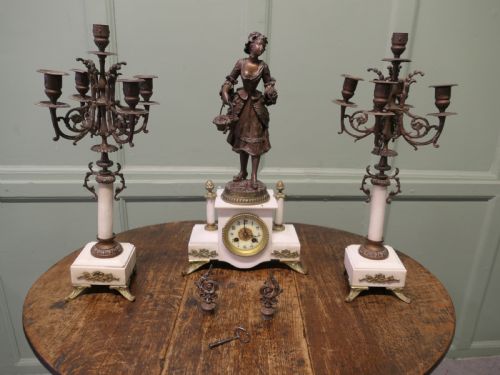
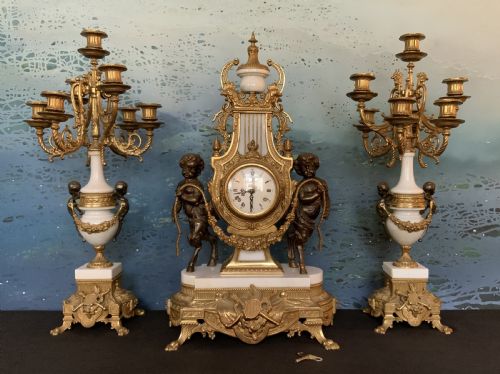
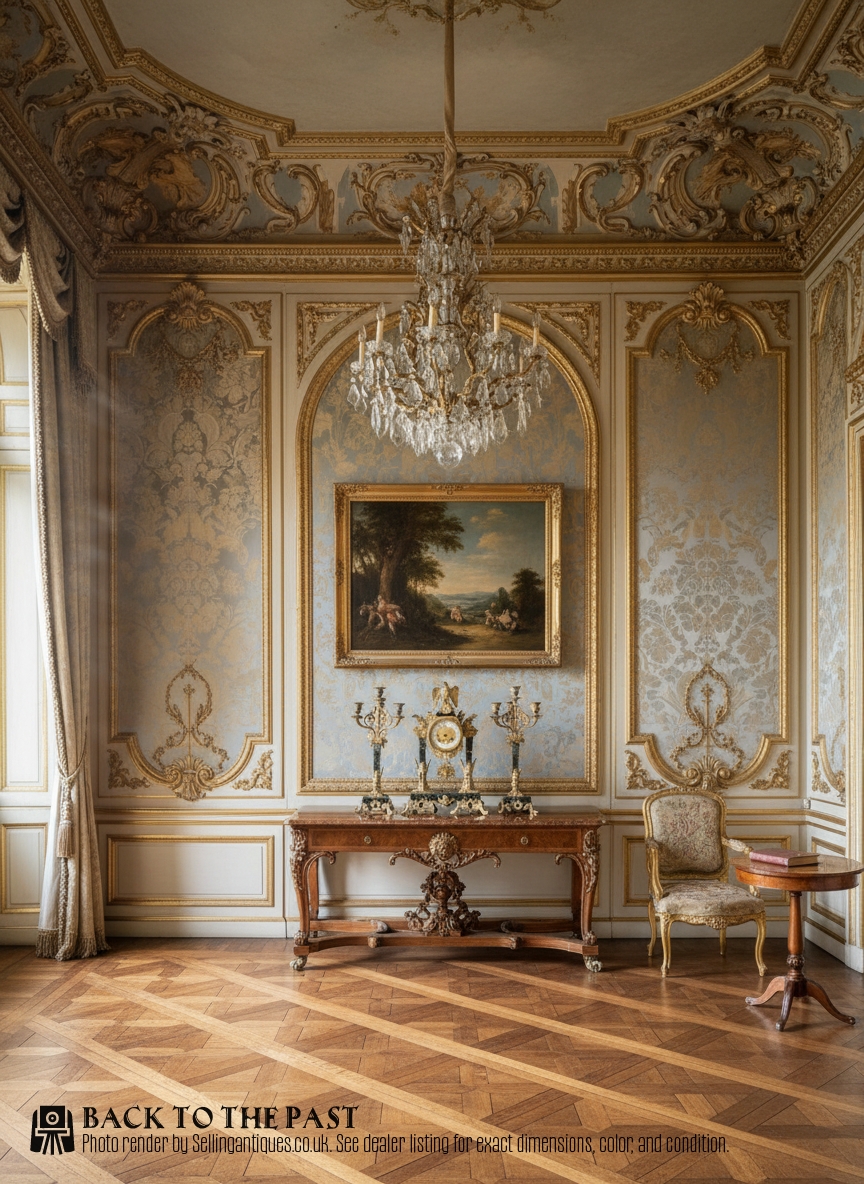
A three piece clock set brings harmony to a mantelpiece through a central clock flanked by matching candelabra or urns.
Understanding a three piece clock set
A three piece clock set comprises a mantel clock accompanied by a pair of matching side pieces such as candelabra, urns, or garnitures. These arrangements stem predominantly from French workshops spanning the nineteenth century, alongside later Art Deco and mid-century examples.
The composition rests on symmetry, where the central timepiece dictates the visual theme and the flanking objects complete the decorative scheme. Buyers frequently encounter sets featuring marble, slate, bronze, and gilt metals arranged in distinct historical revivals.
Nineteenth-century manifestations lean towards ornate Victorian and French Empire styling, whereas twentieth-century iterations adopt cleaner Art Deco geometries and materials like pink marble or brass. Every formation serves to anchor a room with unified metalwork and stonework.
Materials and construction
Maker assemblies combine heavy structural elements of marble, slate, alabaster, and porcelain with cast metal components including bronze, brass, ormolu, and spelter. Artisans mount enamel dials within the central clock housings and drive movements via eight-day mechanisms.
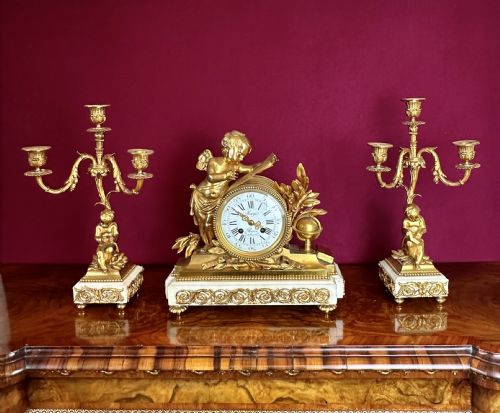
Surface treatments involve fire gilding, patination of bronze, and precision mounting of cast metal ormolu onto polished stone bases. Side pieces mirror the exact motifs, feet, and material combinations of the main clock body to ensure complete uniformity.
Retail Price Guide 2026
Typical UK retail prices for three piece clock set, calculated from the Sellingantiques database of over a million retail prices indexed since 2003. This retail price guide relies exclusively on Sellingantiques data; no external sources or auction records are used, so the figures do not describe the wider market.
Cupid casts a watchful eye over early alabaster dials, reminding every observer that time passes but romance remains stubbornly fixed in stone.
Distinctions in quality
Quality rests upon the weight and purity of the materials, separating dense natural marbles and hand-chased bronze from lighter spelter and cast metal alternatives. Finer sets display crisp casting detail in the ormolu mounts and hand-painted porcelain panels.
The integration of signed movements by established Paris makers elevates a set above standard anonymous production. Superior pieces maintain exact material matching across all three components without compromise in the stone selection or gilt preservation.
Lemerle Charpentier and Cie Paris·J Pratt Paris
The Three Piece Clock Set Glossary
- Garniture
- A set of matching decorative objects designed to be displayed together on a mantelpiece. This term encompasses the side pieces that accompany the central clock.
- Ormolu
- Gilded bronze created by applying finely ground gold-mercury amalgam to a bronze base. This technique produces a rich metallic lustre seen on French clock mounts.
- Spelter
- An alloy of zinc and lead used as a cheaper substitute for bronze. It appears frequently in later or decorative clock sets.
- Alabaster
- A fine-grained translucent stone used for sculptural clock bodies. It provides a soft white surface often carved with classical figures.
Frequently Asked Questions
How do I style a three piece clock set on a mantel?
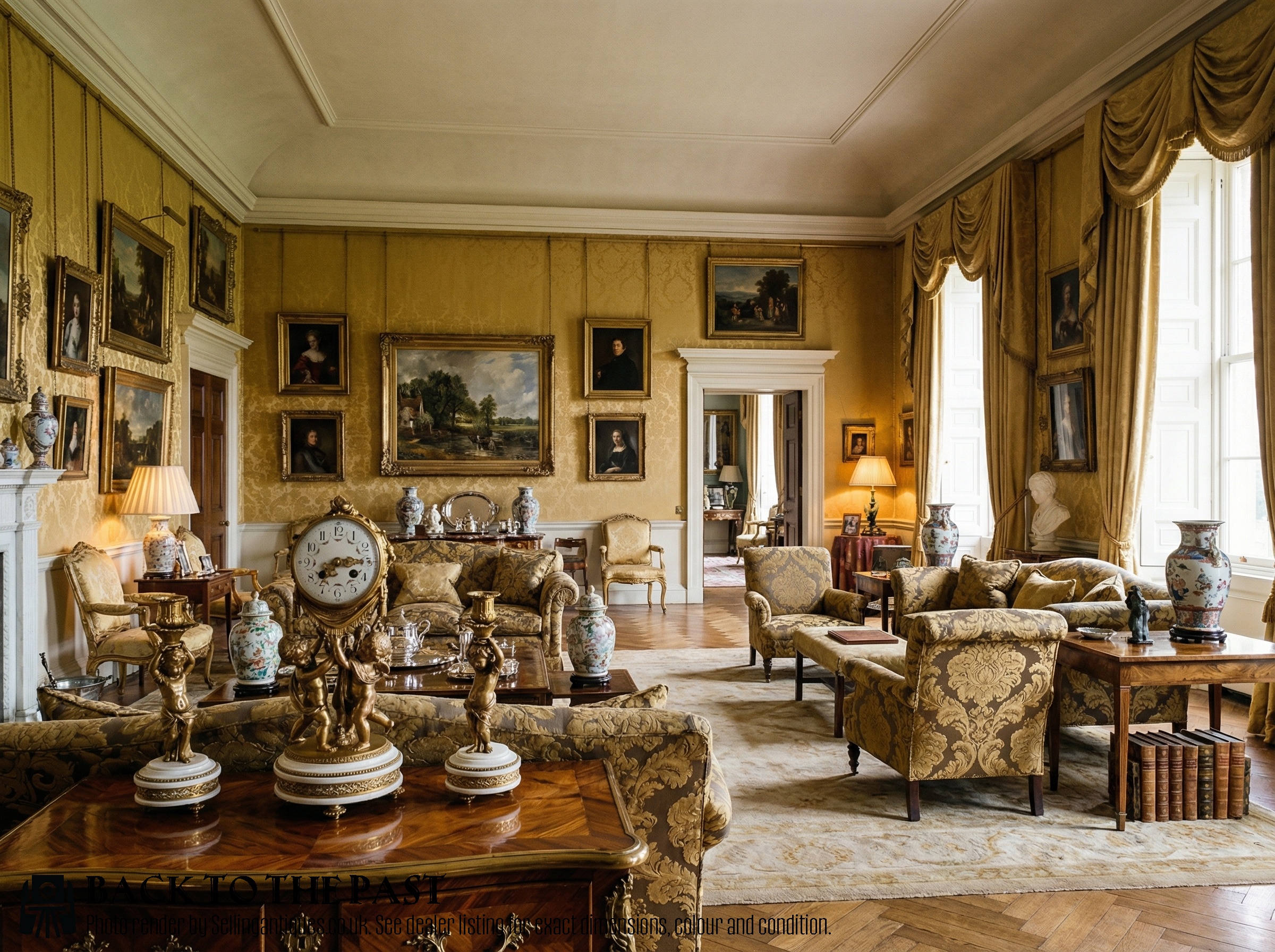
Place the central clock in the exact middle of the mantelpiece to create a focal point. Position the matching candelabra or side urns symmetrically on either side to complete the balanced arrangement.
Ensure adequate clearance around each piece so the individual materials and gilt details remain visible. The matching side objects echo the height and form of the central clock to unify the fireplace display.
What periods do these clock sets come from?
The available pieces originate primarily from the nineteenth century, including Victorian and French Empire periods. Later examples extend into the Art Deco era and mid-century modern production.
Stylistic cues such as heavy marble columns indicate earlier nineteenth-century manufacture, while geometric lines point towards twentieth-century modernism. Each period utilises distinct material combinations and decorative motifs.
How do marble and slate sets differ?
Marble sets utilise stones like Siena, white, or pink varieties paired with gilt bronze and ormolu mounts. Slate sets present a dark, uniform stone body often accented with incised details or contrasting marble inlays.
Both materials provide the heavy structural foundation required for large mantel clocks and flanking garnitures. Slate versions lean toward architectural severity, whereas marble sets emphasise natural colour variation.
What are side garnitures typically used for?
Side garnitures function purely as decorative ornaments designed to match the central clock. They often take the form of candelabra, urns, or covered vases.
Historically, these flanking pieces balanced the visual weight of the mantel display and completed the interior decorative scheme. They share identical base materials and ornamental bronzes with the main timepiece.