


French Marble Mantel Clock
A french marble mantel clock brings substantial architectural presence and precise mechanical movement to a room, drawing the eye with polished stone and metal mounts.
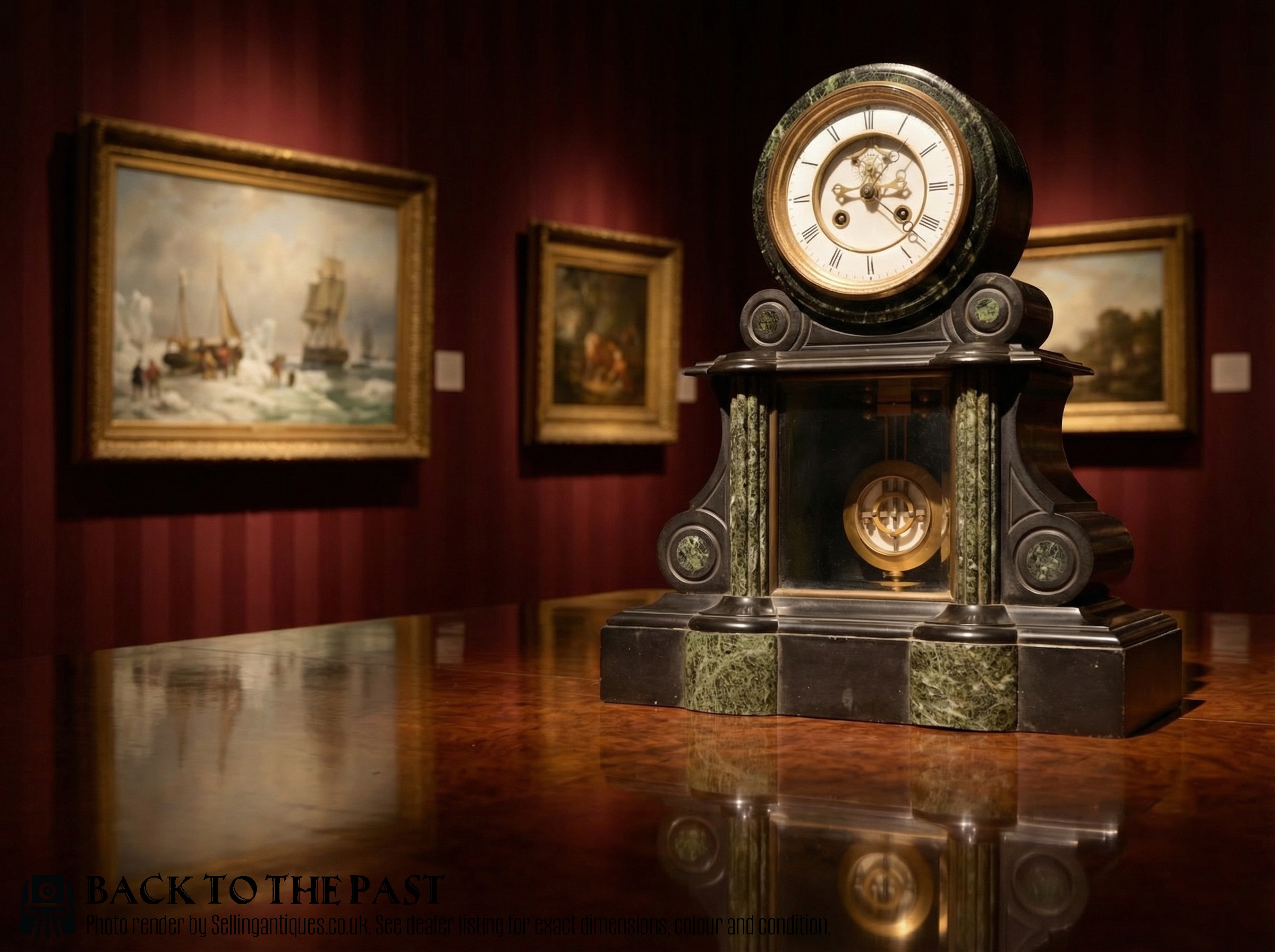
The French marble mantel clock
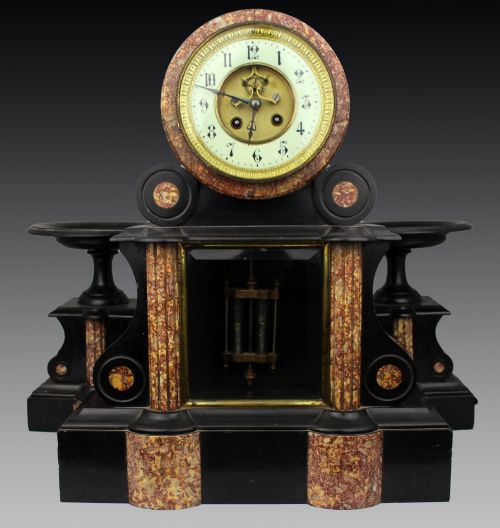
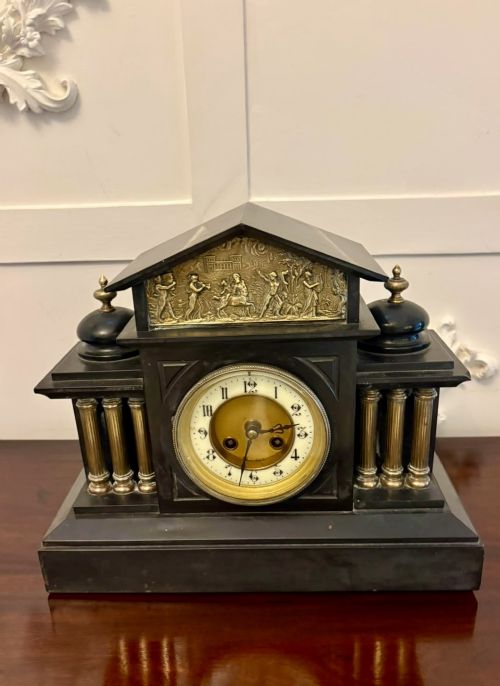
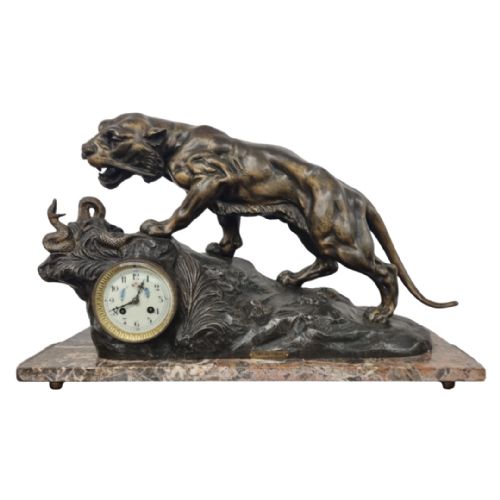
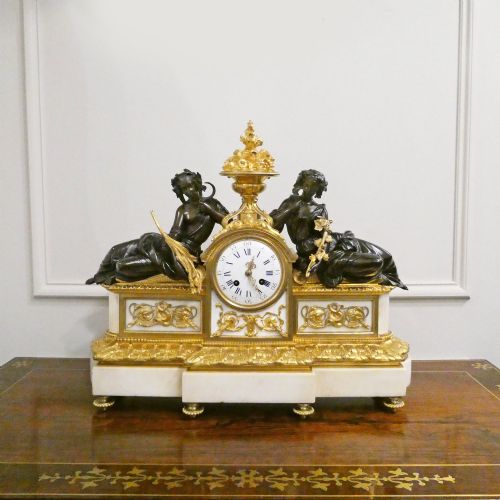
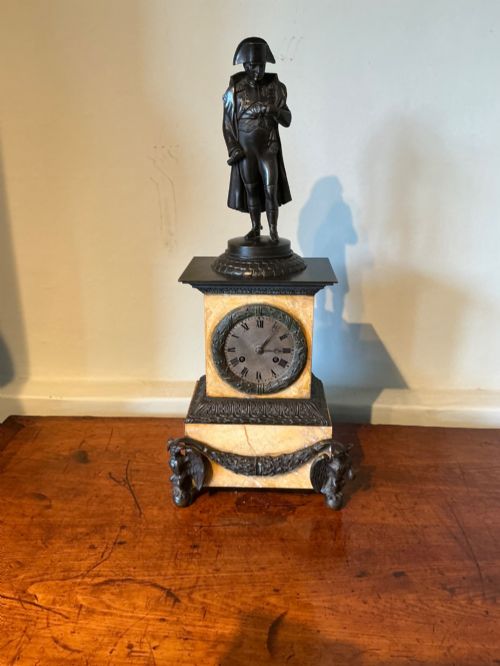
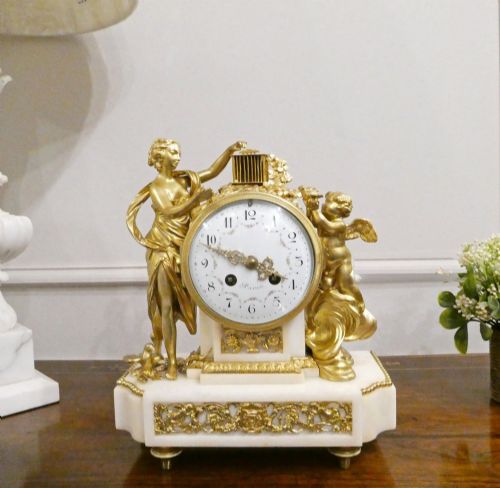
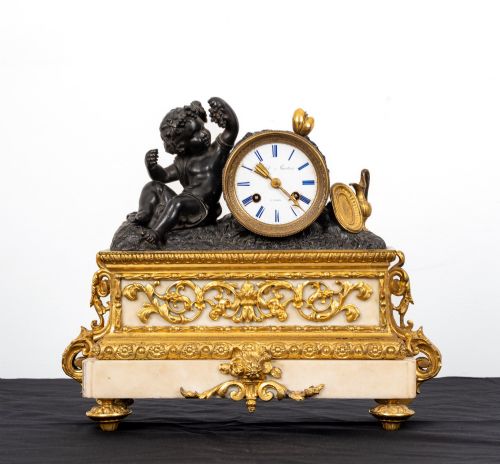
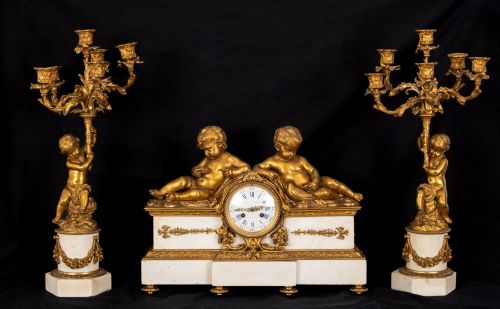
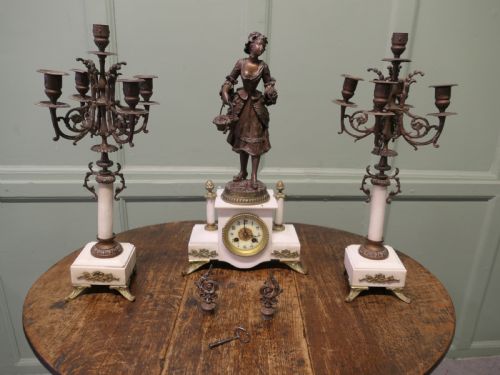
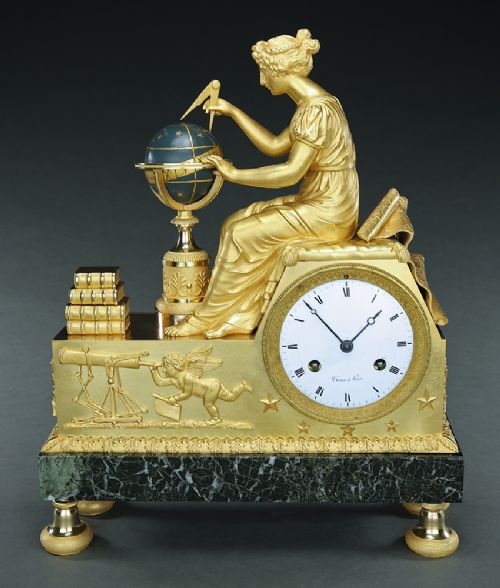
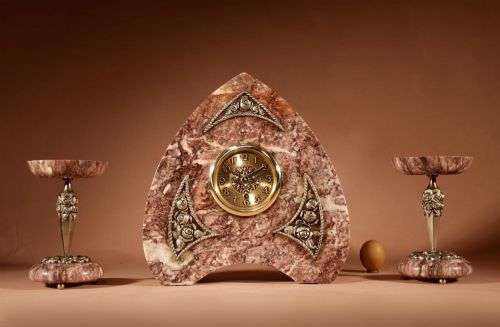
A french marble mantel clock combines heavy stone bodies with metal ornamentation, appearing in forms ranging from austere neoclassical portico designs to symmetrical Victorian formats and geometric Art Deco shapes. These pieces often arrive alongside matching side ornaments to form complete garniture sets.
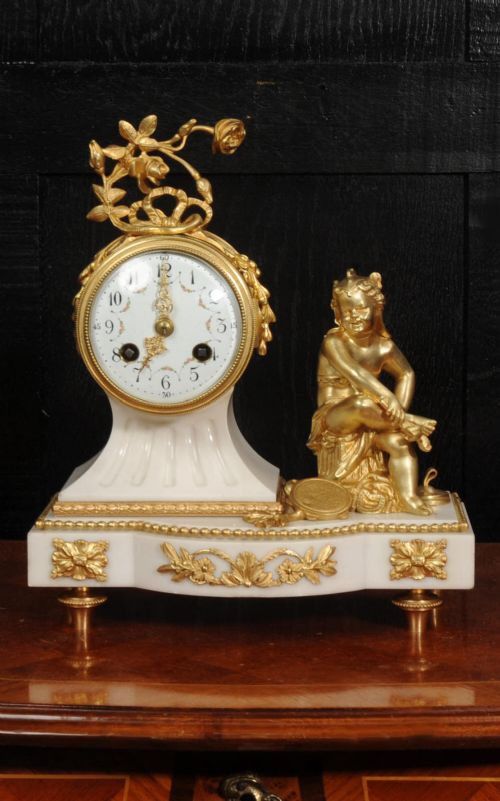
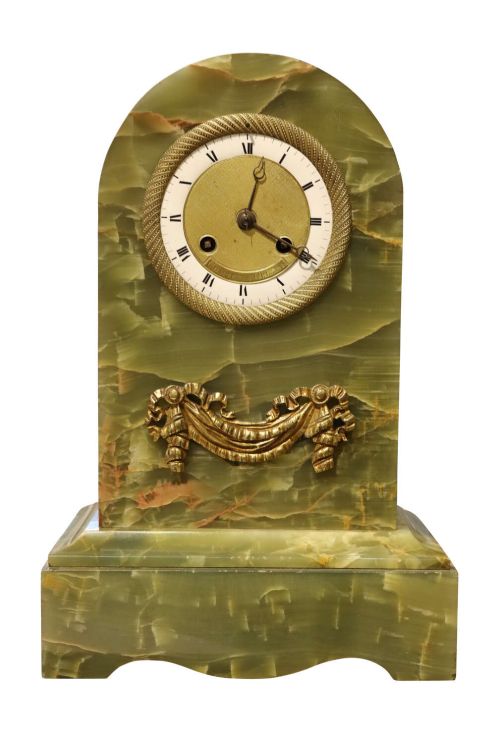
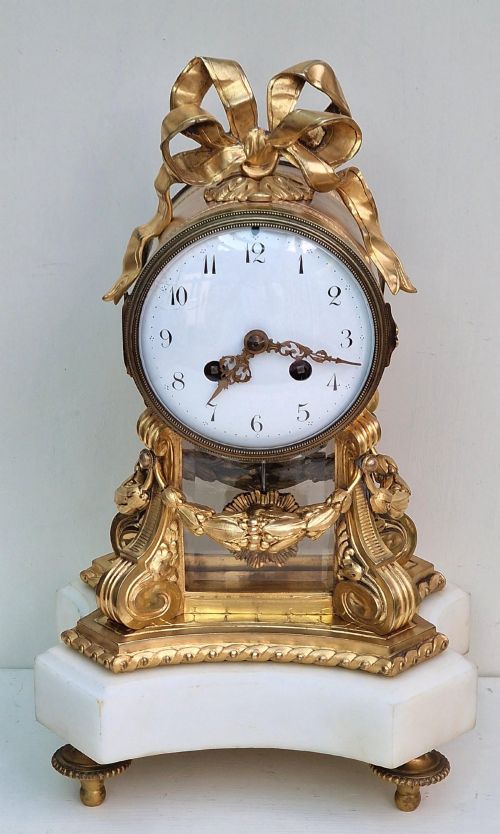
The materials span white and black marble, grey and sienna marble, paired with brass, bronze, and ormolu mounts. Dials typically feature enamel finishes behind protective glass covers.
Examples date from the eighteenth century through the nineteenth century and into the nineteen-twenties and nineteen-thirties. Buyers encounter architectural portico models, urn clocks, and sculptural garnitures featuring literary or classical themes.
Materials and construction
Masons shaped solid blocks of marble into columns, porticos, and rectangular housings, while metalworkers cast bronze and brass components to create gilded ormolu mounts and applied details.
Clockmakers integrated eight-day striking movements behind glass panels and enamel dials, using brass gear trains and pendulums to regulate time.
Craftsmen combined these heavy stone and metal elements using threaded pins and screws to secure the decorative bronze figures and columns to the marble body.
Retail Price Guide 2026
Typical UK retail prices for french marble mantel clock, calculated from the Sellingantiques database of over a million retail prices indexed since 2003. This retail price guide relies exclusively on Sellingantiques data; no external sources or auction records are used, so the figures do not describe the wider market.
Some clocks hide literary themes and sculpted cherubs among their heavy marble columns.
Distinctions in quality
The refinement of the cast ormolu and bronze figures separates standard production from exceptional pieces, as finer models display crisp chiselling and deep gilding on every mount.
The integration of the movement with the stone housing, alongside signed dials by known Parisian makers, marks the division between ordinary timepieces and superior works.
Sacre·Pinchon, Fils, Paris·Samuel Marti·Japy Freres·L Beche Le Mans·Henri Picard
The French Marble Mantel Clock Glossary
- Ormolu
- Gilded bronze applied as decorative mounts and figures to the marble body. This technique uses mercury gilding on earlier pieces to produce a lasting metallic lustre.
- Portico clock
- An architectural clock design supported by four marble columns resembling a classical temple facade. These frames often suspend the pendulum freely within the central archway.
- Garniture
- A matching set consisting of a central clock flanked by side ornaments such as urns or vases. These decorative groups balance mantelpieces and console tables.
- Enamel dial
- A metal face covered in fused glass powder to provide a smooth, white surface for painted numerals. These dials protect against tarnishing over decades of use.
Frequently Asked Questions
How do I wind the clock?
Insert the winding key into the designated arbors on the enamel dial and turn gently until resistance is felt. This tensions the internal springs or raises the weights that power the movement.
Take care not to overwind the mechanism, as this can strain the mainsprings. Most movements require attention every eight days.
Where should I place the clock?
Position the piece on a sturdy, level surface such as a mantelpiece, sideboard, or pier table capable of supporting significant stone weight. Ensure the furniture does not wobble.
A stable foundation allows the pendulum to swing evenly, which keeps the timekeeping accurate and prevents premature wear on the escapement.
How do I tell periods apart?
Examine the decorative motifs and stone colours to identify the era. Eighteenth-century and Louis XVI pieces feature strict neoclassical symmetry, white marble, and delicate ormolu mounts.
Victorian examples often use black slate or mixed marbles with heavier proportions, while nineteen-thirties pieces adopt streamlined geometric lines characteristic of Art Deco.
What is a garniture set?
A garniture set includes a central mantel clock accompanied by matching side pieces, usually designed as urns or vases made from the same marble and metal.
These matching elements were arranged symmetrically across a fireplace mantel to create a balanced decorative display in nineteenth-century interiors.