
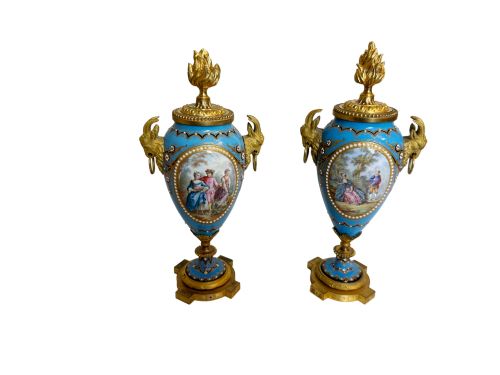
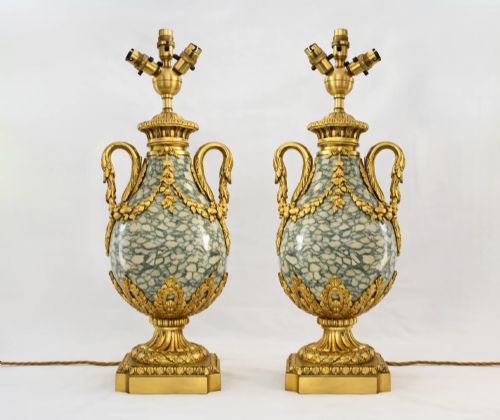


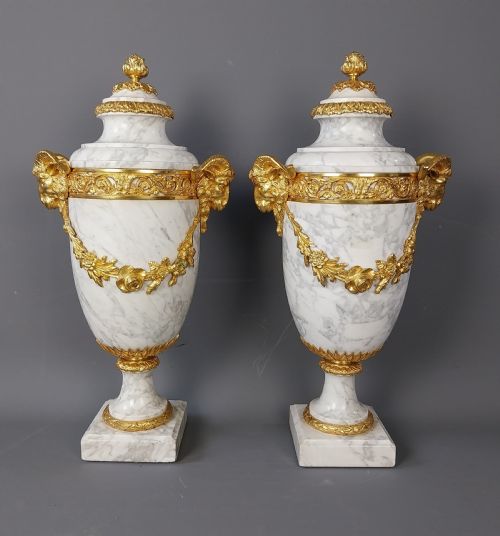


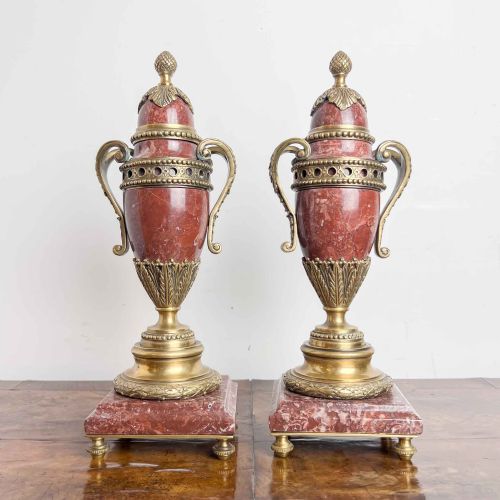


Louis XVI Cassolettes
Louis xvi cassolettes are reversible decorative vessels that transform from covered urns into candlesticks, bringing French Neoclassical elegance to interior schemes.
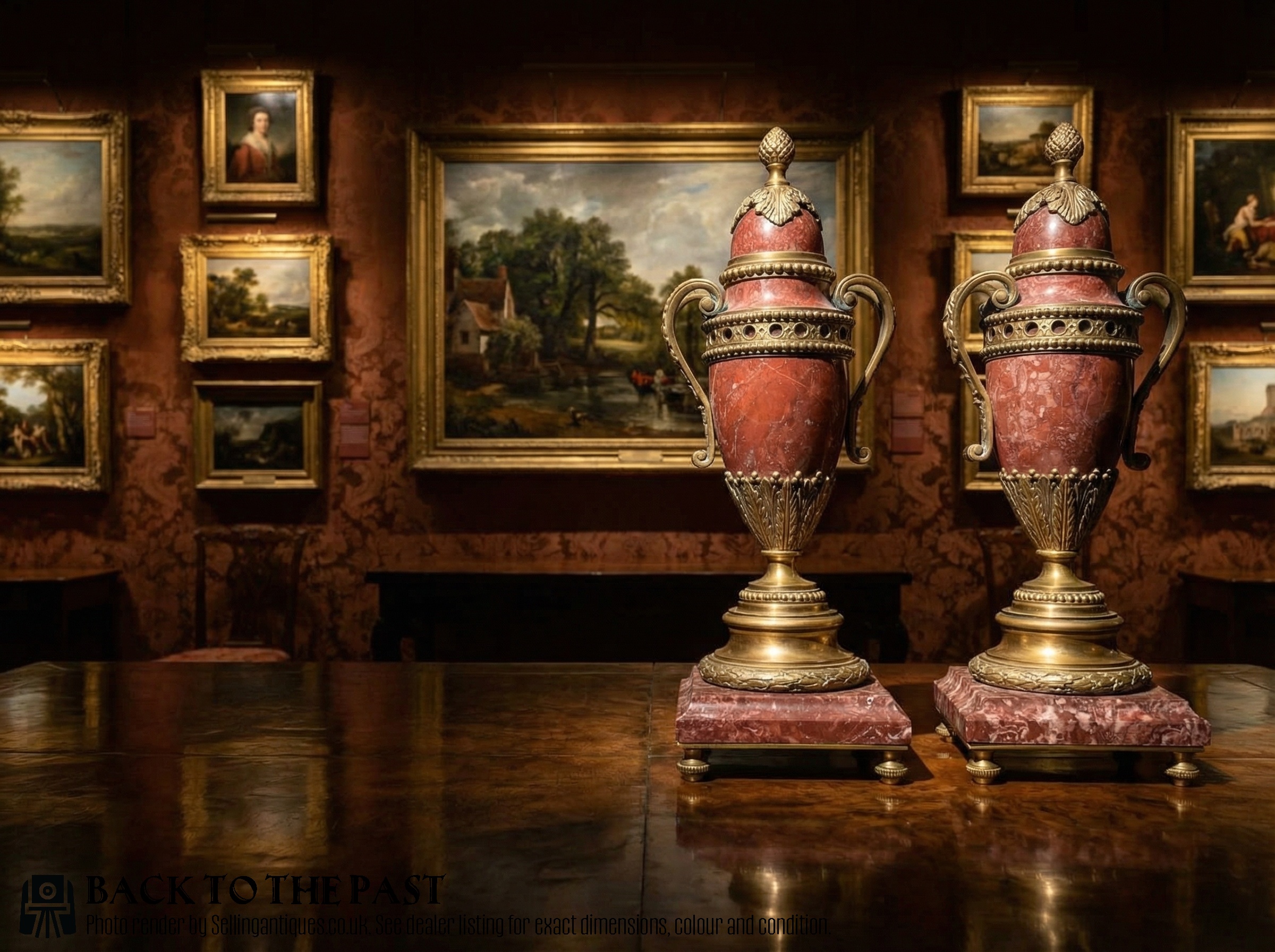
Louis XVI Cassolettes
When searching for louis xvi cassolettes, buyers encounter ornamental vessels rooted in French Neoclassical design that often double as table lamps or clock garniture components. Most examples on this page date from the nineteenth century, including the Victorian period and the eighteen nineties, reflecting a strong revival of eighteenth-century aesthetics.
The primary form is a stone body mounted with cast metal, frequently designed with a reversible lid that presents a flame finial on one side and a candle nozzle on the other. These objects function equally well as standalone mantel ornaments or as converted electrified lamps, retaining their symmetrical architectural proportions.
How they were made
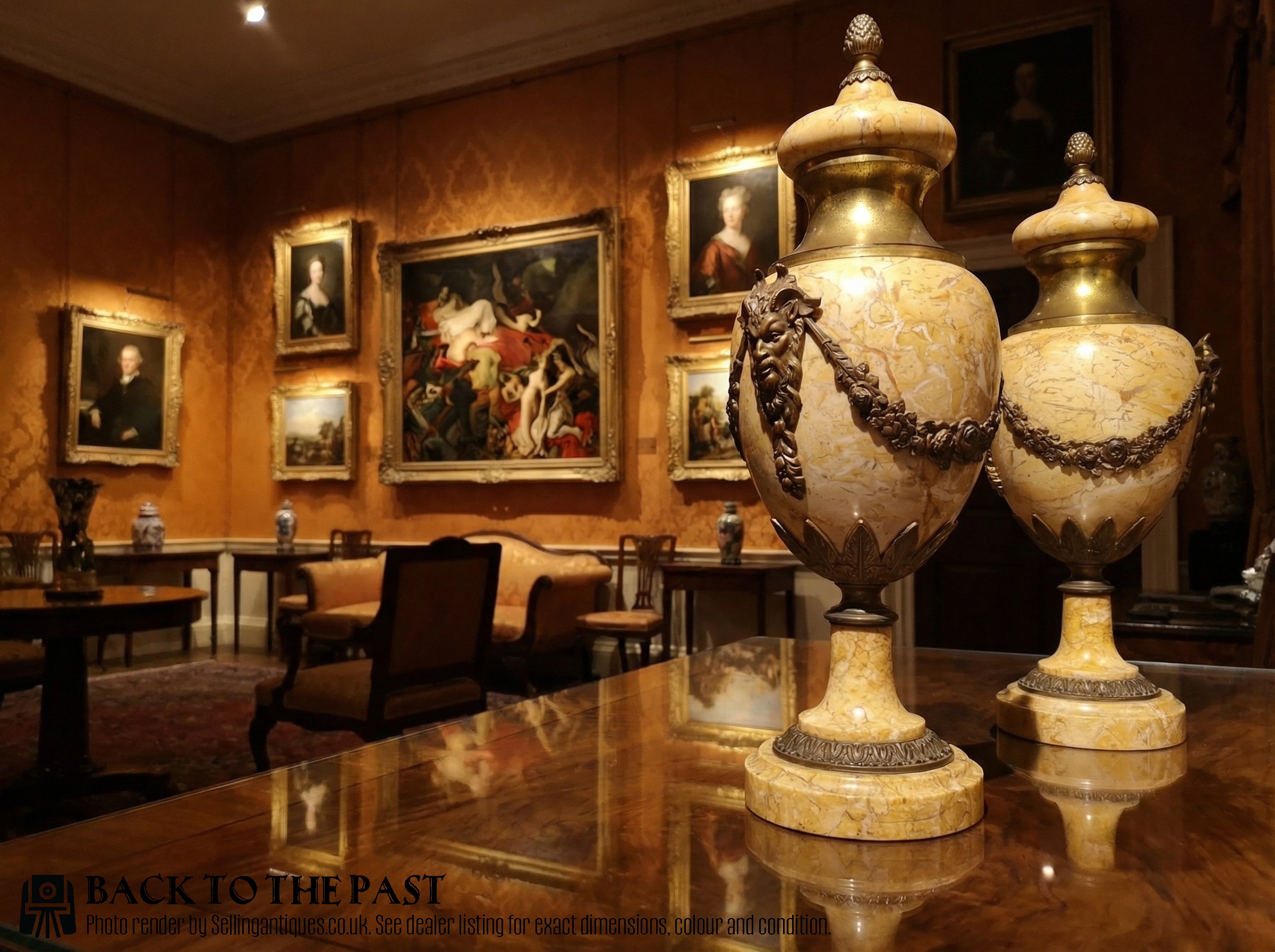
Maker-craftsmen shaped bodies from various stones including white marble, green marble, onyx, rouge marble, and porcelain, turning and polishing the mineral surfaces to a smooth finish. These stony reservoirs were then fitted with cast metal components, predominantly ormolu, gilt bronze, and standard bronze.
The mounting process required precise metal casting and chasing to secure foliage swags, handles, and feet directly onto the stone bodies. Enamel details and majolica porcelain elements were occasionally integrated to add colour and texture to the neoclassical composition.
Louis XVI Cassolettes Retail Price Guide 2026
Typical asking prices for louis xvi cassolettes among the pieces listed under this phrase on Sellingantiques today, from the lower quarter to the upper quarter. They describe what is for sale here now, not the wider market.
Available forms range from standalone mantel urns and clock garnitures to converted table lamps and majolica porcelain vases.
What varies in quality
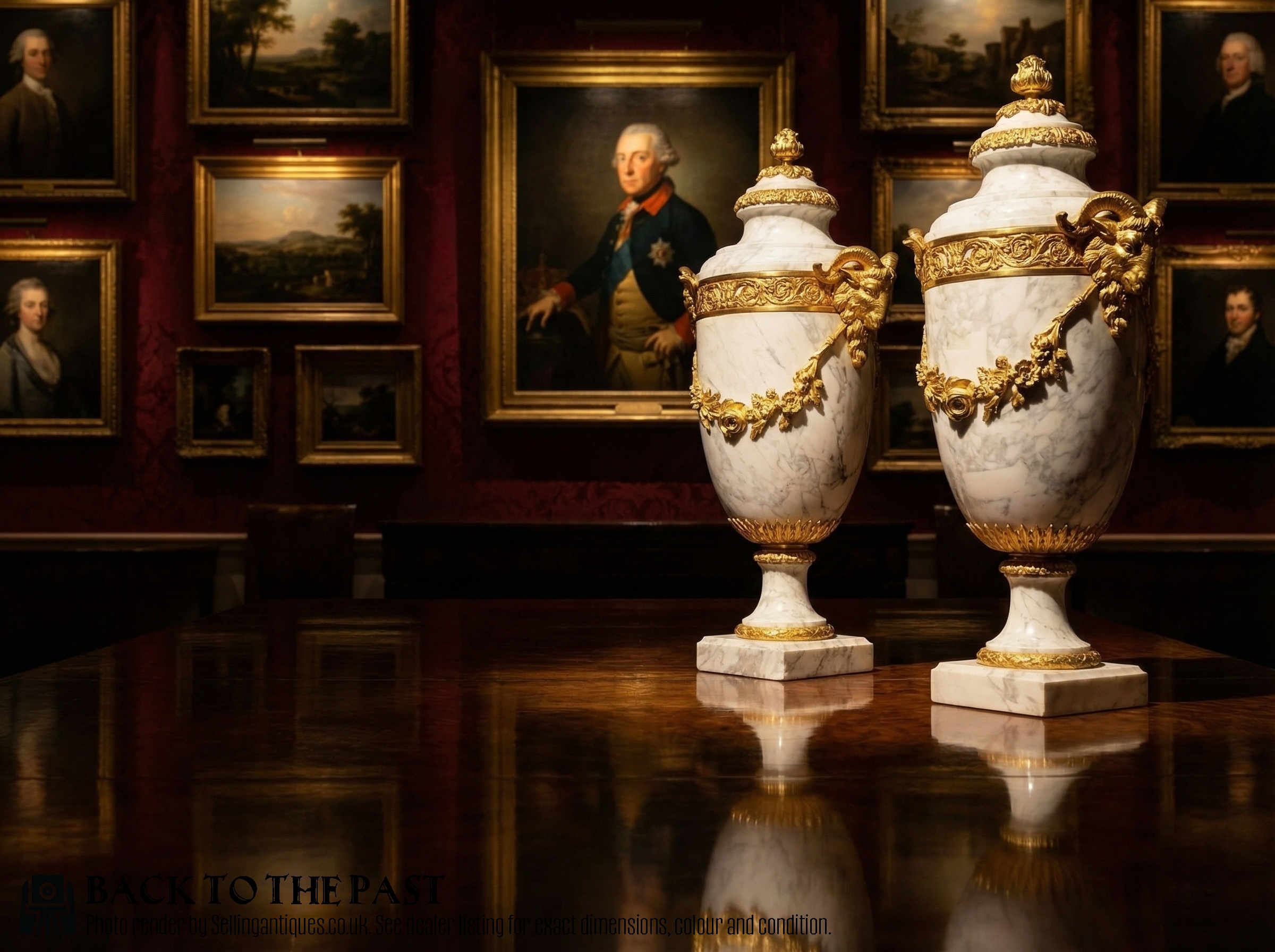
The standard of a piece depends heavily on the crispness of the bronze chasing and the selection of the stone. Superior examples display deeply chiselled ormolu mounts with sharply defined acanthus leaves and beading, whereas lesser pieces show softer, shallower casting work.
The choice and figuring of the marble or onyx also dictate the grade of the object, with richly coloured mineral veins and heavy gauge bronze elevating the overall presence of the vessel.
The Louis XVI Cassolettes Glossary
- Cassolette
- A dual-purpose decorative vessel with a reversible lid that serves as either an urn or a candle holder. This clever mechanism defines the primary utility of the object.
- Ormolu
- Gilded bronze produced through a mercury amalgamation technique on cast brass or bronze. This rich surface treatment defines the bright golden mounts characteristic of French revival pieces.
- Garniture
- A set of matching ornamental vases or clocks designed to be displayed together on a mantelpiece. These groupings often include a central clock flanked by matching cassolettes.
- Grand Tour
- The nineteenth-century practice of affluent travellers collecting continental antiquities and revival pieces. Many decorative urns from this era were acquired during these European travels.
- Neoclassical
- A revival style drawing inspiration from the classical art and architecture of ancient Greece and Rome. This aesthetic governs the symmetry, urn forms, and crisp foliate motifs seen on these pieces.
Louis XVI Cassolettes: Frequently Asked Questions
What is a cassolette?
A cassolette is a decorative urn featuring a reversible lid with a solid finial on one side and a candle socket on the reverse. This dual design allowed owners to alternate between displaying a classical vase and utilising a candleholder.
Most surviving examples date from the nineteenth century and reflect French taste. They were prized on mantelpieces and tables for their versatility.
How do you use a reversible cassolette?
To use the piece as a vase, simply place the lid with the decorative finial facing upward. Rotating the lid exposes the candle nozzle when illumination is desired.
Care should be taken when handling heavy marble and ormolu lids to protect the delicate gilt bronze mounts from impact.
Are these pieces from the eighteenth century?
The majority of these decorative objects date from the nineteenth century, created during periods of intense revivalism such as the Victorian era and the eighteen nineties. They interpret the earlier eighteenth-century Louis XVI aesthetic rather than originating from that reign.
Craftsmen of the later period emulated neoclassical proportions while utilising nineteenth-century manufacturing techniques.
What materials are typical for these urns?
The bodies are typically turned from natural minerals such as white marble, green marble, onyx, and rouge marble. Porcelain and majolica are also encountered in certain sculptural examples.
These stone bodies are invariably paired with cast metal mounts in ormolu, gilt bronze, or standard bronze to complete the neoclassical silhouette.
Can cassolettes be used as lamps?
Many nineteenth-century examples have been adapted as table lamps over time, integrating electrical wiring through the central core while preserving the outer stone and ormolu decoration. These converted pieces maintain their original decorative appeal while serving modern lighting functions.
Original reversible functionality is occasionally modified during conversion, so examining the top fittings clarifies the current state of the piece.