

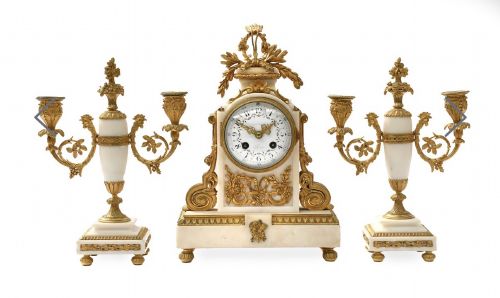

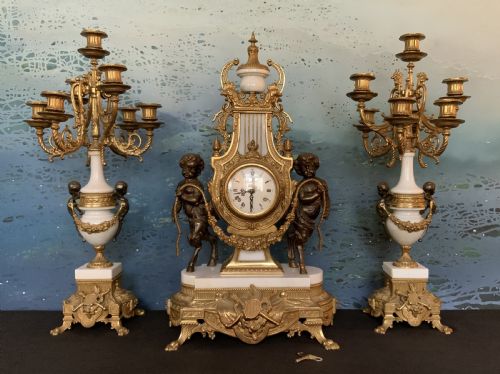
French Ormolu Garniture
A French ormolu garniture brings balanced grandeur to a mantelpiece, pairing a central clock with matching candelabras or urns.
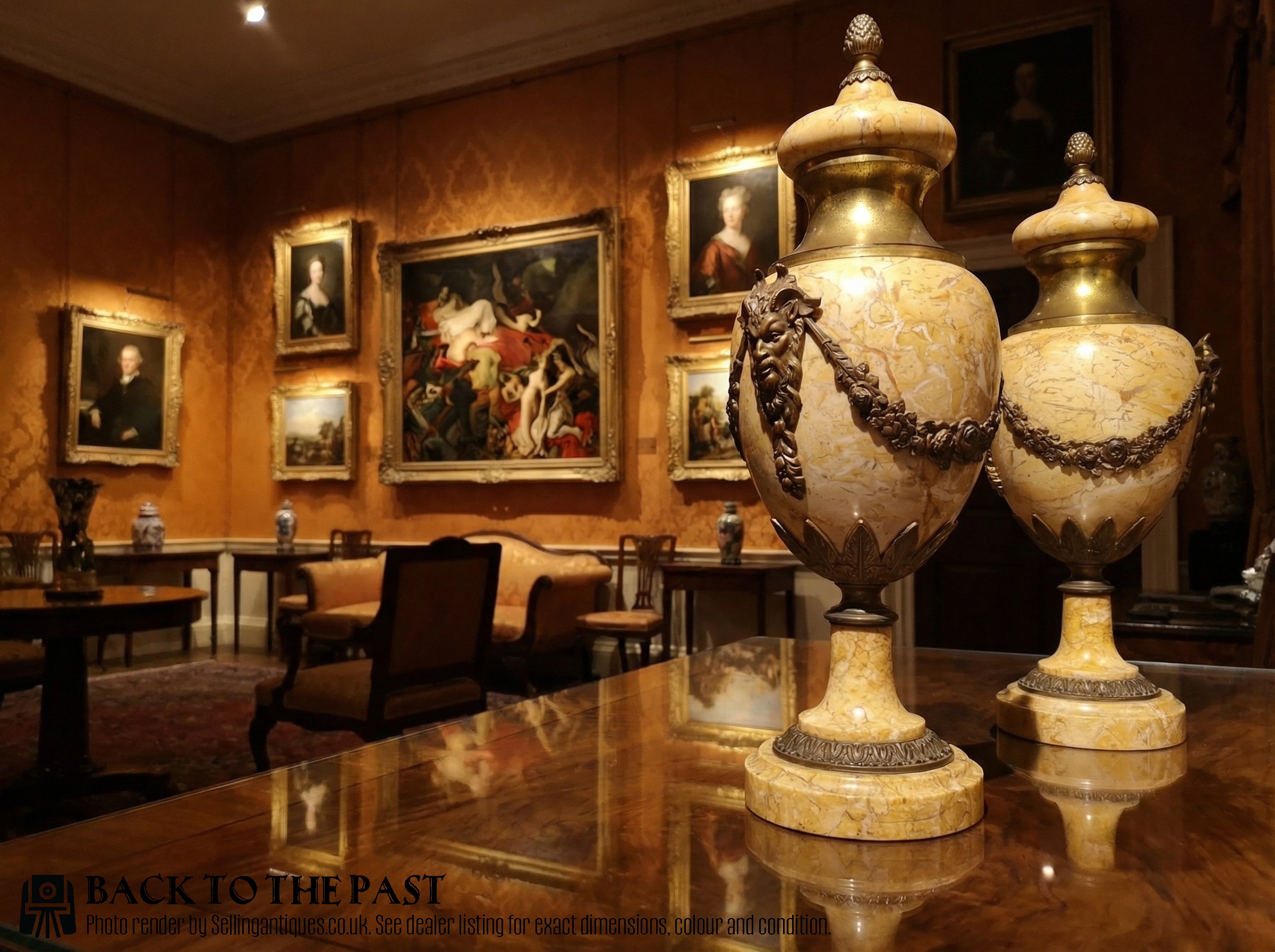
French Ormolu Garniture
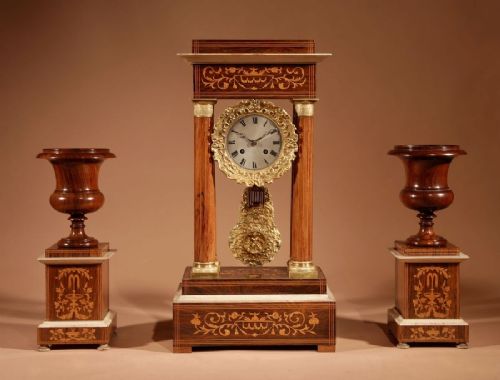
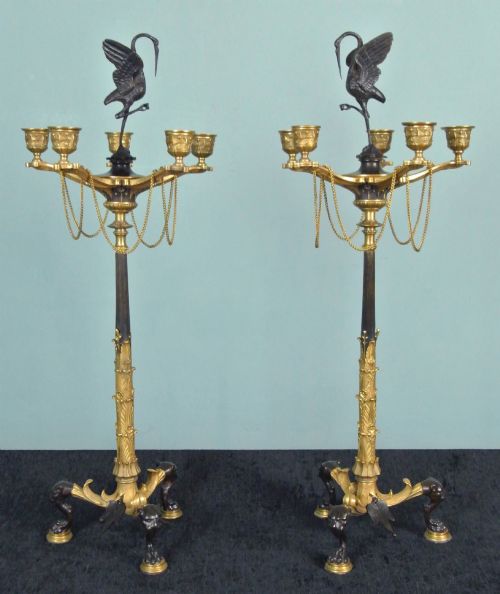
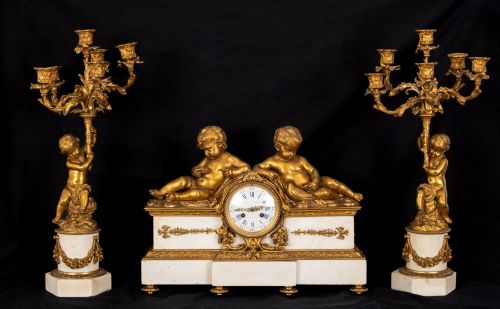
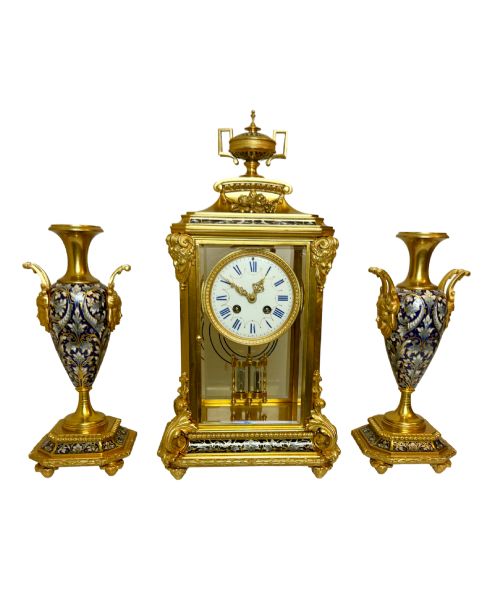
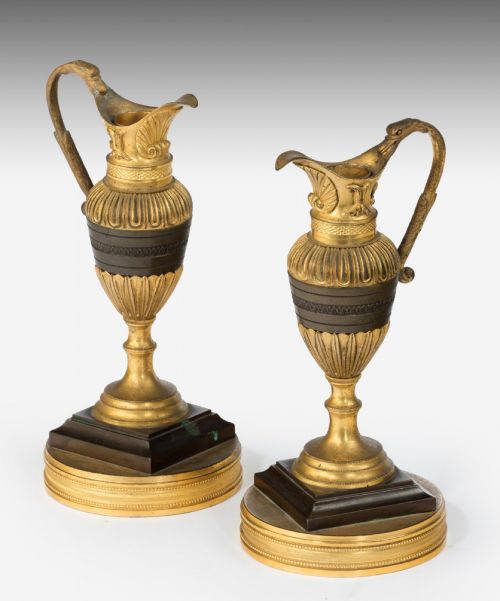
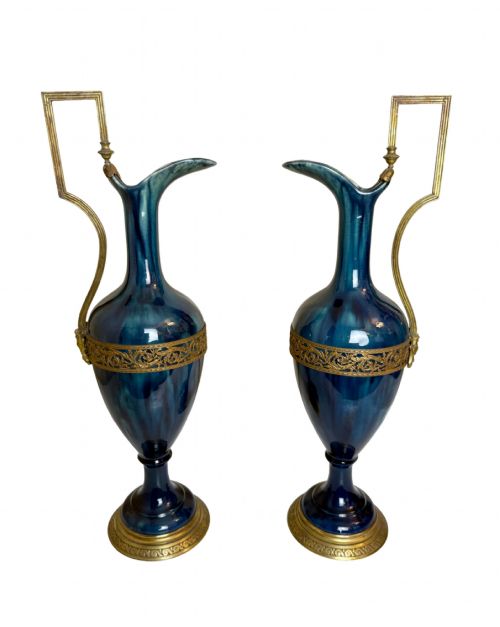
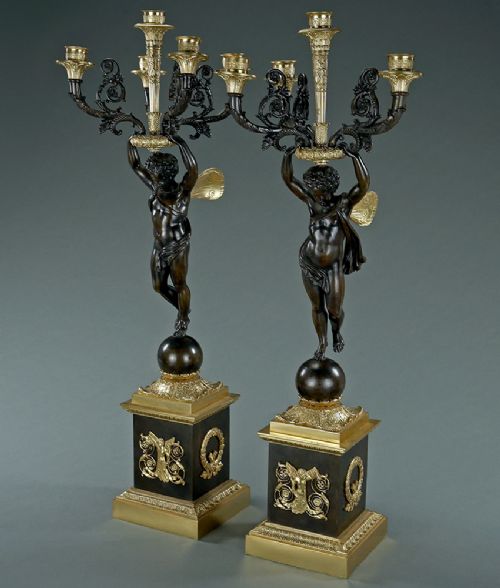
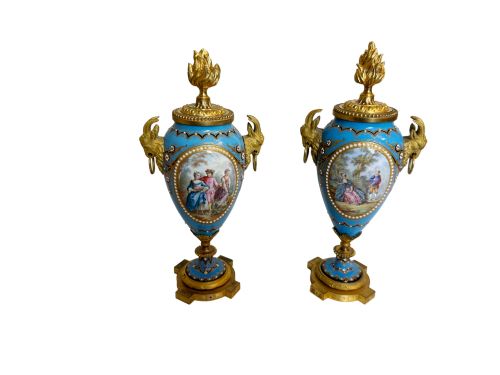
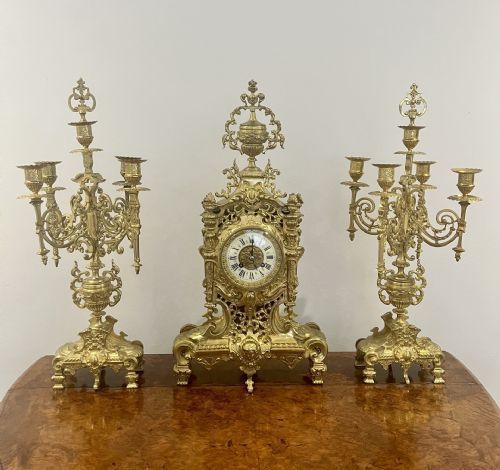
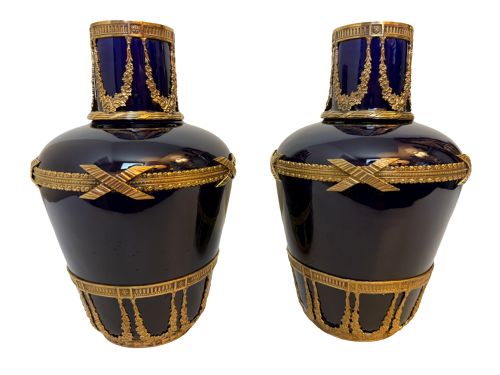
A french ormolu garniture comprises a matched three-piece or multi-piece suite designed for unified display on a mantelpiece or console table. The grouping typically pairs a striking mantel clock in the centre with flanking decorative urns, candelabras, or vases.
Most examples encountered date from the nineteenth century, spanning periods from the Second Empire to the late Victorian era. These decorative sets reflect classical and revivalist tastes, drawing heavily on French Empire, Louis XVI, and Rococo styles.
The objects serve both a decorative and practical function, uniting timekeeping with symmetrical ornamentation. Surviving pieces frequently retain their original mounting arrangements and corresponding side ornaments.
Determinants of quality
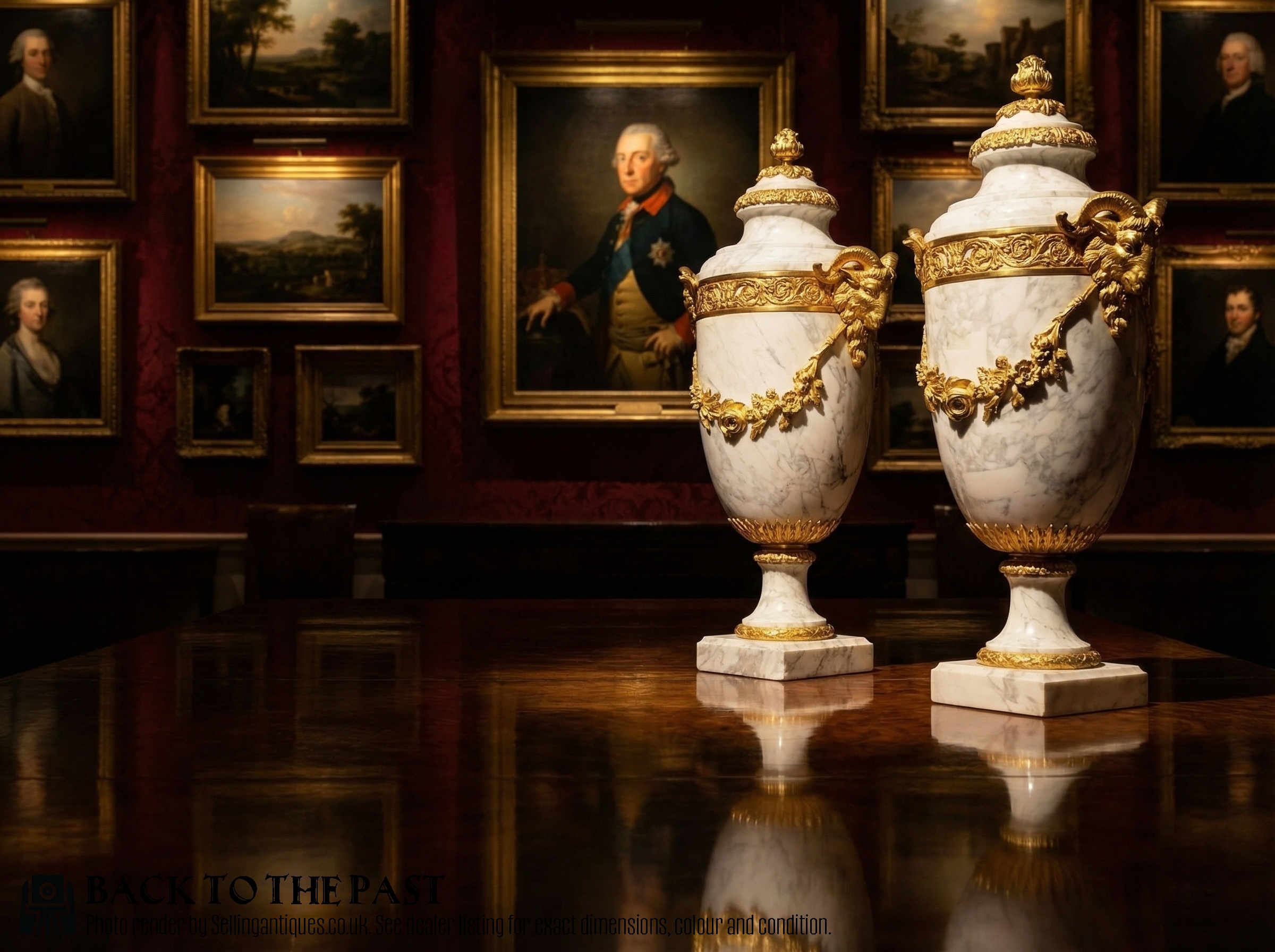
The standard of a french ormolu garniture rests heavily on the crispness of the bronze casting and the depth of the subsequent hand-chiselling. Superior pieces exhibit sharply defined acanthus leaves, cleanly articulated figures, and tight mechanical assembly.
Material selection further distinguishes the manufacturing tier, with dense veined marbles, fine porcelain bodies, and heavy gauge bronze elevating a suite. Movement quality also dictates worth, as signed or well-engineered clockwork mechanisms separate standard production models from exceptional workshop outputs.
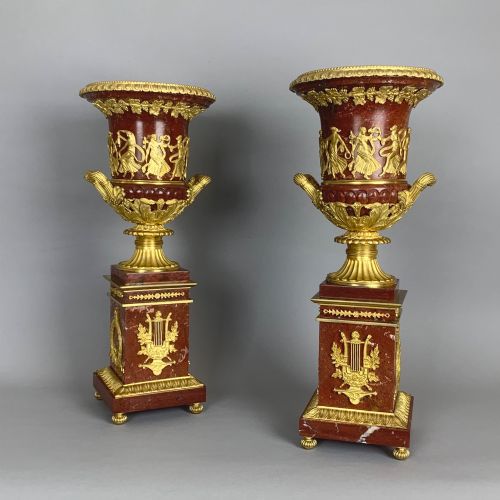
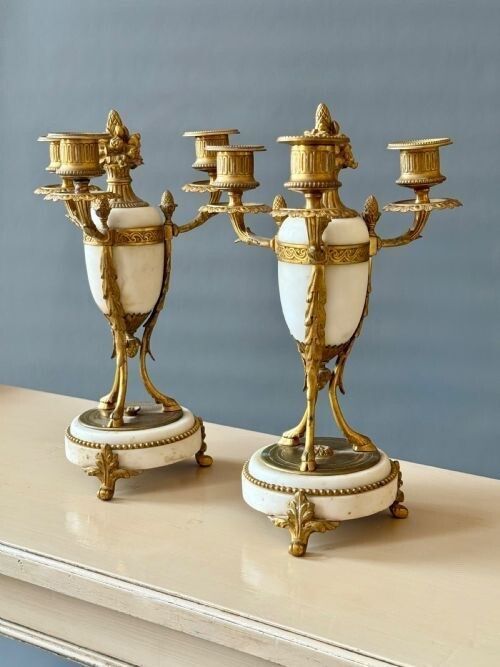
Listings feature items incorporating gilt bronze, white marble, red marble, onyx, porcelain, and glass across various nineteenth-century periods.
Henry Dasson·Barbedienne·A D Mougin·Japy Freres
The French Ormolu Garniture Glossary
- Ormolu
- Finely ground high-purity gold amalgamated with mercury and applied to bronze, then heated to drive off the mercury. This historic technique yields a rich, warm golden lustre characteristic of antique French metalwork.
- Garniture
- A set of decorative objects designed to be displayed together as a matched ensemble. In nineteenth-century interiors, these usually consisted of a central clock flanked by two matching vases or candelabras.
- Cassolette
- A decorative lidded vase or urn designed to hold perfumes, featuring a reversible lid that presents either a solid top or a pierced burner grill. They frequently form the sidepieces of high-end clock sets.
- Portico clock
- A mantel clock housed within a architectural frame supported by four or more columns. These architectural timepieces often form the centrepiece of elaborate nineteenth-century garnitures.
- Champleve
- An enamelling technique where troughs or cells are hollowed out of the metal surface and filled with vitreous enamel powder before firing. The technique produces vibrant coloured patterns flush with the surrounding ormolu mount.
French Ormolu Garniture: Frequently Asked Questions
How do you display a garniture set?
Garniture sets are traditionally arranged on a mantelpiece, sideboard, or large console table with the clock in the centre and the matching urns or candelabras placed symmetrically on either side.
This layout creates a balanced focal point that draws the eye and highlights the matching materials and design motifs across all three pieces.
What periods do these pieces come from?
The majority of these decorative sets date from the nineteenth century, particularly the Victorian period and the French Second Empire. Makers and workshops produced them extensively throughout the eighteen-fifties, sixties, seventies, and eighties.
Design revivals during these decades frequently drew inspiration from earlier French royal styles such as Louis XVI and Louis XV.
How are marble and bronze cleaned?
Marble surfaces require gentle cleaning with a soft, damp cloth and mild, neutral soap to avoid scratching or staining the polished stone. Harsh chemical cleaners can strip the finish from both the marble and the delicate ormolu mounts.
Ormolu needs only light dusting with a dry microfiber cloth, as aggressive polishing wears away the historic gold layer on the bronze.