

French Marble Urns
French marble urns combine mineral weight with cast metal mounts to create decorative focal points prized for classical grandeur.
French Marble Urns
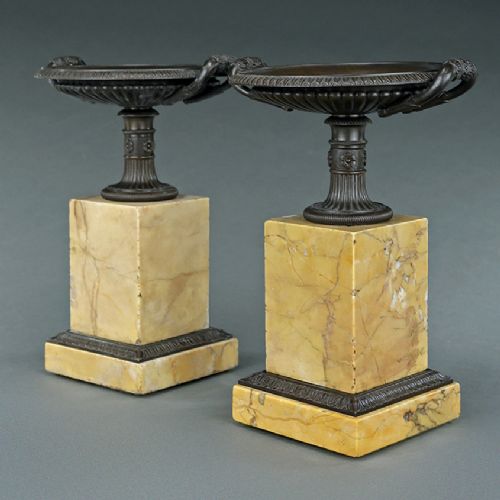
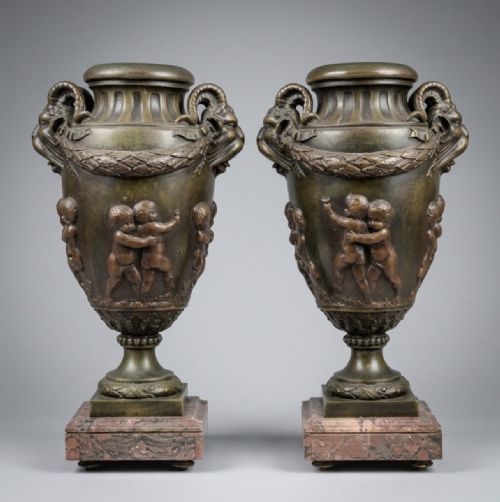
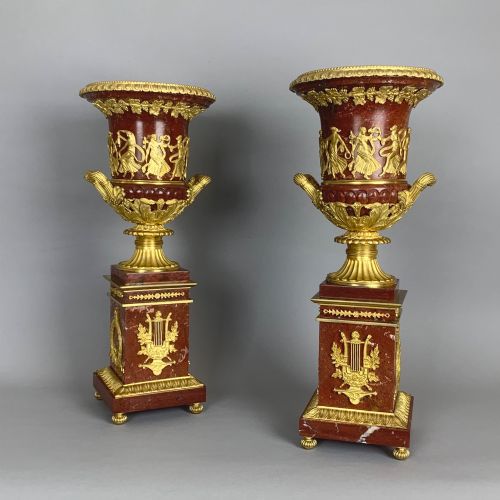
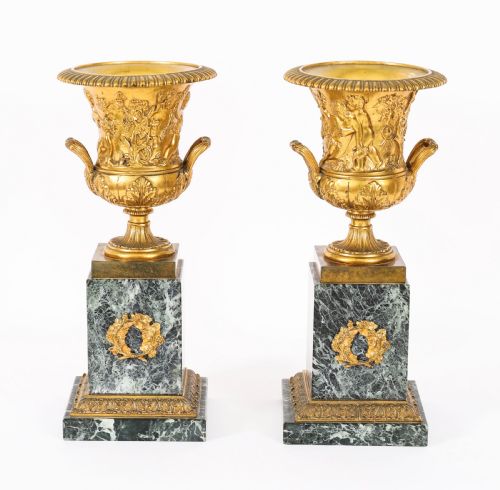
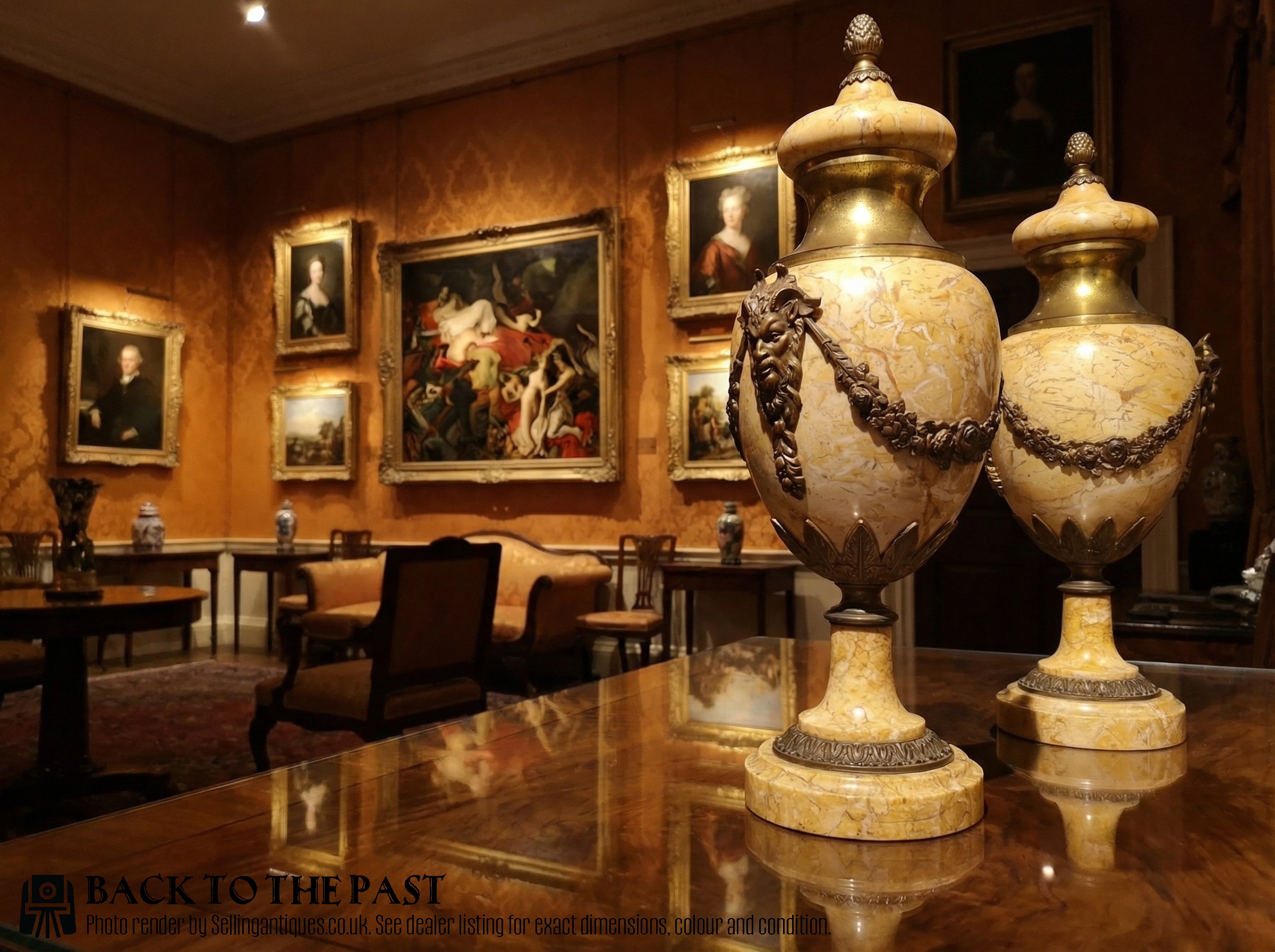
French marble urns are decorative objects shaped from natural stone, frequently paired with cast metal mounts, designed to evoke classical antiquity on mantelpieces and tables. They appear often as pairs of cassolettes, amphorae, or campana-shaped vessels originating predominantly from the nineteenth century.
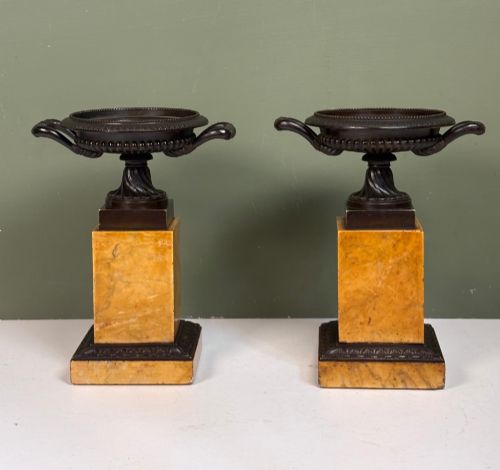
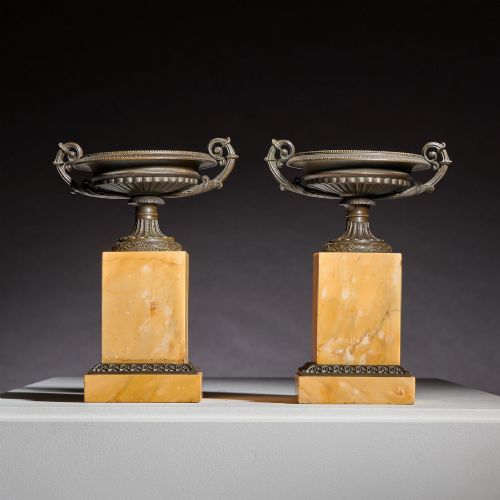
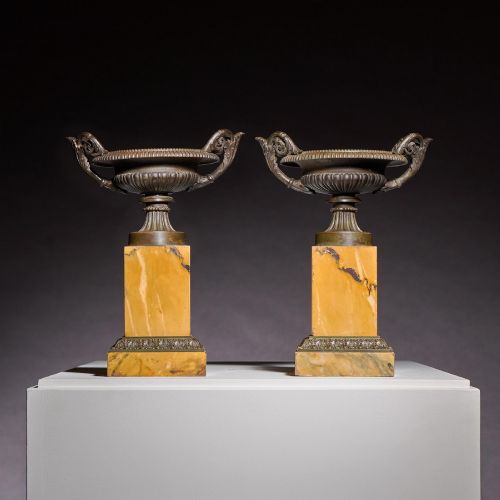
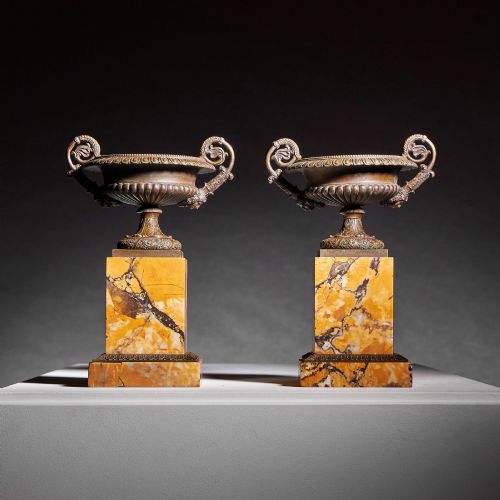
The selections on this page span Neoclassical, French Empire, and Louis XVI revival styles, reflecting nineteenth-century revivals of ancient forms. Makers utilised contrasting stones such as Sienna, black, pink, rouge, and white marble, often mounting them on stepped plinths or bronze bases.
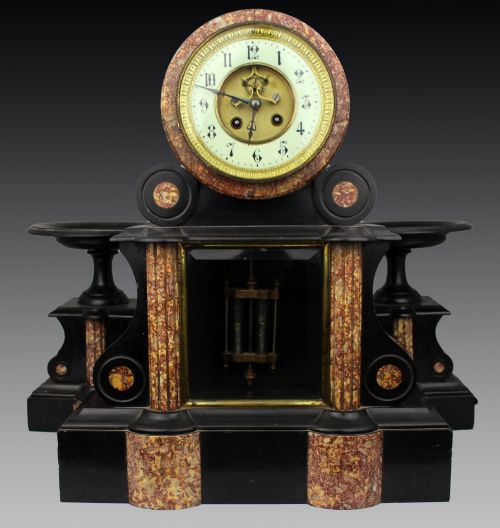
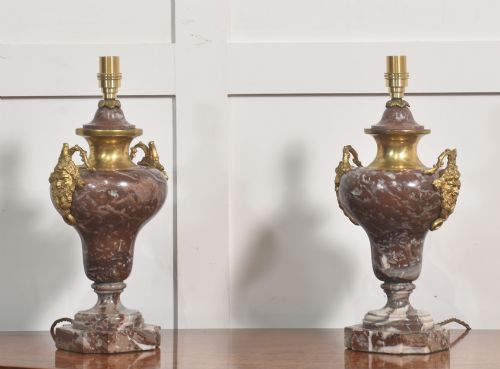
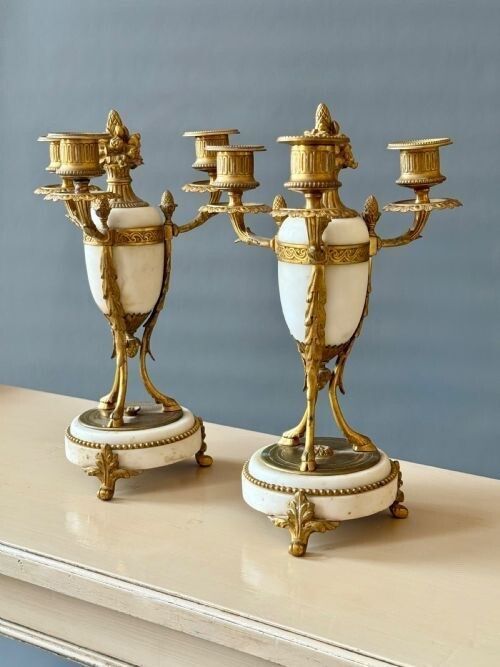
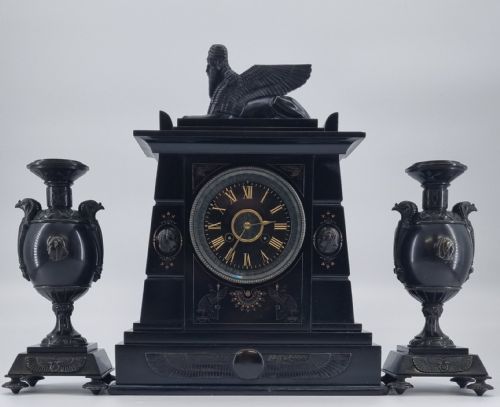
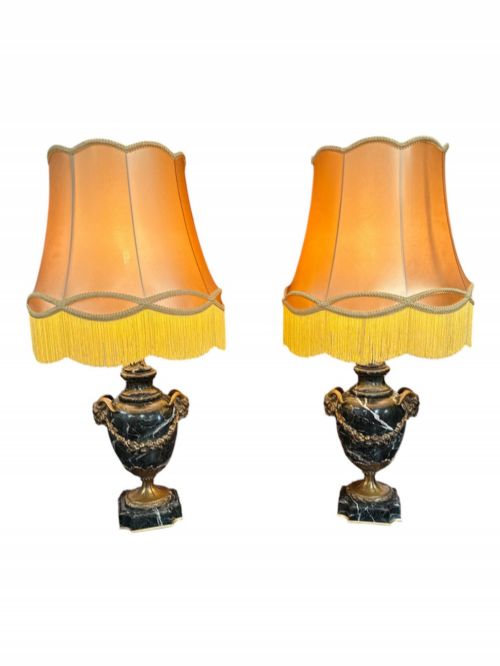
Beyond purely decorative vessels, many of these pieces function as garniture elements accompanying mantel clocks, or have been adapted into table lamps. Collectors find examples ranging from modest cabinet pieces to large Grand Tour showpieces.
How They Were Made
Lapidaries turned blocks of marble on lathes to shape the bodies of the urns, achieving smooth, symmetrical profiles in stones like Sienna or white marble. Stonemasons then hollowed the interiors and polished the exterior surfaces to a high sheen.
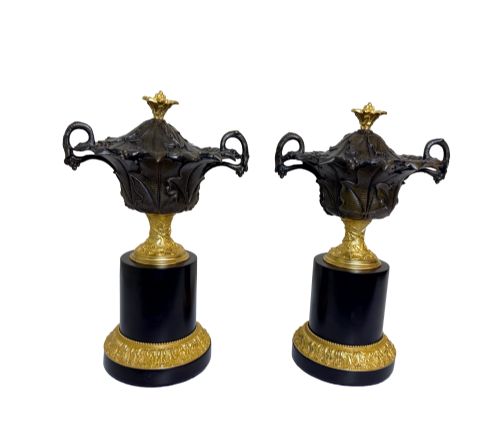
Foundries produced the decorative mounts, handles, and plinths using bronze, brass, or spelter, often finishing them with fire gilding or ormolu. Artisans chased the cast metal details by hand before securing them to the stone bodies with pins or threaded rods.
Materials recorded across the inventory include black, white, Sienna, rouge, and pink marble, paired with bronze, ormolu, and gilt brass.
What Varies in Quality
The distinction between ordinary and exceptional pieces lies primarily in the crispness of the bronze chasing and the selection of the stone. Superior examples feature deeply articulated leaf motifs, finely rendered animal or Bacchic handles, and richly figured marble with harmonious mineral veining.
Weight and structural integration also divide the range, as better-made urns rely on heavy, solid mounts rather than thin sheet metal applied to inferior stone. The precision of the joinery between the metal collars and the turned marble body dictates the overall stability and tactile presence of the object.
Japy Frères·Louis Goret·Sacre
The French Marble Urns Glossary
- Cassolette
- A dual-purpose vessel featuring a reversible lid that transforms from a closed urn into a incense burner or vase. It is a common form among French decorative bronzes.
- Ormolu
- Finely ground high-carat gold applied to a bronze base using a mercury amalgamation technique, yielding a warm, durable metallic lustre. Nineteenth-century French makers used this extensively on mounts.
- Campana
- A bell-shaped vessel profile derived from ancient Roman pottery excavated in Campania. This silhouette defines many classical decorative urns.
- Garniture
- A set of three matching ornamental objects, typically comprising a central mantel clock flanked by matching urns or candelabras. They formed the visual centrepiece of nineteenth-century interiors.
- Grand Tour
- The nineteenth-century practice where wealthy travellers collected classical antiquities and souvenirs across Europe. It inspired many bronze and marble works produced in France.
French Marble Urns: Frequently Asked Questions
What were french marble urns used for?
These vessels served primarily as decorative ornaments on mantelpieces, credenzas, and side tables in grand nineteenth-century interiors. Some variations, such as cassolettes, doubled as burners for aromatic substances during formal receptions.
Over time, many of these decorative urns were adapted into table lamps while retaining their classical silhouette and stone bodies. They were also manufactured as matching side pieces to accompany large mantel clocks in garniture sets.
How do I identify french empire style?
French Empire style objects display a heavy, authoritative classical influence drawn from ancient Roman and Egyptian motifs. Look for strict symmetry, patinated bronze figures, and architectural mounts featuring laurel wreaths or paw feet.
The marble used in these pieces is often dark, such as black or deep Sienna, contrasted sharply against bright gilt bronze or ormolu. This aesthetic emphasises military glory and imperial grandeur.
How do I care for marble and ormolu?
Clean marble surfaces gently using a soft, dry cloth to remove dust without scratching the polished mineral finish. Avoid abrasive household cleaners or acidic liquids that can etch the stone.
Dust ormolu mounts with a soft brush, steering clear of metal polishes that strip away historic gilding. Maintaining stable indoor humidity prevents stress on the joints where metal meets stone.
What is a grand tour piece?
Grand tour pieces are decorative objects acquired by travellers touring the cultural sites of Italy and France during the nineteenth century. They frequently adapt ancient architectural forms into portable cabinet bronzes and marble specimens.
These works celebrate classical antiquity, often incorporating mythological figures, Bacchic motifs, or architectural fragments. Their manufacture combined French foundry skill with romanticized classical subjects.