
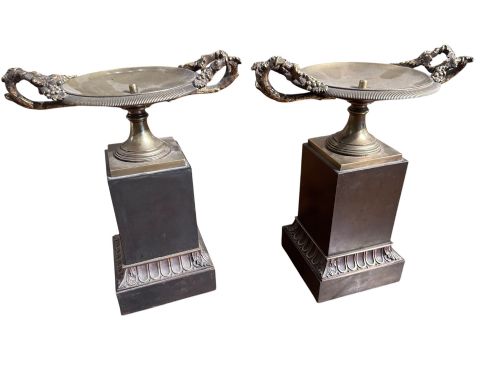


Decorative Marble Urns
These decorative marble urns bring classical proportion and refined stone into a room, offering the sculptural weight collectors seek.
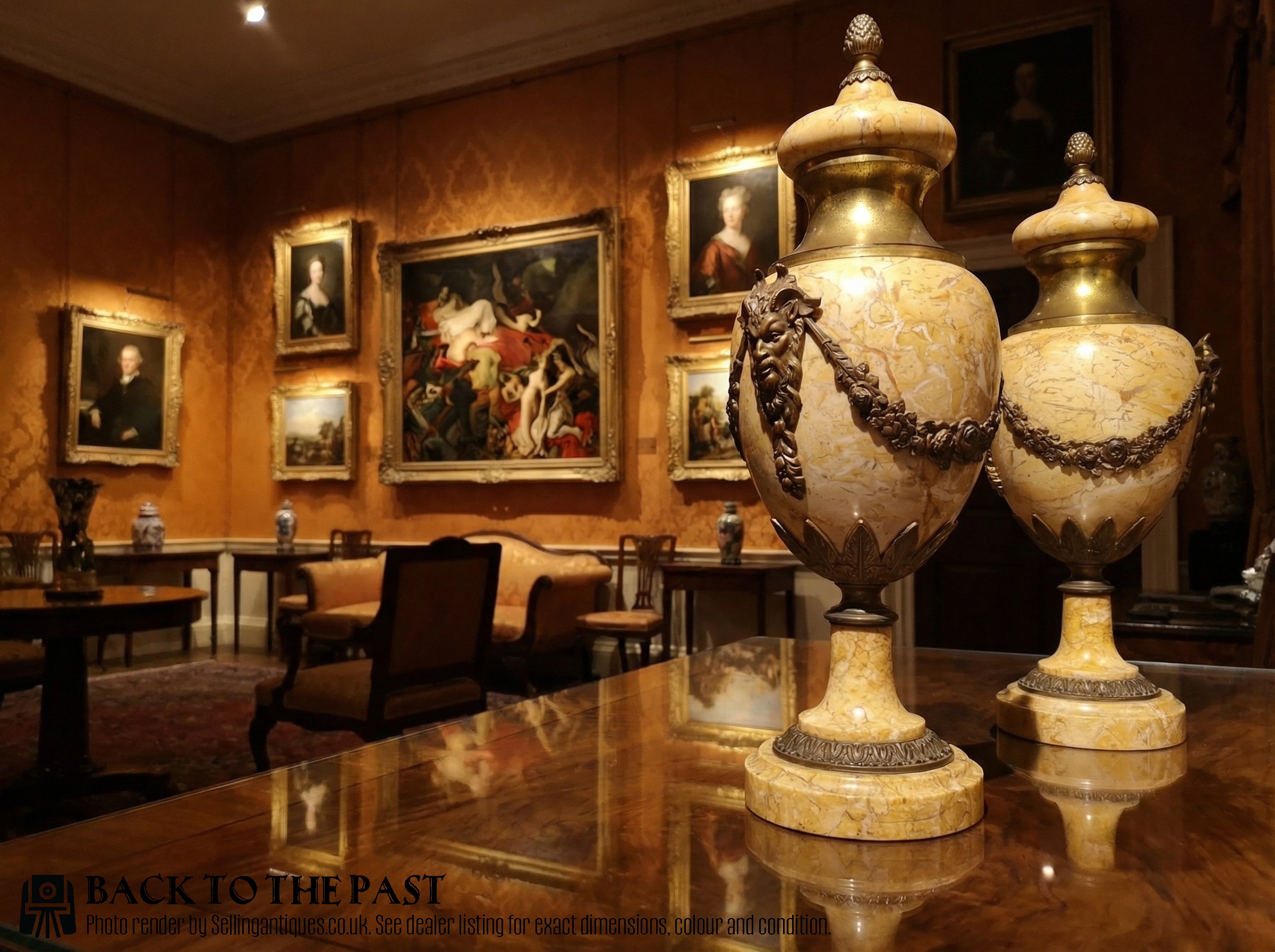
Decorative Marble Urns
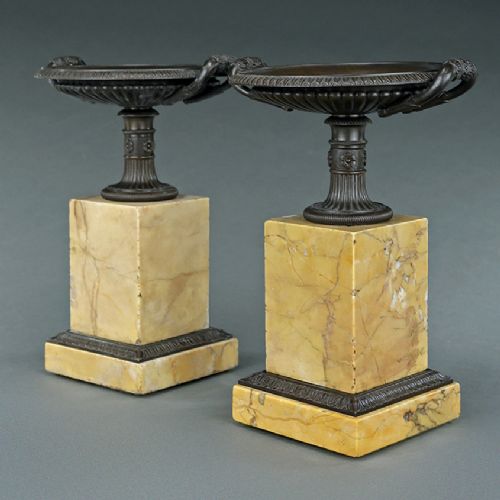
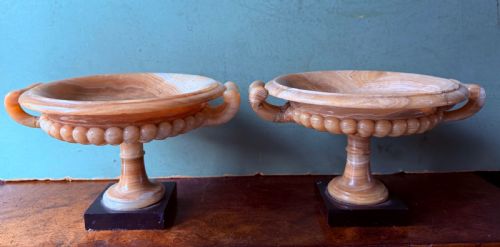
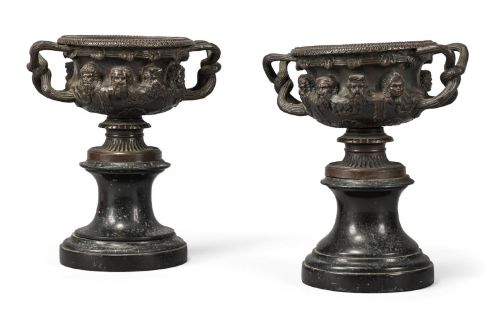
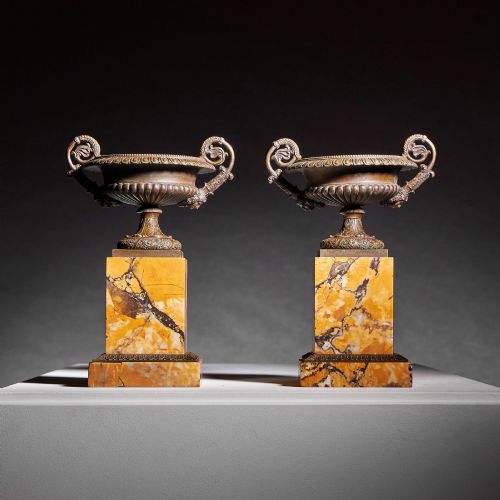
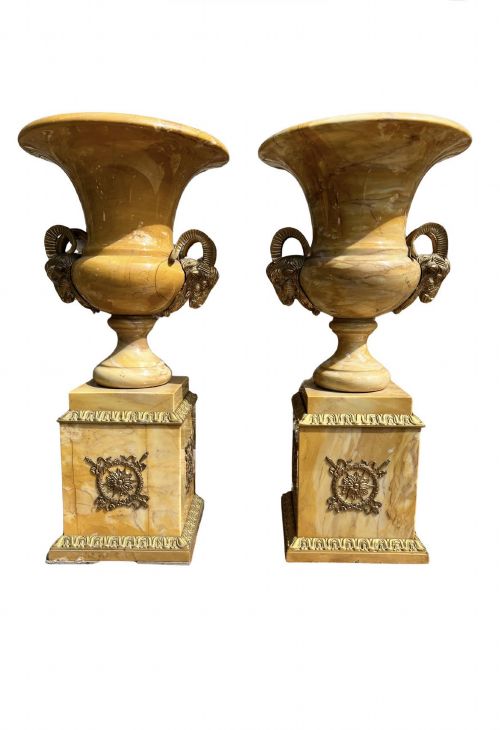
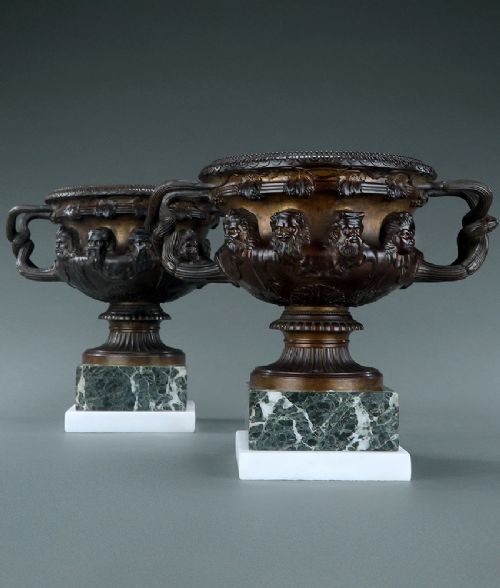
When buyers search for decorative marble urns, they encounter nineteenth-century objects rooted in neoclassical taste and Grand Tour travels. These pieces take the form of classical urns, tazzas, cassolettes, and vases mounted on stone bases.
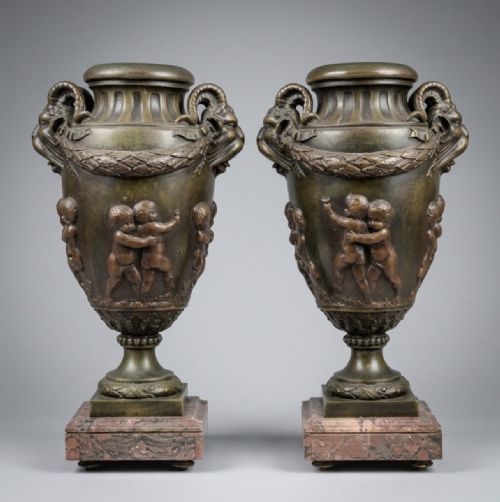
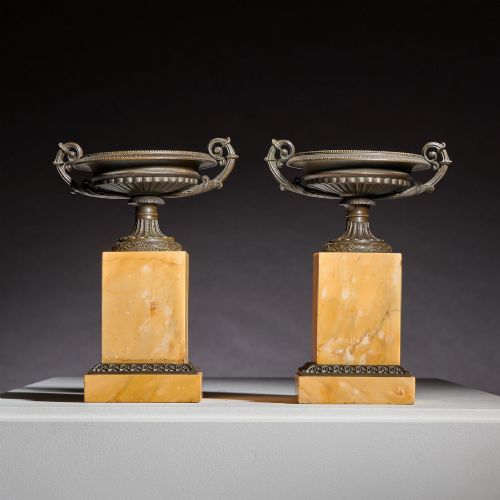
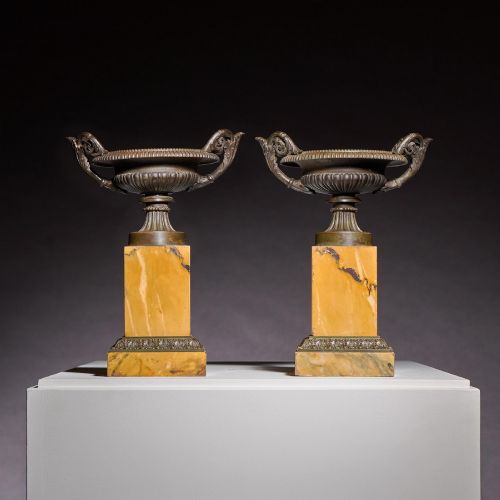
The selection on this page centres on nineteenth-century French and Italian pieces, drawing heavily from French Empire and Louis XVI styles. Makers combined turned stone bodies with cast metal mounts to create ornamental vessels for mantelpieces and tables.
Alongside standard urns, the inventory holds functional adaptations like table lamps and clocks flanked by matching garnitures. These varied objects share a reliance on classical silhouettes and polished mineral surfaces.
How They Were Made
Craftsmen turned and carved solid blocks of marble, onyx, and alabaster on a lathe to form the body of each vessel, achieving smooth profiles and hollow interiors. Stones such as Siena, green, black, and white marble provided varied natural veining and colour.
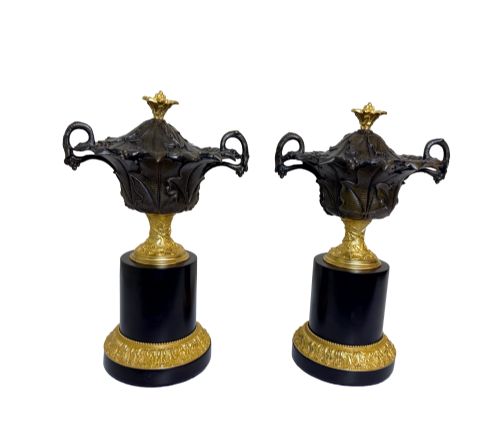
Foundries cast bronze, brass, and spelter elements using traditional techniques, then gilded, patinated, or finished these mounts with ormolu. Artisans combined the heavy stone components with intricate metal handles, collars, and plinths.
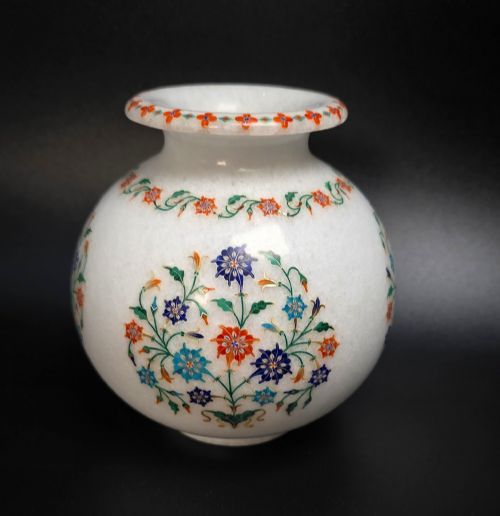
Selected examples incorporate inlaid pietra dura work or carved relief details that mirror ancient archaeological discoveries. Assembly relied on threaded metal rods running through the centre to secure the stone and metal sections together.
Victorian travellers occasionally brought home miniature alabaster vases so heavy their luggage required extraporters at every railway station.
What Varies in Quality
The fineness of the cast metal mounts dictates much of the visual success, separating sharp, hand-chiseled ormolu from softer, simpler castings. Superior pieces display crisp definition in the acanthus leaves, classical figures, and beaded borders.
The choice and preparation of the stone body determine the overall presence of the object, with highly figured marbles and unblemished onyx commanding attention. Skilled turning ensures balanced proportions and symmetrical wall thickness across the vessel.
Integration between the metal mounts and the stone surfaces reveals the maker's hand, where tight joints and secure fixings indicate careful workshop practices. Pieces created as matched pairs maintain consistent stone grain and uniform patination across both objects.
The Decorative Marble Urns Glossary
- Tazza
- A shallow cup or vase on a pedestal foot, often derived from classical metal prototypes. These open vessels frequently appeared as Grand Tour souvenirs.
- Cassolette
- A decorative vase equipped with a reversible lid that functions as a solid cover or a burner. Many nineteenth-century examples feature mounted bronze handles and marble bodies.
- Ormolu
- Gilded bronze produced through a mercury amalgamation process or electroplating on nineteenth-century decorative objects. This bright metallic finish highlights cast brass and bronze mounts.
- Grand Tour
- The nineteenth-century travel itinerary through Italy where visitors acquired classical antiquities and souvenirs. Souvenirs included miniature bronze vases and marble architectural models.
- Pietra dura
- An inlaid stone technique using cut and fitted polished coloured stones to create pictorial designs. This painstaking method appears on select nineteenth-century vases.
Decorative Marble Urns: Frequently Asked Questions
What are decorative marble urns?
These pieces are ornamental vessels inspired by classical antiquity, typically shaped from natural stone during the nineteenth century. They combine turned marble bodies with cast bronze or ormolu mounts.
Craftsmen produced them in various forms, including campana urns, shallow tazzas, and reversible cassolettes. They served primarily as decorative focal points in nineteenth-century interiors.
How were they used historically?
Wealthy travellers and collectors displayed these urns on mantelpieces, pedestals, and library tables to signal classical learning and refined taste. They functioned as purely ornamental objects or as garniture sets flanking clocks.
Some examples were adapted later to hold lamp fittings or serve as inkwells. Their primary role remained decorative enhancement within formal rooms.
How do I style them at home?
Place a pair of urns on a mantelpiece, sideboard, or console table to establish symmetrical balance in a room. Their stone surfaces contrast effectively with timber furniture and modern interiors.
Ensure they sit on stable, weight-bearing surfaces due to the heavy combination of stone and metal. Keep them away from direct heat sources to protect the polished stone finish.
How do I identify French Empire style?
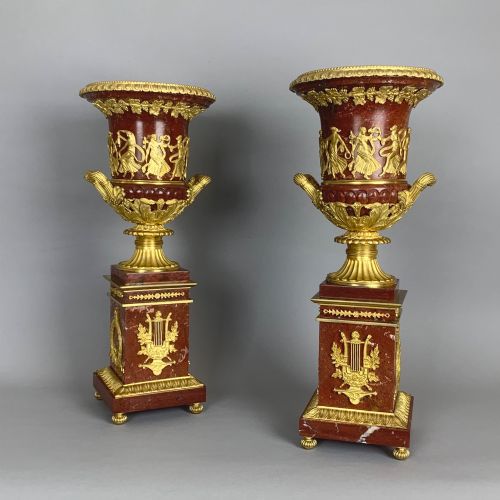
French Empire pieces display strict classical geometry, often featuring dark marbles paired with bright ormolu mounts. Common motifs include laurel wreaths, sphinxes, and military trophies.
This style reflects the neoclassical revival under Napoleon, emphasising imperial authority and Roman forms. The metalwork on these pieces tends to be particularly bold and substantial.