




Neoclassical Marble Vases
Neoclassical marble vases bring classical proportion and quiet gravity into a room, channelling the grand traditions of antiquity.
Neoclassical Marble Vases
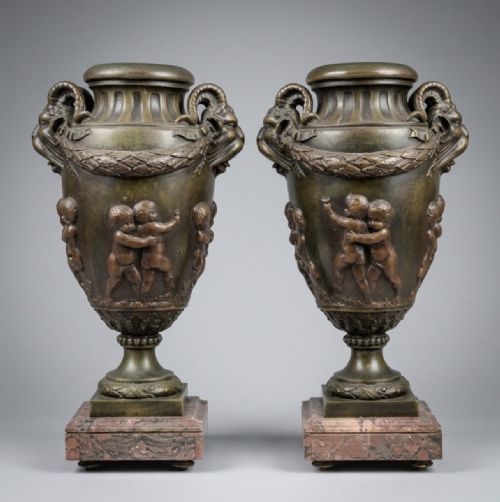
Neoclassical marble vases draw on ancient Greek and Roman forms, translating classical architecture and sculpture into ornamental vessels for the home. When exploring neoclassical marble vases, buyers frequently encounter pairs designed for mantelpieces, side tables, and architectural consoles.
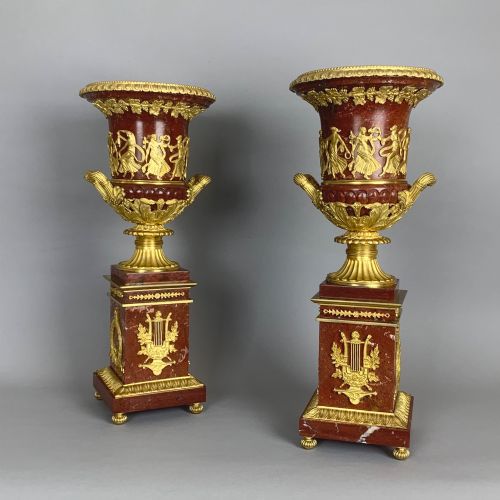
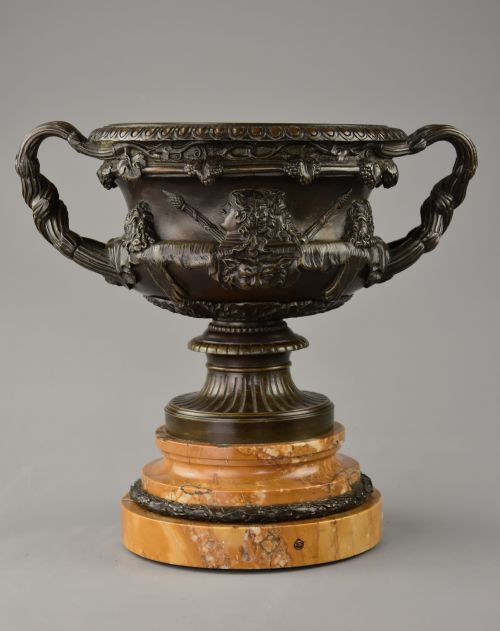
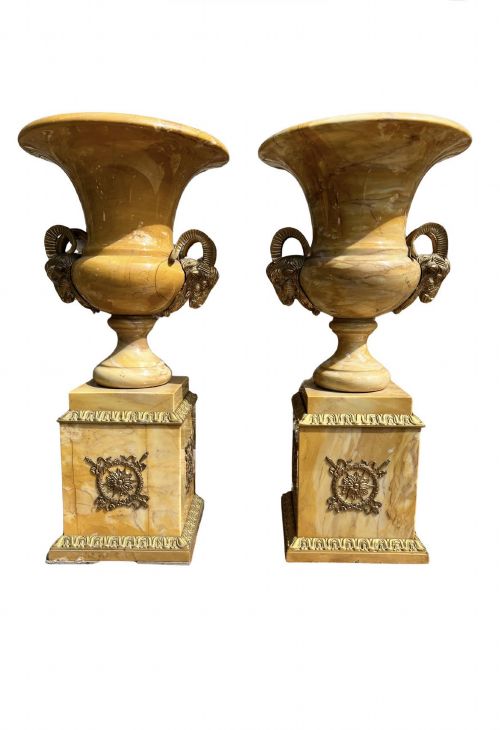
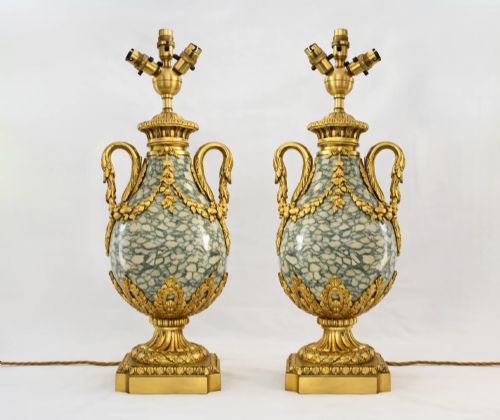
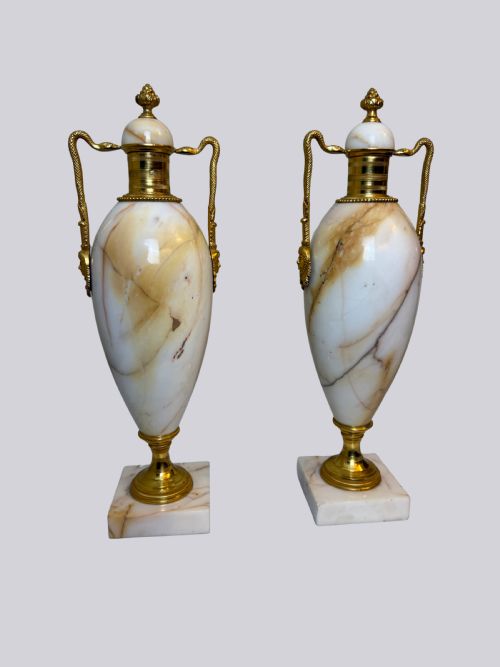
The selection here heavily reflects the nineteenth century, encompassing Grand Tour souvenirs, French Empire designs, and Louis XVI style interpretations. These pieces often take the form of campana urns, cassolettes, and amphorae, merging carved stone with metal mounts.
Materials and construction
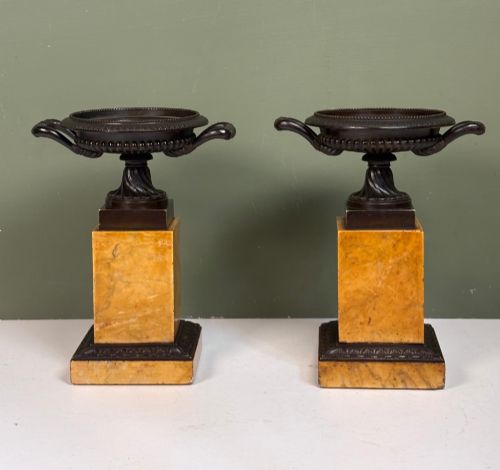
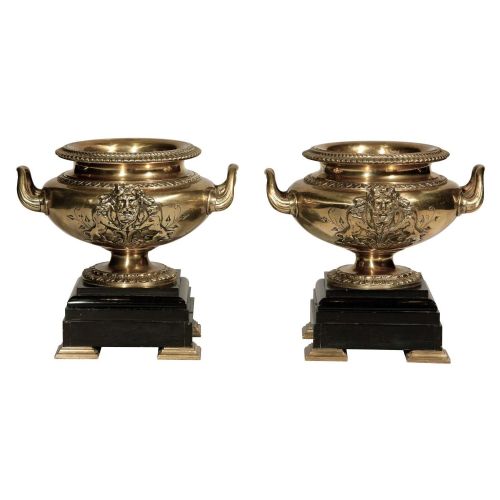
Makers shaped these vessels from various marbles and stones including white marble, green marble, rouge marble, sienna marble, onyx, and alabaster, frequently pairing them with cast metals. Gilt bronze, ormolu, and brass mounts provide structural support and decorative contrast to the smooth stone bodies.
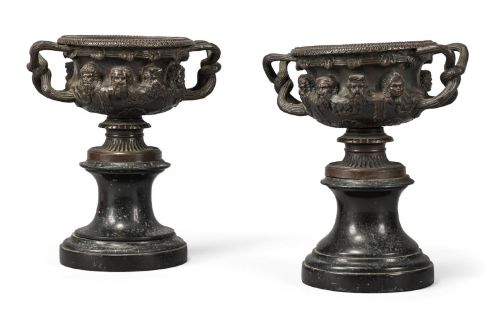
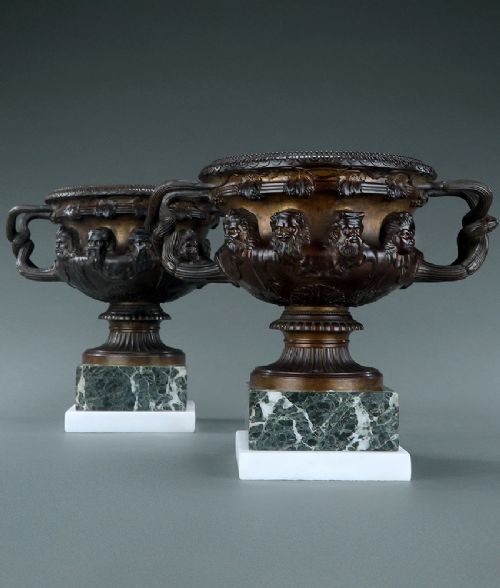
Bronzed spelter and patinated bronze also appear in the metal elements, particularly on Grand Tour reductions of famous antiquities. Artisans turned the stone on lathes and hand-carved the finer details, securing the metal collars and handles with pinned joints.
Some nineteenth-century travellers carried home miniature alabaster vases in custom leather cases to survive the rough carriage ride across the Alps.
Evaluating quality and execution
Quality rests primarily in the crispness of the bronze chasing and the precise figuring of the marble. Finer examples display tightly fitted metal mounts that follow the contours of the stone without gaps or crude pinning.
The weight and selection of the marble itself dictate the character of the piece, with dense, evenly coloured stones commanding greater visual presence. Additionally, the fidelity of the classical casting, especially in reduction vases modeled after ancient monuments, separates standard decorative objects from superior works.
Selim Bright
The Neoclassical Marble Vases Glossary
- Cassolette
- A dual-purpose vessel featuring a reversible lid that transforms from a solid urn top into a incense burner or candleholder. They are frequently mounted in ormolu during the nineteenth century.
- Campana urn
- A bell-shaped vessel with an everted rim and footed base, modeled directly after ancient Roman garden vases. This silhouette forms the basis for many Grand Tour souvenirs.
- Grand Tour
- A cultural journey undertaken by wealthy young Europeans to study classical antiquities in Italy, giving rise to souvenir bronzes and marble models. These items were brought back to furnish English and European homes.
- Ormolu
- Gilt bronze created by applying a mercury and gold amalgam to cast bronze, producing a rich golden lustre. It provides structural and decorative mounts on marble bodies.
- Alabaster
- A fine-grained translucent stone used for carved classical urns and vases. Its softness allows for delicate detail work and lets light pass slightly through the vessel wall.
Neoclassical Marble Vases: Frequently Asked Questions
What is a Grand Tour vase?
Grand Tour vases are miniature or reduced copies of famous ancient monuments, such as the Warwick Vase or the Albani Vase, created as souvenirs for travellers in Italy during the eighteenth and nineteenth centuries.
These pieces allowed collectors to bring the prestige and aesthetics of classical antiquity into domestic interiors.
How do I style marble urns at home?
Marble urns work effectively as symmetrical pairs on mantelpieces, sideboards, or pedestals where their classical proportions can anchor a room. Their neutral stone tones and metallic mounts complement both traditional period spaces and restrained modern interiors.
Because many function as cassolettes, they also offer versatile display options depending on how the lid is positioned.
Are these vases from ancient Rome?
The pieces seen here are almost entirely nineteenth-century interpretations or souvenirs created long after antiquity, inspired by classical Roman and Greek archetypes. They reflect the nineteenth-century revival of classical taste rather than archaeological antiquity itself.
Craftsmen utilised period manufacturing techniques like lathe-turning and bronze casting to emulate ancient forms.