






French Cassolettes Pair
A french cassolettes pair brings dual-purpose classical elegance to a room, functioning as either a covered urn or a reversible candleholder.
French Cassolettes Pair
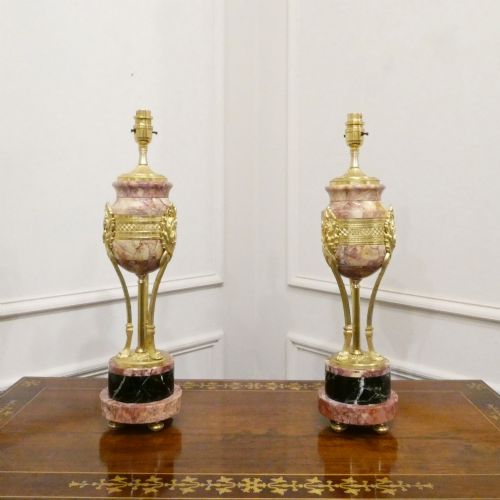
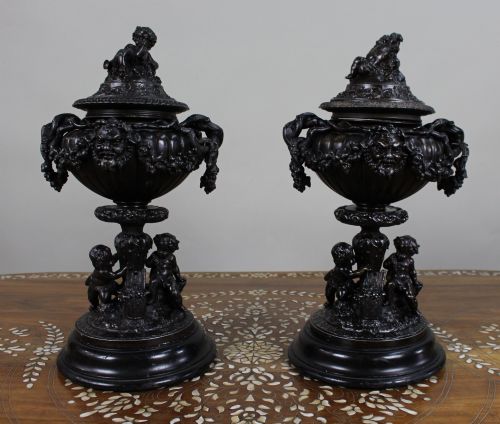
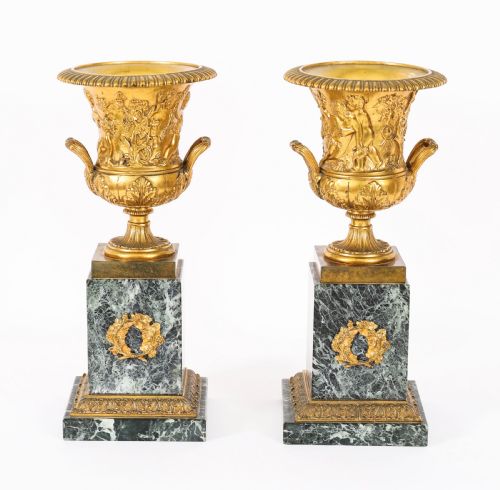
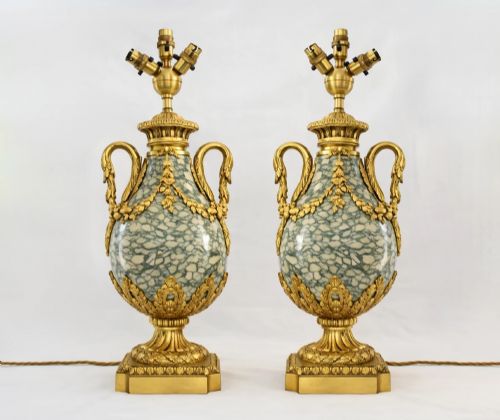
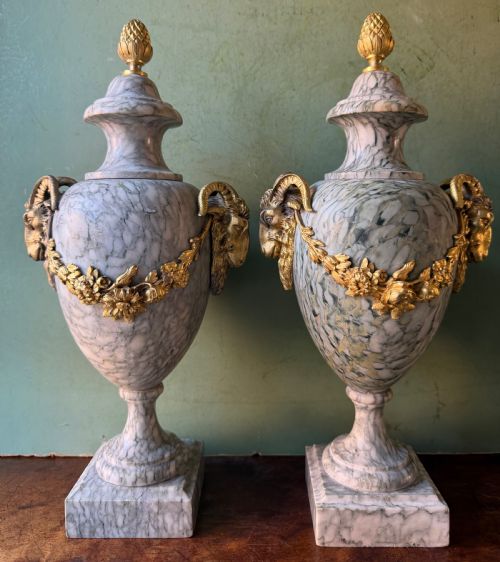
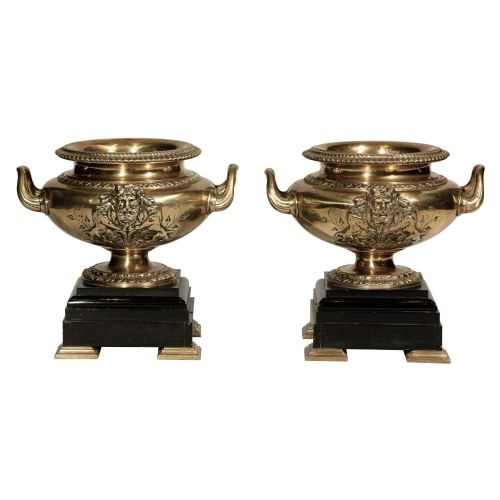
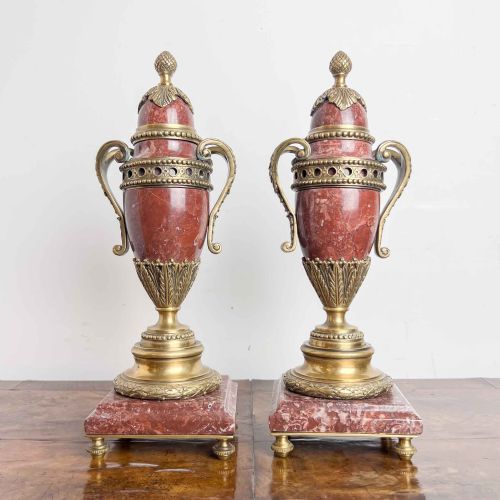
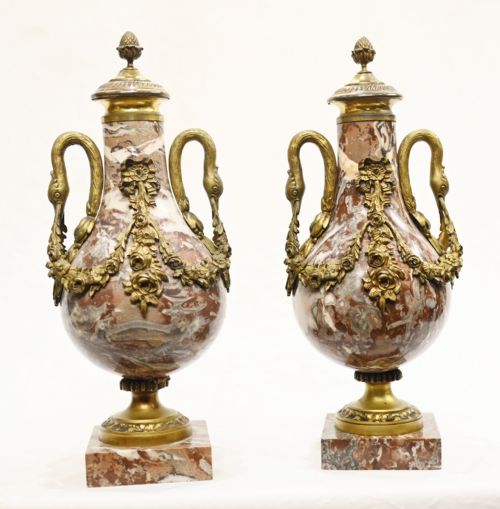
A french cassolettes pair consists of decorative twin vessels originating primarily from the nineteenth century, built with a clever reversible lid that transforms an urn into a candleholder. These pieces draw heavily from the neoclassical, Louis XVI, and French Empire styles, reflecting a deep historical fascination with antiquity.
The objects seen here most frequently take the form of marble bodies mounted in cast metal, spanning standard decorative urns and converted table lamps. Makers shaped these items for formal mantelpieces and display tables, combining ornamental utility with sculptural presence.
Materials and construction
The physical build relies on the pairing of dense stone bodies with cast metal mounts, uniting turned marble, onyx, or quartz with gilt bronze and ormolu. Workshops turned the stone on lathes to form the vases and pedestals before applying finely detailed metal collars, handles, and bases.
Casting techniques for the bronze elements required lost-wax methods or sand casting to achieve crisp neoclassical foliage and masks. Artisans then gilded the metal surfaces or left the bronze patinated, securing the components with internal threaded rods.
French Cassolettes Pair Retail Price Guide 2026
Typical asking prices for french cassolettes pair among the pieces listed under this phrase on Sellingantiques today, from the lower quarter to the upper quarter. They describe what is for sale here now, not the wider market.
Listings span multiple marble varieties including rouge, siena, green, white onyx, and black marble paired with gilt bronze.
Evaluating craftsmanship and proportion
Quality rests heavily on the crispness of the bronze chasing and the select character of the stone. Superior examples show deeply carved acanthus leaves, finely articulated mounts, and richly figured marble such as rouge, siena, or vert de mer.
Proportion and weight also divide standard output from finer studio work. Better pieces display balanced symmetry between stone and metal components, with heavy, tight-fitting lids that reverse smoothly without wobble.
The French Cassolettes Pair Glossary
- Cassolette
- A dual-purpose decorative vessel with a reversible lid that exposes either a solid finial or a candle nozzle.
- Ormolu
- Finely chopped gold leaf amalgamated with mercury and applied to bronze through heat gilding, prevalent in eighteenth- and nineteenth-century French work.
- Grand Tour
- The nineteenth-century practice where wealthy travellers collected classical antiquities and neoclassical souvenirs across Europe.
- Empire Style
- The nineteenth-century design movement inspired by the classical architecture and motifs of ancient Rome and Greece.
- Breche Violette
- A richly coloured decorative marble featuring jagged, contrasting veins of purple, red, and cream.
French Cassolettes Pair: Frequently Asked Questions
What is a french cassolettes pair?
These pieces are decorative twin urns featuring reversible lids designed to hold candles or act as closed vessels.
Originating largely in nineteenth-century France, they bridge the gap between sculptural ornaments and functional lighting accessories.
How do you use cassolettes?
Owners typically display them on mantelpieces, sideboards, or console tables as matched decorative focal points.
Turning the lid over allows the vessels to switch function from ornamental urns to candlesticks.
How do you date nineteenth-century pieces?
Dating relies on examining the casting quality of the ormolu mounts and the turning style of the marble bodies.
Nineteenth-century interpretations of Louis XVI designs often incorporate heavier bronze casting and specific regional stone varieties.
What marble types are common?
Listings frequently feature white onyx, green marble, black marble, and rouge or siena varieties.
These stones were selected for their striking natural veining and polished surfaces that complemented gilt bronze mounts.