




Green Marble Urns
Green marble urns are heavy, decorative vessels of classical form that bring a tangible weight of history and colour to a room.
Green Marble Urns
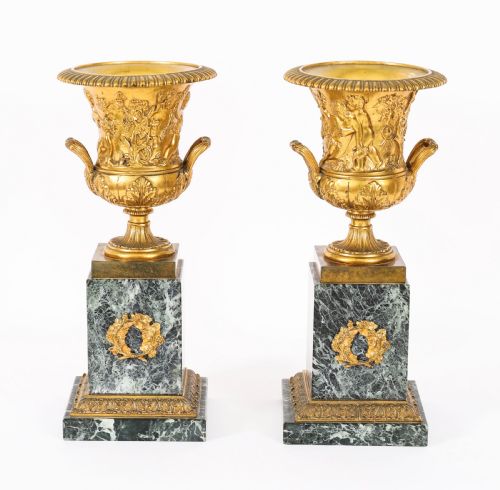
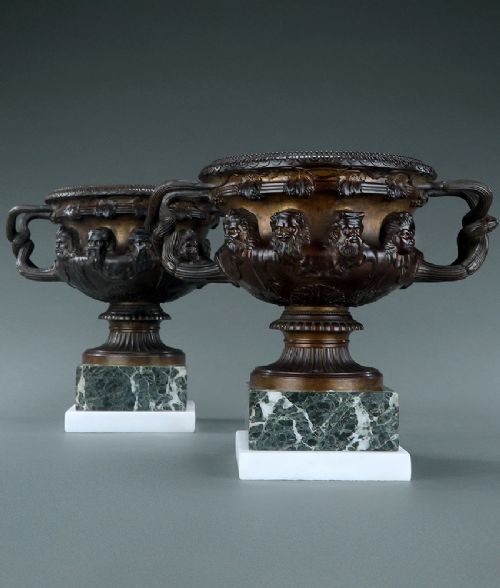
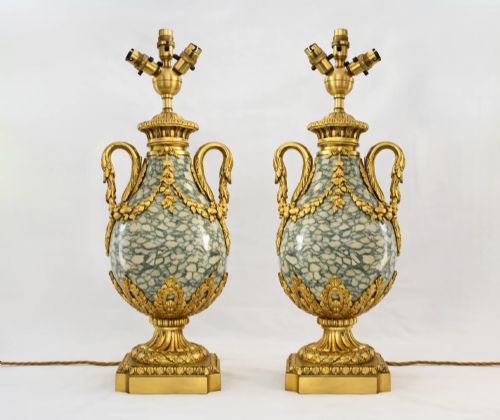
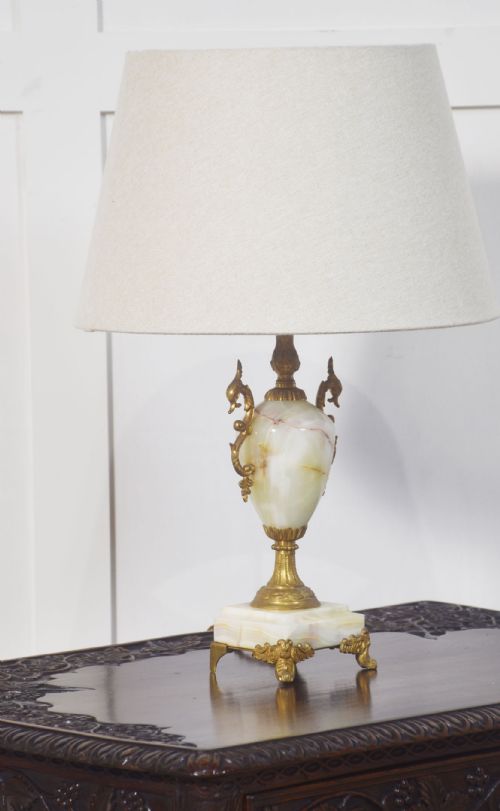
Green marble urns span decorative vessels, cassolettes, and table lamps shaped by nineteenth-century tastes. These pieces frequently draw upon classical antiquity and the Grand Tour, translating ancient architecture into domestic ornament.
The most common examples on this page are nineteenth-century French and Italian works. You will regularly encounter pairs designed as garnitures or mounted as lamps, combining carved stone bodies with cast metal mounts.
Forms range from campana shapes to lidded cassolettes and columnar pedestals. They reflect periods from the Victorian era through the early twentieth century, showing steady demand for Neoclassical and Louis XVI styles.
What Varies in Quality
The fineness of the stone turning and the depth of the natural veining set the baseline for quality. Richly variegated green marble and smoothly hollowed profiles distinguish superior work from simpler productions.
The crispness and weight of the metal mounts separate ordinary examples from the best. Finely chased ormolu and gilt bronze accents, with sharply defined acanthus leaves or classical motifs, show the hand of a skilled artisan.
Some nineteenth-century travellers carried home entire marble columns in their luggage, while others settled for a modest green urn.
The Green Marble Urns Glossary
- Cassolette
- A dual-purpose vessel with a reversible lid that functions as an urn or a burner. These pieces often feature pivoting mounts.
- Grand Tour
- A cultural journey undertaken by nineteenth-century travellers who collected antiquities and souvenir marbles in Italy. This movement heavily influenced continental design.
- Ormolu
- Gilt bronze created by applying a mercury-gold amalgam to cast bronze. The technique produces a warm, durable golden finish.
- Campana
- A bell-shaped vase form derived from classical pottery. It is frequently seen in bronze and marble decorative works.
Green Marble Urns: Frequently Asked Questions
How do I clean green marble urns?
Dust the stone and metal mounts gently with a soft, dry cloth. Avoid water, alcohol, and modern chemical cleaners, as these substances can strip the historic polish from the marble and damage the gilt surfaces.
For stubborn dust in crevices, use a soft natural-bristle brush. Take care around the junction of stone and metal to prevent moisture from settling in the seams.
Were these urns originally made as lamps?
Many nineteenth-century pieces served purely as decorative ornaments, garniture sets, or cassolettes. Wiring was frequently added later in the twentieth century to convert them into table lamps without harming the original stone.
When inspecting a wired piece, look for discreet cord placement that preserves the integrity of the base and mounts. The core structure often retains its original function beneath the electrical fittings.
What is the difference between marble and alabaster?
Marble is a hard, metamorphic rock that takes a high, durable polish and displays complex veining. Alabaster is a softer, gypsum-based stone with a translucent quality that allows light to pass through the material.
While both appear in classical vases and lamp bases, alabaster responds more readily to carving and is more sensitive to moisture. Green marble is chosen primarily for its deep colour and weight.
How can I tell the period of these pieces?
Dating relies on the style of the metal mounts, the turning technique of the stone, and the overall aesthetic movement. Nineteenth-century pieces often reflect French Louis XVI Revival or Grand Tour influences with hand-chased ormolu.
Examine the construction of the interior threads, screws, and mounting pins. Older pieces use hand-cut elements and heavy cast bronze rather than modern lightweight alloys.