





Classical Marble Cassolettes
These classical marble cassolettes are sculptural ornamental urns that bring a grand neoclassical symmetry and presence to a room.
Classical Marble Cassolettes
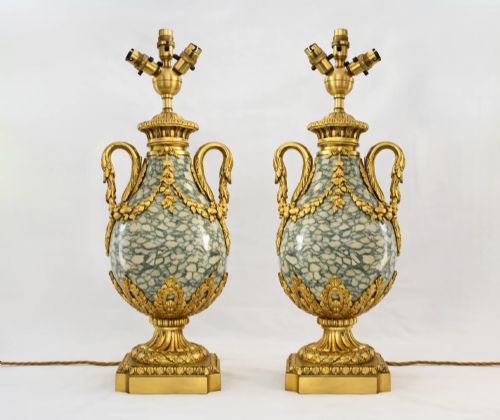
When you search for classical marble cassolettes, you are looking at decorative vessels that often double as lidded urns or table lamps. These pieces originate predominantly from the nineteenth century, reflecting the enduring taste for French Empire and Louis XVI style ornaments.
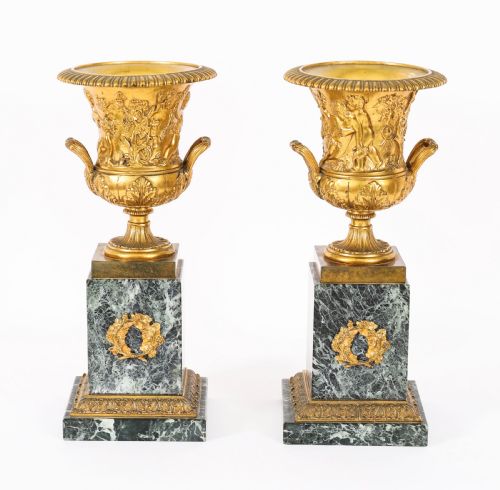
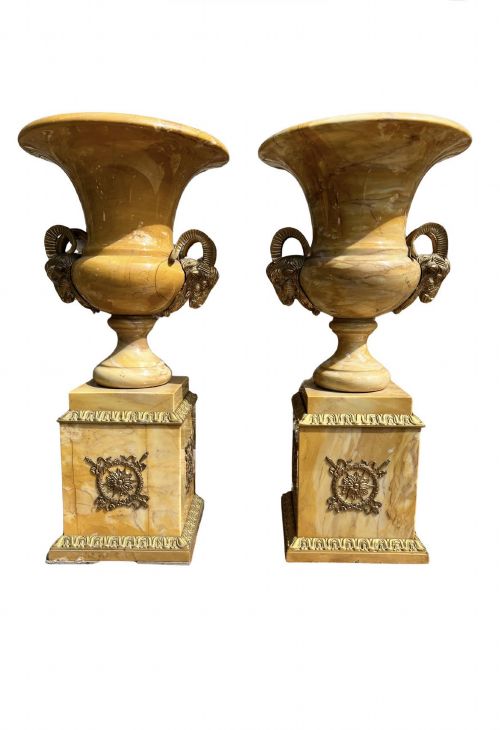
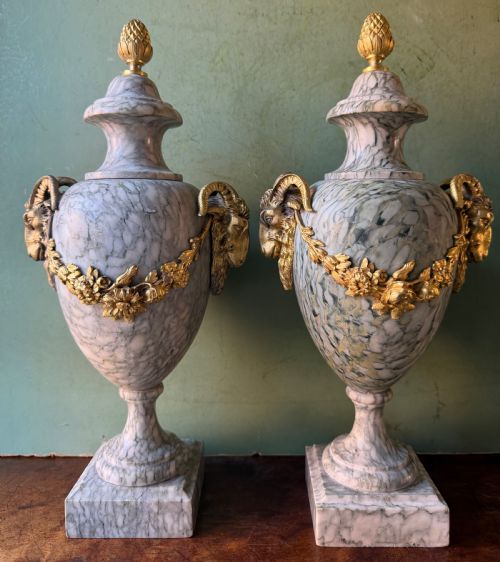
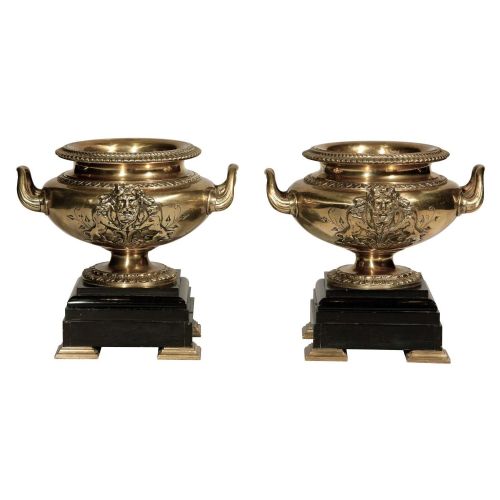
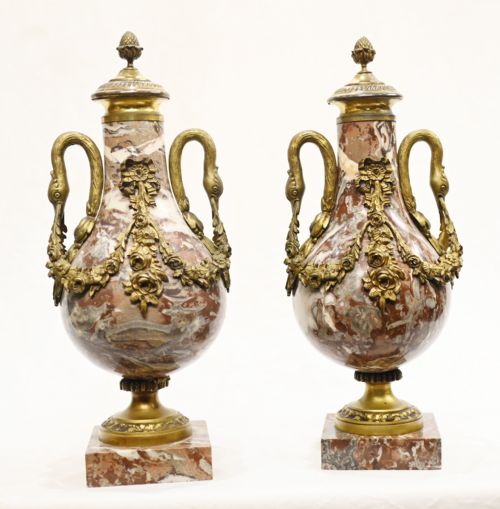
The versions you are most likely to meet on this page are matched pairs of decorative vases and urns mounted on marble bases. They frequently incorporate cast bronze or ormolu mounts, reflecting both Grand Tour souvenirs and European decorative arts.
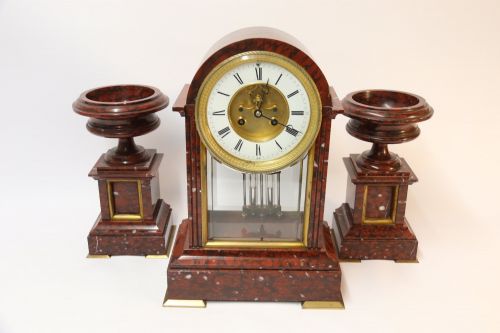
Forms range from simple ornamental urns to complex clock garnitures and functional cassolette lamps. The underlying stone varies from Sienna marble to heavily veined green and grey varieties.
How they were made
Maker workshops turned and carved natural stone into solid marble bodies, selecting varieties with prominent mineral veining and tonal depth. These stone sections were then polished to a smooth finish.
Metal components such as mounts, handles, and lids utilise cast bronze, brass, or ormolu. Artisans chased and gilt these bronze elements to create contrast against the dark or variegated marble plinths and bodies.
Listings feature nineteenth-century items utilising materials such as Sienna marble, Campan vert, ormolu, and bronze.
What varies in quality
The distinction between ordinary and exceptional examples rests in the crispness of the bronze casting and the depth of the ormolu gilding. Superior pieces display finely detailed chasing on the metal mounts rather than soft, commercial finishing.
The selection of the marble itself dictates much of the visual weight, with tightly figured green, grey, and Sienna stones commanding greater presence than plain or uniform blocks. Harmonious matching within pairs further separates standard decorative items from finer collector pieces.
Samuel Marti
The Classical Marble Cassolettes Glossary
- Cassolette
- A decorative vessel, typically an urn or vase, with a reversible lid that functions either as a solid cover or a burner. These pieces often feature mounted handles and rest on distinct plinths.
- Ormolu
- Finely ground high-carat gold mercury-gilded onto a bronze base. This technique creates a rich, warm metallic lustre popular in French decorative arts.
- Grand Tour
- A cultural journey undertaken by wealthy young Europeans through France and Italy to collect classical antiquities and art. Items acquired often included bronze and marble ornaments styled after antiquity.
- Garniture
- A set of matching decorative objects, typically comprising a central clock flanked by two matching vases or urns. They were designed to sit symmetrically on a mantelpiece.
- Campan vert
- A distinctive dark green and grey mottled marble quarried in the Pyrenees. It was heavily utilised in French neoclassical and Louis XVI revival decorative objects.
Classical Marble Cassolettes: Frequently Asked Questions
What is a cassolette?
A cassolette is a decorative vessel featuring a removable or reversible lid, designed originally to diffuse perfumes or simply serve as an ornamental urn.
In nineteenth-century interiors, they functioned primarily as decorative mantel ornaments or paired garniture elements rather than practical scent burners.
How do I style them?
These urns work best in pairs on heavy wooden mantelpieces, sideboards, or console tables where their symmetrical neoclassical lines can anchor a room.
Some converted examples also operate as table lamps, providing soft illumination while retaining their classical sculptural silhouette.
What periods do they date from?
The pieces seen here date predominantly from the nineteenth century, spanning the Victorian era and the height of the French revival styles.
Many draw aesthetic inspiration from the earlier Louis XVI period or reflect nineteenth-century Grand Tour travels through Italy and France.
What materials are used?
Construction combines turned natural marbles, such as Sienna and green veined varieties, with cast bronze and ormolu mounts.
Additional elements like brass, enamel, and onyx occasionally appear in the hardware, clock faces, or secondary decorative trim.