
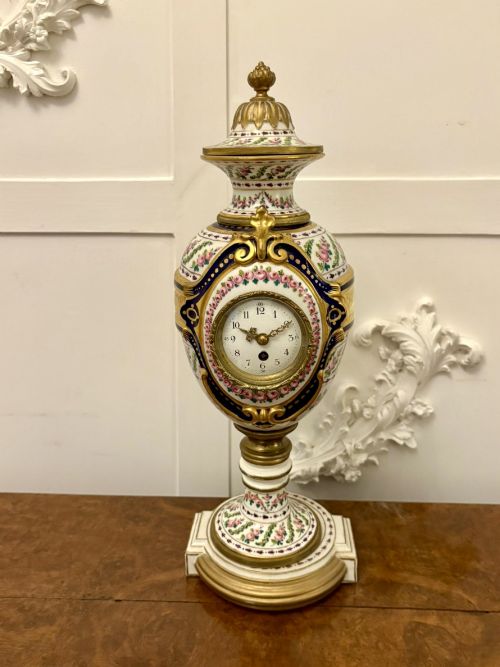
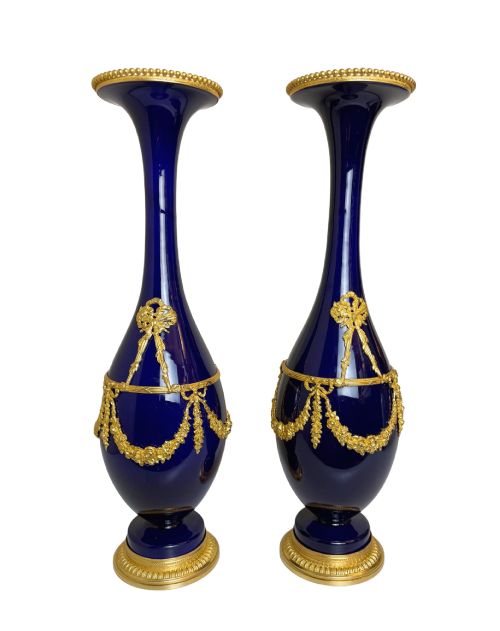
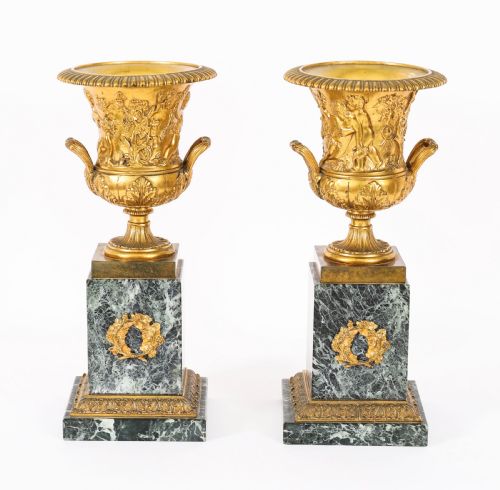
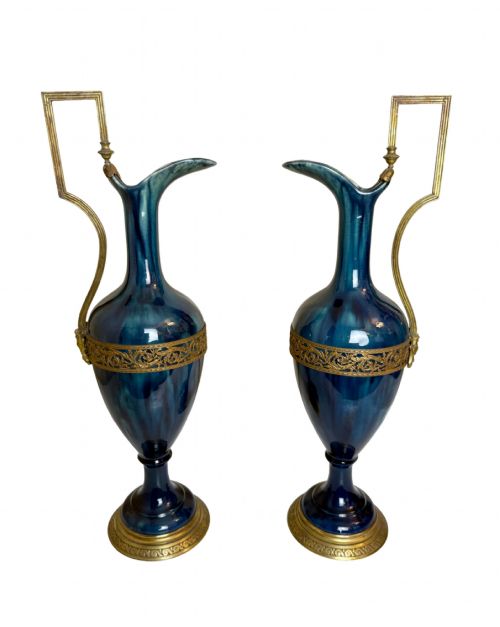




Ormolu Mantle Urns
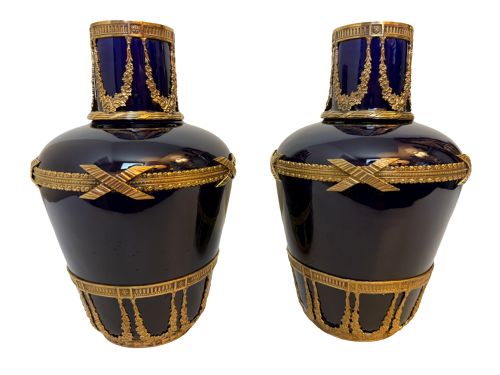
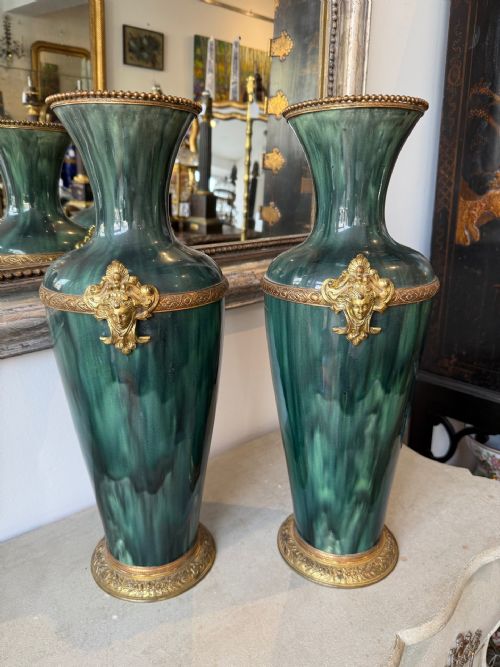
These ormolu mantle urns and associated garniture pieces bring French decorative ambition into a room, offering the heavy presence of nineteenth-century metalwork and porcelain.
Ormolu Mantle Urns
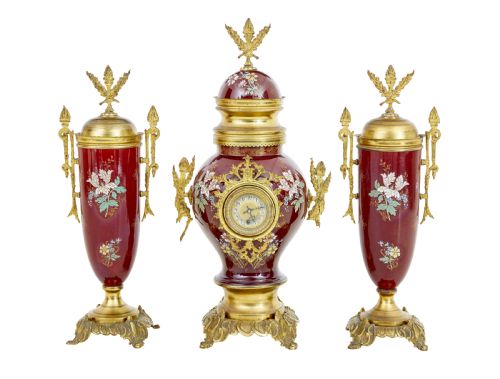
When you search for ormolu mantle urns, you encounter nineteenth-century French decorative objects, mantel clocks, and garniture sets designed to command attention on a fireplace or side table. The most frequent pieces on this page are pairs of porcelain, glass, or marble urns and vases fitted with gilt bronze mounts, alongside matching clock garnitures.
These items emerge predominantly from the Victorian era and the later decades of the nineteenth century, reflecting revivalist tastes ranging from French Empire to Rococo and Neoclassical styles. Makers and manufacturers of the period utilised rich materials to create balanced decorative displays for formal domestic interiors.
Materials and construction
The construction relies on the combination of cast gilt bronze or ormolu mounts paired with bodies formed from porcelain, marble, glass, slate, or toleware. Artisans cast and chased the metal components to produce crisp decorative detail before applying a gold finish.
Porcelain bodies often feature hand-painted scenes or solid colour grounds such as blue and pink, securely framed by the metal mounts. Marble and slate provide heavy, stable bases for clocks and candlesticks, anchoring the lighter metallic and ceramic elements.
Listings on this page span the nineteenth century, featuring materials from gilt bronze and porcelain to slate and toleware.
Judging quality in ormolu and porcelain
Quality rests on the crispness of the bronze chasing and the depth of the gilding, where sharper cast details and heavier metal weight distinguish superior examples. Finer porcelain bodies display superior hand-painting and careful integration with their ormolu mounts rather than loose or clumsy fitting.
The overall harmony of a garniture set or a matched pair dictates its desirability, as balanced proportions and intact original surfaces elevate a piece far above composite or heavily restored alternatives.
Achille Brocot
The Ormolu Mantle Urns Glossary
- Ormolu
- Gilt bronze produced by applying a finely ground high-carat gold mercury amalgam to a bronze object, followed by heat to drive off the mercury. This technique creates a durable, warm golden surface characteristic of nineteenth-century French luxury goods.
- Garniture set
- A matched set of three or more decorative objects, typically comprising a central clock flanked by vases, urns, or candelabra. These sets were designed to sit symmetrically on a mantelpiece.
- Grand Tour
- A cultural journey undertaken by wealthy young Europeans in the eighteenth and nineteenth centuries to study classical antiquities. Souvenirs from these trips often included marble and bronze ornamental urns.
- Toleware
- Painted or lacquered sheet metal items produced in the eighteenth and nineteenth centuries. The technique allowed makers to imitate more expensive lacquer and ceramic finishes.
- Sevres style
- A term describing nineteenth-century ceramics decorated in the manner of the famous French royal porcelain factory. Pieces often feature rich coloured grounds and hand-painted panels.
Ormolu Mantle Urns: Frequently Asked Questions
What is a clock garniture?
A clock garniture is a matched set consisting of a central mantel clock accompanied by two side pieces, such as urns, vases, or candlesticks. These sets were manufactured to create a balanced, symmetrical display on a fireplace mantel.
They became immensely popular in nineteenth-century French interiors, combining timekeeping with coordinated ornamental ceramics and gilt metalwork.
How do I date these pieces?
Dating relies on stylistic clues, manufacturing techniques, and the materials used across the nineteenth century. Victorian pieces often incorporate revival styles like Louis XVI or Neoclassical, while specific date markers appear in movement signatures on clocks.
Examining the casting quality of the ormolu and the composition of the porcelain body also helps narrow down the period of production between eighteen-sixty and nineteen-hundred.
Where should I display an urn?
These decorative urns suit prominent placement on mantelpieces, large sideboards, or console tables where their height and gilt details can catch the light. Because many were designed as part of a pair or garniture, displaying them symmetrically enhances their visual impact.
Ensure the supporting surface is sufficiently sturdy to bear the weight of marble and bronze components.
Are ormolu mounts fragile?
Ormolu mounts are relatively durable but require gentle care to preserve the original gilt surface. Avoid abrasive cleaners or harsh polishing compounds, which can wear away the thin layer of gold over the bronze.
Dusting with a soft, dry cloth is usually sufficient to maintain the appearance of the metalwork.