


Japanese Bronze Urns
Japanese bronze urns bring nineteenth-century craftsmanship into a room through patinated metal and intricate inlaid detail.
What Japanese Bronze Urns Are
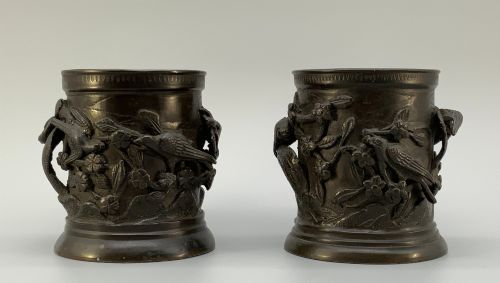
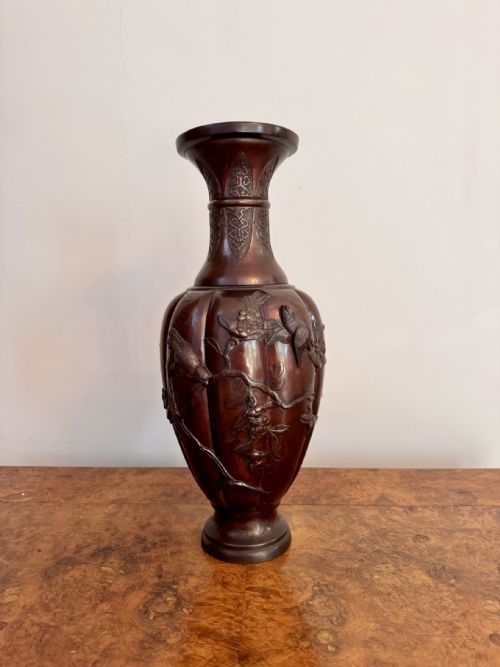
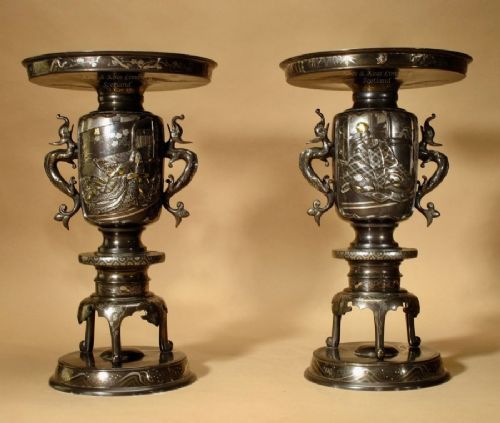
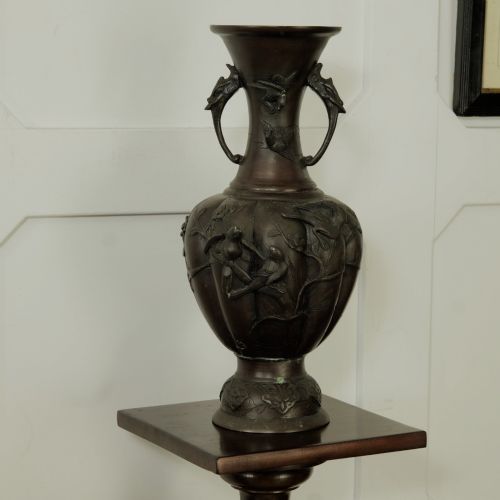
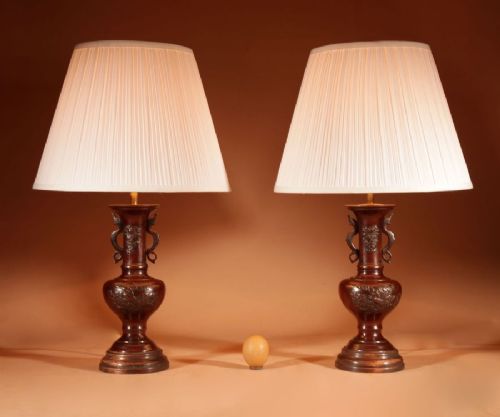
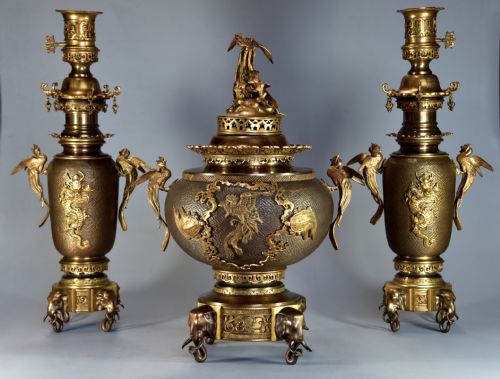
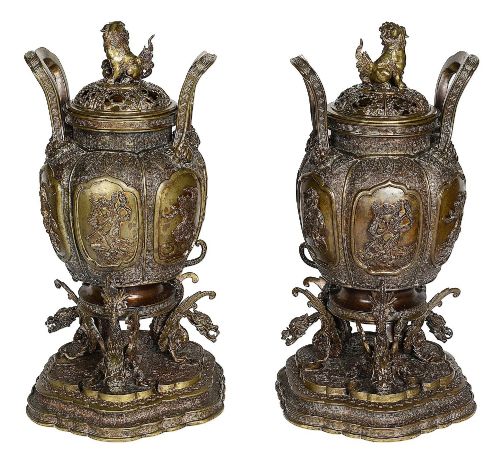
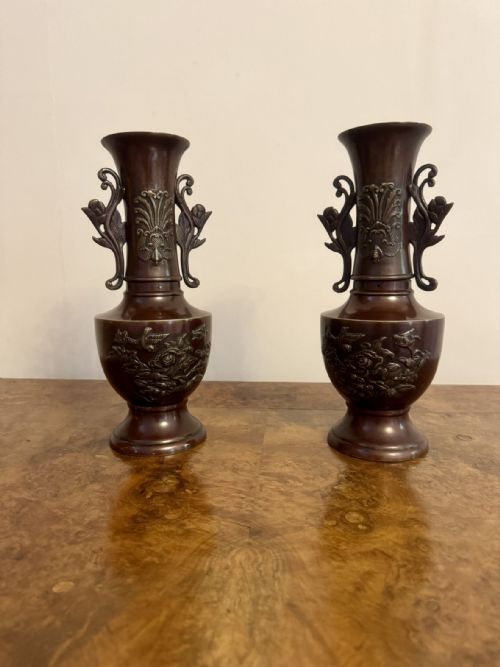
Japanese bronze urns comprise nineteenth-century vessels created in forms such as vases, lidded urns, incense burners, and planters. These decorative objects display the distinctive aesthetic of the Meiji period, capturing the artistry of late nineteenth-century metalwork.
The pieces appearing on this page span the nineteenth century, including dated examples from eighteen-sixty, eighteen-eighty, and nineteen-hundred. Buyers encounter both single vessels and matched pairs, often featuring substantial weight and scale.
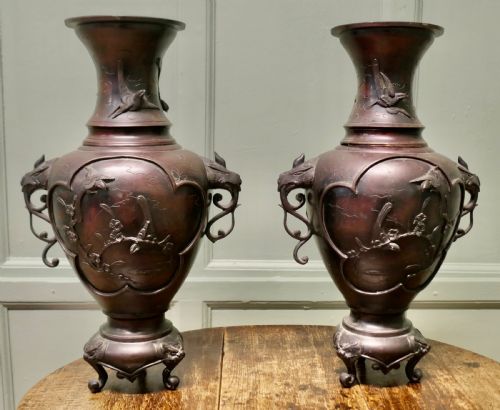
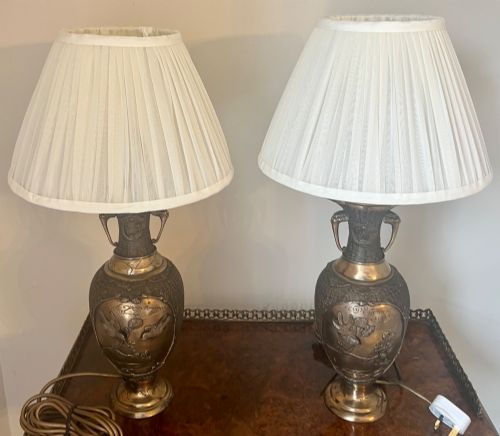
Makers shaped these items using traditional Japanese casting methods, frequently incorporating classical amphora shapes alongside traditional Japanese vessel forms. Each piece reflects the material culture of nineteenth-century Japan as exported to Western markets.
How They Were Made
Artisans cast these vessels in bronze, utilising metalworking traditions that produced durable, weighty pieces like eight-kilogram pairs. The core material provides a dark, stable foundation capable of holding complex surface decorations.
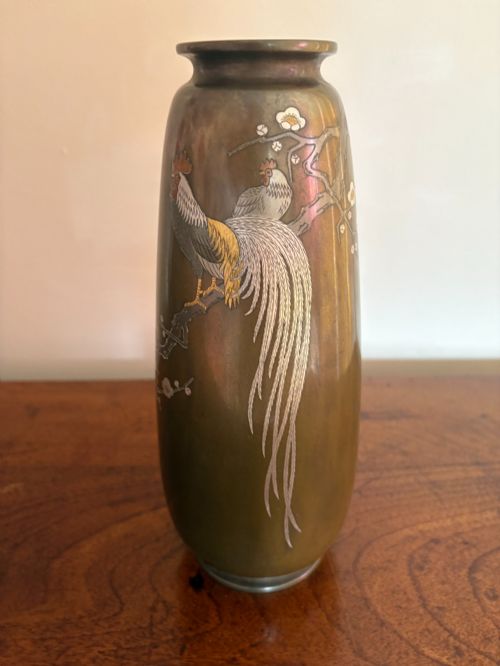
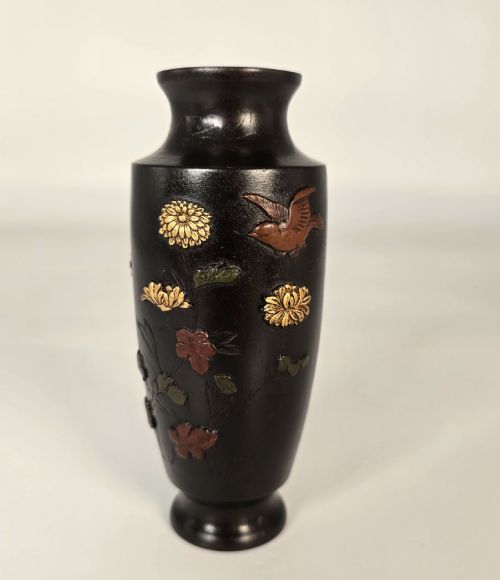
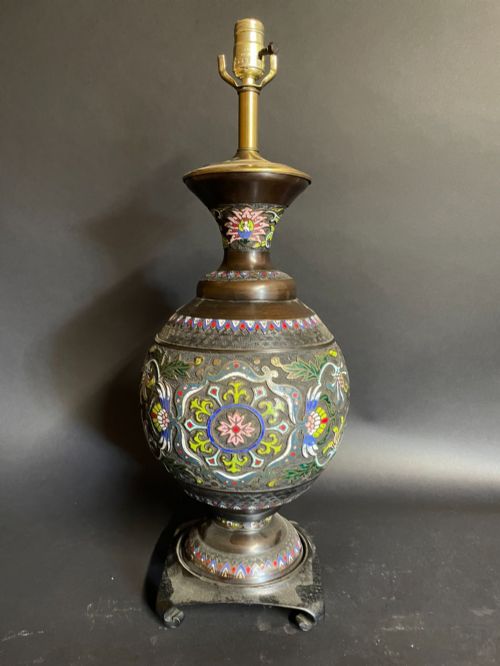
Craftsmen enriched the bronze surfaces using gold inlay and silver inlay techniques, embedding precious metals into the dark metal ground. Gilt bronze details also appear, adding contrasting metallic tones to the cast designs.
Retail Price Guide 2026
Typical UK retail prices for japanese bronze urns, calculated from the Sellingantiques database of over a million retail prices indexed since 2003. This retail price guide relies exclusively on Sellingantiques data; no external sources or auction records are used, so the figures do not describe the wider market.
Some bronze pairs tip the scales at eight kilograms, proving that nineteenth-century Japanese artisans took heavy metal seriously.
What Varies in Quality
The sophistication of the metal inlay work distinguishes finer examples, where gold and silver are flush with the bronze ground and form complex pictorial or geometric motifs. Weaker pieces display simpler surface treatment with less meticulous hand-finishing.
Substantial weight and balanced proportions separate impressive decorative items from lighter, more utilitarian vessels. The crispness of the cast relief and the depth of the original patination indicate the skill of the original workshop.
The Japanese Bronze Urns Glossary
- Bronze
- An alloy of copper and tin used for casting durable metal objects. It develops a natural dark patination over time.
- Meiji Period
- The era in Japanese history spanning from eighteen sixty-eight to nineteen twelve. This period saw a surge in high-quality metalwork exported internationally.
- Inlay
- A decorative technique where contrasting materials like gold or silver are embedded into recesses in the base metal. This method creates striking multi-coloured surface patterns.
- Amphora
- A classical two-handled vessel shape with a narrow neck, adopted by Japanese makers for Western export markets. These forms bridge traditional Eastern casting with Western decorative tastes.
- Patina
- The surface sheen and colour acquired by bronze through age and chemical treatment. A stable patination protects the metal and enhances visual depth.
Frequently Asked Questions
What are Japanese bronze urns?
Japanese bronze urns are nineteenth-century metal vessels produced during the Meiji period for both domestic use and export. They encompass lidded urns, vases, planters, and incense burners cast in heavy bronze.
These objects often feature decorative inlays of gold and silver. Their forms range from traditional Japanese vessel shapes to classical amphora outlines.
How do I date these bronze pieces?
Dating relies on stylistic markers associated with the Meiji period, which spans the late nineteenth and early twentieth centuries. Pieces on this page specifically reference dates between eighteen-sixty and nineteen-hundred.
Makers working within this era combined traditional casting with export-driven designs. Physical evidence such as casting seams and inlay style helps confirm this nineteenth-century origin.
Where were these urns made?
These vessels originated in Japan during the nineteenth century, specifically within the Meiji era. Skilled metalworkers produced them in specialised workshops catering to international demand.
Many of these objects crossed to Europe and Britain during the Victorian period. They reflect the cross-cultural exchange of late nineteenth-century decorative arts.
How heavy are antique bronze urns?
Antique bronze urns are notably heavy due to the solid bronze used in their construction. Some large pairs recorded here reach weights of eight kilograms.
This substantial mass reflects the generous use of metal by nineteenth-century founders. It requires sturdy placement surfaces when displaying them in a room.
How do I care for bronze urns?
Caring for bronze involves dusting gently with a soft cloth to protect the original patinated surface. Avoid chemical cleaners that can strip away historic gold and silver inlay.
Keep the pieces away from moisture and direct heat sources to preserve the metal. Stable indoor conditions maintain the integrity of the bronze and any embedded precious metals.