

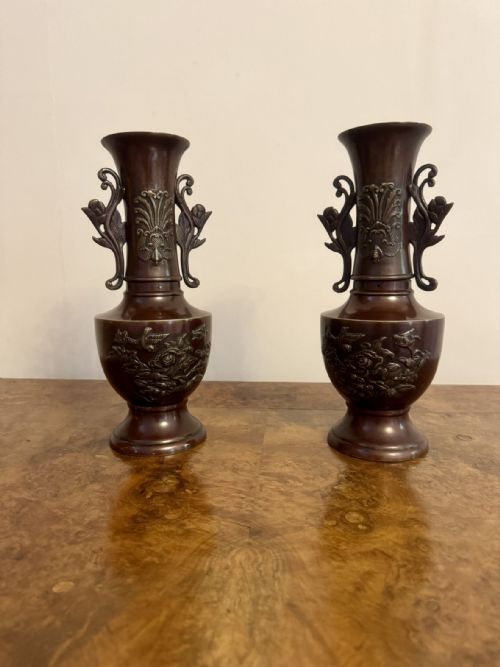


Relief Carved Bronze Vase
A relief carved bronze vase offers sculptural depth and weighty presence, bringing nineteenth-century craftsmanship directly into your interior scheme.
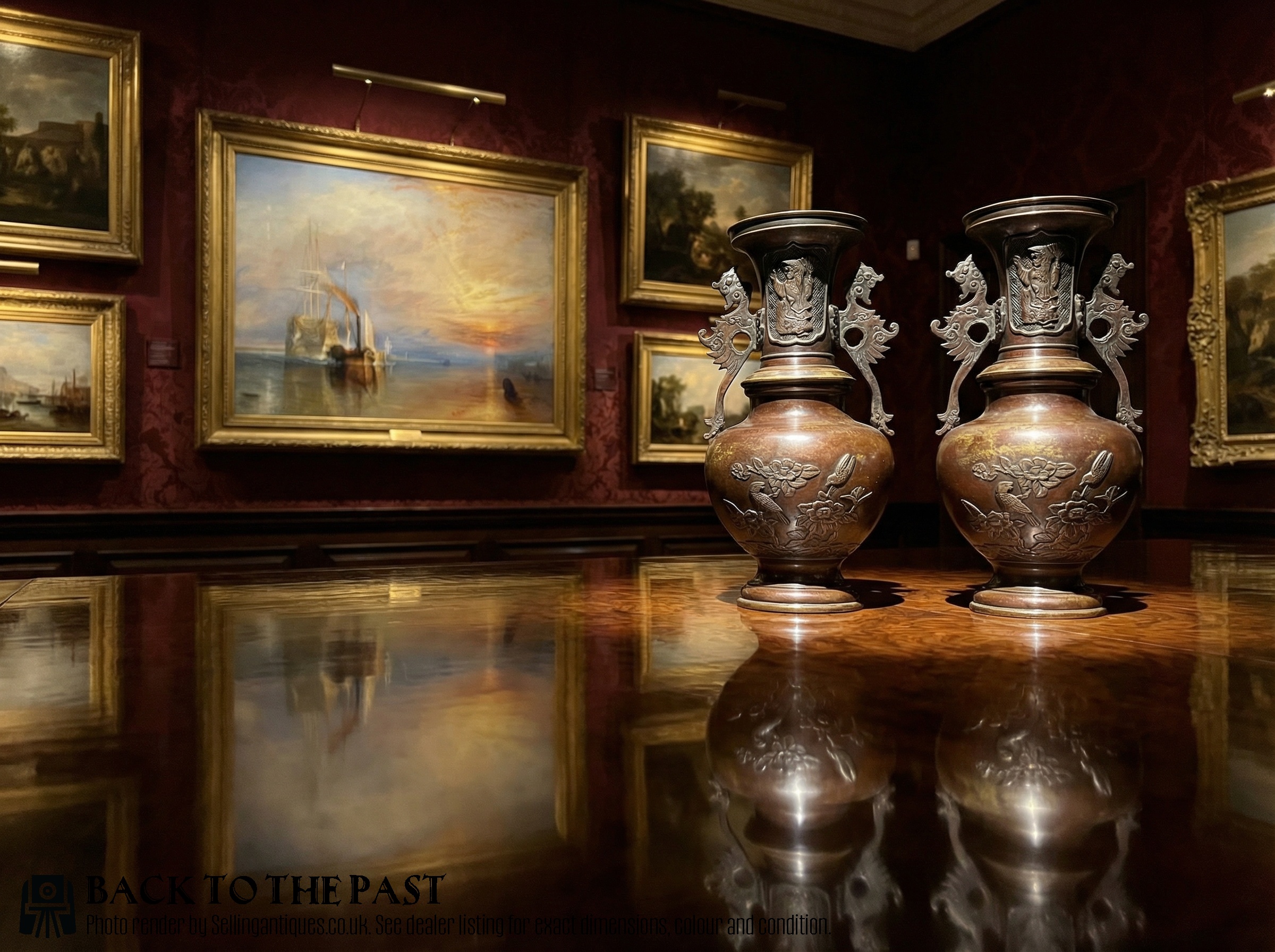
What relief carved bronze vases are
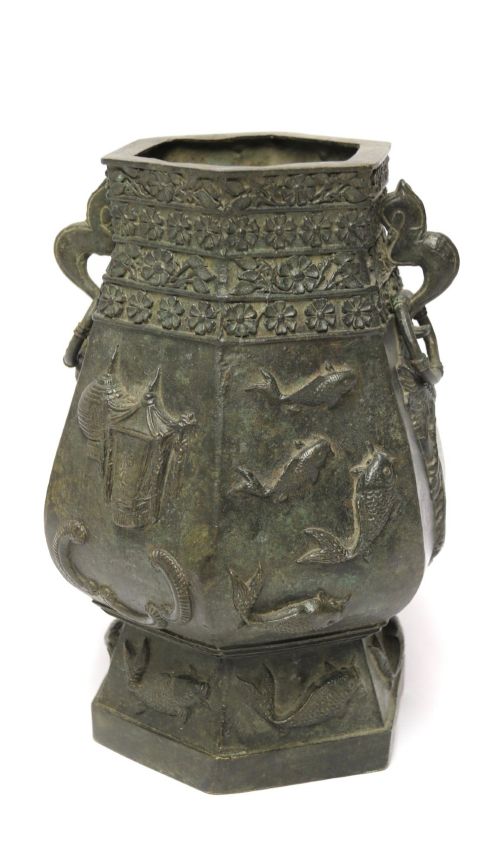
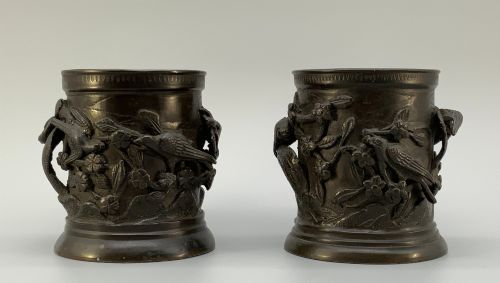
When you search for a relief carved bronze vase, you encounter substantial metal vessels originating from nineteenth-century workshops in China and Japan. These pieces range from solid hexagonal vessels to grand twin-handle urns and posy vases.
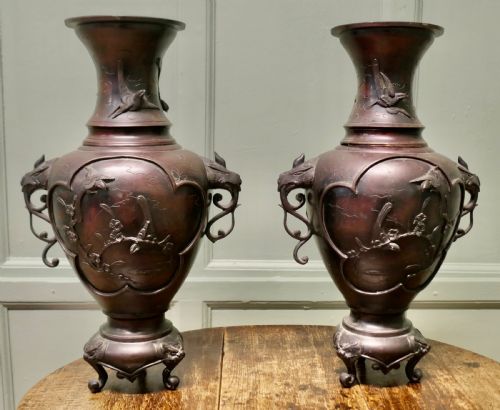
The selections span the Victorian era, the Meiji period, and the Qing Dynasty, reflecting distinct Eastern and Western stylistic intersections of the nineteenth century. You are most likely to meet Japanese Meiji period examples, often presented in impressive pairs.
Forms vary from large thirty-eight centimetre display pieces to smaller decorative table urns. Each object displays the distinctive heavy metal construction characteristic of nineteenth-century bronze casting.
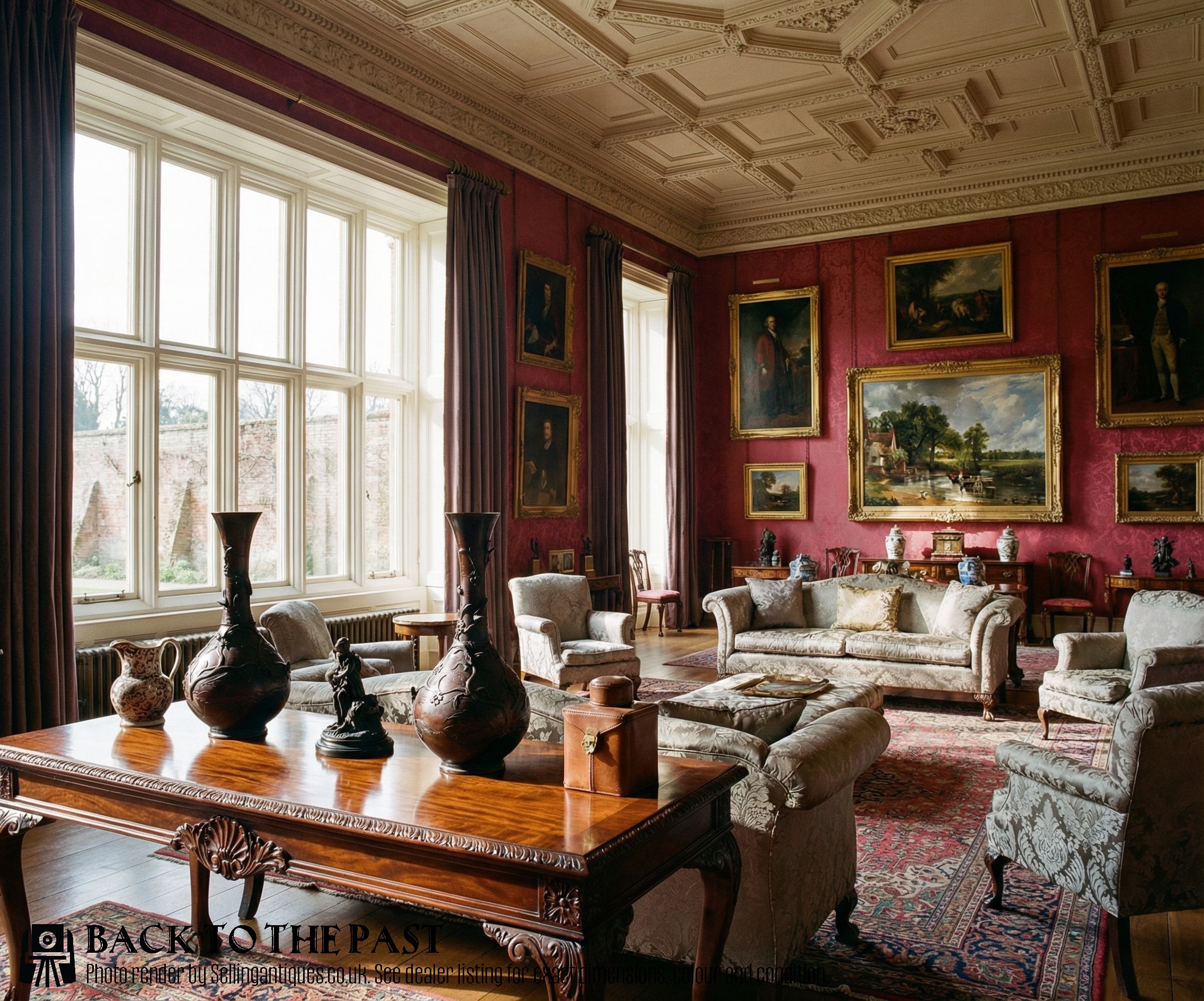
How they were made
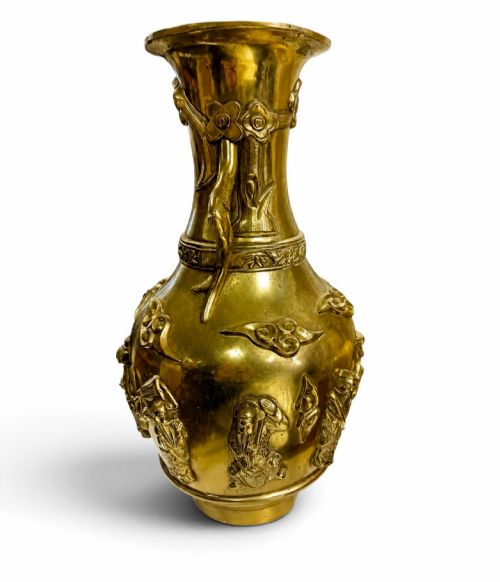
These vessels utilise solid bronze and brass foundations, shaped through traditional casting methods to achieve robust walls and intricate structural forms. Metalworkers then applied relief carving techniques directly into the heavy bronze surface to build up three-dimensional motifs.
Many examples incorporate mixed metal elements alongside gold inlay and silver inlay to highlight specific details within the carved decoration. This meticulous combination of inlay work and metal carving creates striking textural contrast across the surface.
Retail Price Guide 2026
Typical UK retail prices for relief carved bronze vase, calculated from the Sellingantiques database of over a million retail prices indexed since 2003. This retail price guide relies exclusively on Sellingantiques data; no external sources or auction records are used, so the figures do not describe the wider market.
One remarkably confident dragon manages to look both terrifying and slightly surprised by its own bronze tail.
What varies in quality
Quality rests in the crispness of the casting and the depth of the relief carving across the bronze body. Superior pieces demonstrate confident handling of form, whether in the symmetry of twin handles or the precise geometry of hexagonal vessels.
The integration of gold inlay and silver inlay further distinguishes finer works, where precious metal details remain secure and sharp within the bronze. Scale and proportion also dictate standing, with exceptionally large vessels commanding greater visual authority.
Genryusai Seiya
The Relief Carved Bronze Vase Glossary
- Bronze
- An alloy primarily composed of copper and tin, valued for its strength and suitability for detailed casting. This durable metal forms the structural body of every piece.
- Relief carving
- A sculptural technique where figures or patterns project from the background plane. This method gives the surface its tactile, three-dimensional character.
- Meiji Period
- The era in Japanese history spanning from 1868 to 1912, noted for significant artistic production in bronze work. Pieces from this time often exhibit highly accomplished metal techniques.
- Inlay
- A decorative technique where materials are embedded into recesses cut into the base metal. Gold and silver versions appear frequently in these listings.
- Hexagonal
- A six-sided geometric form utilised in certain vessel shapes. This structure requires precise metalworking skill during the casting process.
Frequently Asked Questions
What periods do these bronze vases come from?
The pieces span the nineteenth century, encompassing Victorian productions, the Meiji period, and the Qing Dynasty.
Most examples originate from the latter half of the nineteenth century, reflecting established Eastern metalworking traditions.
Are these vases usually found in pairs?
A significant number of listings comprise matching pairs of vases and urns.
Single vessels also appear, including large display pieces and smaller posy forms.
What materials are used in the decoration?
Decoration relies on bronze and brass, frequently enhanced with contrasting gold inlay and silver inlay.
Mixed metal techniques add further colour variation to the carved surfaces.
How do Chinese and Japanese pieces differ?
Chinese examples often feature solid geometric forms such as hexagonal vessels dating around eighteen-eighty.
Japanese pieces frequently showcase Meiji period craftsmanship, including twin handles and elaborate relief carving.