
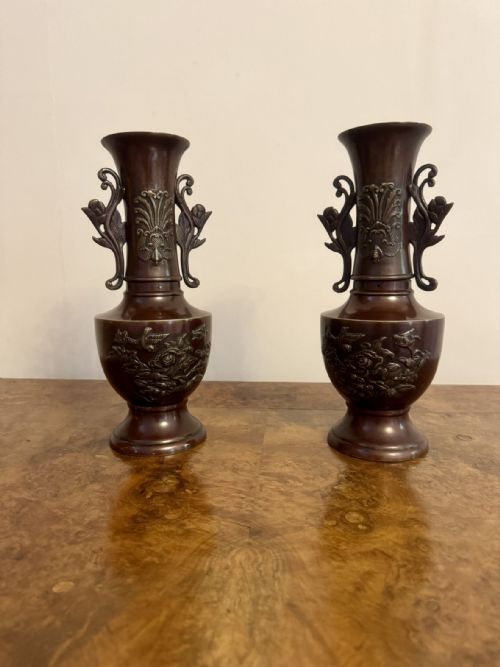


Bronze Bird Motif Vase
A bronze bird motif vase brings the meticulous metalwork and natural imagery of nineteenth-century East Asia directly into a room.
Bronze Bird Motif Vase
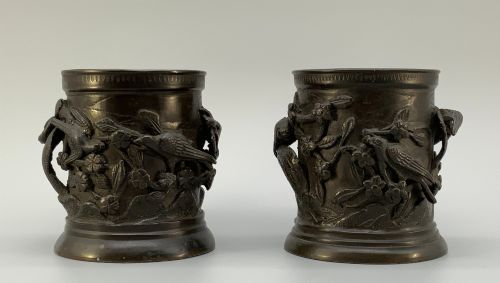
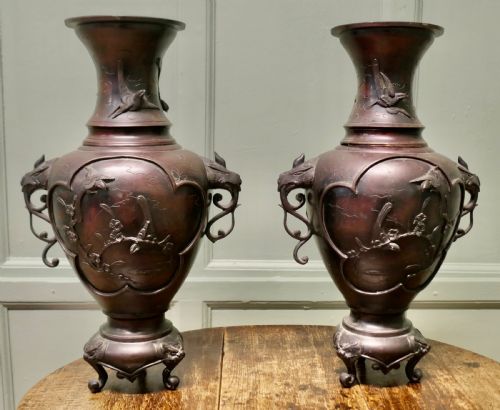
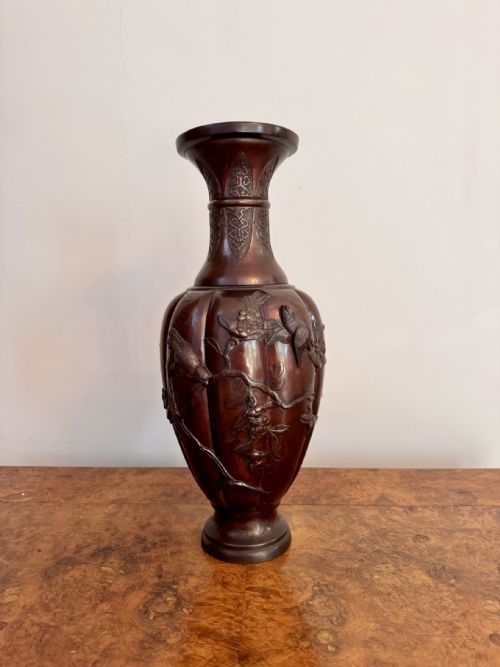
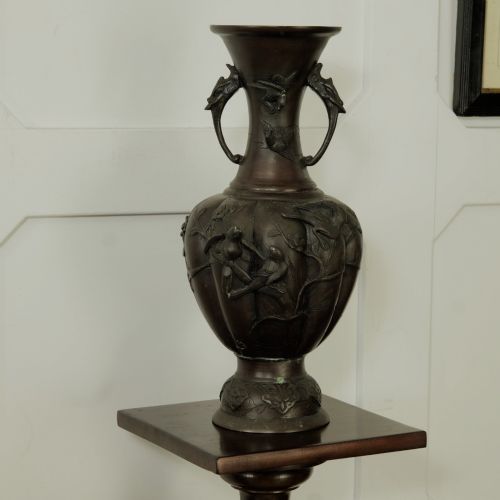
When you search for a bronze bird motif vase, you are looking at nineteenth-century metalwork originating predominantly from Japan during the Meiji period, alongside select Chinese examples. These vessels span forms ranging from grand twin-handled urns and altar vases to more compact decorative stem vases.
The objects seen here reflect Victorian-era importing tastes, bringing Eastern casting traditions into Western homes. You will frequently encounter matched pairs, often bearing naturalistic depictions of birds alongside blossom or foliage.
Originating largely between eighteen-eighty and nineteen-ten, these heavy cast vessels demonstrate the decorative ambition of late nineteenth-century metalworkers. Their presence bridges traditional Asian ritual and ornamental forms with the Victorian desire for elaborate domestic display.
How they were made
These vessels are produced primarily from cast bronze, occasionally complemented by patinated bronze surfaces or brass elements. The casting process allows for substantial weight, with individual pieces reaching several kilograms, whilst retaining fine decorative detail.
Surface decoration relies on patination techniques to alter the natural tone of the metal, creating contrast between the dark body and applied or engraved motifs. Artisans combined lost-wax casting with intricate hand-chasing to render the plumage of birds and the delicate texture of blossom.
Bronze Bird Motif Vase Retail Price Guide 2026
Typical asking prices for bronze bird motif vase among the pieces listed under this phrase on Sellingantiques today, from the lower quarter to the upper quarter. They describe what is for sale here now, not the wider market.
Several matched pairs weigh well over three kilograms each, proving that nineteenth-century artisans took the phrase heavy metal quite literally.
What varies in quality
Quality in these vessels rests upon the crispness of the original cast and the depth of the hand-chased surface details. Superior examples display sharply defined plumage and botanical elements that remain distinct across the entire curvature of the metal.
Proportion and structural balance also separate standard production pieces from the finest works. The distribution of weight, the symmetry of handles where present, and the subtlety of the patination determine the overall visual harmony of the vessel.
The Bronze Bird Motif Vase Glossary
- Meiji Period
- The era in Japanese history spanning from eighteen-sixty-eight to nineteen-twelve, noted for the opening of trade and the export of exceptional metalwork. Much of the decorative bronze available today dates from the latter decades of this era.
- Patinated Bronze
- Bronze treated with chemicals, heat, or acids to produce a deliberate surface colour rather than leaving the metal bare. This technique highlights engraved motifs and protects the underlying alloy.
- Altar Vase
- A vessel originally designed for ritual placement in temples or domestic shrines, typically characterised by a stable, substantial base and an elongated neck. These forms were later adapted for export markets.
- Stem Vase
- A smaller vessel elevated on a distinct foot or stem, designed for single blooms or slender foliage rather than large arrangements. They offer a more intimate scale of metalwork.
Bronze Bird Motif Vase: Frequently Asked Questions
Are these vases waterproof?
Many nineteenth-century bronze vessels were created primarily for decorative display rather than holding water. Placing liquid directly inside older cast metal can sometimes cause corrosion or reveal hairline fissures in the internal seams.
To display fresh stems safely, insert a small glass or ceramic vessel inside the neck to hold the water. This protects the historic interior whilst allowing you to use the vase as originally intended.
How can I tell Japanese Meiji bronzes apart from Chinese examples?
Japanese Meiji pieces frequently exhibit naturalistic asymmetry and highly detailed depictions of birds and blossom influenced by traditional painting schools. Chinese examples from the same period often lean towards more archaic ritual forms, such as altar vases with stylised handles.
Examine the weight, the style of the patination, and the character of the motifs. Japanese casting from this era typically prioritises fine surface engraving, whereas Chinese export bronzes from the late nineteenth century often emphasise robust, traditional proportions.
What is patination on antique bronze?
Patination is the colouration or film that forms on the surface of bronze, either naturally through age or artificially through chemical treatments applied by the artisan. It provides the characteristic deep brown, black, or greenish tones seen on older metalwork.
On quality pieces, the patination is integral to the design, creating contrast that makes bird and floral motifs stand out. Preserving this surface layer is essential for maintaining the historical character of the object.