

19th Century Bronze Vase
A 19th century bronze vase brings classical weight or intricate Eastern craftsmanship directly into a room, offering enduring decorative presence.
Forms and Origins
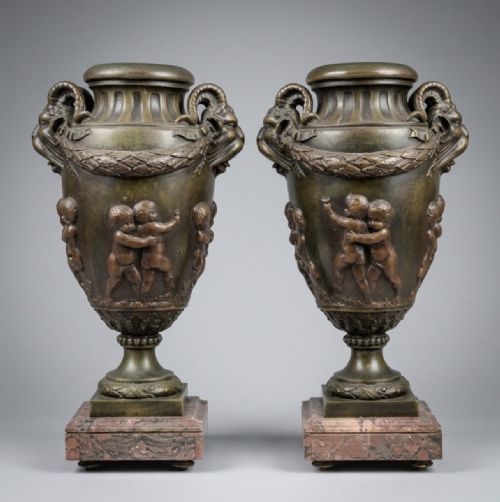
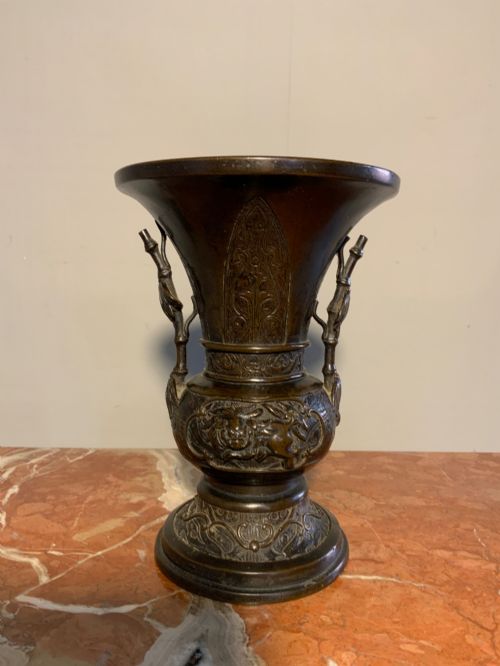
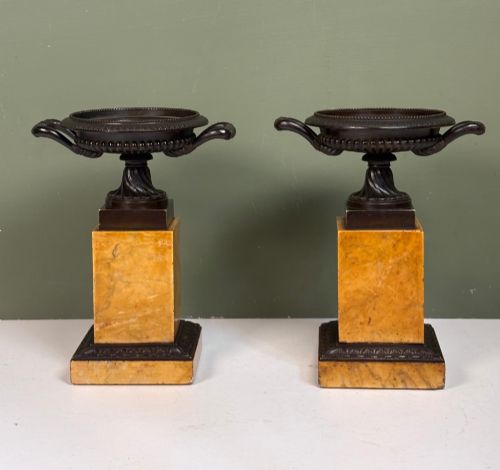
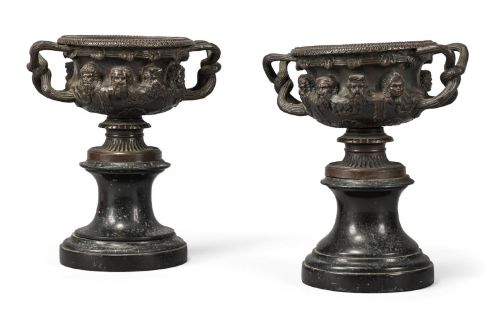
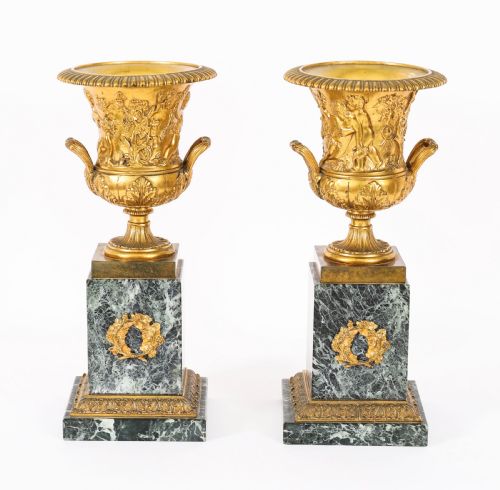
When you search for a 19th century bronze vase, you encounter two distinct traditions: European Grand Tour souvenirs interpreting classical antiquity and refined vessels from East Asia. The European pieces draw heavily on famous archaeological finds, taking the form of monumental vessel models or reduced architectural trophies. Grand Tour examples often sit directly upon marble bases or square plinths to elevate their sculptural proportions.
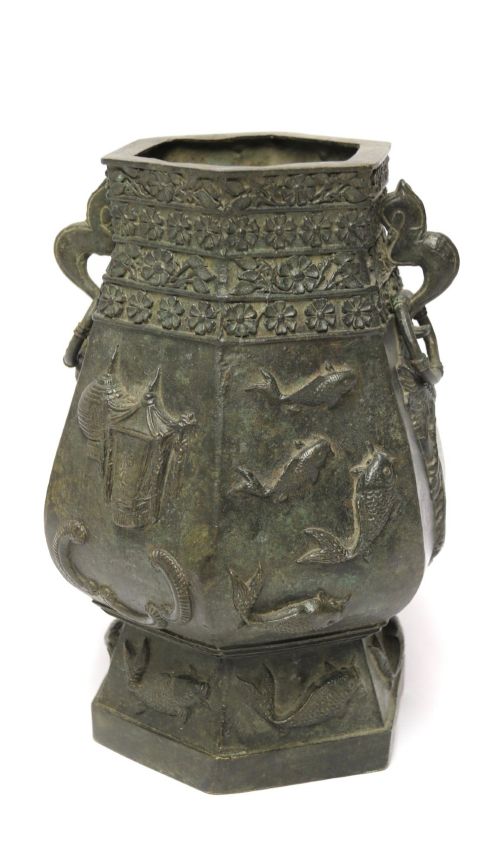
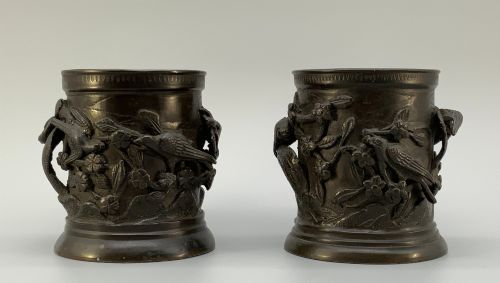
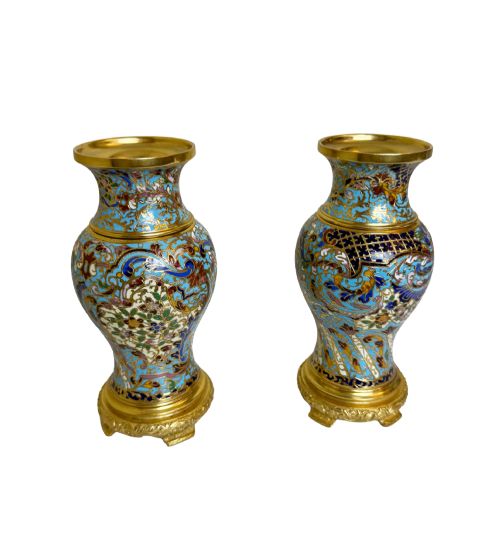
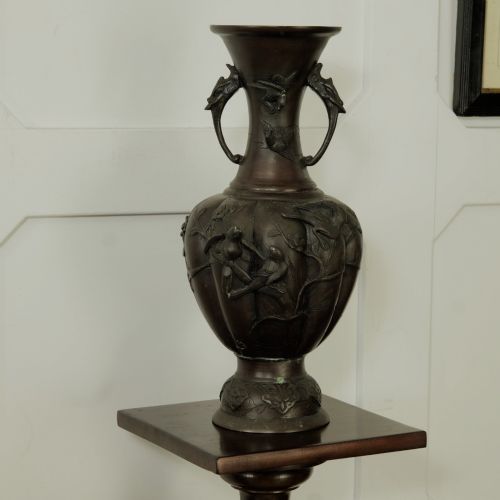
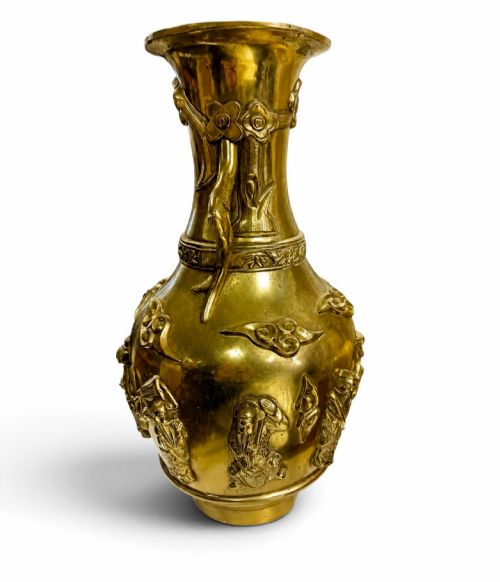
Alongside these classical European reductions appear substantial Japanese Meiji period examples and Chinese works from the Qing Dynasty. Japanese pieces frequently utilise elaborate surface decoration, incorporating dragons or flora. Chinese variations span from simple twin-handled forms to intricate pieces decorated with enamels.
The selections available here range from imposing pairs suitable for a grand mantelpiece to individual cabinet pieces. Single vases and matched pairs both appear with regularity, reflecting the original domestic display habits of the period.
Materials and Technique
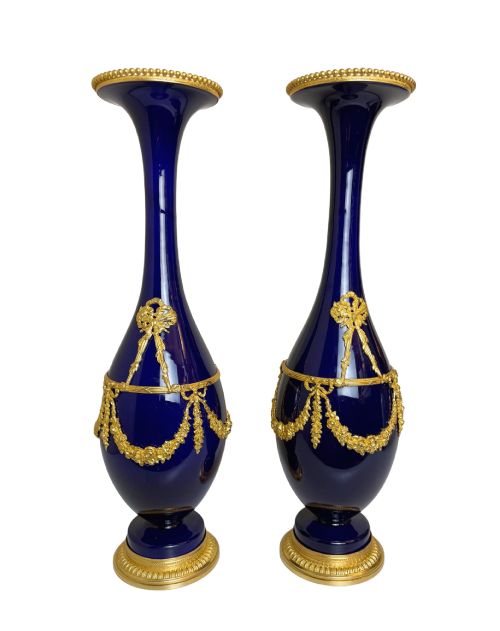
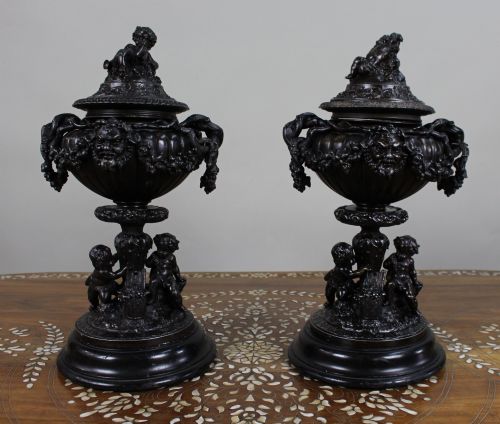
The foundation of these objects is cast bronze, handled with varying degrees of metallurgical skill across different continents. European Grand Tour pieces often employ chemical treatments to produce specific surface colours, yielding sedium brown patinas or gilt finishes. Some continental works utilise related base metals such as bronzed spelter.
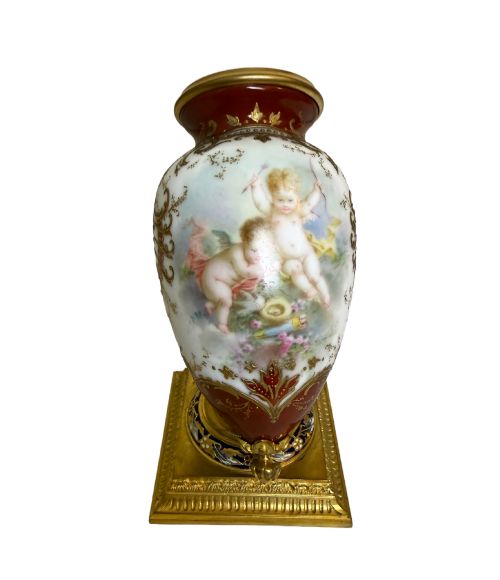
Asian pieces from the Meiji and Qing periods incorporate specialised decorative techniques alongside traditional casting methods. Champleve and cloisonne enamelling appear frequently, where recessed or wired metal channels hold coloured vitreous pastes. These techniques require meticulous hand-finishing by skilled artisans before final mounting.
Retail Price Guide 2026
Typical UK retail prices for 19th century bronze vase, calculated from the Sellingantiques database of over a million retail prices indexed since 2003. This retail price guide relies exclusively on Sellingantiques data; no external sources or auction records are used, so the figures do not describe the wider market.
Listings feature both European Grand Tour bronzes and East Asian works from the Meiji period and Qing Dynasty, utilising materials including marble and champleve enamel.
The Spectrum of Execution
The quality of the patina or surface decoration dictates visual depth. A finely achieved brown or gilt patination interacts with light naturally, whereas lesser examples display flat, uniform colour. In enamelled Asian pieces, the regularity of the wirework and the smoothness of the fired enamel define the tier of the piece.
Eugene Cornu
The 19th Century Bronze Vase Glossary
- Grand Tour
- A traditional extended journey through Europe undertaken by young upper-class men to absorb classical culture. Objects acquired as souvenirs during these travels frequently replicate famous ancient sculptures.
- Warwick Vase
- A monumental Roman marble vase discovered at Hadrian's Villa and subsequently housed at Warwick Castle. 19th century reductions of this specific vase are highly sought-after decorative objects.
- Meiji Period
- The era in Japanese history spanning from 1868 to 1912, marked by the opening of trade with the West. Bronzes from this period often display extraordinary technical proficiency in casting and surface detail.
- Champleve
- An enamelling technique where troughs or cells are carved into the surface of the bronze and filled with enamel powder before firing. This creates colourful decorative patterns flush with the metal body.
- Reduction
- A scaled-down artistic copy of a larger, well-known monument or sculpture. These were cast to allow collectors to display famous antiquities within private domestic interiors.
Frequently Asked Questions
What is a Grand Tour bronze vase?
A Grand Tour bronze vase is a 19th-century European souvenir cast after famous archaeological antiquities such as the Warwick or Medici vases. Travellers collected these miniature or reduced-scale monuments to commemorate their educational travels through Italy.
These pieces typically display rich brown patinas and often incorporate marble bases or square plinths. They served as scholarly ornaments in libraries and drawing rooms across Europe.
How do I identify a Meiji period bronze vase?
Meiji period Japanese bronze vases date from the late 19th century and often feature distinct cultural motifs such as dragons, birds, or floral elements. They showcase exceptional metallurgical casting skills developed during Japan's opening to Western markets.
Many of these pieces utilise detailed relief work or incorporate contrasting patination. Their distinctive aesthetic bridges traditional Asian craftsmanship with Victorian decorative tastes.
What is champleve enamel on bronze?
Champleve is a decorative technique where hollows are carved directly into the bronze surface to hold coloured enamel pastes. The object is then fired and polished until the metal and enamel form a smooth, patterned plane.
This method appears frequently on late 19th-century Chinese bronze vases. It produces rich, multicoloured surface designs that contrast with the dark bronze body.
Where should I display a 19th century bronze vase?
These vases suit stable, weight-bearing surfaces such as sturdy sideboards, mantelpieces, or dedicated console tables. Their substantial metal construction and occasional marble plinths require firm placement away from edges.
Pairing matching vases symmetrically creates a formal classical arrangement. Single monumental vessels work effectively as striking focal points within a room.