



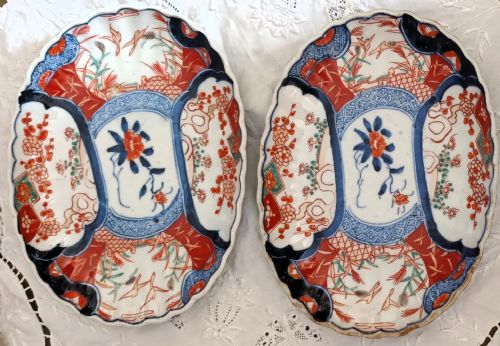
Antique Japanese Porcelain Pair
Antique japanese porcelain pair selections bring balanced symmetry to a room through matched vessels, plates, and lamps spanning the Meiji period and beyond.
Antique Japanese Porcelain Pair
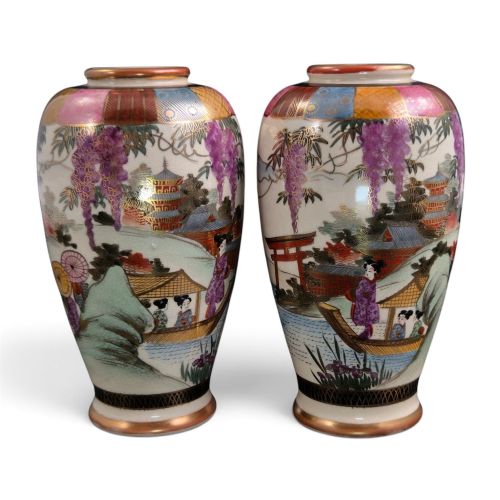
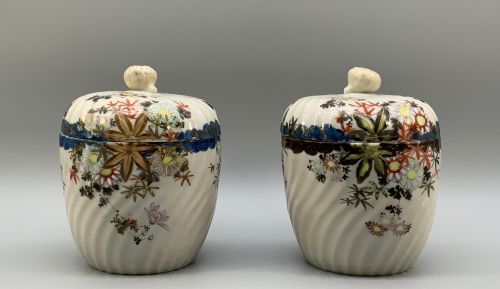
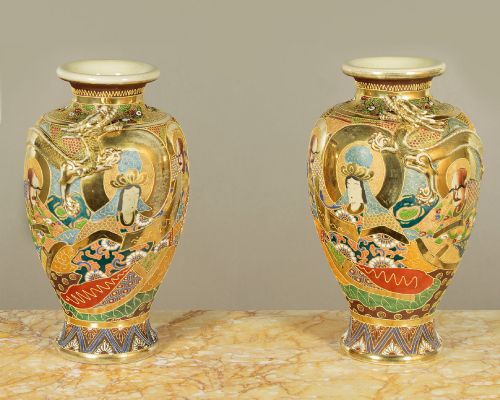
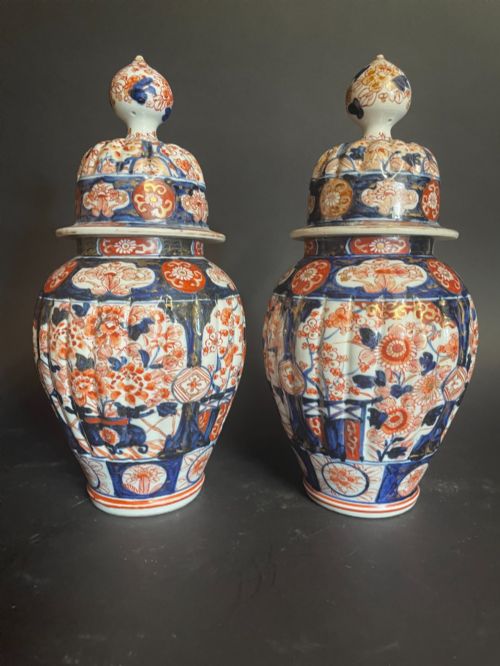
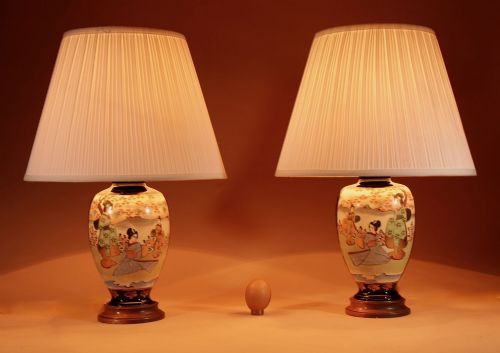
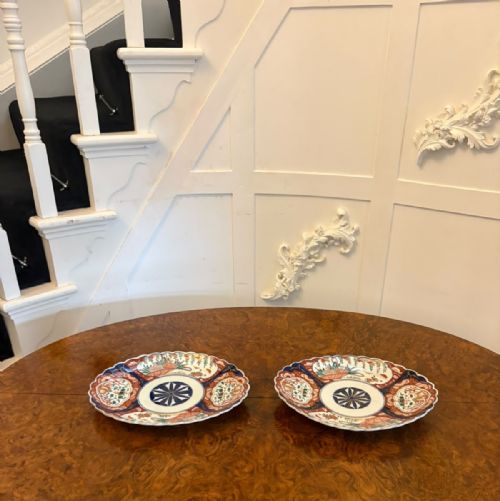
An antique japanese porcelain pair consists of matching decorative or utilitarian vessels designed to be displayed together as symmetrical counterparts. The listings frequently comprise Imari plates and chargers, Satsuma vases, lidded jars, and converted table lamps originating from the nineteenth and early twentieth centuries.
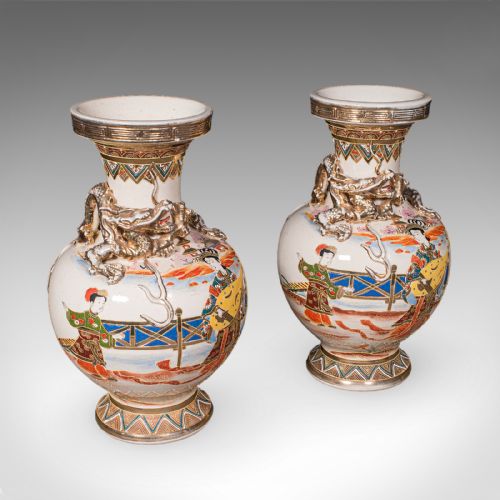
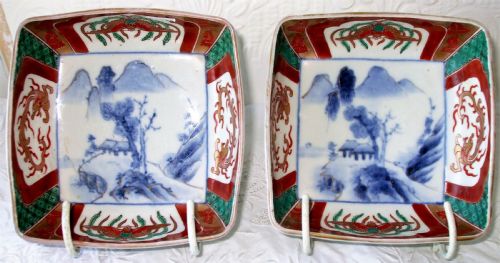
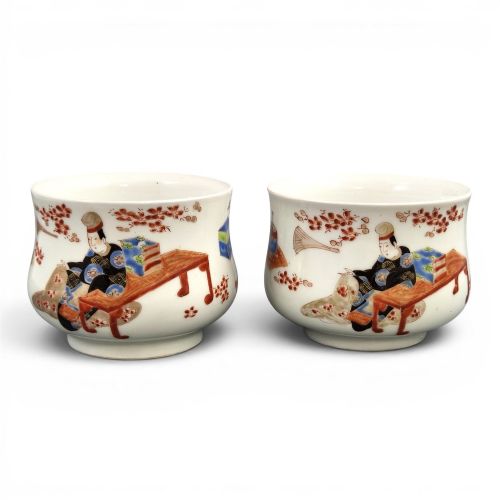
Buyers often encounter Imari blue and white or polychrome dishes alongside earthenware Satsuma baluster vases featuring elaborate pictorial scenes. These matched sets range from small tea cups and inkwells to large temple jars and monumental floor vases.
The objects stem from distinct historical eras including the Edo, Meiji, Taisho, and Showa periods, reflecting changing export demands and domestic kiln traditions. Pairs provide insight into traditional Japanese interior arrangement and the historical trade in ceramics with Western markets.
Materials and Techniques
Potters shaped these vessels using indigenous clays, porcelain paste, or fine earthenware, often applying cobalt blue underglazes before high-temperature firing. Artisans then added overglaze enamels, copper reds, and metallic highlights such as gold leaf and gilt detailing.
Satsuma pieces characteristically employ a finely crackled cream glaze over an earthenware body, serving as a porous ground for dense hand-painted pictorial motifs. Arita and Imari wares utilise durable porcelain bodies fired to vitrification, yielding crisp blue and white designs or saturated iron-red palettes.
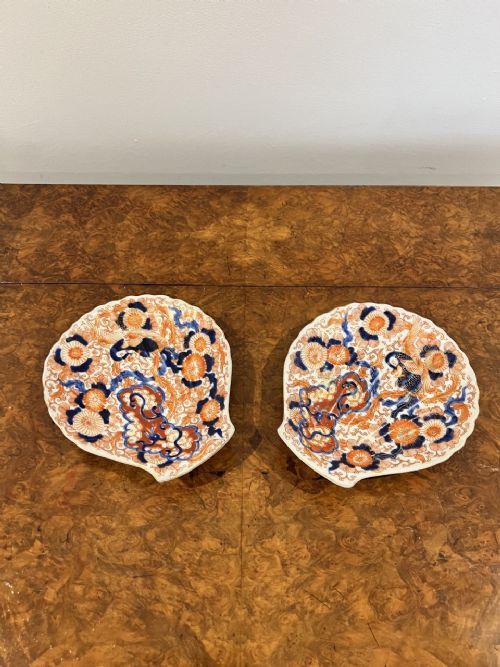
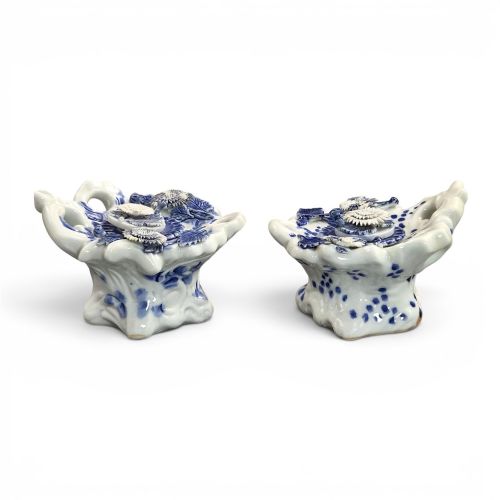
Clam shell dishes shaped by historic potters turn ordinary sideboards into miniature cabinets of marine curiosity.
Factors of Execution
Differentiation in quality rests upon the precision of the hand-painting, the complexity of the enamel work, and the symmetry between the two matching objects. Superior examples display crisp definition in intricate borders, balanced composition across both pieces, and controlled application of gilding.
Workshop attribution also influences the standing of a pair, with recognised names from Kyoto, Kobe, or Seto commanding attention for their refined brushwork. The preservation of original surface gilding and the crispness of moulded porcelain details distinguish finer workshop output from simpler export production.
Manpei·Kato Sanhei
The Antique Japanese Porcelain Pair Glossary
- Imari
- A style of Japanese export porcelain originating from the port of Imari, traditionally decorated in underglaze blue, iron red, and gold. This palette creates a vibrant contrast across plates, bowls, and vases.
- Satsuma
- A type of Japanese earthenware featuring a pale, crackle-glaze finish painted with polychrome enamels and gilding. These pieces frequently depict figures, landscapes, and floral arrangements.
- Arita
- The historic centre of Japanese porcelain production in Hizen province, where kilns produced durable blue and white wares and Imari types. Arita porcelain formed the backbone of early Japanese ceramic exports.
- Baluster
- A vase shape characterised by a rounded body that tapers toward the base and flares at the neck. This silhouette appears frequently among larger export jars and display vessels.
- Totai Shippo
- A specialised technique where cloisonné enamels are applied directly onto a porcelain or ceramic body rather than a metal base. This method combines the properties of pottery and wirework.
Antique Japanese Porcelain Pair: Frequently Asked Questions
How do I display an antique Japanese porcelain pair?
Matched pairs look best when placed symmetrically on mantelpieces, sideboards, or dedicated display stands to preserve their visual balance. Keeping them away from direct sunlight protects the overglaze enamels and gold leaf from fading.
Larger charger plates require sturdy plate stands, while lidded jars and vases can anchor a room when positioned at equal heights. Ensuring adequate spacing around each piece highlights the intricate hand-painted details without crowding the display.
Are these pairs from the Meiji period?
Many examples date from the Meiji period, which spanned the late nineteenth and early twentieth centuries during a peak in Japanese ceramic exports. This era produced a vast quantity of decorative Imari and Satsuma wares destined for Western drawing rooms.
Distinguishing Meiji pieces involves examining the paste, the style of the overglaze enamels, and any signature panels on the base. Earlier pieces from the Edo period or later Taisho and Showa examples also appear within the wider selection.
What is the difference between Satsuma and Imari?
Satsuma ware utilises a porous earthenware body covered in a finely crackled cream glaze, painted with dense pictorial scenes in matte and glossy enamels. Imari ware is a hard-paste porcelain characterised by its distinct blue, iron-red, and gold colour scheme.
While Satsuma focuses on narrative scenes of figures and landscapes, traditional Imari relies on geometric panels, floral motifs, and brocade patterns. Both styles served different aesthetic roles in traditional Japanese interiors and export markets.
How can I tell if a pair is genuinely matched?
Genuine pairs share identical dimensions, clay composition, and stylistic execution, often bearing the same workshop or artist signatures. Minor variations in hand-painting are normal, but the overall design and palette should mirror each other closely.
Evaluating the wear patterns and glaze characteristics helps confirm that both pieces originated from the same kiln firing and have remained together over time.