


Antique Japanese Floor Vases
These heavy brass, bronze and ceramic vessels stand commandingly in a room, bringing the scale and decorative ambition of the Meiji era directly to your floor.

Antique Japanese Floor Vases
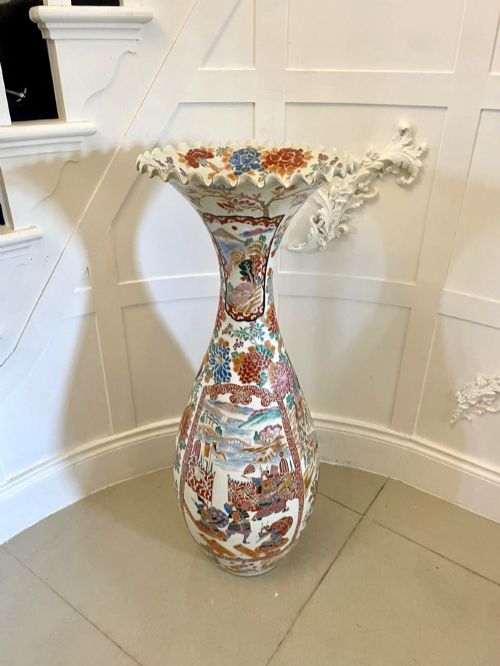
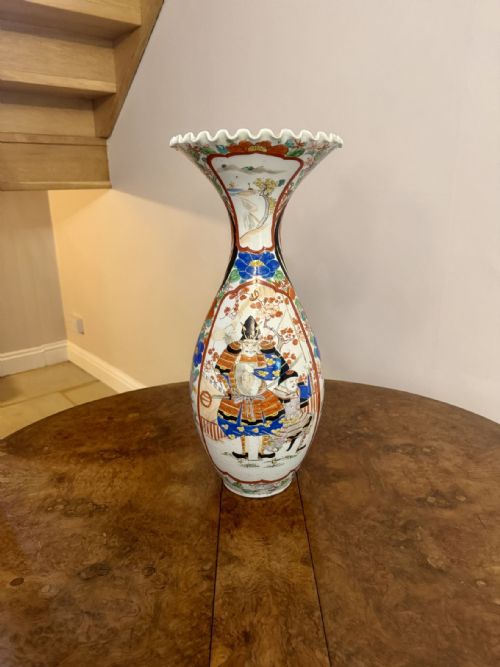
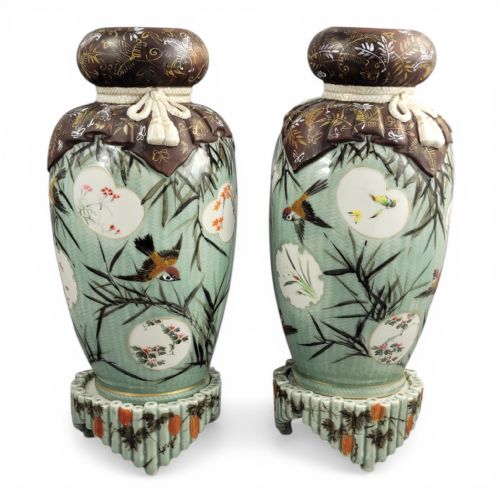
When you search for antique japanese floor vases, you encounter substantial vessels created primarily during the nineteenth century and the Meiji period for both export markets and domestic display. The pieces on this page span monumental floor-standing heights, often reaching several feet, designed to anchor large reception spaces and hallways.
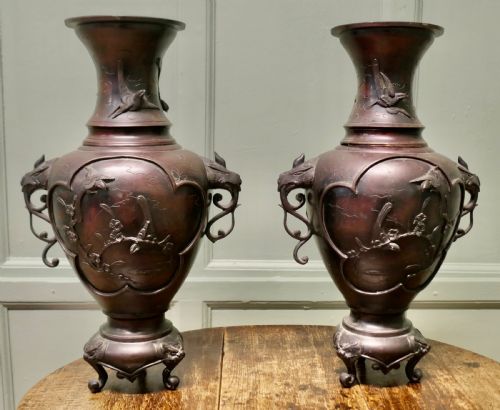
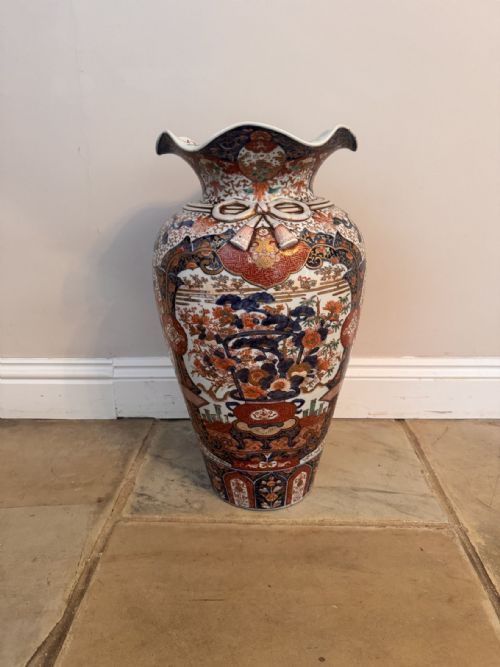
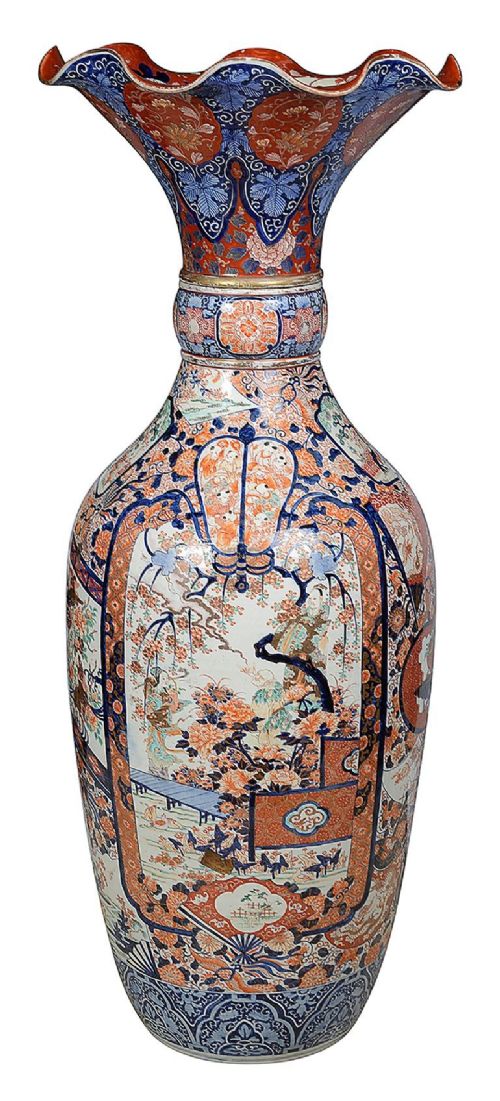
The dominant forms include Imari porcelain palettes, intricate Satsuma earthenware, and heavy bronze castings. Many survive in matched pairs, offering symmetry for architectural settings such as entrance halls and drawing rooms.
Makers utilised distinct regional styles, ranging from the cobalt and iron-red designs of Imari to the richly detailed enamels of Satsuma and Kutani. These grand objects combine utility with the decorative arts of late nineteenth-century Japan.
Materials and construction methods
Potters and metalworkers combined porcelain, earthenware, and bronze with applied decoration in gold leaf, enamel, and lacquer panels. Ceramic bodies were thrown or moulded before receiving hand-painted pigments and intricate surface finishes.
Cloisonne enamel examples required wirework cells soldered to metal bases to contain coloured vitreous pastes before firing and polishing. Bronze pieces relied on traditional casting techniques, often finished with chiselled details and patination.
Recorded forms include lidded palace jars, spill vases, and flared-neck vessels decorated with lacquer panels, phoenix motifs, and koi fish.
Standards of craftsmanship
The distinction between ordinary production and superior work rests on the precision of the hand-painted detail and the weight of the metal or ceramic body. Finer examples display meticulous brushwork in the Imari palette and tightly controlled enamel work without blurring or pooling.
The presence of original stands, matching pairs, and named studio signatures elevate certain vessels above standard export wares. Structural ambition, such as monumental height combined with balanced proportions, defines the upper tier of these pieces.
Kato Sanhei·Kinkozan
The Antique Japanese Floor Vases Glossary
- Imari
- A traditional Japanese porcelain style utilising a palette of underglaze blue, iron red, and gilt highlights. This aesthetic proved highly popular for export wares during the nineteenth century.
- Satsuma
- An earthenware ceramic type with a crackle-glaze finish, typically decorated with elaborate polychrome enamels and raised gold details. These pieces often depict figurative scenes and nature motifs.
- Cloisonne
- A metalwork technique where fine wires create raised compartments on a vessel surface, which are subsequently filled with enamel paste and fired. The resulting panels present intricate patterns and pictorial designs.
- Meiji Period
- The historical era spanning from eighteen sixty-eight to nineteen twelve, marked by intense artistic production and opening trade with Western markets. Much of the surviving decorative export work originates from this span.
Antique Japanese Floor Vases: Frequently Asked Questions
Where should I place a floor vase?
These large vessels suit wide hallways, entrance lobbies, and spacious reception rooms where their height and decorative presence remain unobstructed.
Pairs offer symmetry when positioned beside fireplaces or architectural doorways, while single monumental pieces anchor empty corners effectively.
How do I clean an antique ceramic vase?
Dust the surface regularly with a soft, dry ostrich feather brush to prevent particle buildup within recessed enamel and crackle-glaze lines.
Avoid using water, chemical solvents, or abrasive cloths, as these can damage fragile gold leaf and delicate painted pigments.
Are these pieces stable on carpets?
Due to their substantial height and weight, many of these vessels require flat, solid flooring to prevent tipping in high-traffic areas.
Using a discreet, heavy-duty furniture base beneath large ceramic or bronze bodies adds stability on uneven historic floorboards.
How do I date a Meiji period vase?
Examine the base for studio signatures, kiln marks, and the quality of the paste or bronze casting characteristic of the late nineteenth century.
Stylistic shifts between Edo traditions and later export-driven Meiji aesthetics also help narrow the production decade.