




Arita Porcelain Vase Pair
These arita porcelain vase pair selections bring balanced symmetry to a room, offering the rich palette and skilled painting of historic Japanese kilns.

Arita Porcelain Vase Pair
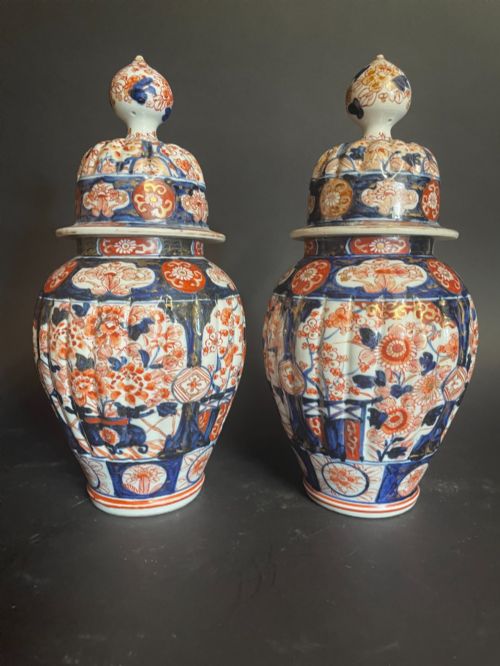
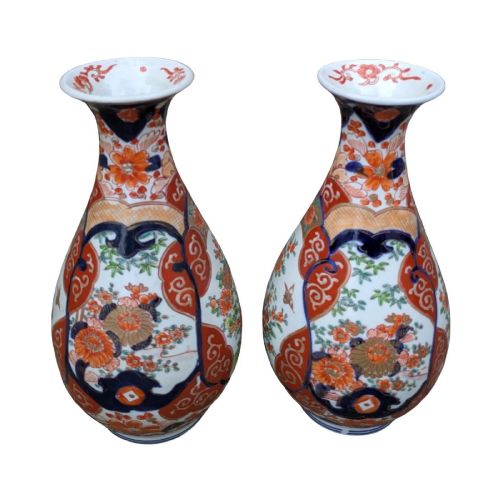
When you search for an arita porcelain vase pair, you are looking at matched dual vessels originating from the historic kilns of Hizen province in Japan. These symmetrical pairs served symmetrical placement on mantelpieces or cabinets, designed to create visual harmony in both European export markets and domestic interiors. The examples available range from tall lidded jars to bottle-shaped forms and spill vases.
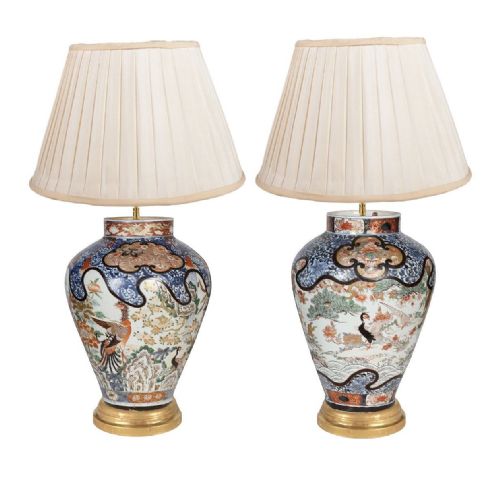
The selection on this page spans several distinct eras, notably the seventeenth-century Edo period through to the late nineteenth-century Meiji period and the year nineteen hundred. You will encounter robust blue and white export pieces alongside vibrant Imari wares adorned with enamel and gold leaf. Some pieces retain their original lids, while others have been adapted as table lamps or mounted in ormolu and brass.
What varies in quality
The distinction between ordinary and exceptional pairs lies primarily in the precision of the hand-painted brushwork and the depth of the glaze. Early seventeenth-century pieces demonstrate a crispness in cobalt pigment application, whereas later nineteenth-century examples often showcase complex layering of enamel and gilding.
Completeness and matched integrity dictate the standing of a pair, particularly when lids or original stands remain intact over centuries. The subtlety of the porcelain body itself, combined with the harmonious balance between the two vessels, marks the upper tier of these works.
Materials recorded across these pairs include porcelain, enamel, gold leaf, brass, fabric, gilt, and ormolu.
Fukagawa
The Arita Porcelain Vase Pair Glossary
- Arita porcelain
- Japanese ceramic ware produced around the town of Arita in Hizen province, known for its durable body and fine finish.
- Imari
- A style of Japanese export porcelain decorated in underglaze blue, iron red, and gold, named after the port from which it was shipped.
- Ormolu
- Gilt bronze mounts applied to furniture and porcelain, frequently utilised during the nineteenth century to adapt Japanese vessels for European tastes.
- Spill vase
- A tall, slender cylindrical vessel designed to hold thin tapers used for lighting candles or fires.
Arita Porcelain Vase Pair: Frequently Asked Questions
How do I tell seventeenth-century pieces apart from nineteenth-century ones?
Seventeenth-century pieces typically exhibit heavier potting with deep underglaze cobalt blues and restrained iron red pigments. Nineteenth-century examples often feature brighter enamel colours, denser surface patterns, and gilding.
Examination of the foot ring and base glaze also provides clues regarding the firing methods and kiln origins characteristic of specific periods.
Were these pairs made for export?
Many of these vessels were produced specifically for trade with European markets via Dutch and other merchants. This export trade influenced both the scale and the decorative motifs applied to satisfy Western tastes.
Some later pieces incorporate European brass or ormolu mounts added shortly after importation to suit domestic interior schemes.
How should I display a large vase pair?
Large pairs require sturdy placement on mantelpieces, sideboards, or dedicated stands where their symmetrical forms can be appreciated from a distance. Ensuring adequate clearance protects the delicate enamel and gold leaf from accidental knocks.
Keep them away from direct sunlight to preserve the vibrancy of the overglaze red and gilt decoration over time.
What is the difference between a jar and a vase?
Jars in this context generally feature wider shoulders and include fitted porcelain lids, originally intended for dry storage or decorative display. Vases typically possess open necks configured for holding stems or simply standing as sculptural objects.
Both forms utilise similar porcelain bodies and decorative palettes, but their silhouette dictates their traditional function.