


Large Imari Floor Vases
Large imari floor vases bring commanding scale and saturated palettes to an interior, built for impact in reception rooms.

Large Imari Floor Vases
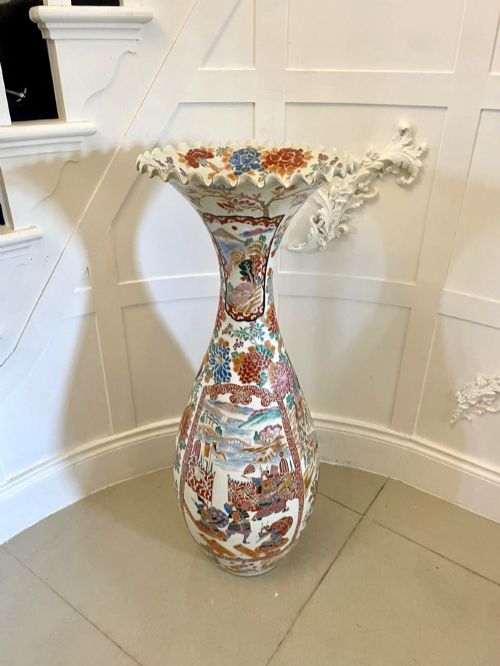
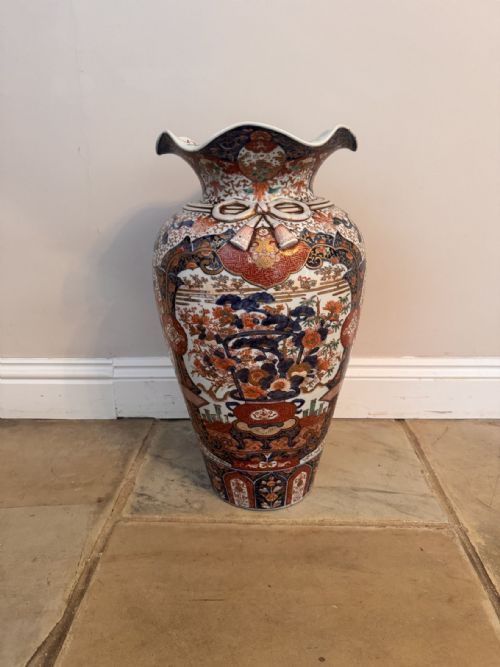
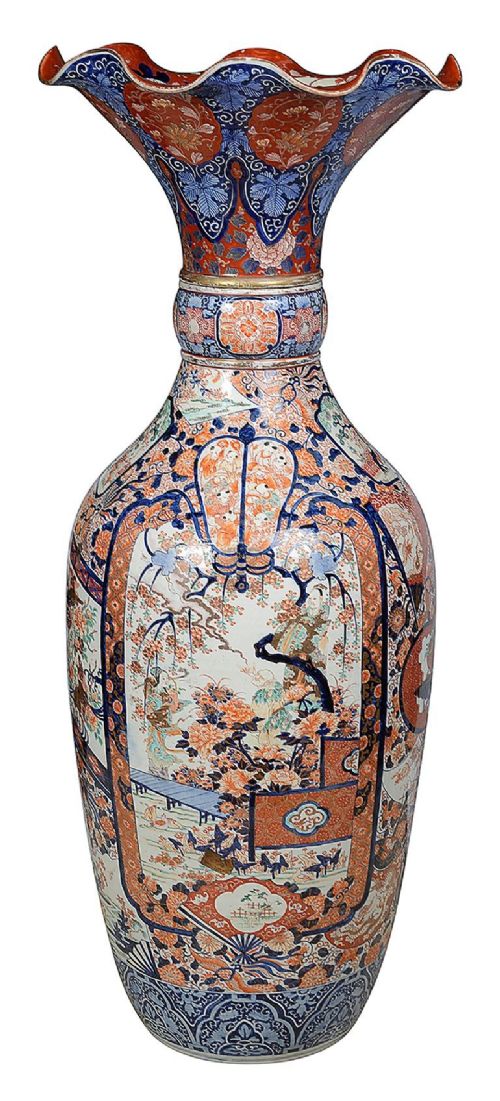
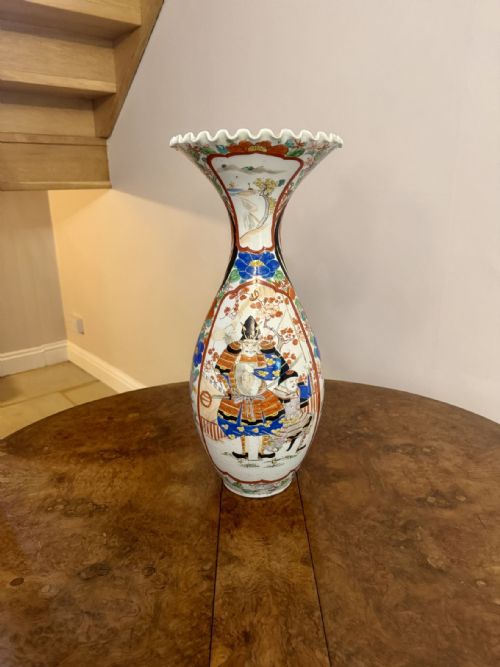
Large imari floor vases represent substantial Japanese porcelain vessels created for prominent display, frequently encountered from the nineteenth century and the Meiji period. These pieces arrive in various formats, including monumental single vessels, matching pairs, lidded examples, and spill vases designed for substantial spaces. Buyers seeking large imari floor vases will find items ranging from around sixty centimetres to towering heights exceeding one metre.
The aesthetic is defined by the traditional Japanese imari palette, combining underglaze blue with iron red and supplementary enamel colours, often heightened with gold leaf. Production dates across the listings span the late nineteenth century into the early twentieth century, encompassing specific years such as 1880, 1890, 1900, and 1910. These forms reflect the export trade and the Victorian taste for large-scale decorative ceramics.
How they were made
These large ceramic vessels begin as heavy porcelain bodies shaped to support considerable height without warping during high-temperature firing. Artisans apply underglaze cobalt blue before the initial glaze firing, establishing the foundational dark contours of the design.
Subsequent decoration involves meticulous overglaze enamelling in iron red and other colours, frequently finished with rich applications of gold leaf to accentuate the surface patterns. Some examples incorporate elements of gilt and wood components to complement the porcelain structure.
Some nineteenth-century makers evidently misjudged the kiln shrinkage, resulting in floor vases with wonderfully wobbly postures that defy strict geometric symmetry.
What varies in quality
Quality in these porcelain vessels is determined by the crispness of the underglaze blue and the density and precision of the overglaze enamel work. The finest examples display intricate hand-painted motifs executed with exceptional control, whereas lesser pieces show rushed brushwork and less refined colour application.
The heaviness and stability of the porcelain body, along with the generous and intact use of gold leaf, separate standard production items from truly outstanding pieces. Proportions matter greatly at this scale, as does the preservation of the vibrant enamel palette over time.
The Large Imari Floor Vases Glossary
- Imari palette
- A traditional decorative scheme utilising deep underglaze cobalt blue combined with iron red and gold overglaze. This distinctive colour combination defines the visual character of these Japanese ceramics.
- Meiji period
- The historical era in Japan spanning from 1868 to 1912, characterised by a surge in decorative arts produced for international export. Much of the porcelain traded during this time found its way into European interiors.
- Spill vase
- A tall, slender cylindrical vessel historically utilised to hold taper candles or spills for lighting fires. In large formats, these function primarily as decorative floor standing ornaments.
- Overglaze enamel
- Coloured glass paste applied over the fired and glazed porcelain surface before undergoing a secondary lower-temperature fix. This technique permits a brilliant spectrum of reds, greens, and gilt highlights.
- Porcelain
- A hard, white, translucent ceramic body fired at extremely high temperatures. Its density allows for the creation of monumental floor-standing vessels that support heavy surface decoration.
Large Imari Floor Vases: Frequently Asked Questions
How were large imari floor vases used?
These large vessels served primarily as decorative floor-standing ornaments in nineteenth-century drawing rooms, halls, and grand reception spaces. Their substantial height and striking colour palette were intended to command attention in large architectural settings.
Pairs were often positioned flanking fireplaces, in doorways, or upon substantial pedestals to create a symmetrical, imposing visual anchor within the room.
How do I date a nineteenth century imari vase?
Dating relies on examining the characteristics of the porcelain body, the specific tones of the underglaze blue, and the style of the enamel painting. Pieces from the Meiji period often exhibit dense, layered ornamentation and rich gilding typical of late nineteenth-century export production.
Documentation, stylistic comparisons with dated examples from 1880 to 1910, and specific potting techniques help narrow the period of creation.
Where should I place a floor vase?
Floor vases require secure, stable ground away from heavy foot traffic due to their considerable weight and height. Corners of rooms, entrance halls, or wide landings provide safe positions where the vessel can be admired without risk of accidental impact.
Pairing them with appropriate clearance allows the complex imari palette and gold leaf details to catch natural light effectively.