


Japanese Floral Enamel Vases
These japanese floral enamel vases bring intricate botanical motifs and master metalwork from Meiji and Showa workshops straight into your interior.
Japanese Floral Enamel Vases
When you search for japanese floral enamel vases, you are looking at decorative vessels shaped from copper, bronze, and earthenware, decorated with botanical motifs. The examples you meet on this page span the Meiji and Showa periods, alongside Edwardian imports.
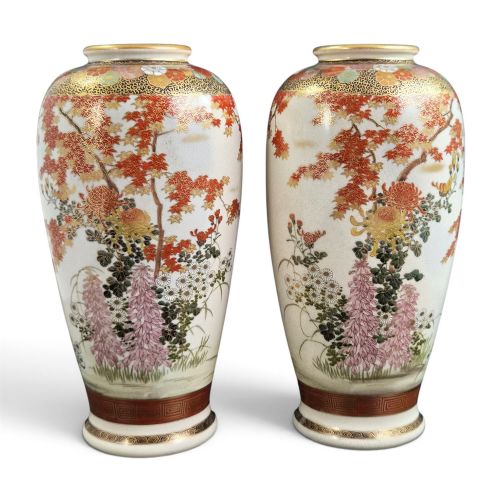
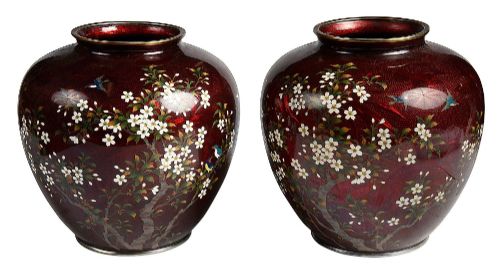
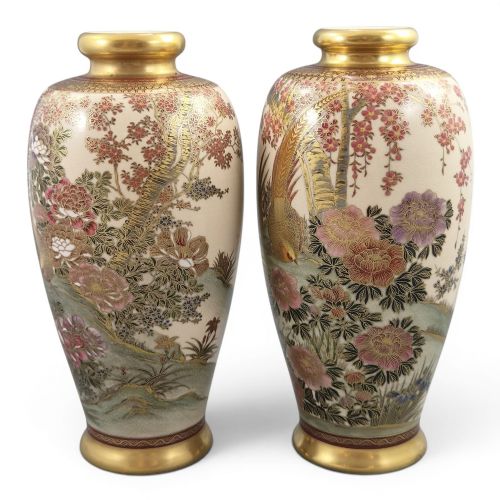
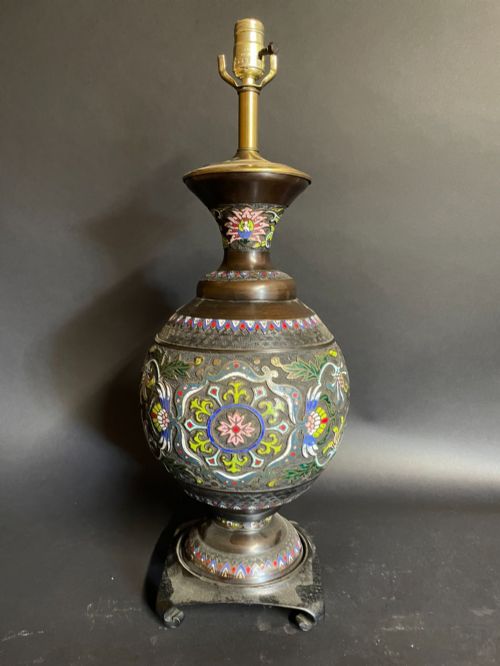
Most pieces take the form of cloisonné, champlevé, and ginbari enamel work, showing flowers, birds, and gardens. You will also encounter Satsuma earthenware and Kutani vases featuring hand-painted floral scenes.
The assortment ranges from miniature vessels to large exhibition pieces, often found as matched pairs. Makers such as Ando Jubei, Manpei, and Tamura Yukio appear across the selections.
How they were made
The makers formed the foundation of each vessel using copper, bronze, or brass, applying metal wires to outline floral and avian designs. Artisans then filled these individual cells with coloured enamel pastes before firing the piece in a kiln.
Advanced techniques included ginbari and basse-taille methods, where textured or foil-backed backgrounds show through translucent red and coloured enamels. Other pieces rely on earthenware or porcelain bodies painted by hand with gold leaf accents.
Several miniature cloisonné vases survive in pairs, proving that tiny birds and flowers require just as much patience to enamel.
What varies in quality
Quality rests in the precision of the wirework and the clarity of the enamel fields, where finer vessels display microscopic cell divisions and flawless polishing. Master workshops achieved smooth, uniform surfaces without pitting or cloudiness in the coloured glazes.
Artistic execution also separates standard production from exhibition pieces, particularly in the shading of petals and the complexity of bird and flower compositions. Signed bases from renowned makers signal superior craftsmanship.
Ando Jubei·Manpei·Tamura Yukio·Kinkozan·Maruni Kobe·Hakusan·Hododa
The Japanese Floral Enamel Vases Glossary
- Cloisonné
- Enamelwork technique where metal wire creates raised barriers to hold coloured paste. These wires remain visible on the finished surface.
- Ginbari
- Japanese enamelling method using textured metal foil beneath a translucent enamel layer. This creates a shimmering depth behind floral patterns.
- Satsuma
- Japanese earthenware pottery featuring a crackle-glaze finish and hand-painted polychrome designs. Many pieces include gold leaf highlights.
- Meiji Period
- Imperial era spanning from 1868 to 1912 noted for rapid modernization and exceptional decorative arts export. It produced the finest cloisonné work.
- Basse-Taille
- Enamelling technique where the metal ground is carved or engraved beneath translucent enamel. It allows light to reflect through the coloured layers.
Japanese Floral Enamel Vases: Frequently Asked Questions
What is the difference between cloisonné and Satsuma?
Cloisonné vases use metal bodies decorated with soldered wires and fused glass enamels. Satsuma vessels consist of earthenware ceramics with a characteristic crackled ivory glaze and hand-painted mineral pigments.
Both styles frequently depict floral themes, but their physical materials and manufacturing techniques are entirely distinct.
Are these vases meant for holding water?
Most antique enamel and earthenware vases function primarily as decorative art objects rather than practical vessels. The interior metal linings or porous ceramic bodies can be vulnerable to moisture.
Exhibition pieces and ginger jars are best displayed dry to preserve the integrity of the enamel and painted glazes.
How should I clean my enamel vase?
Dust these pieces gently with a soft, dry cloth to remove surface particles without scratching the polished metal and glass surfaces. Avoid chemical cleaners, abrasives, or soaking.
Gentle care ensures the delicate silver wires and translucent enamel layers remain undamaged over time.