

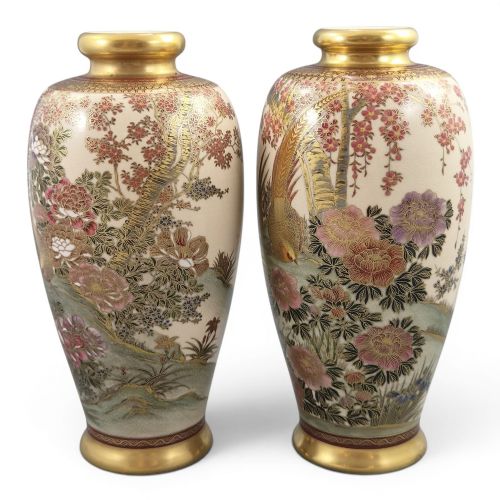


Japanese Decorative Ceramic Urns
These japanese decorative ceramic urns bring rich historic craft and bold colour palettes into contemporary interior spaces.
Japanese Decorative Ceramic Urns
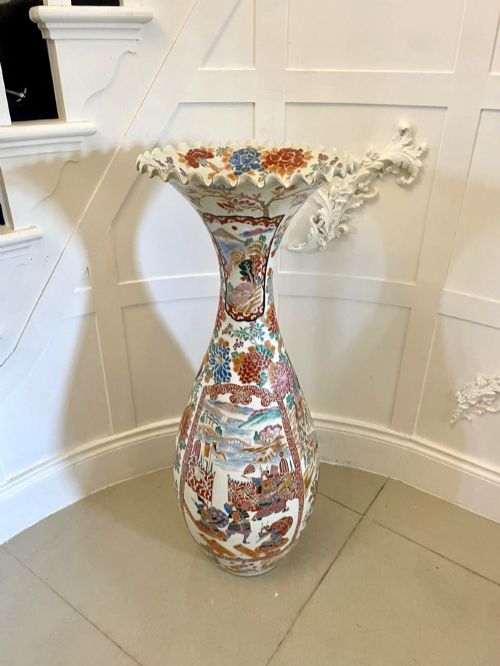
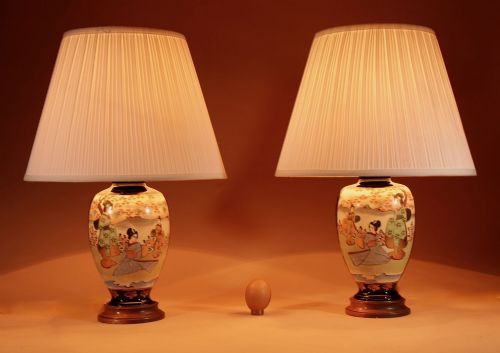
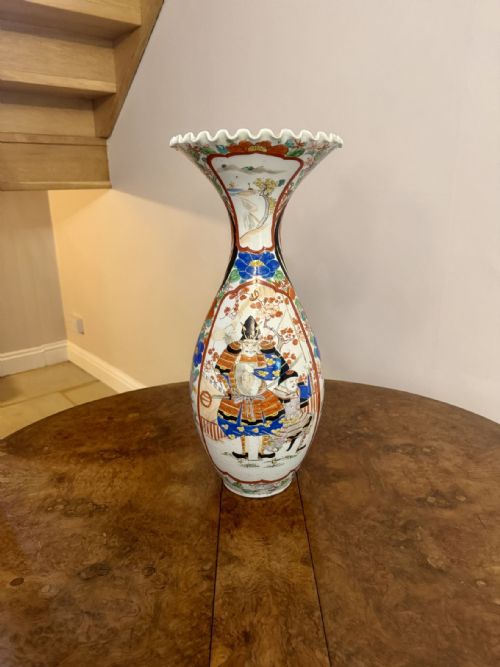
When you search for japanese decorative ceramic urns, you encounter a varied selection of antique vessels originating primarily from the late nineteenth and early twentieth centuries. These objects span several distinct forms, including large floor-standing vessels, covered ginger jars, garnitures, and baluster shapes.
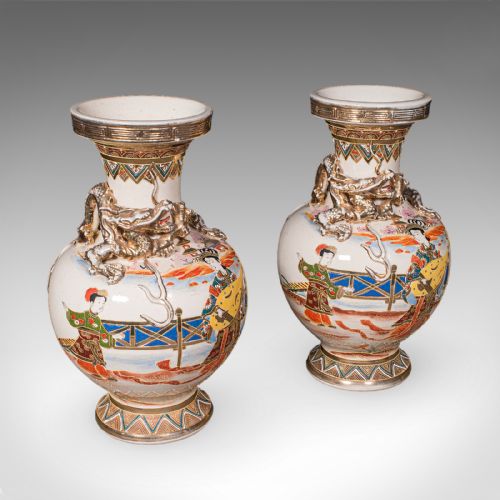
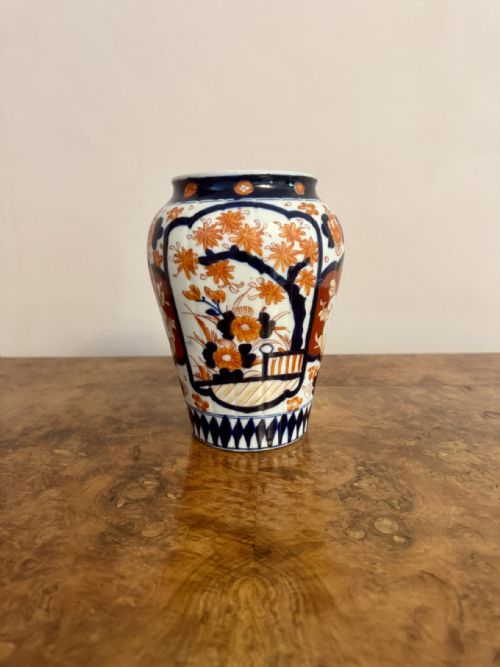
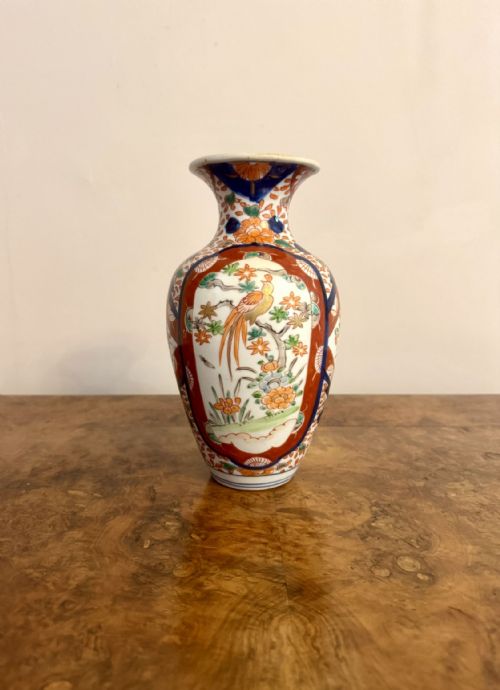
The assortment on this page draws heavily from traditional styles such as Imari, Satsuma, and Kutani. Pieces range from large architectural statement items designed for prominent display to intricate miniature vases created for close inspection.
Originating across periods spanning the Meiji, Edo, and Showa eras, these ceramic works reflect distinct shifts in decorative output. Buyers frequently encounter matched pairs and groupings alongside individual centrepieces.
How They Were Made
The making of these pieces relies upon porcelain and earthenware bodies shaped into complex forms such as baluster vases and lidded jars. Potters applied detailed surface decoration utilising enamel, glaze, and gold leaf to achieve rich visual depth.
Techniques recorded in the listings include raised moriage work, cobalt painting, and applied lacquer panels on ceramic bodies. Workshops employed meticulous brushwork alongside gilding to define figures, landscapes, and floral motifs.
The listings span the Meiji, Edo, and Showa periods, incorporating porcelain and earthenware bodies decorated with enamel, gold leaf, and glaze.
What Varies in Quality
The standard of execution in these pieces rests upon the precision of the hand-painted detail and the density of the gilding. Superior examples display tightly controlled brushwork, clean enamel application, and balanced compositions across complex multi-panel surfaces.
The reputation of the maker and the specific studio origin influence the standing of an individual piece within the range. Pieces bearing documented signatures or associated with established workshops demonstrate a higher degree of artistic ambition.
Manpei·Makuzu Kozan II·Kinkozan·Chosei·Shuzan·Nanzan·Kizan·Hakusan·Hododa
The Japanese Decorative Ceramic Urns Glossary
- Imari
- A traditional Japanese ceramic style characterised by a distinct palette typically featuring cobalt blue, iron red, and gold on a white porcelain base. These wares were widely produced for export during the Edo and Meiji periods.
- Satsuma
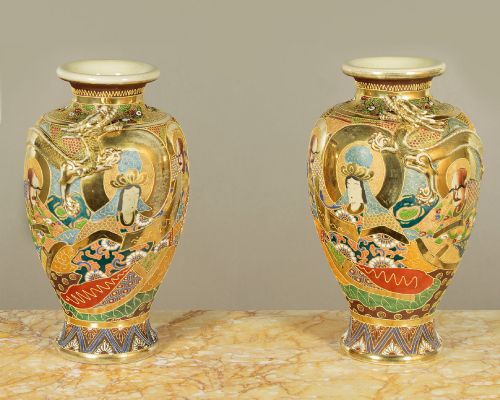
- An earthenware ceramic type with a crackled ivory glaze, typically heavily decorated with polychrome enamels and raised gold. Production centres in Kyoto and other regions generated these highly detailed narrative and floral pieces.
- Moriage
- A decorative ceramic technique using piped clay to create raised relief patterns beneath glazes and enamels. This method provides tactile texture to borders, foliage, and garments on Satsuma wares.
- Kutani
- A style of Japanese porcelain noted for bold colour schemes, often dominated by greens, blues, yellows, and purples. Pieces feature intricate pictorial scenes and dense geometric borders.
- Garniture
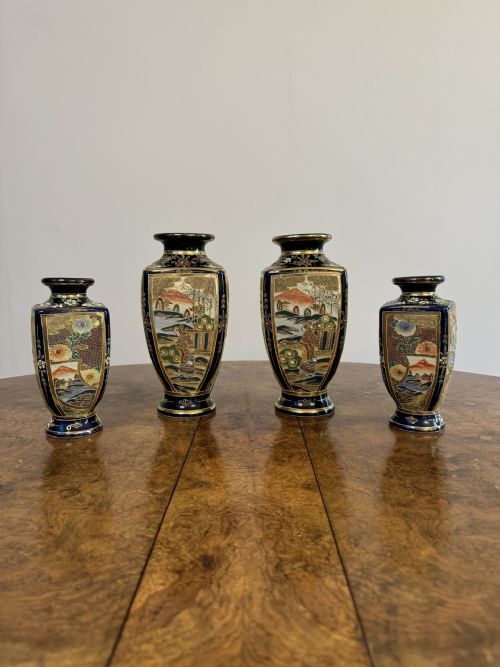
- A set of matching vases or jars designed to be displayed together on a mantelpiece, shelf, or cabinet. These groupings usually consist of three or more coordinated vessels.
- Baluster
- A vase shape characterised by a rounded body that tapers toward the base and swells outward before narrowing into a distinct neck. This classic profile supports elaborate vertical and horizontal decorative panels.
Japanese Decorative Ceramic Urns: Frequently Asked Questions
How were antique Japanese urns originally used?
These vessels served primarily as decorative focal points within domestic interiors, often displayed on tables, pedestals, or within specialised reception rooms. Lidded jars and ginger and temple styles also functioned to store precious dry goods.
Larger floor-standing examples and garniture sets were arranged in prominent architectural spaces to demonstrate the taste and refinement of the household.
How do I distinguish Satsuma from Imari ware?
Satsuma ceramics feature an opaque earthenware body covered in a fine crackle-glaze, decorated with opaque enamels and heavy gold leaf. They typically depict figurative scenes, deities, and dense floral compositions.
Imari pieces utilise a hard white porcelain body with underglaze cobalt blue and overglaze iron red, complemented by gilt highlights. The resulting aesthetic relies on geometric patterns and contrasting blue-and-red motifs.
How should I display these ceramic urns at home?
Position these vessels on stable surfaces away from high-traffic household areas to protect delicate enamel and gold leaf decorations. Pairing matched vases on sideboards or mantels creates visual symmetry within a room.
Keep pieces out of direct sunlight to prevent the fading of red and green overglaze enamels over extended periods.
What indicates a Meiji period piece?
Meiji period ceramics often display complex pictorial narratives, meticulous moriage relief work, and refined signatures or studio marks on the base. The opening of trade during this era encouraged workshops to produce highly detailed export wares.
These pieces combine traditional Japanese motifs with ambitious scale and technical precision, reflecting the pinnacle of late nineteenth-century ceramic production.