


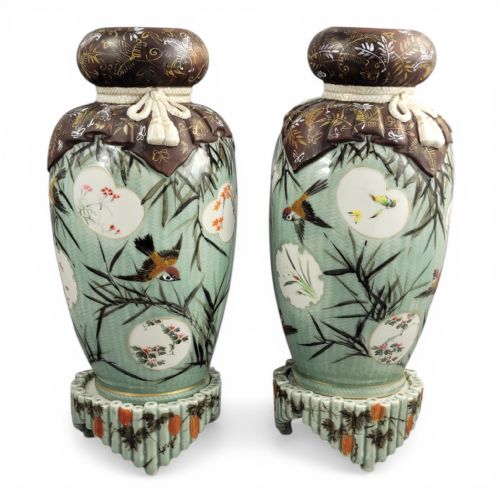


Large Japanese Urn Pair
These large japanese urn pair selections bring monumental scale and historical depth to a room through traditional forms and intricate decoration.
Large Japanese Urn Pair
A large japanese urn pair brings together matching decorative vessels intended for prominent display in interiors. Buyers searching for a large japanese urn pair encounter various forms including palace vases, floor vases, garden urns, and jardinieres originating from the nineteenth and early twentieth centuries.
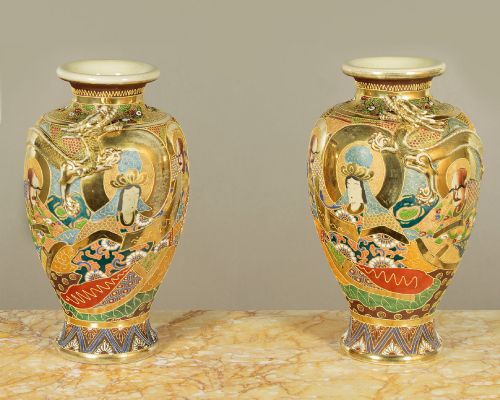
The selections span distinct cultural periods and regional kilns, predominantly featuring Satsuma earthenware, Imari porcelain, and cast bronze. Many examples date from the Meiji period, reflecting the decorative arts of export markets during the late nineteenth and early twentieth centuries.
Materials and technique
The construction utilises traditional ceramic and metalworking techniques, combining hand-thrown or cast bodies with detailed surface decoration. Porcelain and earthenware vessels frequently display hand-painted enamels, gilding, and underglaze blue pigments.
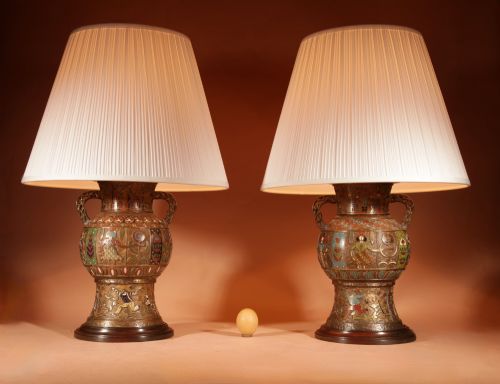
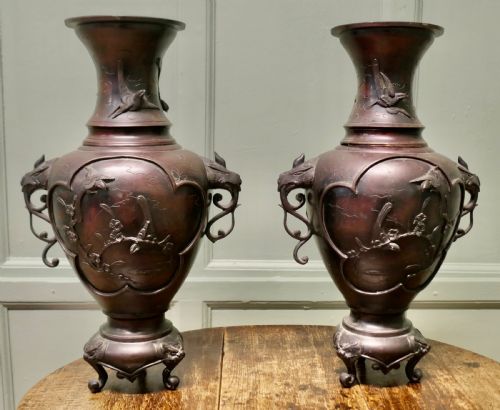
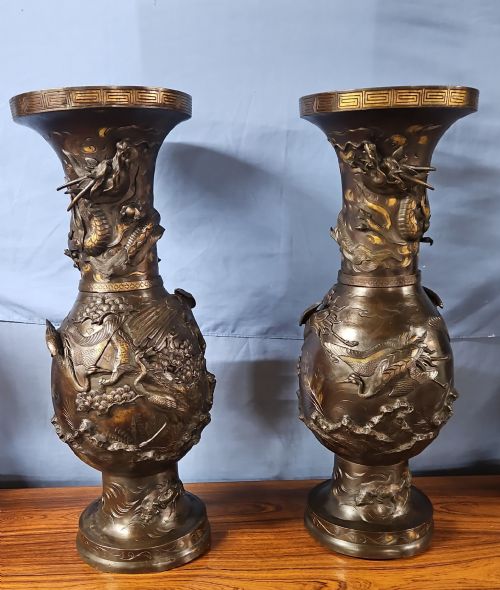
Bronze pieces employ lost-wax casting methods, often enhanced with champlevé enamel, mixed metals, or applied gold leaf details. Artisans shaped these heavy materials into tall vessels, lidded jars, and garden urns requiring substantial technical skill.
Materials span porcelain, earthenware, bronze, brass, wood, and gold leaf.
Distinctions in quality
The distinction between standard export items and exceptional works lies in the precision of the surface decoration and the weight of the material. Finer examples display meticulous brushwork, crisp casting lines, and well-preserved gilding without rubbing.
Artistic provenance and structural integrity also separate the categories, where signed pieces from notable makers or those retaining original stands demonstrate superior craftsmanship. The balance of the pair and the complexity of the motifs determine the standing of the work.
Kato Sanhei·Kinkozan
The Large Japanese Urn Pair Glossary
- Satsuma
- A type of earthenware with a characteristic ivory crackle-glaze, decorated with polychrome enamels and gold. It became particularly popular for export during the Meiji period.
- Imari
- A style of Japanese porcelain featuring a distinct palette of underglaze blue, iron red, and gold. These wares were produced in Arita and exported in large quantities to Europe.
- Champlevé
- An enamelwork technique where recesses are carved into a metal surface and filled with vitreous paste before firing. This method appears frequently on bronze vessels.
- Meiji Period
- The era in Japanese history spanning from 1868 to 1912, noted for the opening of trade with the West and the production of elaborate decorative arts.
- Usubata
- A specific form of bronze vessel featuring a wide basin and a flared neck, traditionally utilised for flower arrangement displays.
Large Japanese Urn Pair: Frequently Asked Questions
How were these urns used?
Historically, such large vessels stood in prominent locations within grand reception rooms, hallways, and gardens to display wealth and taste. They served as focal points in interiors, sometimes functioning as floor vases or planters.
In modern settings, collectors continue to use them as statement floor pieces, table lamps, or decorative garden ornaments depending on their material and scale.
How do I distinguish Satsuma from Imari?
Satsuma ware is characterised by an earthenware body covered in a cream-coloured crackle glaze, which provides a textured surface for detailed enamel and gilt painting. It has an opaque, ceramic feel.
Imari pieces are made of hard-paste porcelain with a smooth, resonant surface, typically decorated in a strict palette of cobalt blue, iron red, and gold leaf.
How do I care for antique bronze and porcelain?
Bronze pieces require gentle dusting with a soft, dry cloth to preserve their patina and prevent moisture accumulation on metal surfaces. Avoid using harsh chemical polishes that can strip historical finishes.
Porcelain and earthenware vessels should be cleaned carefully by hand using mild soap and water only when necessary, taking extra care around fragile gilded or enamelled areas.