


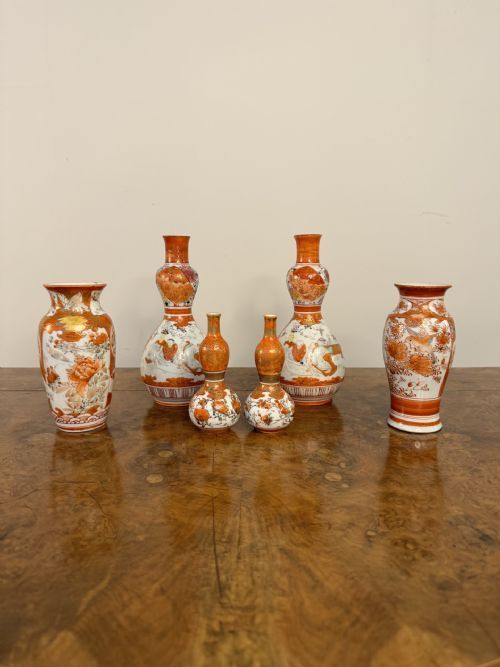

Gilded Japanese Ceramic Vases
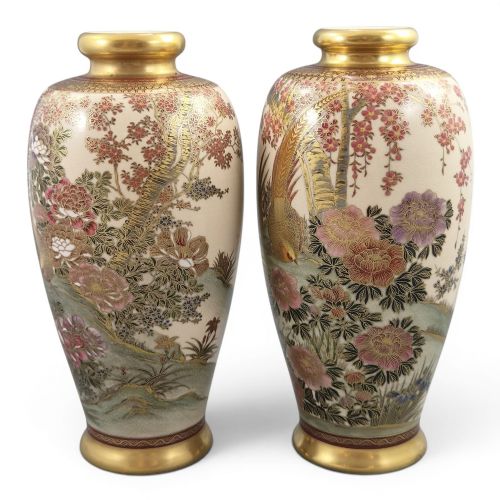
These gilded japanese ceramic vases bring the intricate hand-painted motifs and rich surface gilding of the Meiji period and late nineteenth century directly into modern interiors.
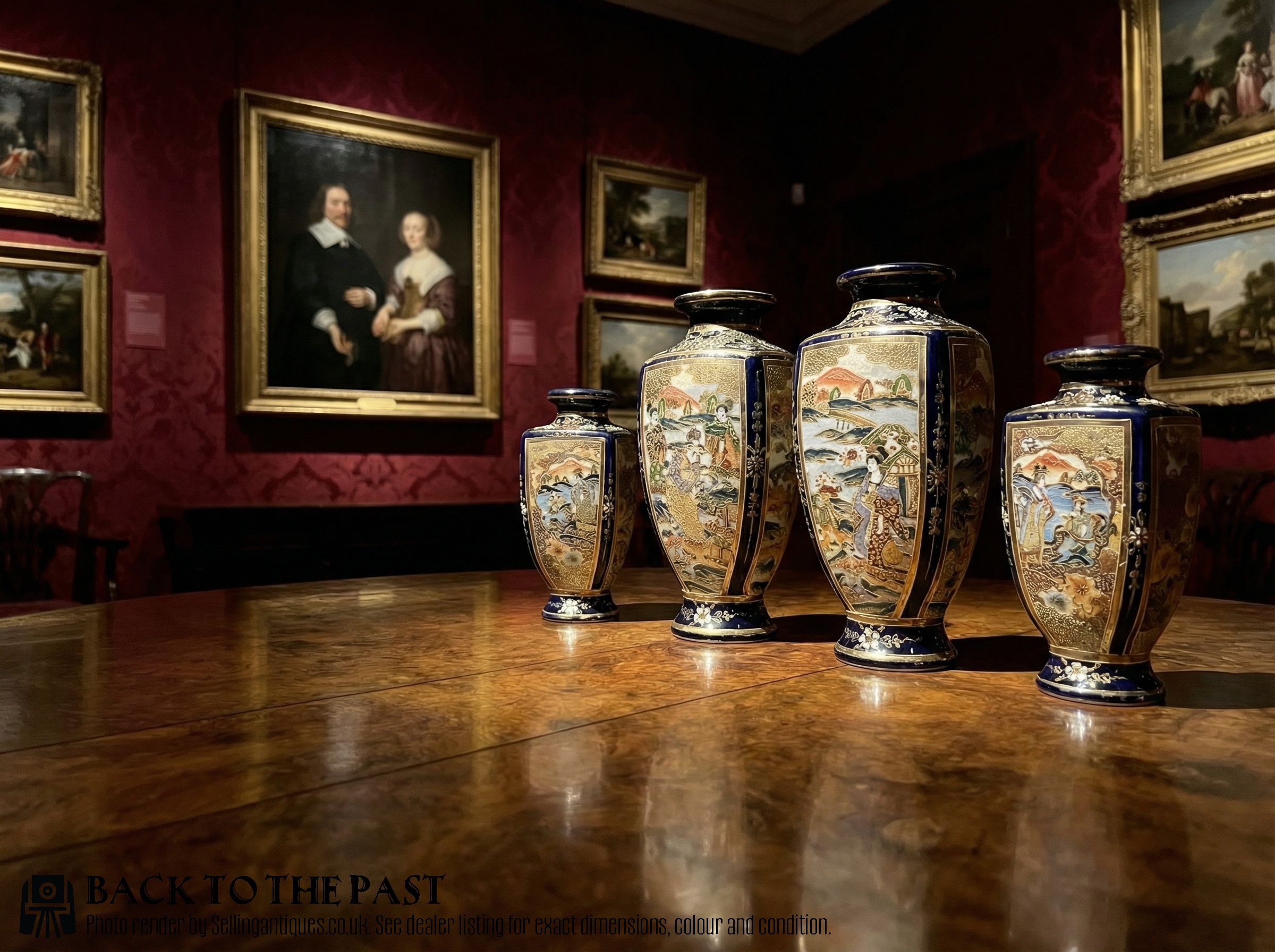
Gilded Japanese Ceramic Vases
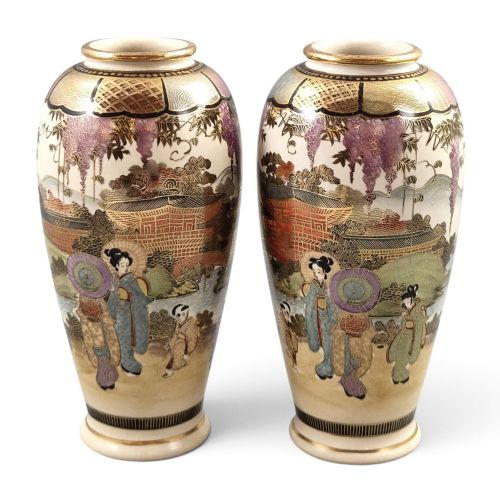
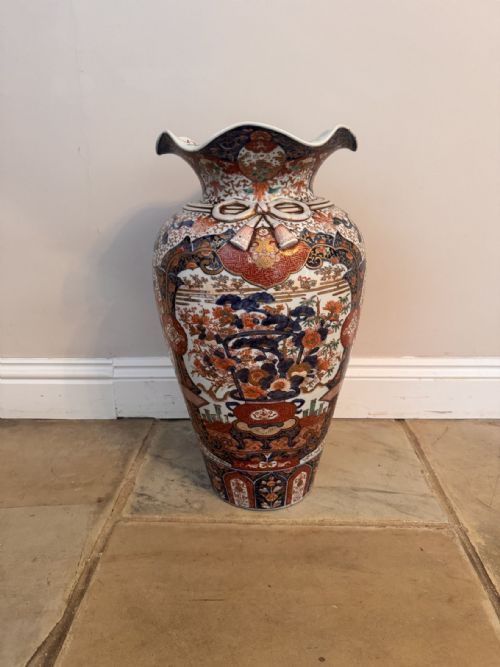
Gilded japanese ceramic vases comprise earthenware and porcelain vessels produced primarily during the Meiji and Showa periods, utilising styles such as Satsuma, Imari, and Kutani. Buyers encounter pairs and individual examples ranging from small miniature vases to large floor-standing and garniture pieces.
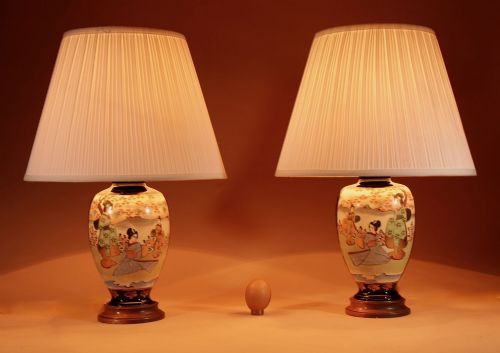
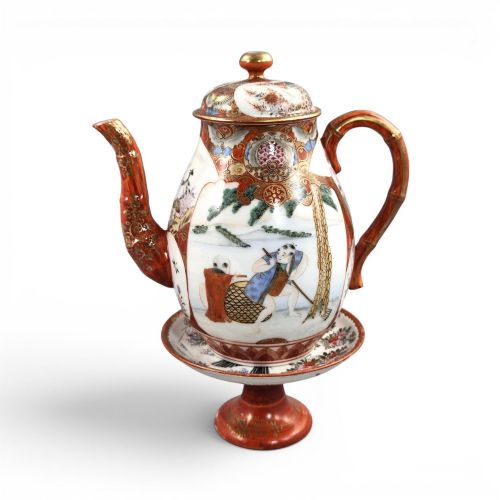
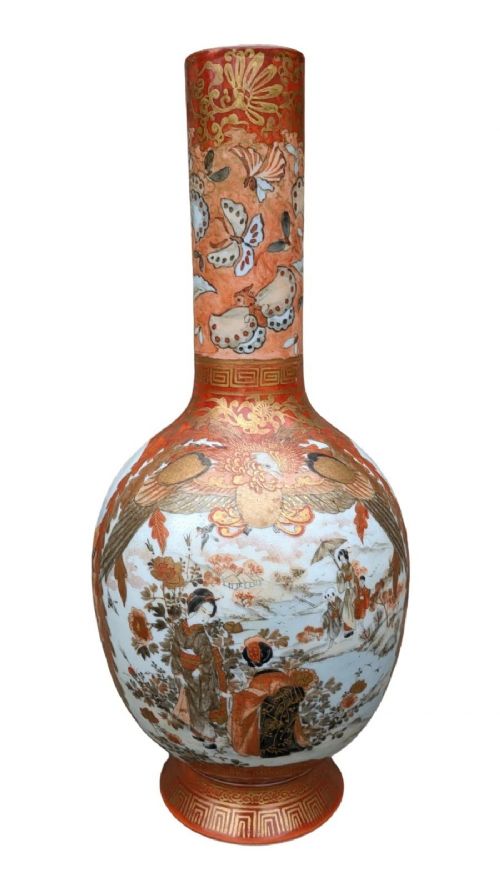
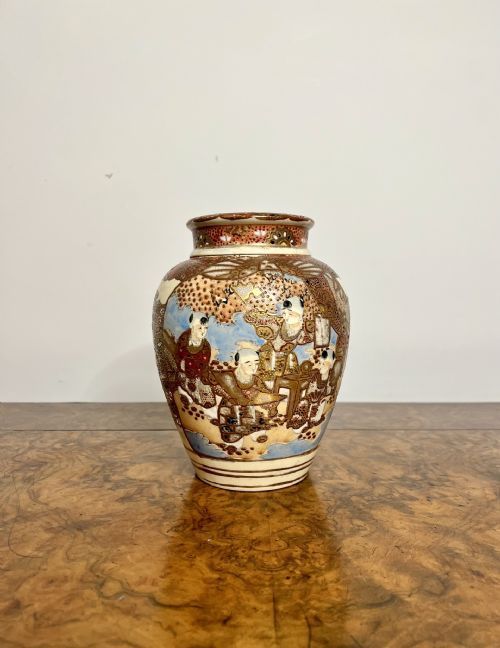
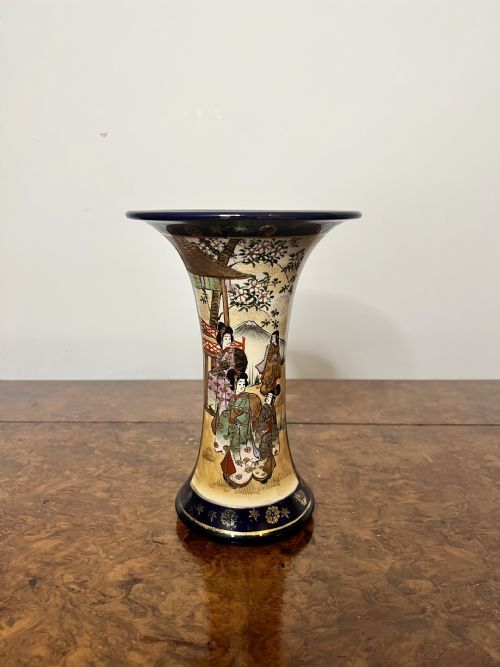
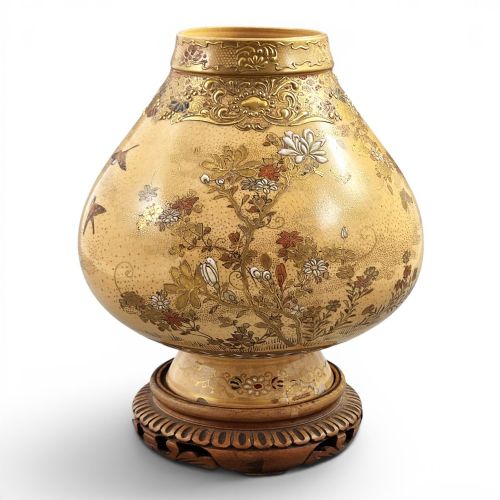
The forms span standard shaped and bottle-shaped vessels alongside ginger jars, ewers, and table lamps adapted from earlier ceramic bodies. Makers often decorated these pieces with court figures, natural motifs, and complex geometric patterns enhanced by gold leaf and enamel.
How They Were Made
Potters shaped ceramic bodies from earthenware and porcelain before applying detailed enamel and glaze pigments. Artisans then introduced gold leaf and gilt work to highlight specific motifs and border panels.
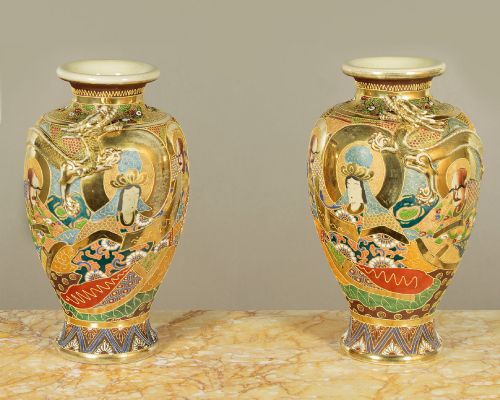
Many workshops utilised specialised techniques like moriage to build up raised clay details beneath the final layers of gilding and colour, creating textured surfaces across the body of the vase.
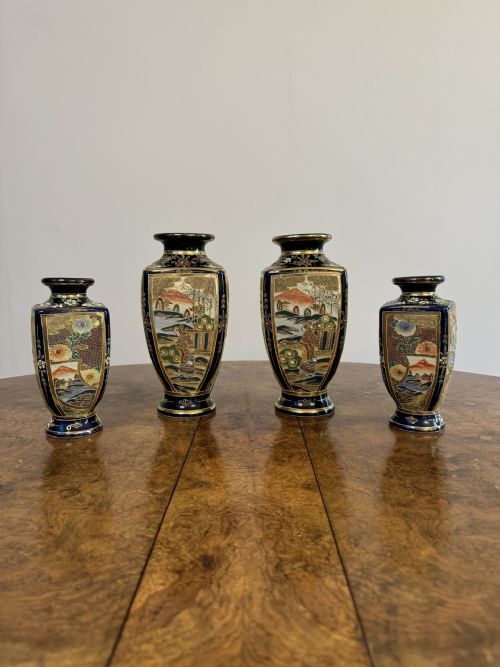
The listings feature diverse forms including hexagonal vases, ginger jars, and table lamps spanning the Meiji, Taisho, and Showa periods.
What Varies in Quality
Quality rests upon the precision of the hand-painted brushwork and the complexity of the figural or natural scenes rendered across the ceramic surface. Pieces bearing signatures from recognised workshops or master makers generally display superior execution in both drawing and gilding.
The depth and preservation of the gold leaf and enamel work distinguish finer examples from standard commercial production. Balanced proportions and crisp definition in raised moriage details also indicate a higher standard of manufacture.
Shozan·Manpei·Kinkōzan·Hotoda·Kinzan·Kato Sanhei·Chosei
The Gilded Japanese Ceramic Vases Glossary
- Satsuma
- Earthenware pottery originating from the Satsuma Domain, typically featuring a crackled cream glaze painted with polychrome enamels and extensive gilding. This style became widely exported during the Meiji period.
- Imari
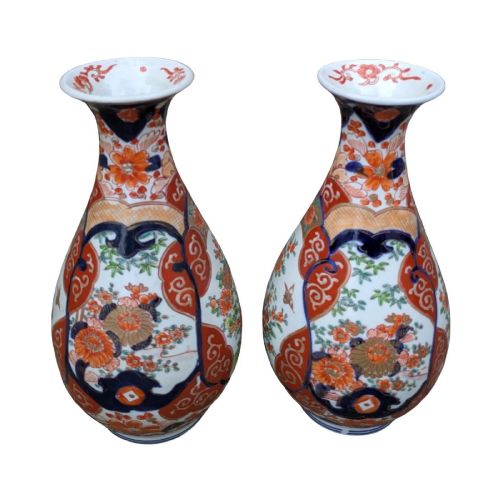
- Japanese porcelain decorated in underglaze blue, iron red, and added gold leaf, traditionally produced in Arita. These pieces are recognised for their bold, saturated palette.
- Kutani
- Japanese porcelain or earthenware distinguished by strong coloured enamels, often dominated by greens and golds. The style dates back to the seventeenth century with significant revival output in the nineteenth century.
- Moriage
- A decorative ceramic technique using piped clay to create raised patterns and textures beneath the glaze and gilding. This method adds a distinct three-dimensional quality to the vessel surface.
- Meiji Period
- The era of Japanese history spanning from 1868 to 1912, characterised by extensive export of decorative arts to Western markets. Pieces from this time often combine traditional motifs with new manufacturing scales.
Gilded Japanese Ceramic Vases: Frequently Asked Questions
How do I identify Satsuma ware?
Satsuma ware is characterised by a distinct ivory-coloured earthenware body covered in a fine, network-like crackle glaze. Artisans then painted these surfaces with detailed figures and floral designs enriched with gold leaf.
Most pieces intended for export date from the Meiji period and often bear signatures or workshop marks on the base.
What is the difference between Imari and Kutani?
Imari porcelain relies on a palette of underglaze blue, rich iron red, and supplementary gilding arranged in structured geometric and floral panels. The body is typically dense and resonant porcelain.
Kutani ceramics lean towards heavier enamel work, frequently utilising vibrant greens and golds to depict narrative scenes or natural subjects across both porcelain and earthenware.
How should I clean gilded ceramics?
Dust these vessels gently with a soft, dry brush to prevent accumulating debris within the textured relief work. Avoid using water, liquid cleaners, or abrasive cloths that can damage delicate enamel and gold leaf.
Display the vases away from direct sunlight to preserve the stability of the antique glazes and pigments over time.
Are these vases glazed on the interior?
Many earthenware vases, particularly Satsuma examples, feature unglazed or partially glazed interiors beneath their decorative exterior shells. Porcelain items like Kutari and Imari generally show fully glazed interiors due to the higher firing temperatures used in production.