


Late Meiji Ceramic Urns
Late meiji ceramic urns bring together meticulous hand-painted detail and rich historical craft, offering striking focal points for a room.
Late Meiji Ceramic Urns
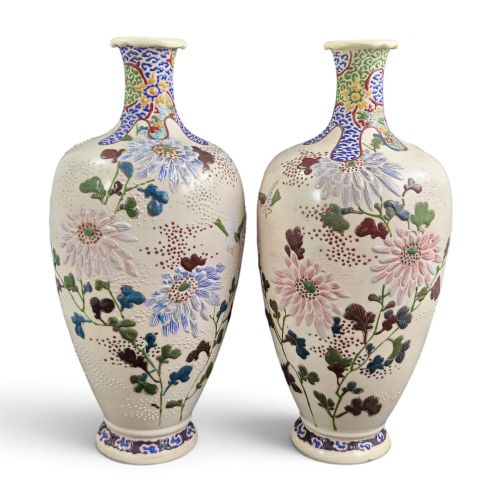
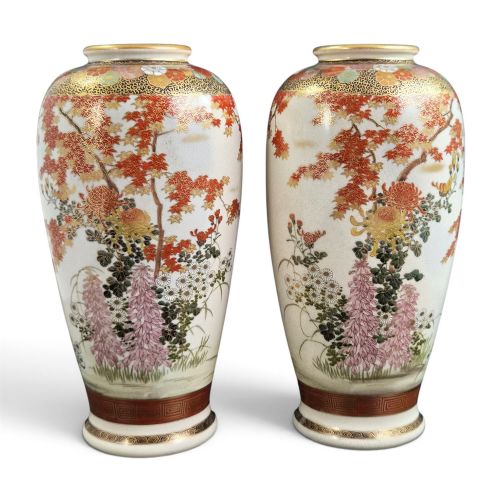
Late meiji ceramic urns encompass diverse decorative vessels created during the closing decades of the nineteenth century and the early twentieth century. You will frequently encounter Satsuma earthenware alongside Imari and Kutani porcelain examples across these listings.
The forms range from compact miniature vases and covered ginger jars to imposing floor vases measuring over fifty inches in height. Many pieces incorporate specific regional origins such as Kyoto, Arita, and Kaga.
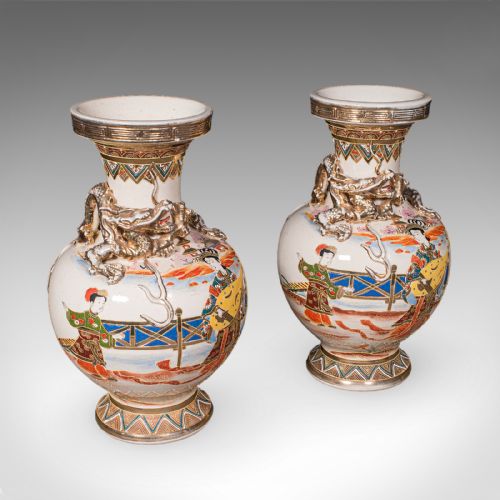
Makers often integrated cultural motifs including court figures, religious scenes, landscapes, and floral patterns. These objects reflect both domestic Japanese tastes and pieces produced for the export market.
Materials and Construction
Potters shaped these vessels from earthenware and porcelain, applying detailed glazes and enamel pigments across the surfaces. Many items feature raised moriage decoration that creates a tactile, three-dimensional texture.
Gilt and gold leaf embellishments highlight intricate figural processions and panel borders. Some larger forms additionally incorporate wood and lacquer panels into their presentation.
Listings span the nineteenth century, the eighteen-nineties, nineteen hundred, and the edwardian period, featuring earthenware, porcelain, enamel, gold leaf, and lacquer.
Assessing Quality and Execution
The refinement of the hand-painted brushwork distinguishes standard production from exceptional pieces. Artisans who achieved precise control over cobalt grounds and heavy gilt detailing produced the most compelling works.
Complexity of composition also dictates distinction, particularly in multi-panel scenes depicting court figures or landscapes. Pieces bearing recognised workshop marks demonstrate higher tiers of period craftsmanship.
Maruni Kobe·Nanzan mark·Kinkozan·Hododa·Kinrin Workshop·Hayakawa·Fukagawa
The Late Meiji Ceramic Urns Glossary
- Satsuma
- A type of Japanese earthenware featuring a crackled ivory glaze and detailed overglaze enamel decoration. It serves as the primary ceramic body for many decorative vases.
- Moriage
- A decorative technique where slip is piped onto the ceramic surface to create raised patterns and textures. This method gives certain motifs a distinct tactile quality.
- Imari
- A style of Japanese porcelain decorated in underglaze blue and overglaze red, gold, and green. Pieces in this palette display vibrant contrasting colours.
- Kutani
- Japanese porcelain originating from Kaga province known for bold colour schemes and pictorial designs. These works frequently depict natural scenes and figures.
- Mon
- A Japanese heraldic badge or crest used to identify families or clans. You will find these emblems painted onto select Satsuma bodies.
Late Meiji Ceramic Urns: Frequently Asked Questions
What defines late meiji ceramic urns?
These pieces comprise decorative earthenware and porcelain vessels produced in Japan during the late nineteenth and early twentieth centuries. They bridge traditional domestic aesthetics with export artistry.
Craftsmen utilised detailed enamels, cobalt grounds, and gold leaf to ornament surfaces with landscapes, figures, and floral panels.
How were these vases displayed historically?
Owners placed larger floor vases and covered ginger jars in prominent interior spaces to demonstrate refined taste. Miniature vessels served as cabinet pieces for close appreciation.
Many of these objects were created specifically for international exhibition and export markets during the period.
How should I care for these ceramics?
Keep vessels away from direct sunlight to preserve the stability of the enamel pigments and gold leaf. Dust gently with a dry, soft cloth.
Avoid using liquid cleaners or abrasive materials that might damage the delicate raised moriage and surface glazes.
How do I identify Satsuma ware?
Look for a characteristic crackled ivory-coloured glaze beneath intricate overglaze painted scenes. This earthenware body forms the foundation for many figurative and landscape compositions.
Many examples also incorporate family crests or distinct artist signatures on the underside.