
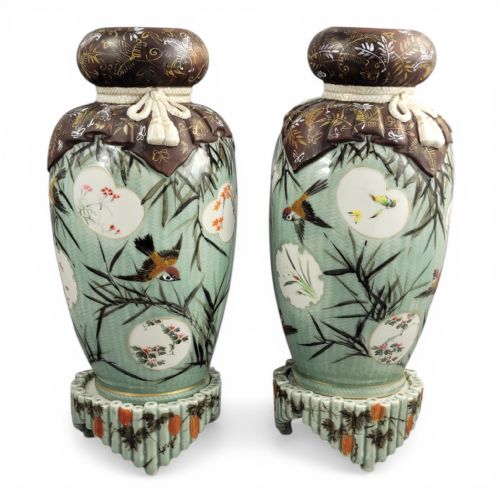


Antique Asian Floor Vase
These large vessels arrive from Meiji period Japan and Qing dynasty China to anchor a room.
Antique Asian Floor Vase
An antique asian floor vase stands tall, designed to occupy open space in a hallway or beside a hearth rather than sit upon a table. These substantial pieces arrive predominantly from Japan and China, created during the nineteenth century and the early decades of the twentieth.
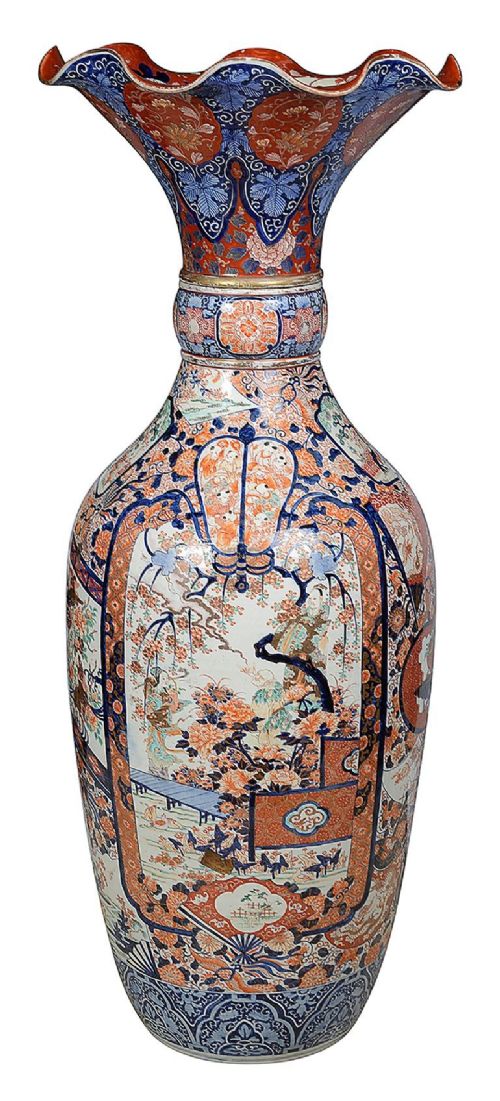
The selection here draws heavily on Japanese Imari and Satsuma wares alongside Chinese cloisonné enamel and bronze. Buyers encounter monumental pairs and single palace vessels scaled for grand interiors.
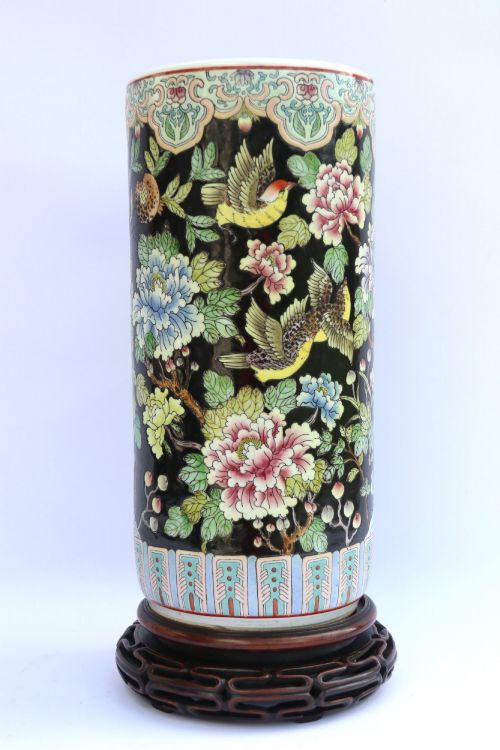
Forms range from flared porcelain bodies to massive bronze and lacquer cylinders. Many retain their original stands, completing the height required for floor display.
How they were made
Potters shaped high-fired porcelain and earthenware, applying cobalt blue, Imari palettes, or intricate enamel pigments before kiln firing. Cloisonné workers soldered thin metal wires to bronze or copper bases to form cells, filling them with coloured glass paste before repeated firing and polishing.
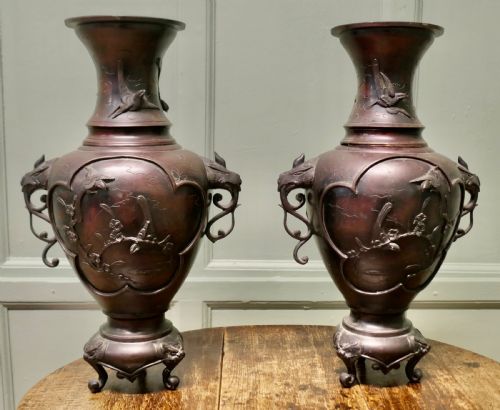
Metalcasters poured bronze into moulds to create heavy dragon and floral relief vessels, often finishing surfaces with patination or gilding. Wood, lacquer, and gold leaf finish select pieces, adding depth to painted or carved decorative schemes.
Listings span the nineteenth century into the 1940s, uniting Japanese Meiji and Edo periods with Chinese Qing styles across porcelain, bronze, and enamel.
What varies in quality
Execution of detail separates standard production from masterworks. The crispness of cloisonné wirework, the precision of hand-painted enamel figures, and the weight of cast bronze indicate the maker's investment of time and skill.
Scale and proportion govern desirability, particularly in pairs where matching height and symmetry prove essential. Original matching stands and intact surface gilding further elevate the standing of a vessel.
Kato Sanhei
The Antique Asian Floor Vase Glossary
- Imari
- A Japanese export porcelain style defined by a palette of underglaze blue, iron red, and gold. This ware gained immense popularity across Europe during the nineteenth century.
- Cloisonné
- A metalwork technique where enamel paste is applied within compartments made by soldering flat wires to a metal body. Subsequent firings fuse the glass to the surface.
- Satsuma
- An earthenware pottery type with a crackled ivory glaze, typically decorated with polychrome enamels and raised gold. Pieces often depict figurative scenes from Japanese history.
- Meiji Period
- The era in Japanese history spanning from 1868 to 1912, noted for opening trade with the West and producing large-scale decorative arts for export.
- Qing Dynasty
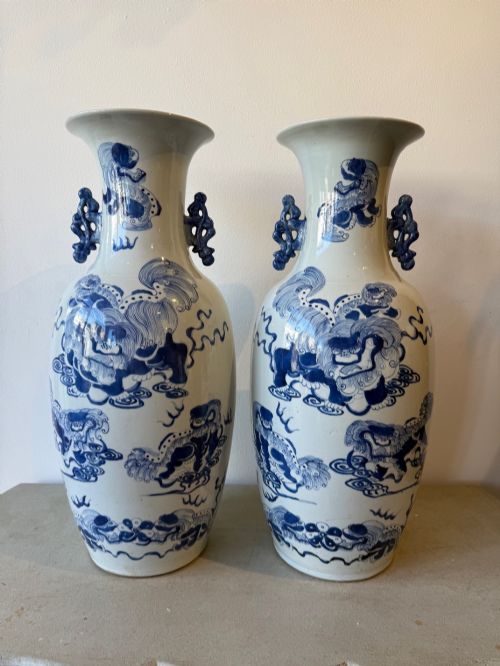
- The final imperial dynasty of China, lasting from 1644 to 1912, known for ambitious blue and white porcelain and scholarly bronze vessels.
Antique Asian Floor Vase: Frequently Asked Questions
Where should I place a floor vase?
These large vessels suit wide hallways, entrance foyers, and corners of reception rooms where floor space permits adequate clearance. They demand visibility away from crowded furniture arrangements.
Pairs look balanced flanking a fireplace or framing a doorway, while single monumental pieces work well against plain walls.
How do I clean an enamel vase?
Dust gently using a dry, soft brush to protect fragile metal wires and painted surfaces. Avoid water and chemical cleaners, which can damage aged glazes and exposed bronze.
If the interior requires attention, use a dry cloth on a flexible wand rather than pouring liquids inside.
How do I tell Satsuma from Imari?
Satsuma wares feature a distinctive cream-coloured earthenware body with a fine crackle glaze, painted in dense enamel and gold. Imari wares use a hard white porcelain body decorated primarily in underglaze blue and iron red.
Weight and ringing tone also help, as porcelain feels denser and rings higher than earthenware.
Are original stands important?
Original matching stands support the proportions intended by the maker and protect the base from floor dampness. They contribute to the overall height and historic integrity of the piece.
Vessels designed for floor display often rely on these wooden or porcelain platforms for stability.
Can these vases hold water?
Many antique floor vessels serve decorative purposes and may lack waterproof glazes or feature construction seams unsuited for liquid. Using them for dry branches or silk stems avoids moisture damage.
If fresh flowers are essential, place a hidden glass or plastic liner inside the neck.