



Japanese Pottery Figure
These pieces capture a Japanese pottery figure through centuries of tactile craft, bringing character and narrative straight into a room.
Japanese Pottery Figure
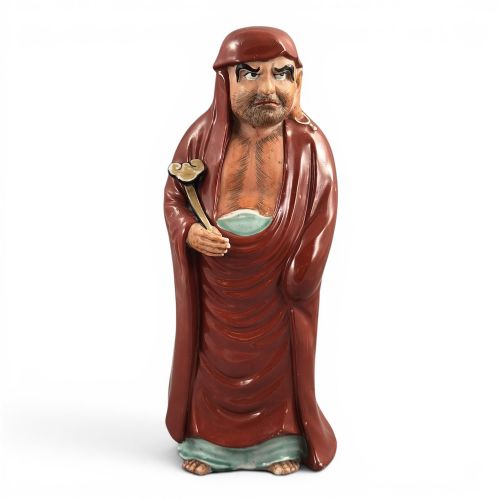
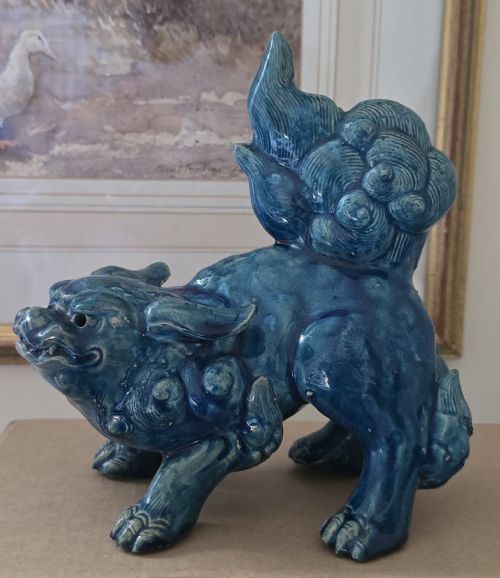
A Japanese pottery figure typically presents as a hand-modelled sculptural ceramic, often depicting traditional sages, mythical guardians, or legendary figures.
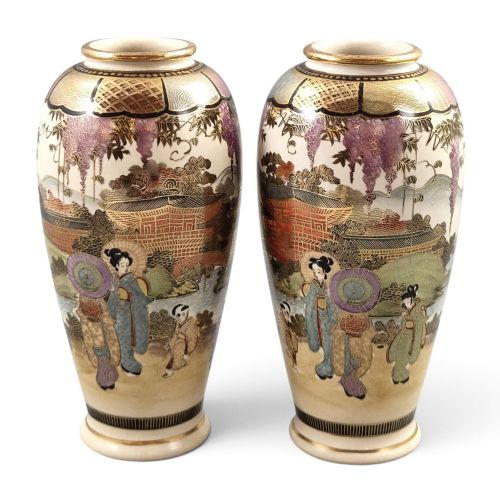
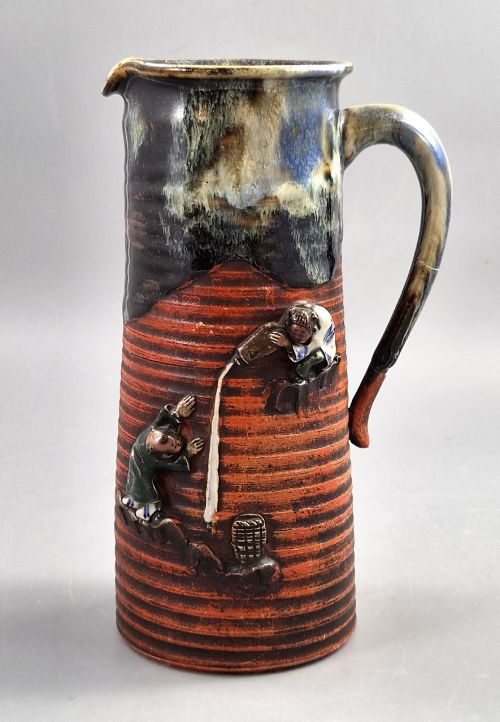
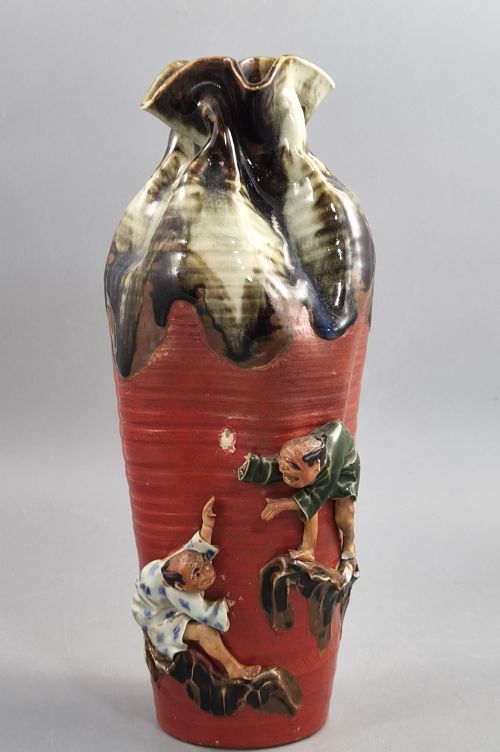
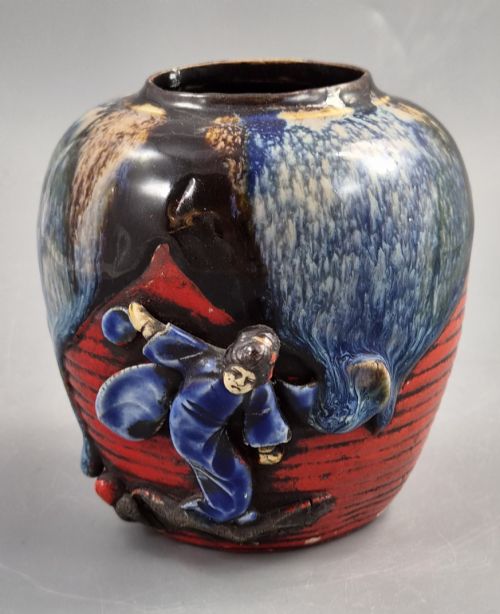
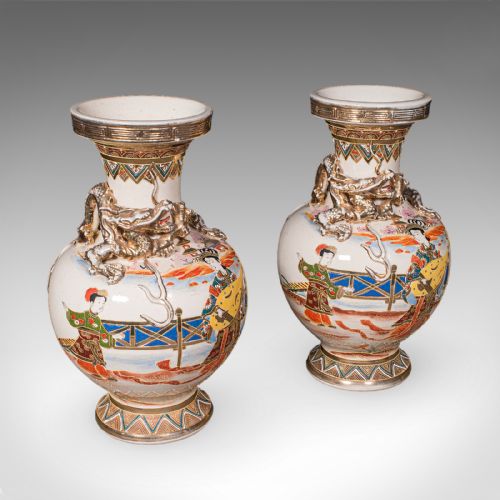
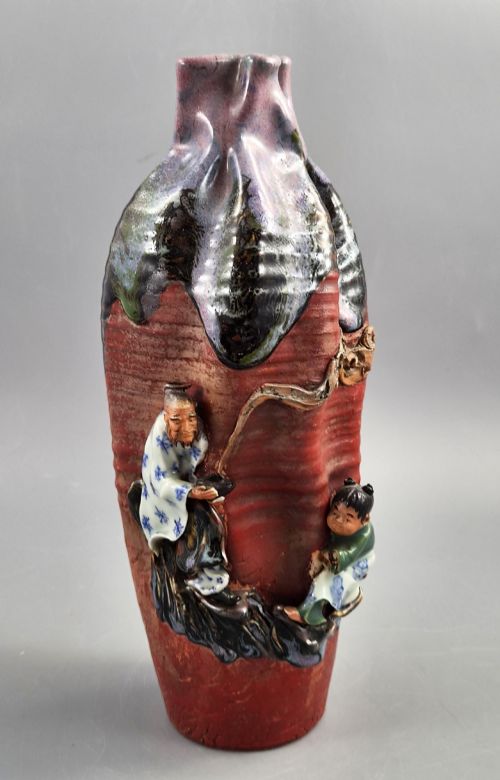
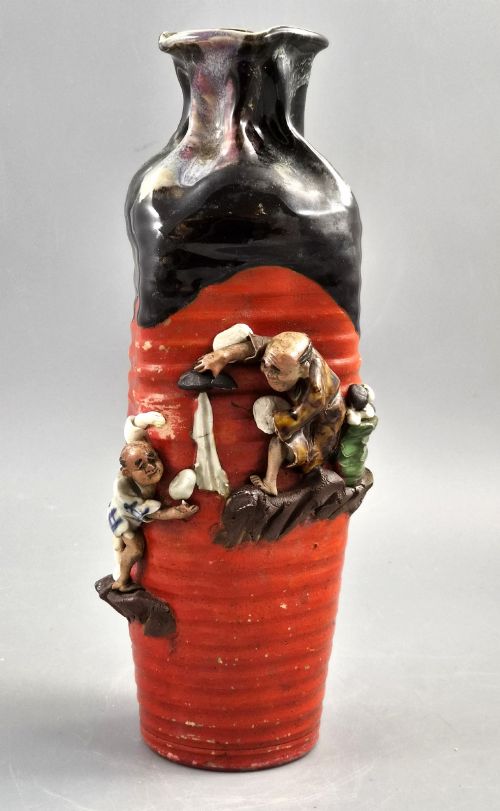
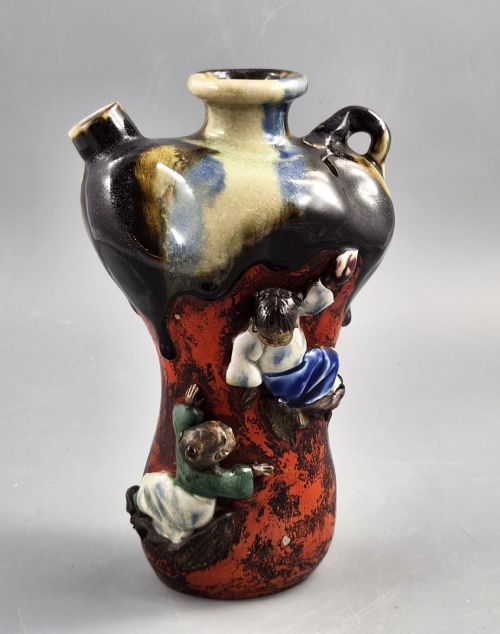
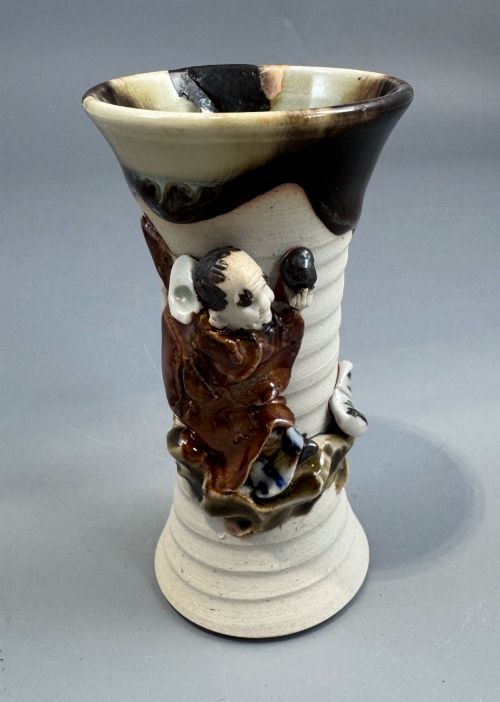
Many examples emerge from the Meiji and Taisho periods, ranging from the distinct textured appliqués of Sumida Gawa ware to the intricate painted deities of Satsuma and Kutani.
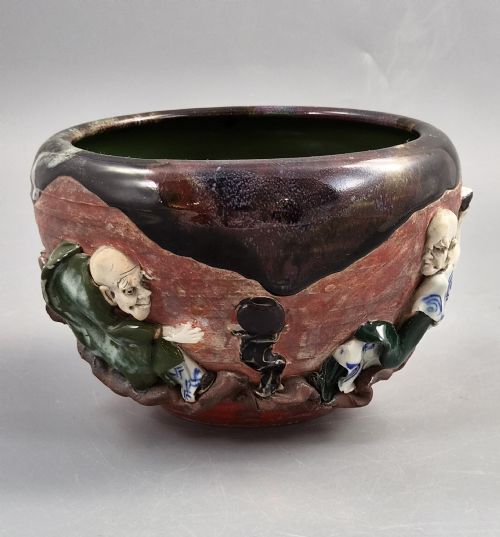
Buyers encounter these works cast in earthenware or heavy stoneware, frequently serving as standalone okimono or adorning the surfaces of vases and bowls.
Materials and Construction
Potters utilised earthenware and robust stoneware bodies, shaping the clay by hand before applying varied glazes such as flowing flambé or rich oxblood.
Figures are frequently modelled separately in high relief and luted onto the vessel walls, combining sculptural modelling with traditional throwing techniques.
Listings feature earthenware, stoneware, and porcelain materials spanning the Victorian era through the Meiji and Taisho periods.
Distinctions in Quality and Execution
The sophistication of the modelling separates standard production wares from superior artistic creations, particularly in the expressive depth of human and animal faces.
Control over the glaze defines the visual success of Sumida Gawa pieces, where uneven pooling should enhance rather than obscure the underlying form.
Signatures from recognised workshops and master ceramists elevate a piece, reflecting precise brushwork and careful kiln management.
Shozan Satsuma·Inoue Ryosai·Ban-ni·Ishiguro Kōko·Tokyo Taizan
The Japanese Pottery Figure Glossary
- Okimono
- A Japanese ornamental statue or figurine intended for display in an alcove or on a shelf. These decorative objects range from mythical deities to daily life scenes.
- Satsuma
- A type of Japanese earthenware originating from Satsuma Province, traditionally characterised by a ivory craquelure glaze decorated with polychrome enamels and gilding. Later production expanded to major urban centres like Kyoto and Tokyo.
- Sumida Gawa
- A style of Japanese pottery originating near Tokyo, known for its heavy, dripping flambé glazes and distinct figures modelled in high relief scrambling across the surface.
- Moriage
- A decorative technique in Japanese ceramics where slip is piped onto the surface in dots or lines to create raised patterns. This adds significant texture beneath the final glaze and enamel layers.
- Karako
- A traditional Chinese-style motif depicting a playful Chinese boy or group of boys, frequently utilised in Japanese art and ceramics as a symbol of happiness and fertility.
Japanese Pottery Figure: Frequently Asked Questions
What is a Sumida Gawa figure?
These are distinct ceramic pieces featuring three-dimensional human figures modelled separately and applied directly to the exterior of vases or mugs.
The style typically incorporates thick, streaky flambé glazes that run down the body of the vessel around the climbing forms.
How do I identify Satsuma ware?
Satsuma ceramics generally display a characteristic ivory-coloured body covered in a fine network of crackled glaze.
Decoration relies heavily on detailed enamel painting and raised gold leaf depicting court scenes, deities, and floral motifs.
Where were these figures displayed?
Okimono and standalone figures were traditionally placed within a room's decorative alcove, known as a tokonoma, for quiet contemplation.
Figural vases and bowls combined domestic utility with sculptural artistry, serving as focal points within interior spaces.
What periods do these pieces span?
The majority of these ceramic figures date from the Meiji and Taisho periods, reflecting a prolific era of Japanese export art.
Earlier examples stretch back into the Victorian era and the nineteenth century, showing traditional craftsmanship adapted for Western collectors.