


Japanese Figural Pottery
Japanese figural pottery brings intricate narrative scenes and detailed craftsmanship into your home through antique vessels created during the Meiji period and Victorian eras.
Japanese Figural Pottery
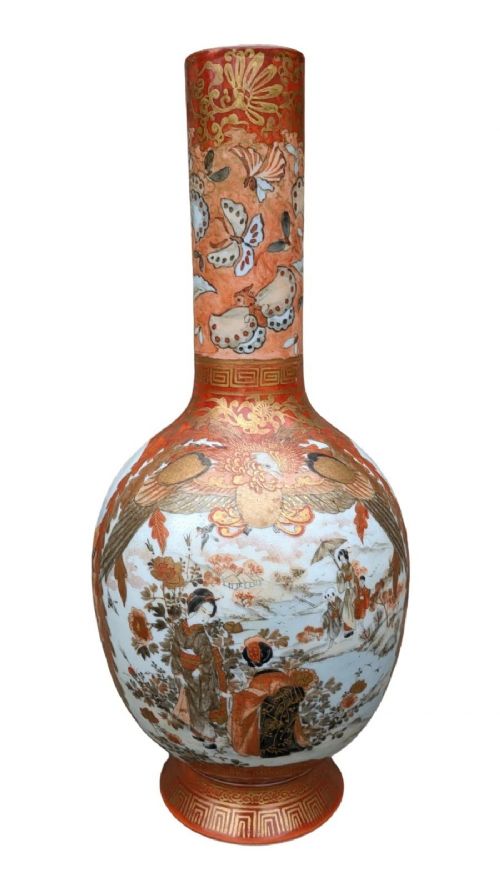
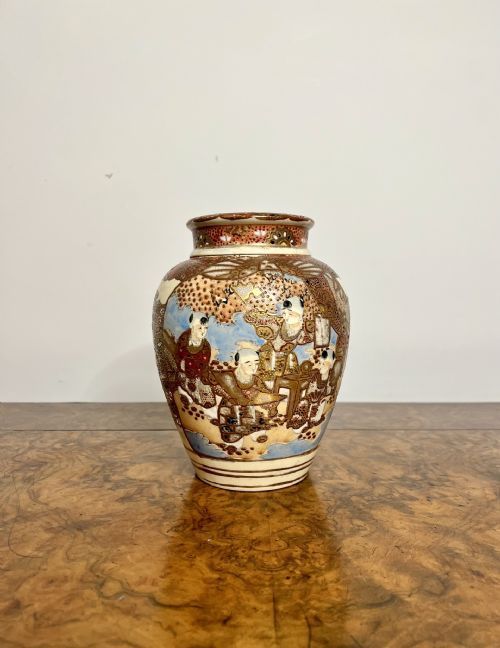
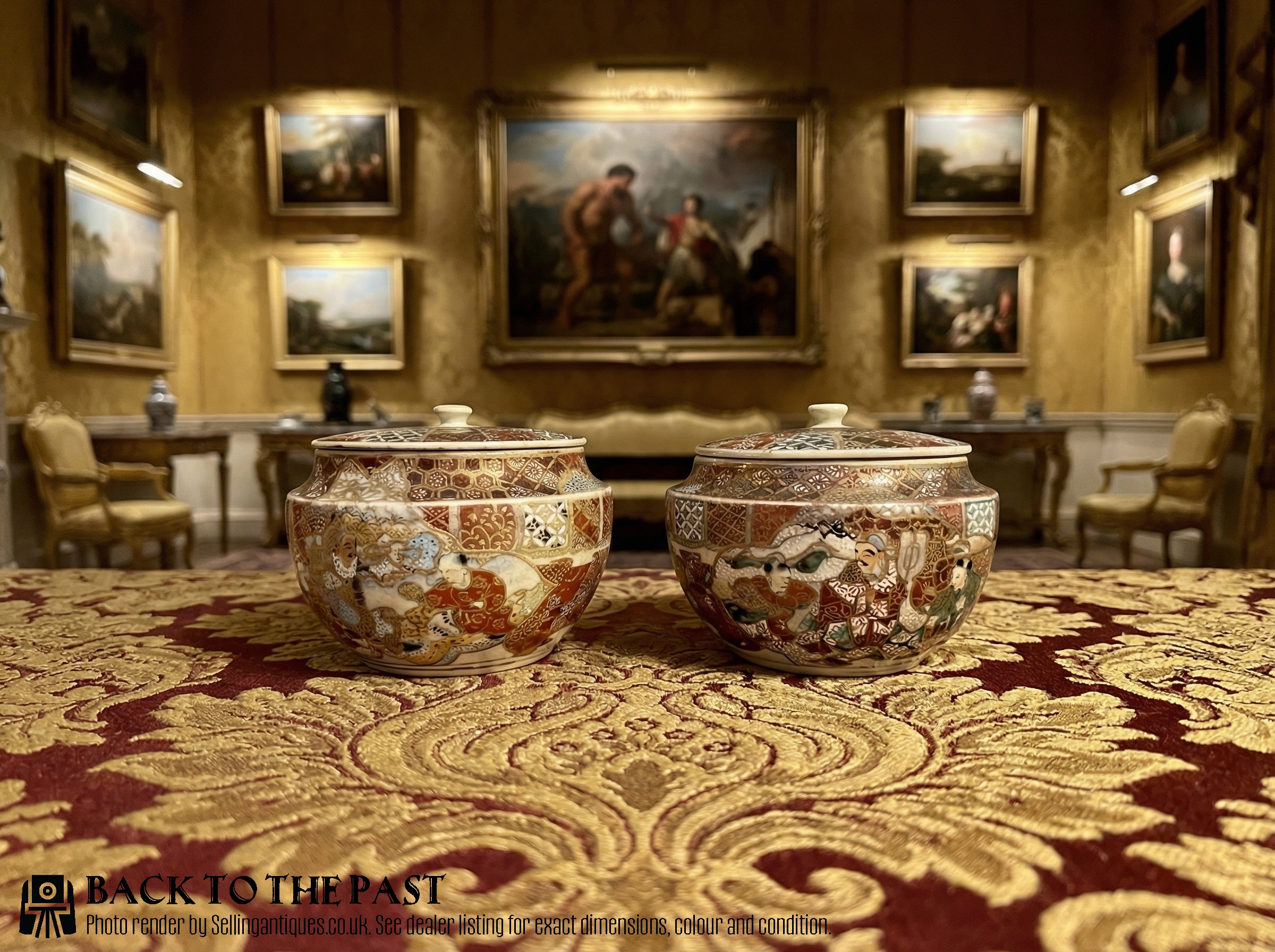
When you search for Japanese figural pottery, you encounter a specialised selection of decorative earthenware and porcelain objects primarily dating from the late nineteenth and early twentieth centuries. These pieces encompass vases, ginger jars, lidded vessels, koros, and decorative bowls that frequently showcase elaborate human processions and figural scenes.
The objects available on this page are predominantly Satsuma and Kutani wares produced during the Meiji period, reflecting the traditional aesthetic sensibilities of that era. Buyers most commonly meet globular vases, bottle vases, and miniature vessels featuring distinct hand-painted artistry and regional motifs.
These items serve as decorative centrepieces or functional vessels such as incense burners and table lamps, carrying historical narratives from Japanese ceramic traditions into modern interiors. Each piece demonstrates specific regional characteristics, from the characteristic crackle glaze of Satsuma ware to the vibrant polychrome enamel of Kutani production.
Materials and Construction Techniques
The creation of these ceramics relies on careful potting of earthenware or porcelain bodies, which are then finished with specialised glazes. Satsuma ware utilises a distinctive ivory-coloured earthenware body covered in a fine, clear crackle glaze that provides a stable surface for subsequent painting.
Artisans applied polychrome enamel pigments alongside gold leaf and heavy gilding to delineate the intricate figural processions and detailed garments seen across the pieces. Techniques such as moriage were also employed to build up raised enamel decorations that add tactile dimension to handles, borders, and decorative motifs.
The listings on this page span the 1870s through to the early 1910s, capturing the height of Meiji period ceramic exports.
Factors Determining Quality
The distinction between standard commercial output and superior craftsmanship rests upon the precision and complexity of the hand-painted figural work. Finer examples display meticulous control in facial expressions, garment patterns, and spatial composition without crowding the surface.
The application of gold leaf and gilding varies significantly across pieces, with higher quality vessels utilising refined metallic accents that remain crisp and well-defined rather than thick or heavy-handed. Additionally, the clarity of the underlying crackle glaze and the inclusion of legible signatures from recognised makers elevate the standing of an individual piece.
Chosei Mark·Kinkozan·Shizan
The Japanese Figural Pottery Glossary
- Satsuma ware
- A type of Japanese earthenware originating from Satsuma Province, characterised by a pale ivory crackle glaze decorated with enamel and gilding. It became immensely popular for export during the Meiji period.
- Kutani ware
- A style of Japanese porcelain and pottery traditionally known for vibrant polychrome enamel designs and strong pictorial motifs. These pieces often incorporate bold greens, blues, and extensive red and gold pigments.
- Moriage
- A decorative ceramic technique where liquid clay is piped onto the surface of a vessel before firing to create raised, textured patterns. This method adds a tangible, three-dimensional relief to borders and decorative elements.
- Koro
- A traditional Japanese incense burner typically featuring a pierced lid and a distinct bowl body supported on feet. They are frequently modelled in ceramic or bronze and utilised during traditional ceremonies.
- Meiji Period
- The era in Japanese history spanning from 1868 to 1912, marked by the rapid modernisation and international export of Japanese arts and crafts. Pieces from this time often exhibit exceptional attention to detail.
Japanese Figural Pottery: Frequently Asked Questions
What is Satsuma pottery?
Satsuma pottery is a distinct type of Japanese earthenware featuring an ivory-coloured body covered in a microscopic network of cracked glaze. This surface acts as a canvas for intricate hand-painted enamel scenes and gilt figural processions.
The style developed significantly for international export during the late nineteenth century, capturing Western interest with its narrative depth and ornate decorative detailing.
How do I identify Meiji period pieces?
Meiji period ceramics are generally identified through stylistic markers such as dense figural compositions, refined polychrome enamel work, and the integration of gold leaf. Many pieces also bear painted or impressed studio signatures on the underside.
Examining the weight, the fineness of the crackle glaze, and the precision of the hand-painted garments helps place a vessel firmly within this historical timeframe.
How were lidded jars used?
Lidded jars and ginger jars functioned primarily as storage vessels for precious spices, medicines, or herbs before being repurposed as purely decorative objects. Their secure lids helped preserve the contents while displaying continuous exterior artwork.
In contemporary settings, these jars serve as striking mantelpiece or tabletop ornaments that retain their historical form and visual symmetry.
What distinguishes Kutani from Satsuma?
Kutani ware typically utilises a porcelain or dense ceramic body with vibrant, saturated polychrome enamels dominated by greens, blues, and reds alongside gold. Satsuma ware relies specifically on an earthenware body with a characteristic ivory crackle glaze.
The tactile and visual impact of Kutani centres on bold colour palettes, whereas Satsuma focuses on delicate figural narratives layered over cracked glaze.