
Gilt Ceramic Vase
A gilt ceramic vase brings brilliant metallic shine and painted detail together, catching the eye across a room.
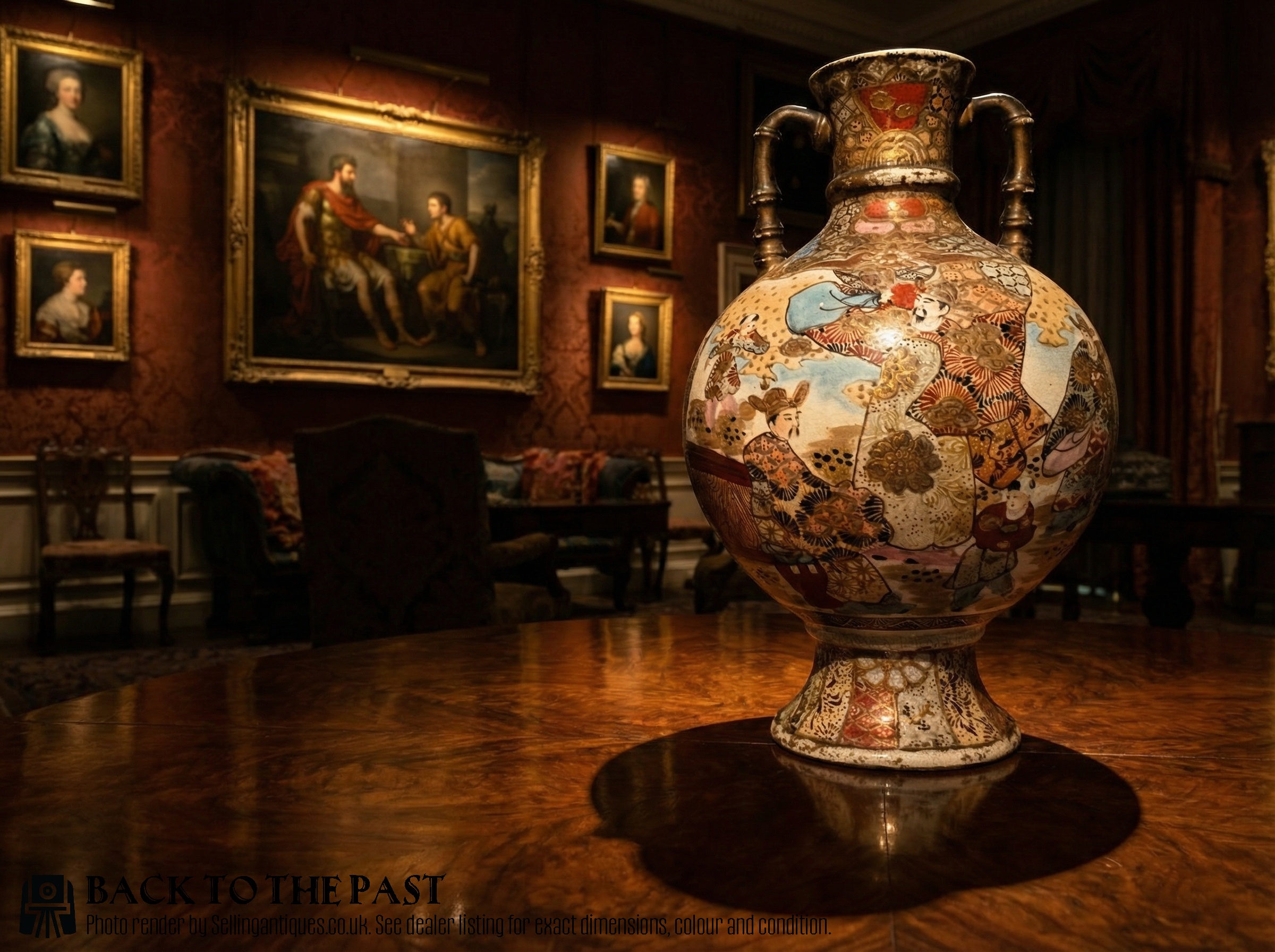
Gilt Ceramic Vase
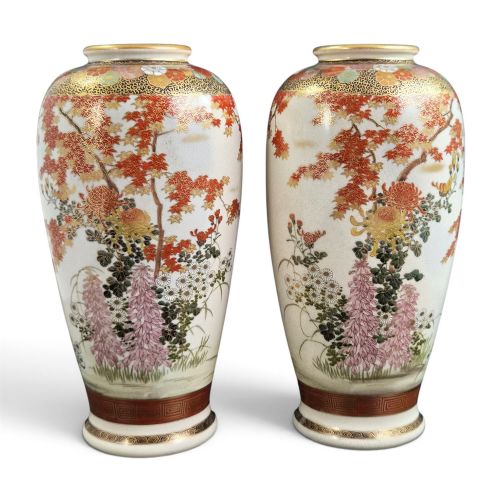
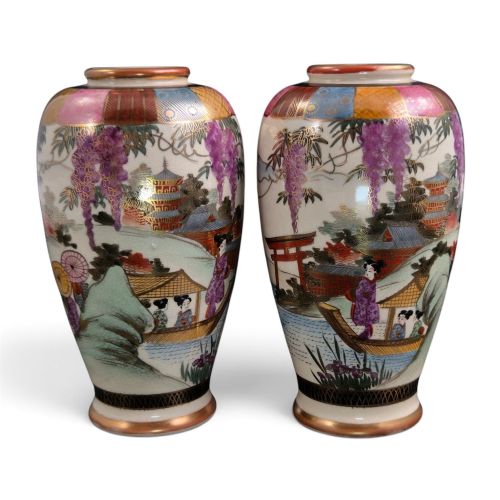
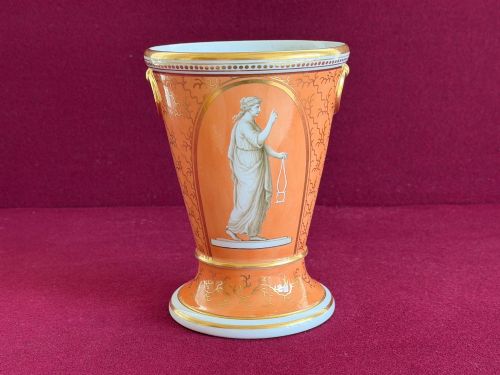
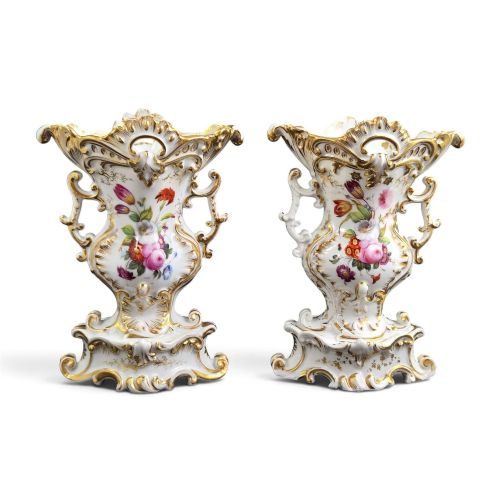
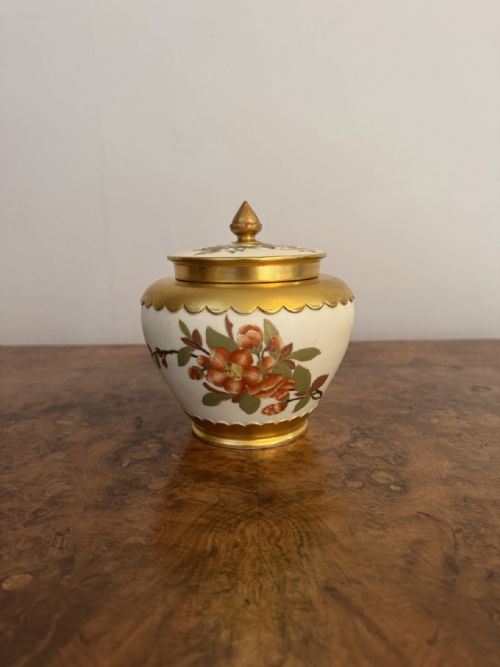
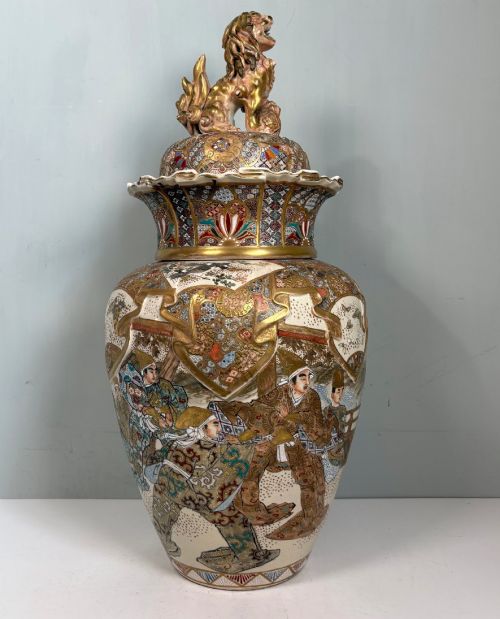
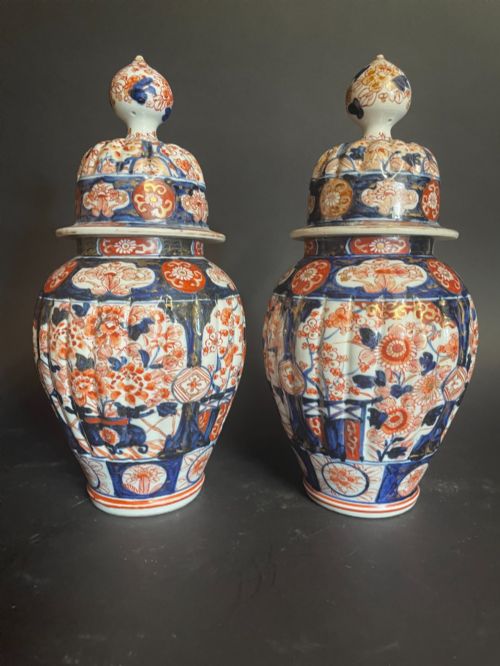
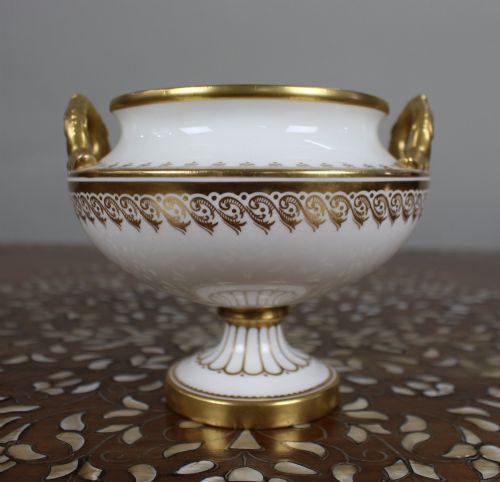
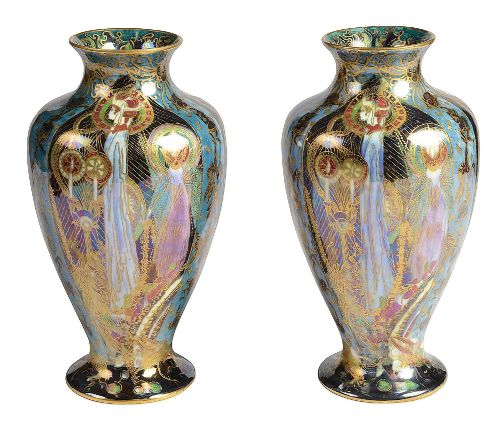
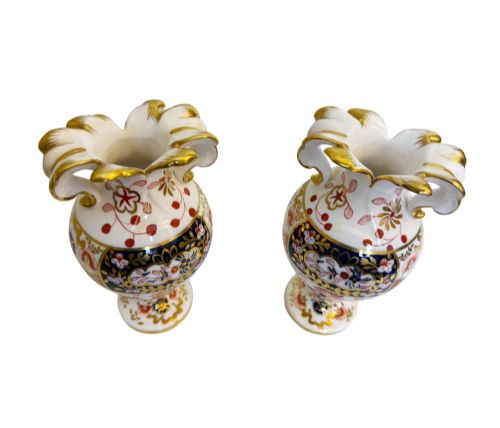
When searching for a gilt ceramic vase, a buyer encounters a wide span of vessels designed for display rather than utility. The selections here include traditional porcelain urns, earthenware jars, and bone china pieces spanning the Georgian, Victorian, and Edwardian periods.
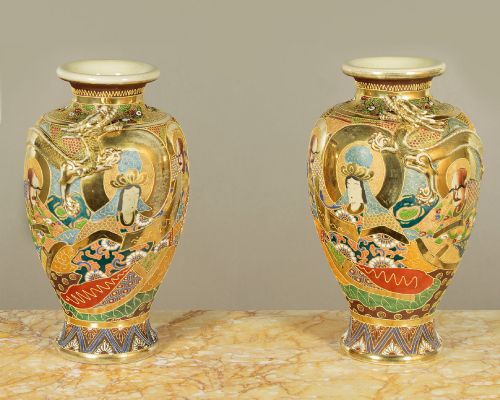
The versions most commonly met on this page range from English porcelain works by factories like Royal Worcester to Japanese Satsuma and Imari earthenwares. Many serve multiple roles, appearing as decorative baluster vases, potpourri pots, or later conversions into table lamps.
How they were made
Potters shaped clay, porcelain, or bone china on the wheel or in moulds before firing the body at high temperatures. Artisans then applied colourful enamel paints and precious metal gilding, often using gold leaf or liquid gold highlights.
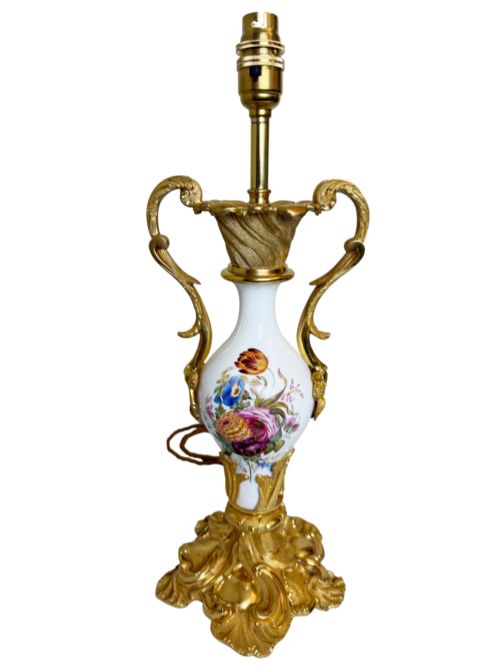
A subsequent low-temperature firing bonded the metallic leaf and painted scenes to the glazed ceramic surface. Mounts of gilt bronze occasionally joined the finished vessel to add structural weight and decorative trim.
Gilt Ceramic Vase Retail Price Guide 2026
Typical asking prices for gilt ceramic vase among the pieces listed under this phrase on Sellingantiques today, from the lower quarter to the upper quarter. They describe what is for sale here now, not the wider market.
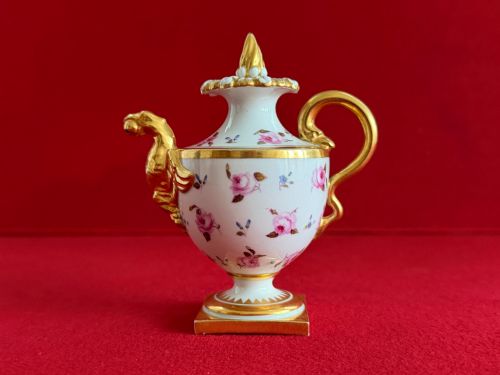
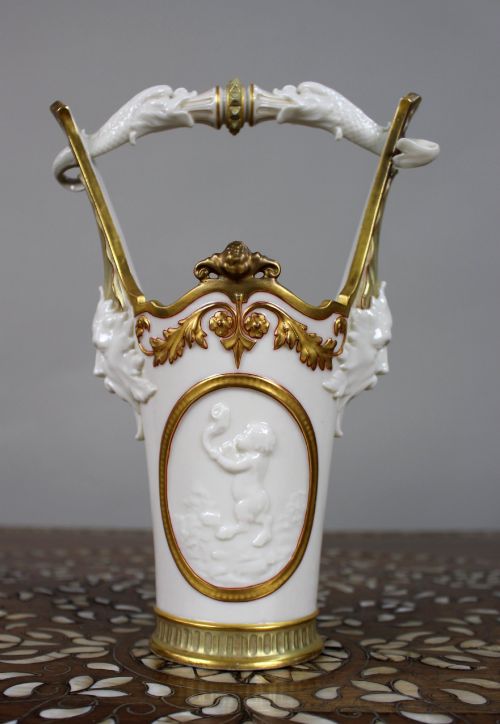
Dolphin-handled vessels bring a splash of Victorian whimsy to the mantelpiece.
What varies in quality
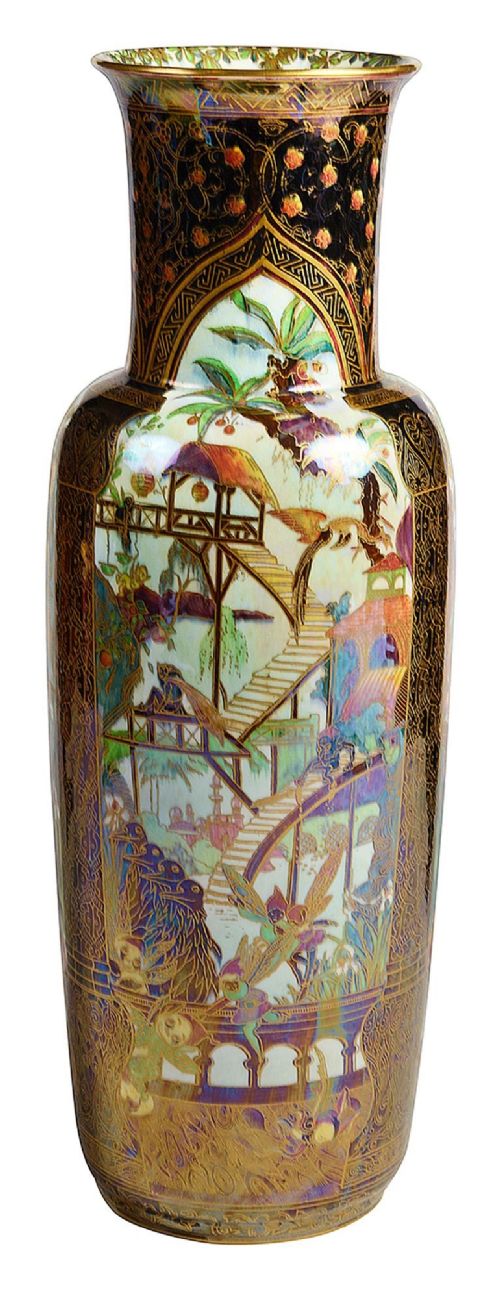
The standard of hand-painting dictates much of the value, distinguishing hurried workshop output from meticulous studio artistry. Crisp execution in floral motifs, figures, and landscapes separates finer vessels from simpler production pieces.
The application and preservation of the gilding also define the grade of a piece. Thick, burnished gold leaf retains its rich lustre better than thin washes that wear away through handling and cleaning.
Flight and Barr·Flight Barr and Barr·Jacob Petit·Royal Worcester·Wedgwood·Spode·Chamberlain Worcester·Samson Paris·Hicks and Meigh·Helena Wolfsohn·Booths Silicon China·Royal Vienna·Royal Crown Derby·Royal Doulton·Ridgeways
The Gilt Ceramic Vase Glossary
- Gilding
- The application of gold leaf or powder to the ceramic surface. This technique adds reflective metallic highlights to painted scenes and borders.
- Baluster
- A vase form featuring a rounded body that tapers toward the base and neck. This classic silhouette supports elaborate surface decoration.
- Imari
- A style of Japanese ceramic decoration featuring dark blue, iron red, and gilt highlights. European factories frequently copied these distinct patterns.
- Campana
- A classical urn shape resembling an inverted bell with flaring rims and mounted handles. These classical forms were popular during the Georgian and Victorian eras.
- Blush ivory
- A soft, creamy ceramic background finish developed by Victorian potteries. Artisans painted delicate floral sprays directly over this matte glaze.
Gilt Ceramic Vase: Frequently Asked Questions
Were these vases used for fresh flowers?
Most decorative vessels on this page were intended for visual display on mantelpieces, tables, and pedestals rather than holding water. Many feature narrow necks, delicate handles, or complex painted surfaces unsuited to practical daily use.
Exceptions include larger jardinieres and certain urns, though antique interiors often utilised them dry as ornaments. Using a glass liner inside protects the historic interior glaze if water is introduced.
What does Sèvres style mean?
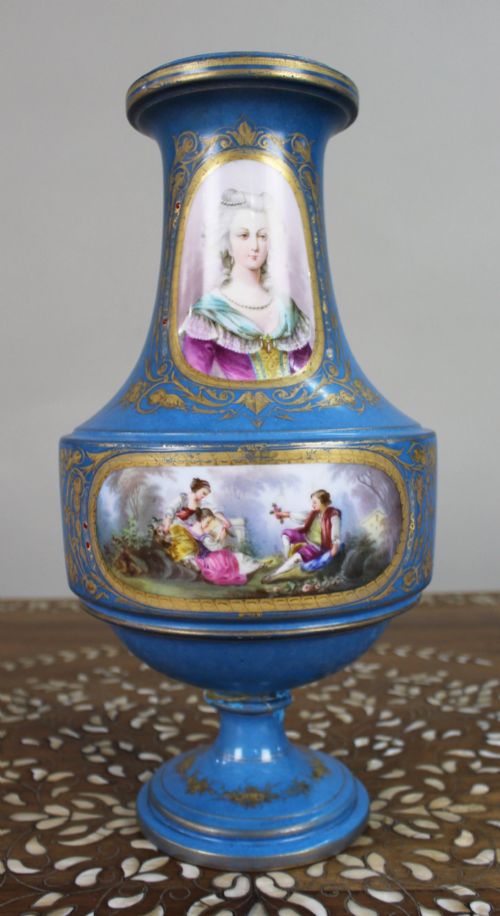
The term describes pieces made outside the royal French Sèvres factory that adopted its characteristic deep blue ground colours and rich gilding. These decorative vessels often feature hand-painted pastoral scenes framed by raised gold scrollwork.
Maker marks on the base usually clarify whether a piece originates from the primary French manufactory or an English or continental workshop working in that taste.
How do I date a ceramic vase?
Factories stamped, painted, or impressed specific marks, ciphers, and registration numbers into the base of their wares over time. Comparing these symbols against standard ceramic reference guides reveals the active period of production.
Stylistic cues such as shape, colour palette, and mounting techniques also help narrow down the decade of manufacture alongside any factory ciphers.