




Japanese Studio Pottery
Japanese studio pottery brings together sculptural vessels and delicate tableware from the Meiji, Taishō, and Shōwa periods, shaped by traditional kiln techniques.
Japanese Studio Pottery
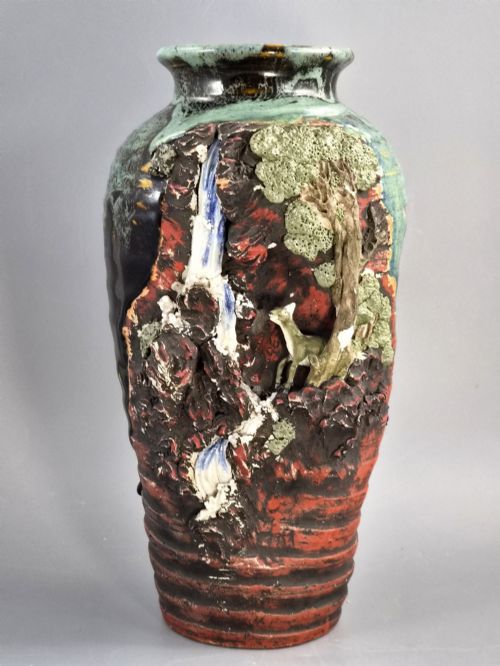
Japanese studio pottery encompasses distinctive items ranging from Satsuma vases and sugar bowls to Sumida Gawa mugs, cups, and sculptural landscape vessels. These pieces frequently date from the Meiji and Taishō periods, showcasing the intricate output of traditional workshops.
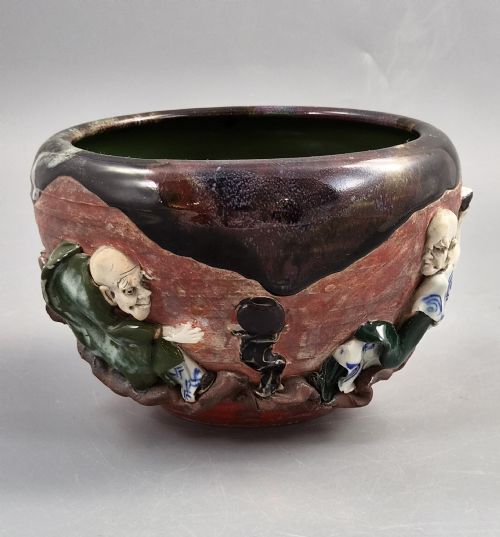
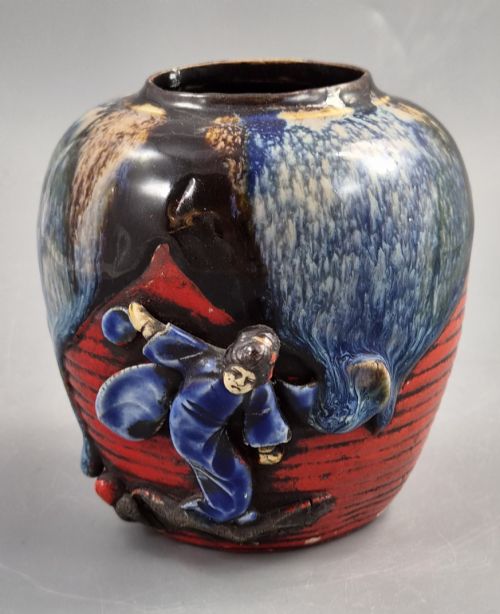
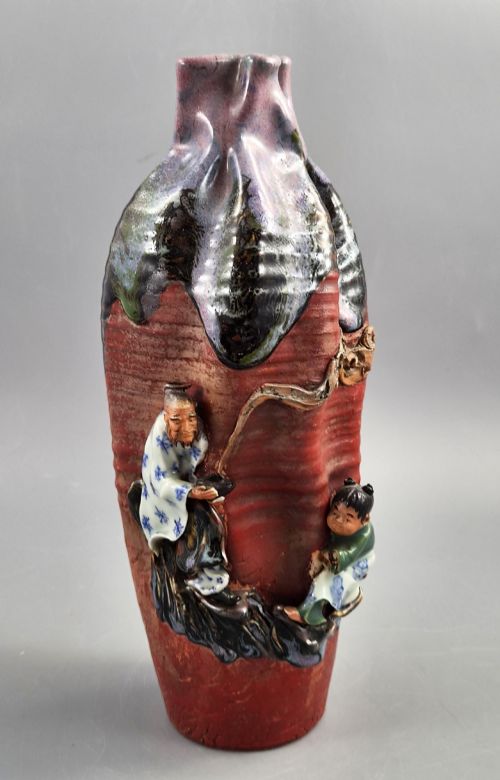
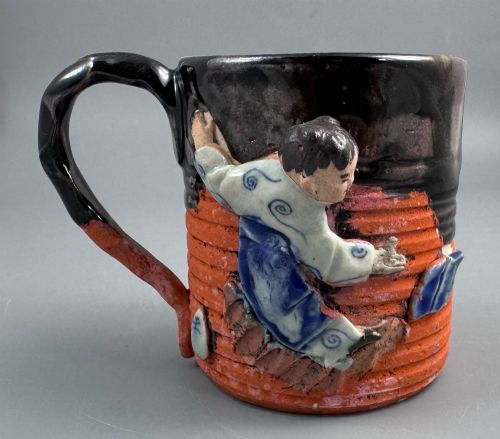
Vases and decorative bowls dominate the selection, often featuring applied figures in relief alongside dramatic flambe glazes. Buyers encounter both utilitarian forms like teacups and elaborate sculptural brush washers created by named makers.
The aesthetic bridges late nineteenth-century craftsmanship and early twentieth-century studio innovation. Earthenware and stoneware forms carry rich surface ornamentation, from gold leaf accents to detailed figural modelling.
How They Were Made
Potters shaped earthenware and stoneware bodies by hand or on the wheel before applying specialised glazes. Many pieces incorporate vibrant enamel colours and gold leaf to highlight intricate surface details.
The distinctive Sumida Gawa vessels utilise dramatic blue and lavender flambe glazes alongside modelled figures applied directly to the surface. Satsuma items rely on finely crackled glazes serving as a canvas for elaborate painted decoration.
Vases and decorative bowls form the majority of available studio pottery types.
What Varies in Quality
Quality depends upon the precision of the modelling and the depth of the glaze effects. Sumida Gawa pieces with well-defined figures in high relief demonstrate superior sculptural skill compared to simpler variants.
The clarity of artist signatures and workshop marks influences desirability, as seen in signed works by Inoue Ryosai or Kinkozan. Finer Satsuma and studio vases show greater control in their detailed enamelwork and gold leaf application.
Inoue Ryosai·Makuzu Kozan·Kinkozan·Shozan·Kizan
The Japanese Studio Pottery Glossary
- Sumida Gawa
- A style of Japanese pottery originating from the banks of the Sumida River near Tokyo, noted for heavy dripping flambe glazes and applied clay figures. These vessels often depict sages, children, or natural landscapes in high relief.
- Satsuma
- Earthenware pottery traditionally characterised by a ivory-coloured, crackled glaze decorated with elaborate enamels and gold leaf. Kyoto studios produced refined Satsuma wares during the Meiji period.
- Flambe glaze
- A rich, streaky glaze that achieves variegated colour effects during high-temperature kiln firing. Blue and lavender flambe variations are common on early twentieth-century studio pieces.
- Okimono
- A freestanding Japanese decorative sculpture designed for display in an alcove or on a shelf. These ceramic figures often portray animals or mythological subjects.
- Karako
- A traditional decorative motif depicting Chinese children at play, frequently modelled in relief on ceramics. These figures appear climbing across the surfaces of Sumida Gawa mugs and vases.
Japanese Studio Pottery: Frequently Asked Questions
How do I identify Sumida Gawa pottery?
Sumida Gawa pieces are instantly recognised by their dripping flambe glazes and distinctive unglazed patches where textured clay figures are applied in relief. They often include signature plaques or incised workshop names.
These vessels lean toward sculptural forms like brush washers, jars, and mugs rather than standard tableware.
What defines Satsuma ware?
Satsuma ware is characterised by a fine earthenware body covered in a creamy, finely crackled glaze. Artisans then hand-painted these surfaces using detailed enamels and gold leaf.
Production during the Meiji period saw major studios in Kyoto refine this style into highly decorative vases and bowls.
How should I display these ceramic pieces?
These pieces suit stable display surfaces away from direct sunlight to protect delicate enamel colours and gold leaf accents. Sculptural vases and okimono figures work well as single focal points in a room.
Take care when handling Sumida Gawa vessels due to the raised relief figures projecting from the body.
Are these pieces signed by makers?
Many studio pieces bear artist signatures or workshop seals either incised into the clay or painted on the base. Signatures often attribute the work to prominent makers or specific kiln traditions.
Unsigned pieces still display distinct regional characteristics and technical methods tied to their period.