





Japanese Sumida Ware
Japanese sumida ware brings heavy earthenware vessels decorated with vivid figurative relief and distinctive flambe glazes straight from the Meiji and Taisho periods.
Japanese Sumida Ware
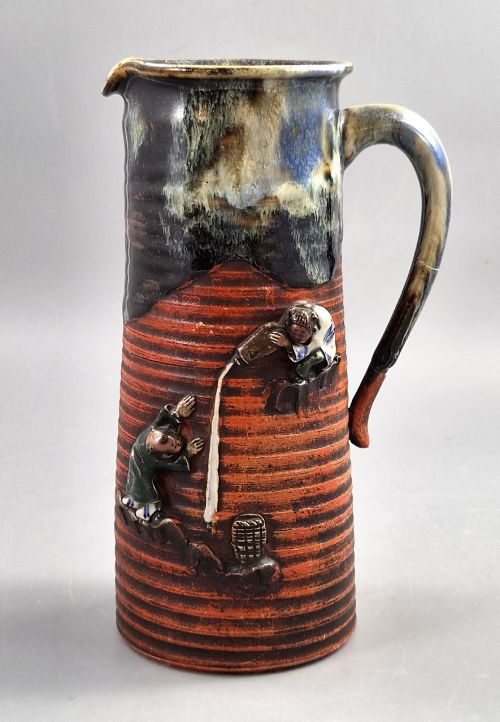
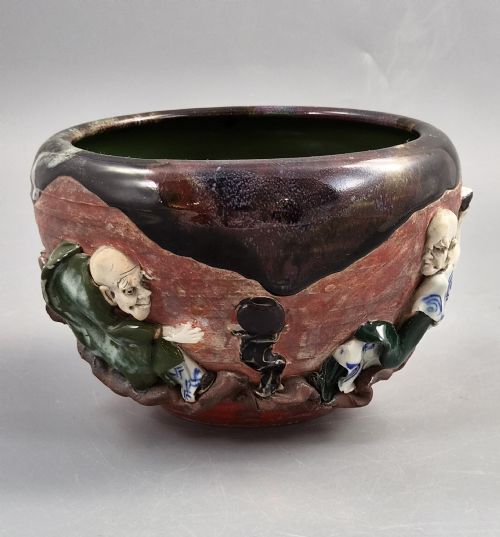
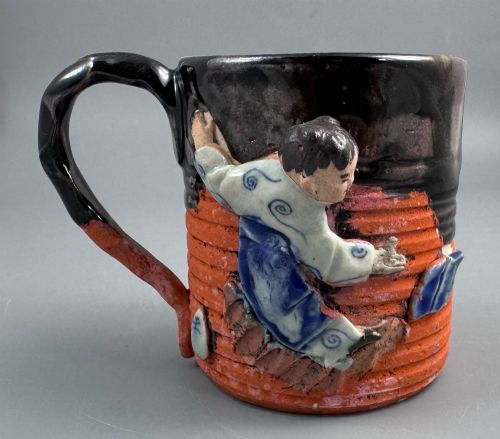
When you search for Japanese sumida ware, you encounter vessels such as vases, pitchers, jugs, bowls, teapots, and mugs produced during the Meiji and Taisho periods around 1900 to 1920. These pieces are characterised by rough terracotta or stoneware bodies combined with heavy, streaked glazes and sculptural elements.
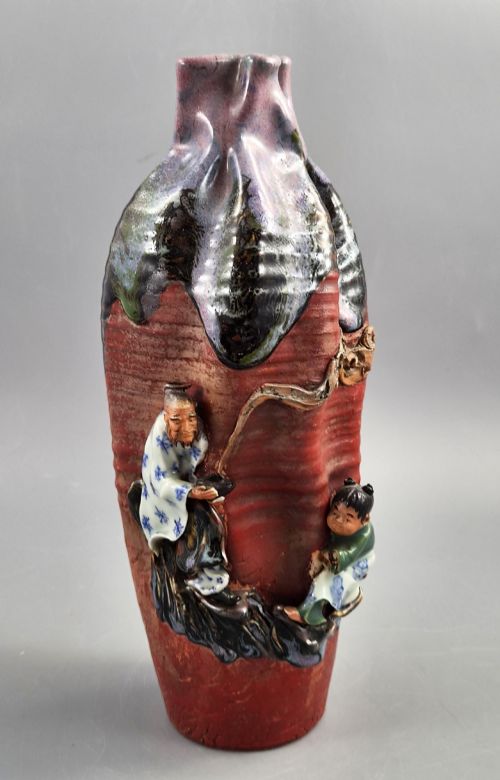
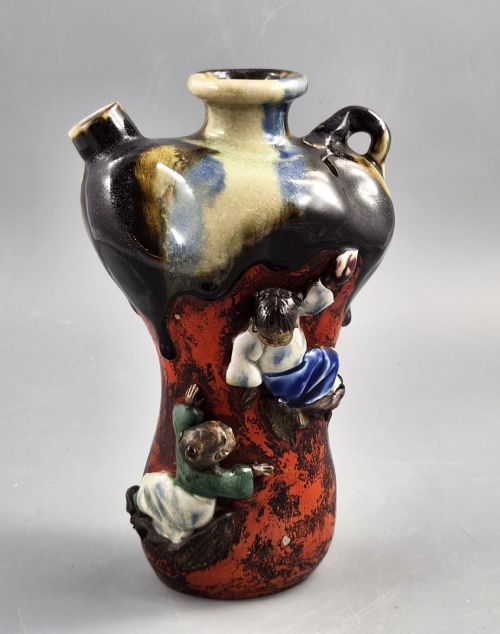
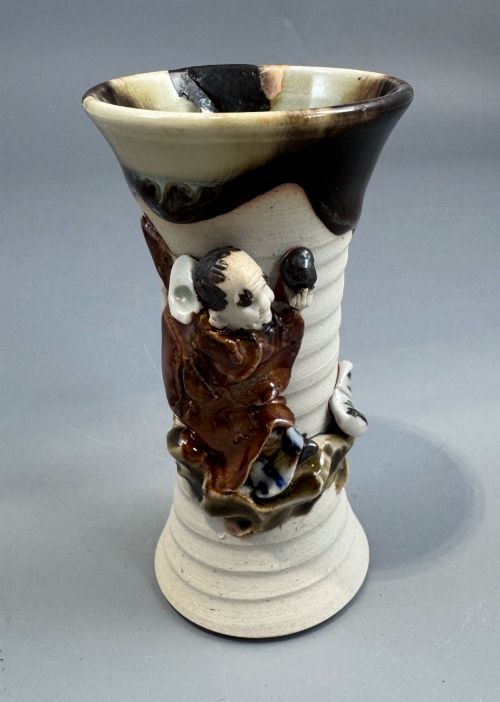
The most common form you will meet on this page is the vase or jar featuring figures modelled in high relief. These applied figures often climb the sides of the vessel, depicting sages, children, or immortals against a contrasting background of blue, lavender, or oxblood glaze.
How Japanese sumida ware was made
Potters built these wares using earthenware, terracotta, or stoneware bodies that provide a gritty, unglazed texture in targeted areas like the faces and hands of the applied figures. Artisans then applied individual clay figures by hand directly onto the vessel walls before firing.
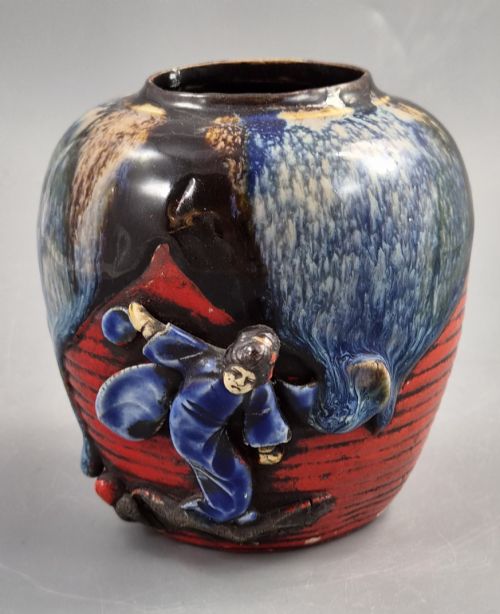
Makers utilised fluid ceramic glazes, including distinct blue and lavender flambe or deep oxblood, which pooled thickly around the shoulders and bases of the vessels. This glazing technique created striking colour variations and glossy runs that contrast with the matte texture of the applied scenes.
A tiny clay child figure perpetually scales the side of a jar vase, caught mid-climb in brilliant blue flambe.
What varies in quality in Japanese sumida ware
The artistry of the modelled figures separates exceptional examples from standard production. Superior pieces display expressive facial details and dynamic poses in the applied characters, such as climbing figures or seated sages, rather than stiff or hastily assembled forms.
Control over the unpredictable flambe and coloured glazes defines the success of a vessel. Better examples feature harmonious pools of glaze that complement the sculptural narrative without obscuring the fine details of the applied figures.
Inoue Ryosai·Ban ni·Ryosai·Ishiguro Koko·Hiroshi
The Japanese Sumida Ware Glossary
- Earthenware
- Porous pottery fired at lower temperatures, forming the foundational body for many traditional vessel types. This material is frequently left unglazed on specific figurative elements.
- Flambe glaze
- A streaked or mottled ceramic coating created by complex kiln reactions during firing. It produces dramatic colour transitions like blues, lavenders, and oxblood.
- Relief
- Sculptural decoration that projects outward from a flat background surface. In these ceramics, figures and scenes are built up in high relief.
- Suiban
- A shallow decorative basin used for arranging flowers or holding water. These items often feature applied figures along the rim.
- Terracotta
- Unglazed, brownish-red fired clay that provides a coarse textural contrast against glossy surface glazes.
Japanese Sumida Ware: Frequently Asked Questions
What is Japanese sumida ware?
Japanese sumida ware consists of distinctive ceramic vessels featuring heavy glazes and figures modelled in high relief. These items originate primarily from the Meiji and Taisho periods.
Potters created these pieces using earthenware and stoneware, often leaving parts of the clay exposed while drenching the rest in vibrant flambe glazes.
How do I identify a Meiji period piece?
Meiji period items are identified through historical stylistic markers and specific signatures left by the studio or artist. The combination of rough terracotta bodies and bold relief work points toward this era.
Many pieces from this timeframe incorporate names such as Inoue Ryosai or Koko pressed or signed directly into the clay body.
How were these vessels used originally?
These ceramics served both functional roles and purely decorative purposes in households. Pitchers, teapots, and mugs handled everyday dining, while suiban and large vases acted as ornamental displays.
The applied figures of sages and children often drew inspiration from traditional folklore and daily life.
How should I care for glazed earthenware?
Care involves keeping the pottery away from harsh impacts that could chip the delicate applied relief work. Dusting gently with a soft dry cloth maintains the surface without harming the glaze.
Avoid exposing these porous historic bodies to standing water for extended periods to protect the antique material.