


Japanese Pottery Bowl
A Japanese pottery bowl brings painted stories, crackle glazes and rich gilding from the Meiji period and Edo eras straight to your table.
Japanese Pottery Bowl
A Japanese pottery bowl in this collection spans decorative vessels, sugar bowls, brush washers and large display pieces. You encounter pieces originating from major historical spans, including the Edo period, the Meiji period, and the Taisho period, with many examples emerging from the late nineteenth century.
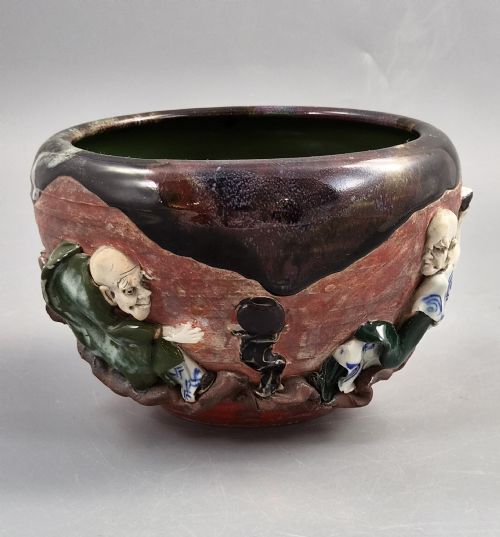
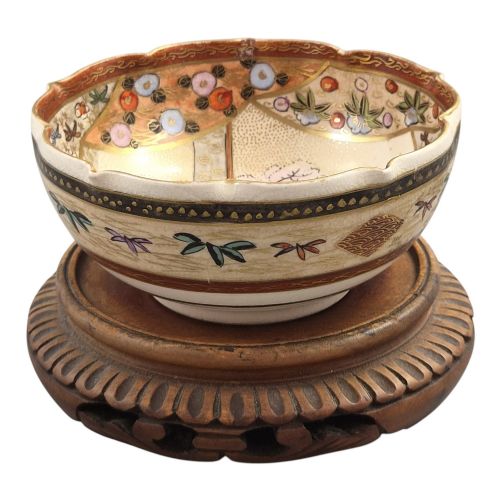
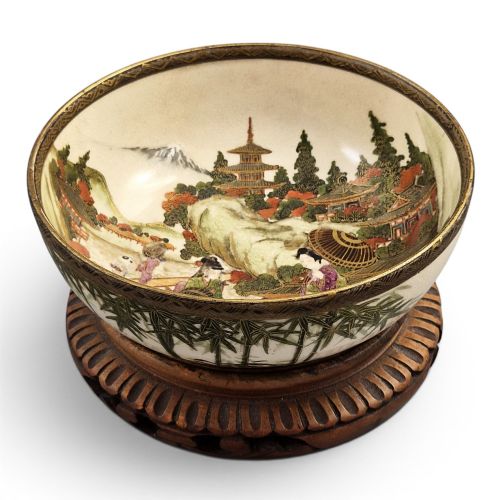
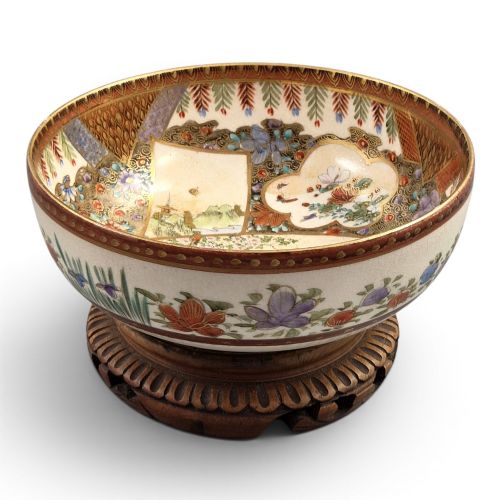
The Satsuma ware bowl dominates the selection, often signed by Kyoto studios and decorated with intricate figures, floral motifs, and the Shimazu mon crest. Alongside these earthenware pieces, you find Imari porcelain tripod bowls from the eighteenth century and unusual Sumida Gawa creations featuring figures in high relief.
The forms range from small Hanami vessels and footed burners to monumental display pieces and matching bowls and saucers. Each object reflects traditional Japanese ceramic craftsmanship designed for both utility and quiet contemplation in a domestic interior.
Materials and construction
Makers shaped these vessels from earthenware, ceramic, terracotta, and porcelain, applying fine glazes and surface treatments. Earthenware bodies often display a characteristic cream crackle glaze that accepts detailed enamel painting.
Artists decorated the surfaces using rich enamel, gold leaf, and gilt detailing to build complex scenes of samurai, flowers, and birds. Specialised techniques include Totai Shippo cloisonne over pottery, creating textured effects that mimic tree bark alongside traditional cobalt blue and white painting.
Listings feature ceramics spanning the Edo period, the Meiji period, and the Taisho period, alongside eighteenth-century Imari porcelain.
Assessing quality and execution
Quality rests in the precision of the brushwork and the depth of the enamel work across the surface of a Japanese pottery bowl. Pieces produced by recognised Kyoto studios or bearing clear artist signatures demonstrate superior control over pigment and gilding.
The complexity of the modelled elements, such as climbing figures in relief or densely painted millefleur and thousand flowers patterns, separates standard production from masterwork output. Preservation of the original gold leaf and the crispness of the underlying ceramic body further define the grade of the piece.
Inoue Ryosai·Kozan·Ryuzan·Kinkozan·Nikko·Hododa·Shozan
The Japanese Pottery Bowl Glossary
- Satsuma ware
- Earthenware pottery originating from the Satsuma province, known for its ivory crackled glaze and elaborate polychrome and gilt enamel decoration. These pieces were heavily produced for export during the Meiji period.
- Meiji period
- The era of Japanese history running from 1868 to 1912, characterised by rapid modernisation and the flourishing of decorative arts for Western markets. Many surviving export ceramics date from this vibrant epoch.
- Imari porcelain
- Porcelain manufactured in the town of Arita and exported from the port of Imari, typically decorated in underglaze blue and contrasting red and gold overglaze enamels. Eighteenth-century examples represent the earlier traditions of this ware.
- Sumida Gawa
- Pottery produced near Tokyo featuring heavy, melting glazes and applied figures in high relief climbing along the exterior walls. This distinctive style often incorporates signatures from notable artists.
- Mon
- A traditional Japanese emblem or crest used to identify families, clans, or governmental organisations. The Shimazu mon frequently appears on Satsuma ware connected to that powerful clan.
- Millefleur
- A decorative pattern covering the entire surface with a dense field of painted flowers. Translated as thousand flowers, it requires immense patience and skill from the artist.
Japanese Pottery Bowl: Frequently Asked Questions
How do I care for a Satsuma bowl?
Keep your Japanese pottery bowl out of direct sunlight and away from sources of extreme heat to protect the delicate enamel and gold leaf decorations. Dust gently with a dry, soft cloth rather than using liquid cleaners.
Avoid submerging antique earthenware in water, as the porous body and historic crackle glaze can absorb moisture and cause staining or structural damage over time.
Are these bowls safe for food?
Historic decorative bowls from the Meiji and Edo periods were created primarily for display, ceremonial use, or dry storage like sugar. Their historic glazes and enamel pigments are not tested to modern food safety standards.
It is best to treat these pieces as works of art rather than functional tableware for daily dining.
How do I date a Japanese ceramic?
Dating relies on examining the ceramic body, the style of the painting, studio signatures, and the presence of specific export marks. Meiji period pieces often reflect the international exhibition tastes of the late nineteenth century.
Comparing the potting technique and signature style with documented examples from Kyoto workshops helps narrow down the decade of production.