
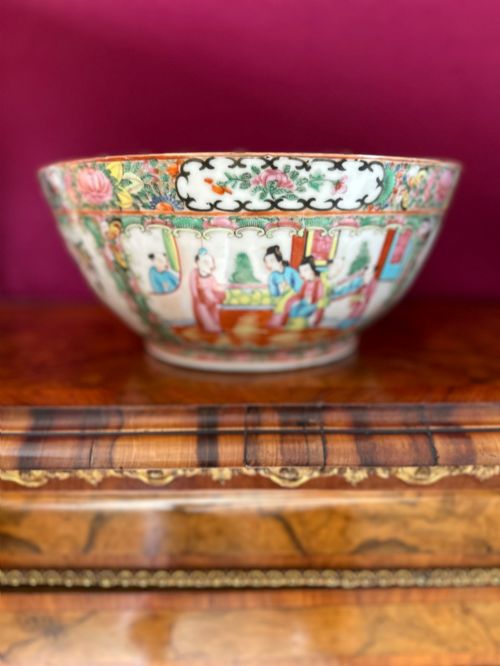
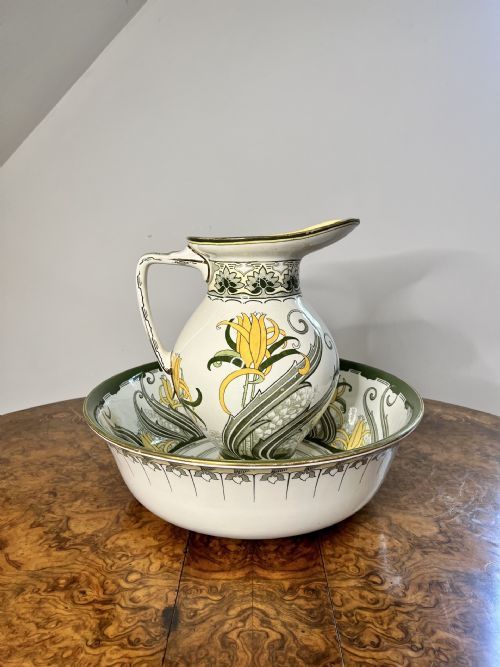
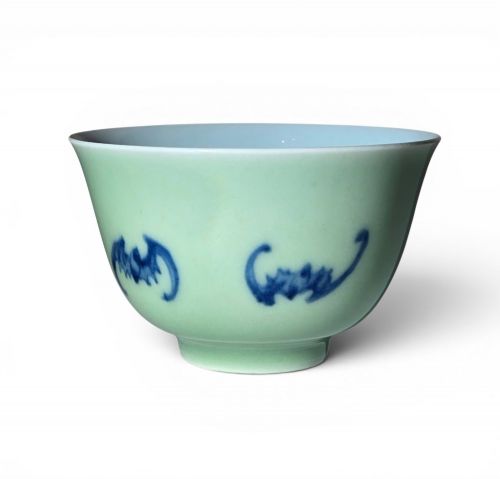
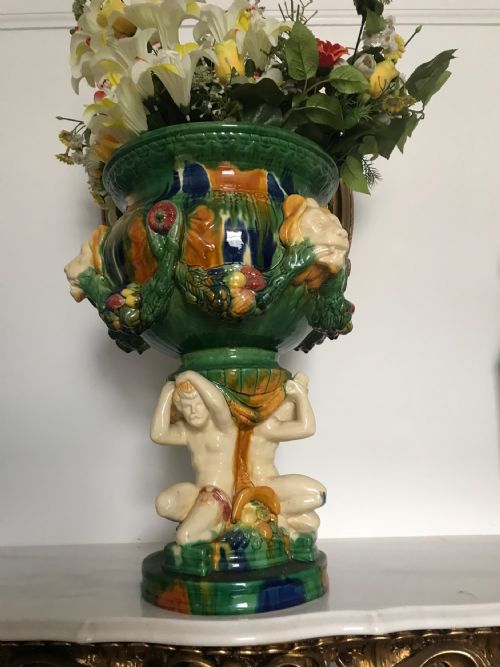


Green Glazed Bowl
A green glazed bowl brings depth and texture to a room, offering centuries of ceramic tradition in a single vessel.
Judging Quality
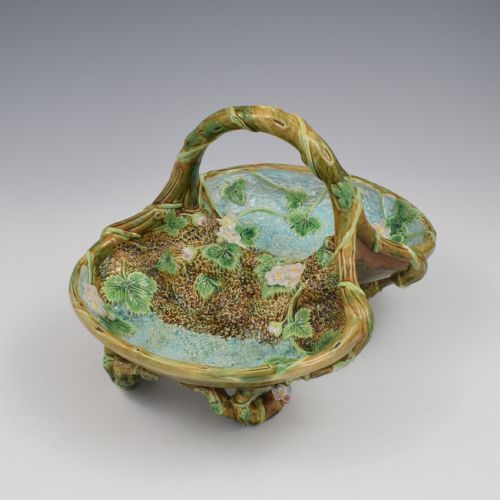
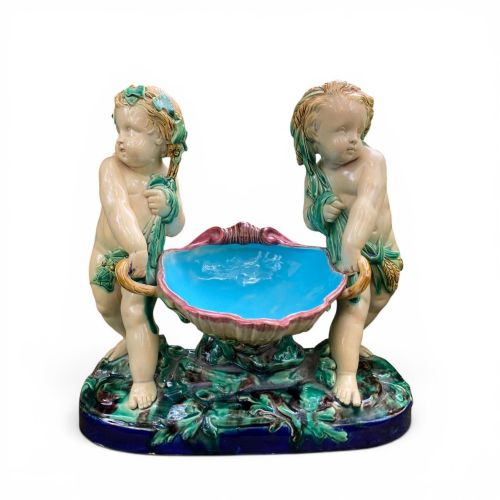
Quality rests upon the crispness of the modelled relief, the harmony of the glaze distribution, and the integrity of the ceramic body. Superior majolica displays sharp botanical or figural details where the green glaze pools naturally in the recesses without obscuring the form.
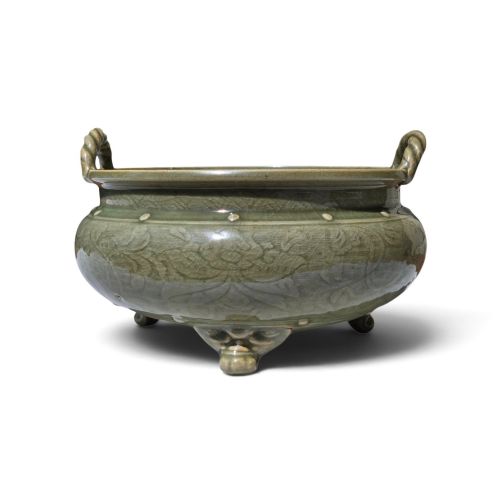
Early Asian celadon wares derive their distinction from the purity of the jade-like tone and the balance of the incised foliate or twin fish designs beneath the glaze. Finer pieces maintain an even thickness and a carefully finished foot ring.
The reputation of the pottery or the hand of a signed maker elevates an object from a standard vessel to a studied work of ceramic art.
Inoue Ryōsai·Daisy Makeig-Jones·Ulisse Cantagalli
The Green Glazed Bowl Glossary
- Celadon
- A term for ceramics featuring a pale green glaze originating in China and emulated across Asia. The glaze results from iron oxide fired in a reducing atmosphere.
- Majolica
- A type of earthenware coated with an opaque tin glaze and painted with metallic oxide colours. It achieved great popularity in Victorian Britain and Europe for vibrant tableware.
- Comport
- A raised bowl or dish used for serving fruit or sweetmeats at the table. These pieces often stand on a central pedestal or foot.
- Censer
- A vessel designed for burning incense, frequently supported by tripod feet in historic Asian ceramics. Many examples feature carved or moulded ornamentation.
- Suiban
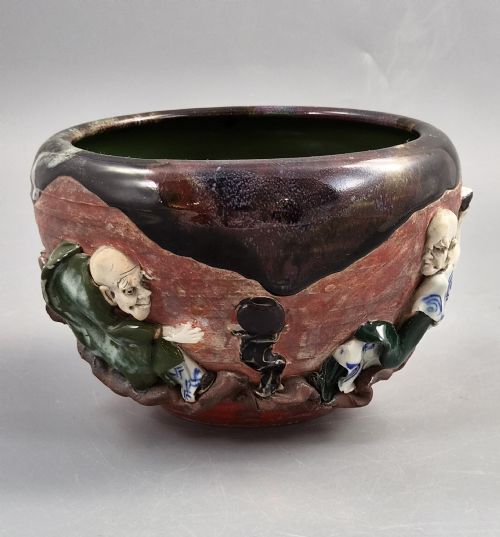
- A shallow Japanese basin or tray used for holding water and viewing stones or arrangement materials. These often display figural relief work along the outer walls.
Several bowls feature small climbing ceramic figures attempting to scale the outer walls, seemingly ignoring the green glaze entirely.
Green Glazed Bowl: Frequently Asked Questions
What is the difference between celadon and majolica?
Celadon refers to Asian stoneware and porcelain featuring a translucent green glaze derived from iron oxide. The aesthetic emphasises subtle jade-like tones and incised beneath-glaze decoration.
Majolica employs an opaque tin or lead glaze over an earthenware body, supporting vibrant colours and heavy moulded relief work. These traditions developed independently across different centuries and continents.
Can these bowls still be used for food?
Historic glazed ceramics often contain lead or other heavy metals within the glaze formulation. Older vessels frequently develop microscopic fissures that absorb moisture and bacteria.
It remains advisable to treat these objects strictly as decorative works of art rather than functional tableware. Display them on stands or within cabinets to preserve their condition.
How are different periods identified?
Period identification relies on a combination of paste composition, glaze characteristics, factory marks, and stylistic conventions. Victorian majolica often bears registry diamonds or specific maker ciphers on the base.
Asian ceramics look to firing kiln characteristics, foot ring preparation, and dynastic markers. Comparing pieces against documented archival examples helps confirm manufacturing eras.