





Sumida Gawa Pottery
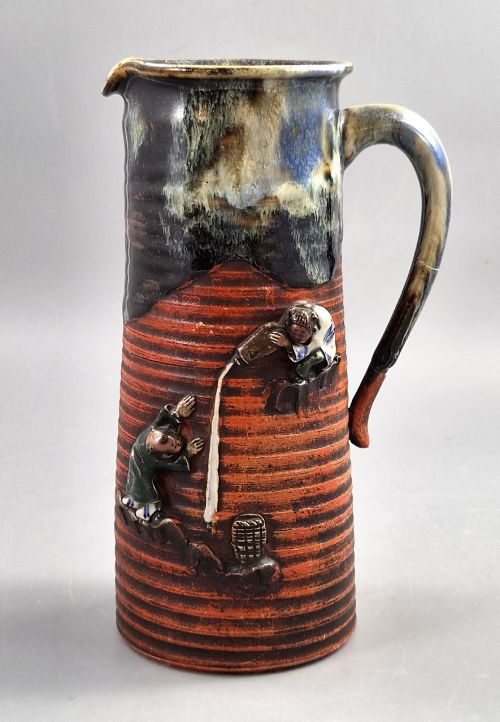
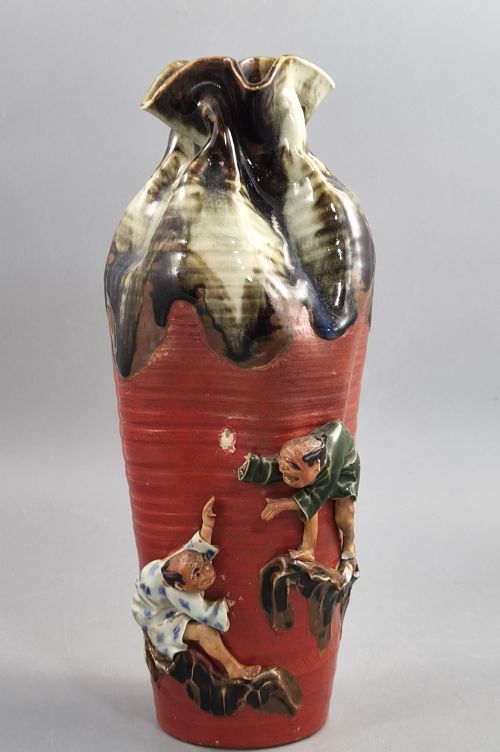
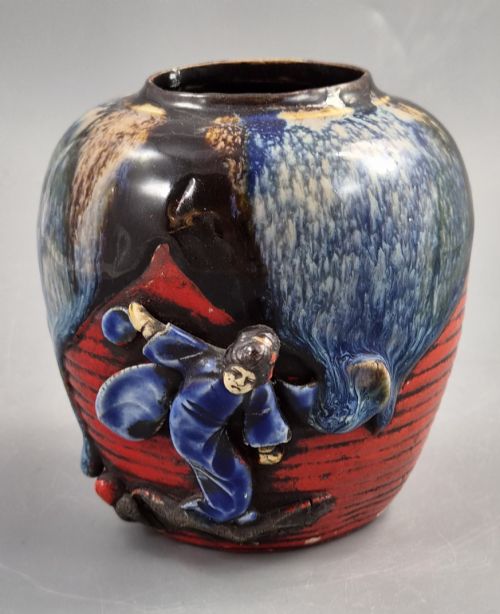
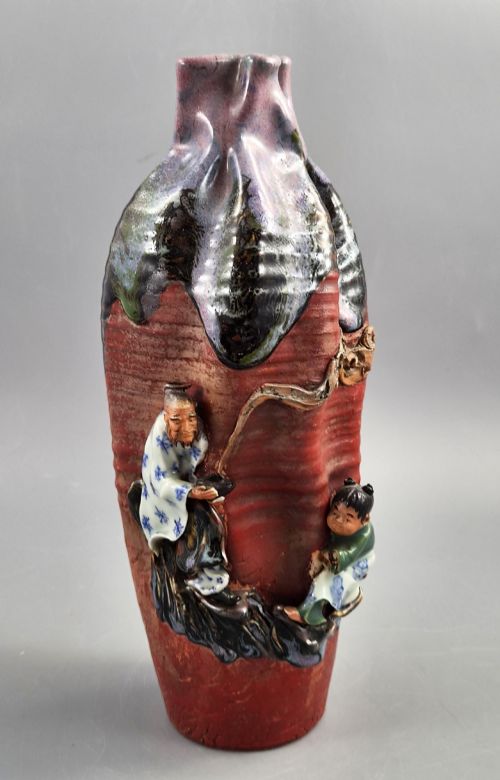
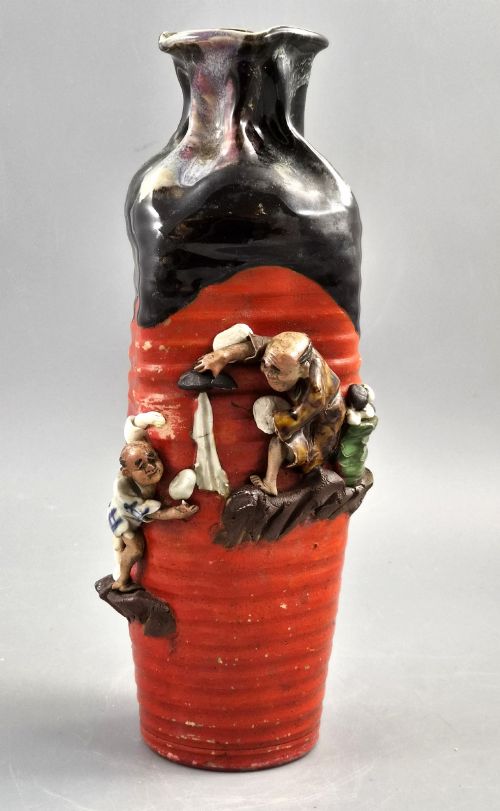
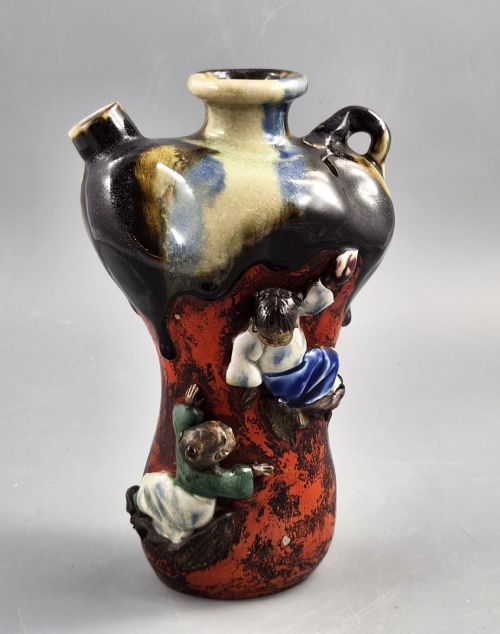
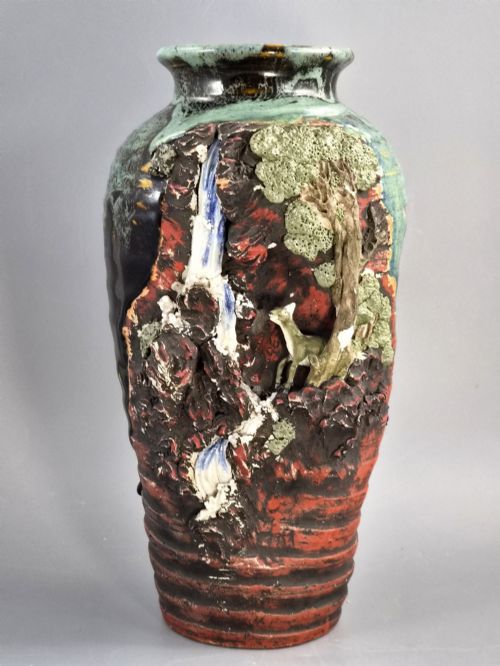
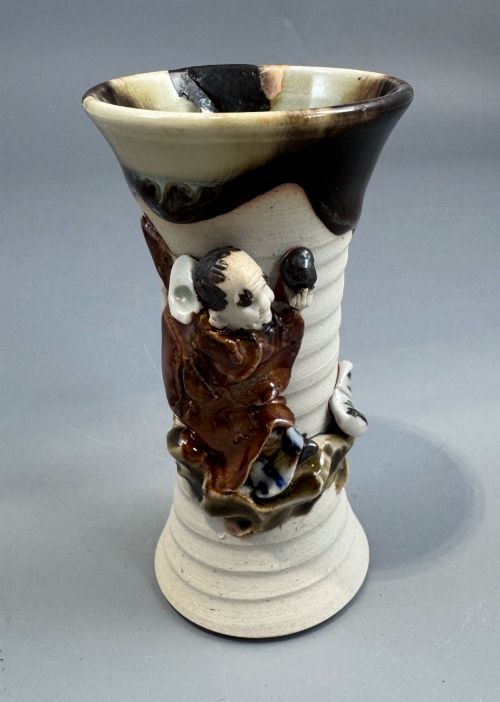
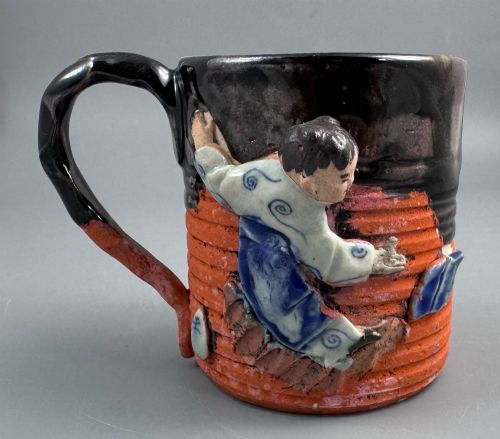
When you handle sumida gawa pottery, you encounter distinct Japanese earthenware and stoneware pieces adorned with striking figures in high relief.
Sumida Gawa Pottery
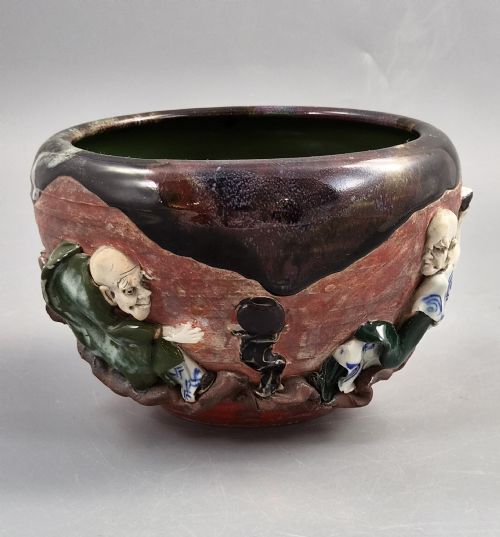
Sumida gawa pottery encompasses distinct Japanese decorative vessels produced predominantly across the Meiji and Taishō periods. When buyers search for sumida gawa pottery, they encounter diverse forms including vases, pitchers, jugs, decorative bowls, teapots, mugs, and suiban brush washers.
The most common versions met on this page include tall vases, jars, and mugs featuring applied figures in relief, often climbing or interacting along the body of the vessel. These pieces typically date from around nineteen hundred to the nineteen twenties, bridging the Meiji and Taisho eras.
Makers and artists working in this tradition produced distinctive sculptural landscapes incorporating figures such as sages, rakan, sennin, and karako children. The vessels often utilise pinched sack rims and textured surfaces to frame these narrative figural scenes.
Assessing Quality
Quality in sumida gawa pottery rests upon the crispness of the modelling in the applied figural relief and the control demonstrated in the dripping flambe glazes. Pieces carrying clear signatures from established workshops or master artisans command stronger interest from collectors.
Listings feature pieces spanning the Meiji and Taisho periods, utilising earthenware, stoneware, and terracotta bodies.
Inoue Ryosai·Ban-ni·Ishiguro Koko·Hiroshi
The Sumida Gawa Pottery Glossary
- Flambé glaze
- A streaked or mottled ceramic glaze exhibiting multiple colours resulting from complex kiln reactions during firing. This glazing technique creates dramatic runs of blue, lavender, or oxblood across the vessel.
- Meiji Period
- The era in Japanese history spanning from eighteen sixty-eight to nineteen twelve, marked by extensive artistic production. Many sumida gawa pieces originate from the later decades of this period.
- Taishō Period
- The historical period in Japan following the Meiji era, lasting from nineteen twelve to nineteen twenty-six. Pieces from this time often share stylistic continuity with late Meiji manufacture.
- Rakan
- A term representing an enlightened follower of Buddha, frequently depicted in the applied figural reliefs on these ceramics. These ascetic figures appear climbing the sides of vases and mugs.
- Suiban
- A shallow decorative basin or ceramic tray utilised for holding water and display stones. In this tradition, suiban frequently incorporate applied figures peering over the rim.
Sumida Gawa Pottery: Frequently Asked Questions
What is sumida gawa pottery?
Sumida gawa pottery refers to distinctive Japanese ceramics produced around the Sumida River area near Tokyo during the late nineteenth and early twentieth centuries. These pieces are recognised by their heavily textured surfaces and three-dimensional figures applied in high relief.
Artisans combined traditional pottery techniques with sculptural modelling to create narrative scenes involving sages, children, and animals. The resulting wares span functional forms like teapots and mugs as well as decorative vases and bowls.
How do I identify the maker?
Makers and studio artists often signed their work using impressed seals, incised signatures, or painted marks directly onto the clay body or glaze. Names such as Inoue Ryosai, Koko, Ban-ni, and Hiroshi appear on authenticated pieces from this tradition.
Examining the style of the applied figures and the specific formulation of the flambe glaze can also provide clues regarding the workshop origin. Signature placement varies from base markings to signatures incorporated discreetly within the relief landscape.
What periods do these pieces date from?
The majority of these ceramics date from the Meiji and Taisho periods, spanning roughly from eighteen sixty-eight through to the nineteen twenties. Production flourished during the late Meiji era when Japanese ceramics gained significant popularity for export.
Pieces crossing into the Taisho and early Showa periods maintain similar decorative vocabulary but often feature distinct glaze colourways and revised vessel proportions.
How were the applied figures made?
The figural elements were modelled separately by hand, often using terracotta or earthenware, and then securely attached to the main vessel before firing. Artisans detailed the faces, clothing, and hair of characters like sages and karako children with fine manual toolwork.
Once attached, the figures were either glazed alongside the vessel or painted separately with enamel pigments to create striking contrasts against the background glaze.
How should I display these vessels?
These sculptural ceramics require placement on stable, level surfaces where adequate lighting highlights the three-dimensional relief details. Because the applied figures project outward from the body, positioning the pieces away from high-traffic areas prevents accidental impact.
Natural indirect light enhances the varied tones of flambe and oxblood glazes without exposing the earthenware body to harsh environmental extremes.