


Oriental Art Pottery
Oriental art pottery brings together Asian and European ceramic traditions, offering collectors striking glazes, intricate figures and centuries of skilled craftsmanship.
Oriental Art Pottery
Oriental art pottery encompasses a diverse selection of ceramic objects, predominantly originating from Japan and China alongside select European interpretations. Pieces on this page span from ancient grey earthenware and late eighteenth-century funereal tiles to intricate Meiji and Taisho period works.
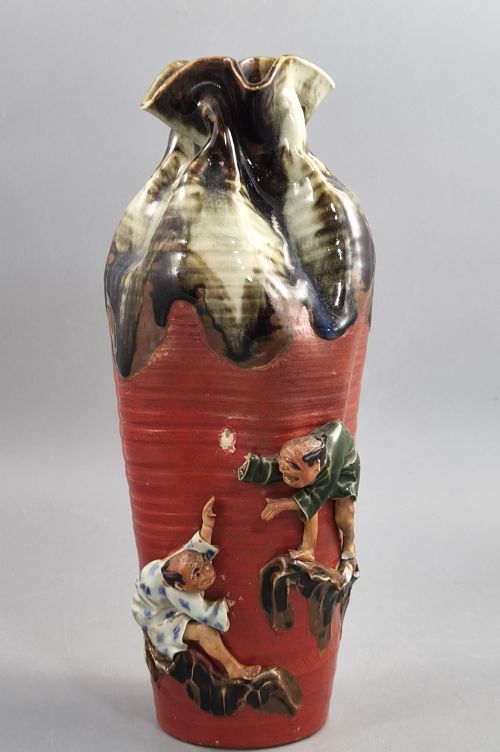
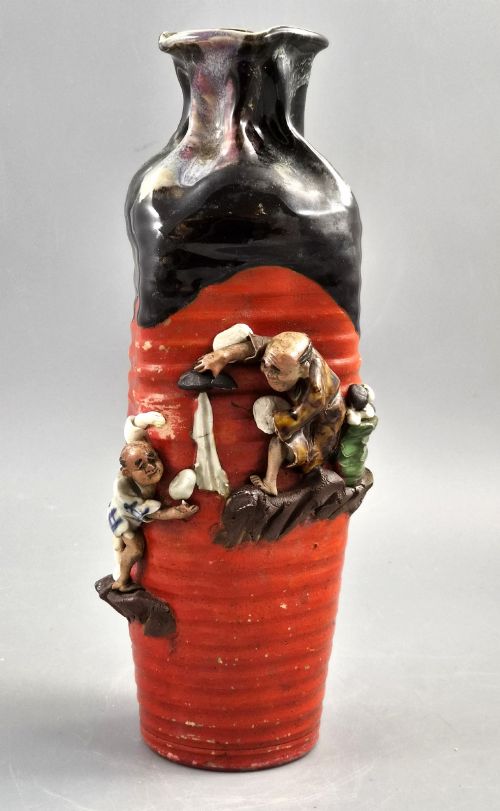
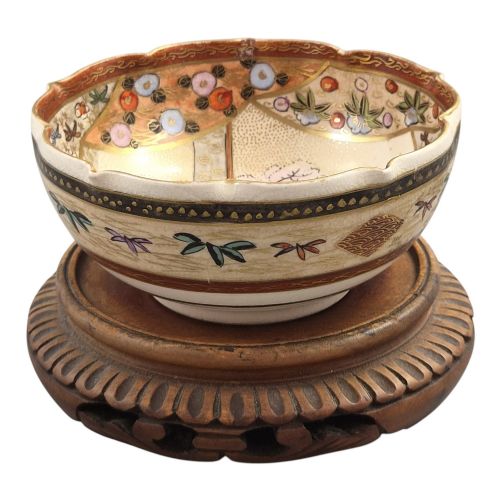
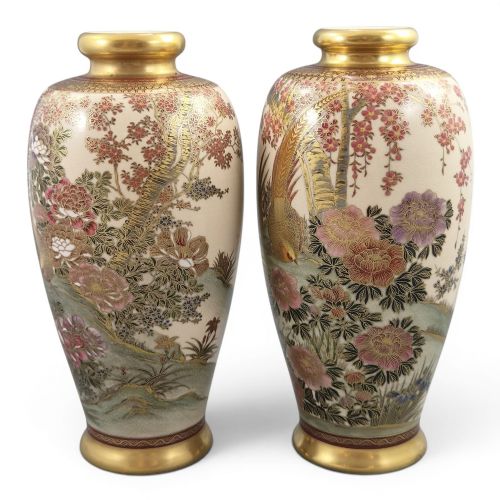
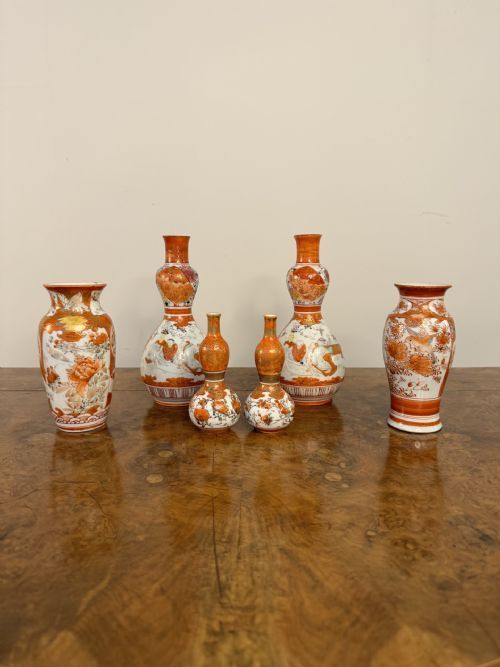
Collectors frequently encounter Satsuma earthenware bowls and vases, alongside distinctive Sumida Gawa pottery featuring applied climbing figures and flambe glazes. The selection also includes Kutani porcelain, Imari vases, and Chinese blue and white ceramics.
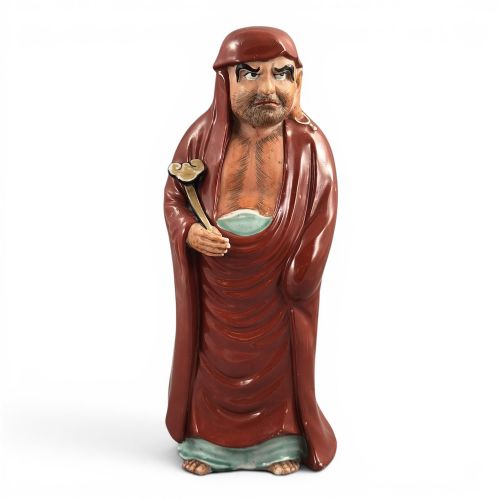
Forms range from tall decorative vases and jars to suiban brush washers, okimono figures, and sculptural depictions of sages and dancers. These items reflect traditional kiln practices from renowned centres such as Kyoto, Yokohama, and Kobe.
How they were made
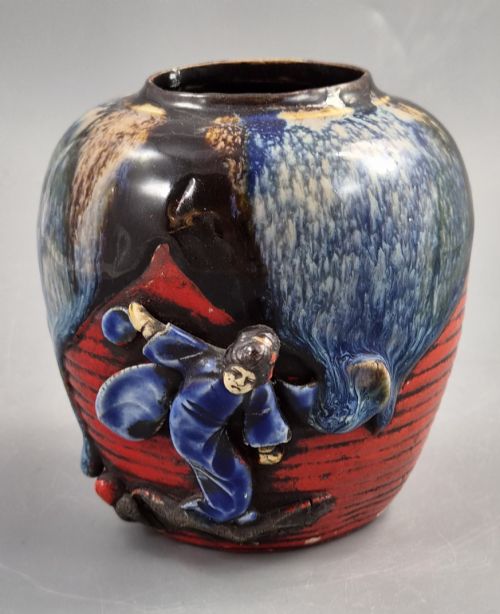
Potters shaped stoneware, earthenware, and porcelain bodies by hand or on the wheel before applying detailed enamel decoration, gold leaf, and gold gilt accents. Many pieces utilise rich cobalt blue and lavender flambe glazes that pool across the ceramic surface during firing.
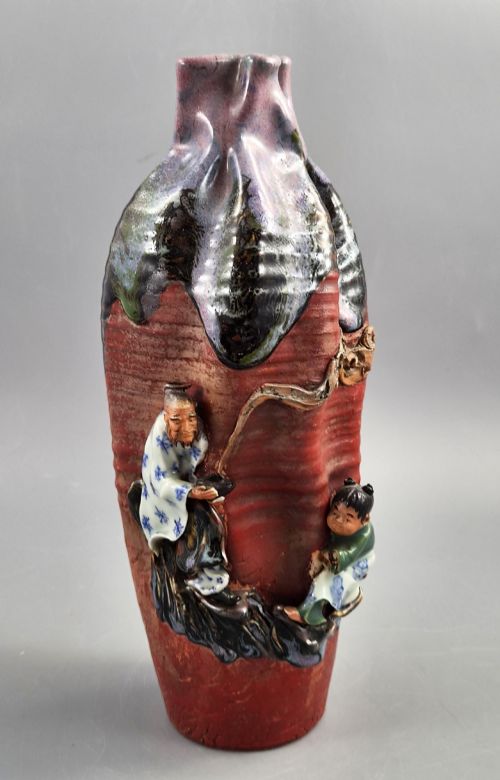
Japanese Satsuma wares typically combine a finely crackled cream-coloured earthenware body with dense overglaze enamel painting and gilding. Sumida Gawa pieces are distinguished by their heavily textured surfaces, raw clay patches, and modelled figures affixed before the glaze firing.
Several grumpy sages and earnest deities spend their eternity permanently stuck climbing the slippery sides of Sumida Gawa vases.
What varies in quality
The standard of painting and modelling distinguishes superior examples, particularly in the precision of facial expressions on figures and the delicacy of Thousand Arhats or floral motifs. Master workshops achieved greater depth through layered enamels and controlled application of gold leaf.
The complexity of the form and the ambition of the glaze execution also determine distinction. Controlled flambe effects and well-balanced sculptural additions demonstrate higher technical mastery from kilns and named artists.
Inoue Ryosai·Kinkozan·Makuzu Kozan·Hotoda·Manpei
The Oriental Art Pottery Glossary
- Okimono
- A small Japanese decorative sculpture designed for display on a tokonoma or shelf.
- Flambe glaze
- A streaked or mottled ceramic glaze that achieves varied colour effects through metallic oxides and reduction firing.
- Satsuma
- A type of Japanese earthenware traditionally characterised by a ivory-coloured, crackled glaze painted with polychrome enamels and gold.
- Suiban
- A shallow basin used for flower arrangement or as a scholar's brush washer.
- Imari
- Japanese porcelain decorated in underglaze blue, iron red, and gilt, produced for both domestic use and export.
Oriental Art Pottery: Frequently Asked Questions
What is Satsuma pottery?
Satsuma pottery is a style of Japanese earthenware originating from the Satsuma Province, known for its characteristic ivory glaze covered in a fine network of crackles. These pieces are typically decorated with elaborate enamel patterns and gold gilt.
Production later expanded to major centres like Kyoto and Yokohama, where studios produced detailed vases, bowls, and figures for international markets during the Meiji period.
How do I identify Sumida Gawa ware?
Sumida Gawa pottery is instantly recognisable by its heavy, textured glazes and distinct sculptural elements. Pieces often feature modelled human figures, such as sages or children, physically climbing across the side of the vase or jar.
The kilns typically left patches of the dark earthenware body exposed beneath dripping flambe glazes, creating a rustic and highly tactile finish.
How should I display these ceramics?
These decorative vessels and figures suit stable surfaces away from direct sunlight, which can fade delicate overglaze enamels and gold leaf over time. Placing them where light catches the flambe glazes or gilt detailing enhances their visual depth.
Ensure larger vases and okimono are positioned securely on level furniture to protect their weighted forms and protruding sculptural elements.