


Sumida Pottery Vase
These sumida pottery vase examples bring striking sculptural figures and bold flambé glazes straight from late Meiji and Taishō Japan into your home.
Sumida Pottery Vase
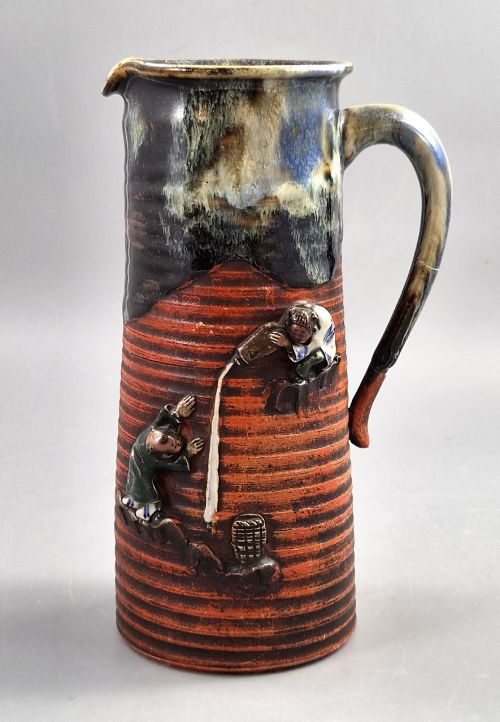
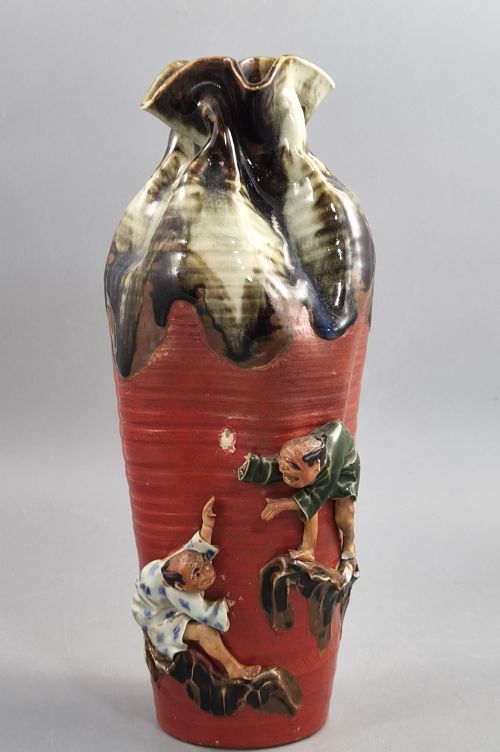
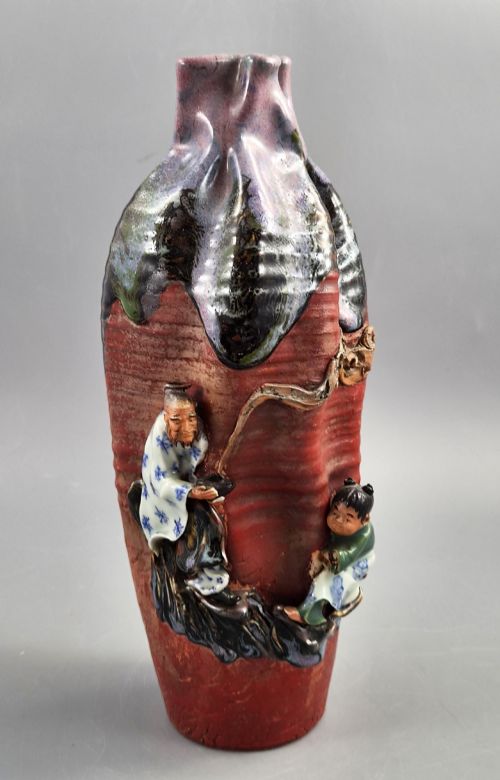
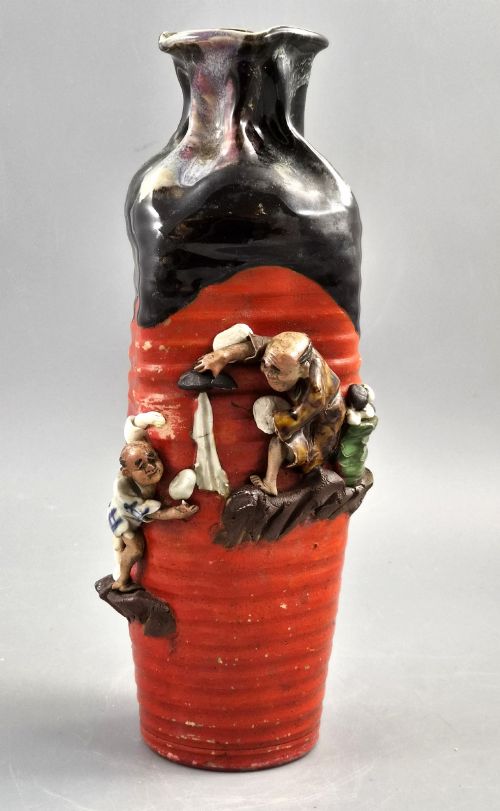
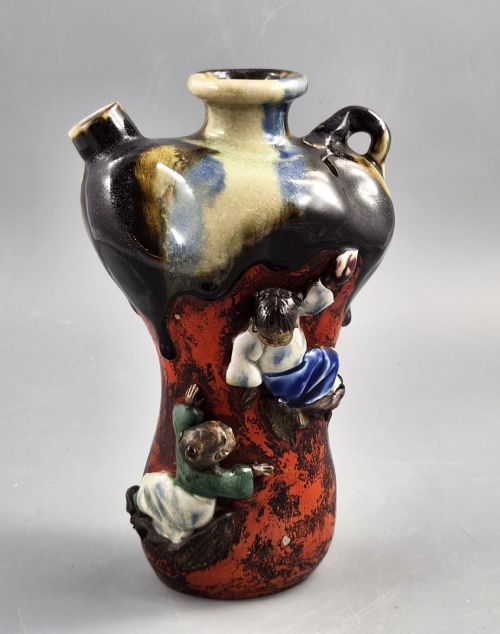
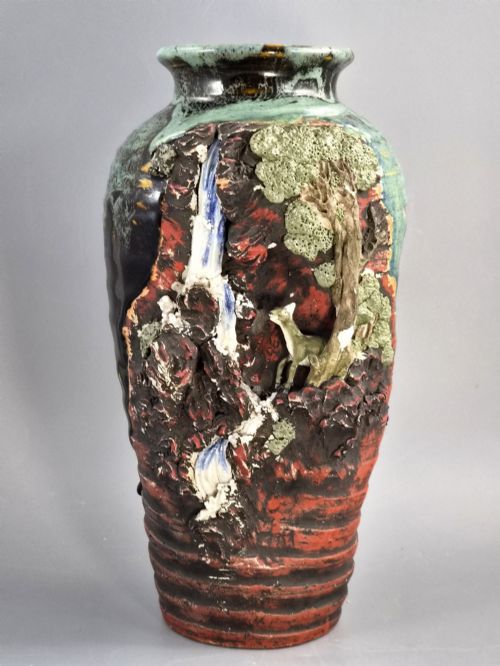
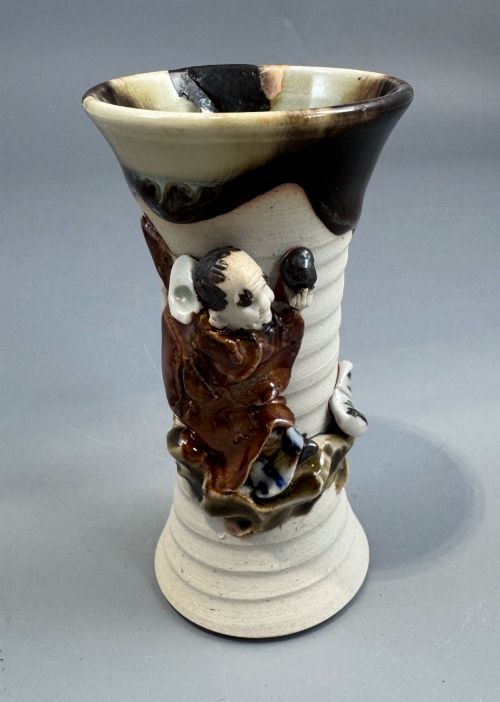
When you search for a sumida pottery vase, you encounter distinctive Japanese ceramic art originating from the Meiji and Taisho periods, spanning roughly from 1900 to 1920. These pieces are immediately recognisable by their heavy earthenware or stoneware bodies and their trademark sculptural relief work, which often depicts sages, children, or climbing figures.
The form you are most likely to meet on this page is the tall baluster vase or pitcher, frequently featuring pinched sack rims and dramatic landscape elements. These vessels combine functional pottery with high relief modelling, creating a tactile surface that sets them apart from conventional painted ceramics.
Originating from the banks of the Sumida River in Tokyo, these wares represent a distinct departure from traditional refined porcelain. Their robust construction and playful, three-dimensional storytelling make them a captivating focal point for any room.
Materials and Construction Techniques
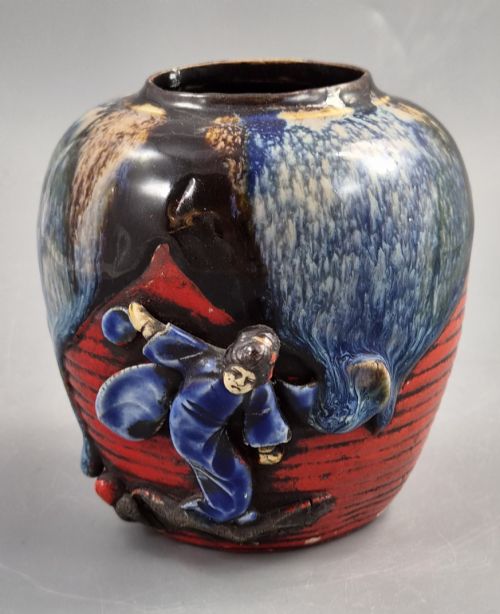
The distinctive appearance relies heavily on dramatic flambe glazes, ranging from deep oxblood and vibrant blue to subtle lavender. Potters often left portions of the textured terracotta body unglazed to contrast sharply against the glossy, flowing pools of colour.
Listings span the Meiji and Taisho periods, showcasing earthenware and stoneware bodies finished with vibrant blue, lavender, and oxblood glazes.
Distinctions in Quality
Quality rests significantly on the precision and animation of the applied sculptural figures, where master modellers create expressive faces and dynamic poses rather than stiff, generic forms. The depth and control of the flambé glaze further separate ordinary examples from exceptional pieces, with harmonious colour pooling enhancing the overall texture.
The presence of clear signatures from accomplished makers adds notable distinction, reflecting superior workshop standards. Finally, the structural integrity of the heavy pinched rims and applied landscape elements determines the lasting success of the piece.
Inoue Ryosai·Ban ni·Hiroshi
The Sumida Pottery Vase Glossary
- Flambé glaze
- A streaky, variegated glaze that exhibits complex colour transitions during high-temperature firing. This technique creates dramatic pools of blue, lavender, or oxblood across the ceramic surface.
- Applied figure
- A sculptural element modelled separately and attached to the vessel before firing. These figures often depict sages, children, or mythical characters climbing the exterior walls.
- Meiji period
- The era of Japanese history spanning from 1868 to 1912, marked by opening trade with the West and vibrant artistic experimentation. Many of the most celebrated sculptural ceramics date from the later years of this reign.
- Taishō period
- The era spanning from 1912 to 1926, which continued the bold stylistic innovations of the preceding decades. Wares from this transition period often blend traditional Meiji motifs with evolving glaze effects.
- Stoneware
- A dense, hard pottery material fired at high temperatures until vitrified. This robust body supports the heavy weight of large sculptural vases and pitchers.
Sumida Pottery Vase: Frequently Asked Questions
What is a sumida pottery vase?
A sumida pottery vase is a distinctive Japanese ceramic piece featuring heavy sculptural figures and dramatic flambé glazes. These vessels originate primarily from the Meiji and Taishō periods around the early twentieth century.
Created along the Sumida River in Tokyo, they combine traditional potting with playful, high-relief modelling. Collectors prize them for their tactile surfaces and vivid storytelling scenes.
How do I identify a Meiji period vase?
You can identify a Meiji period vase by examining the combination of coarse earthenware bodies, textured unglazed patches, and characteristic glaze colours like oxblood or blue. Signature marks stamped or incised into the clay also help confirm the era.
Stylistic cues such as applied sages, children, and pinched rims point directly to the workshops active around 1900. Comparing the glaze behaviour and relief work provides further clues to dating.
Where were these pieces made?
These pieces were produced in workshops located along the banks of the Sumida River in Tokyo, Japan. Master potters and decorators worked in this specific region to create wares primarily intended for export markets.
The local clay and distinct glaze traditions gave these riverside kilns their unique artistic identity. This geographic focus defines the entire genre of Sumida Gawa ceramics.
How do I clean my vase?
Clean your vase gently using a soft, dry brush or a slightly damp cloth to remove accumulated dust from the textured relief figures. Avoid submerging the piece in water or using harsh chemical cleaners that could harm the historic glaze.
Because the earthenware and applied elements can be fragile, handle the vessel with care and support the base securely. Regular, gentle dusting preserves the surface without risking the vintage materials.