




Flambe Glaze Vase
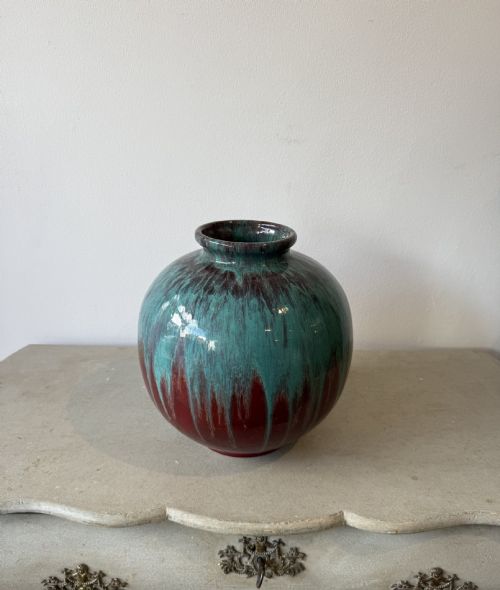
A flambe glaze vase brings intense, streaked colour and pooling depth to a room through fired metallic oxides.
Flambe Glaze Vase
When you search for a flambe glaze vase, you encounter works defined by rich, unpredictable chemical reductions during firing. These pieces span centuries and geographic origins, taking the form of Chinese vessels, Japanese art pottery, and European studio ceramics.
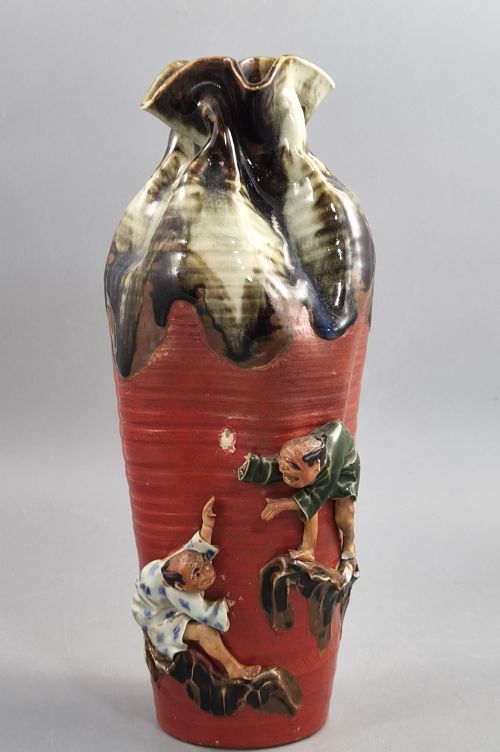
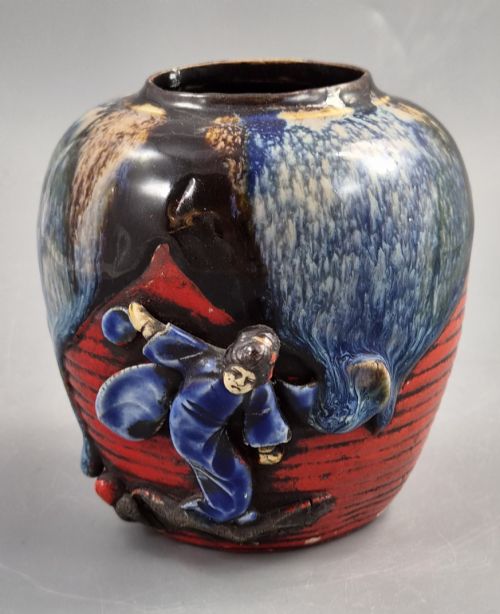
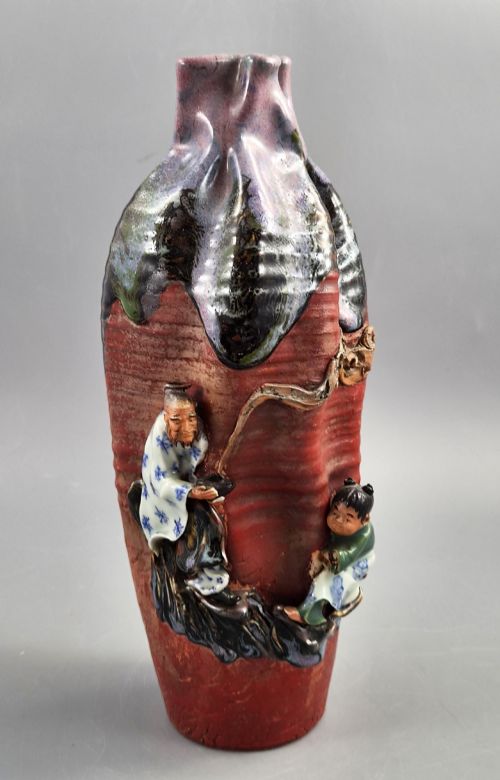
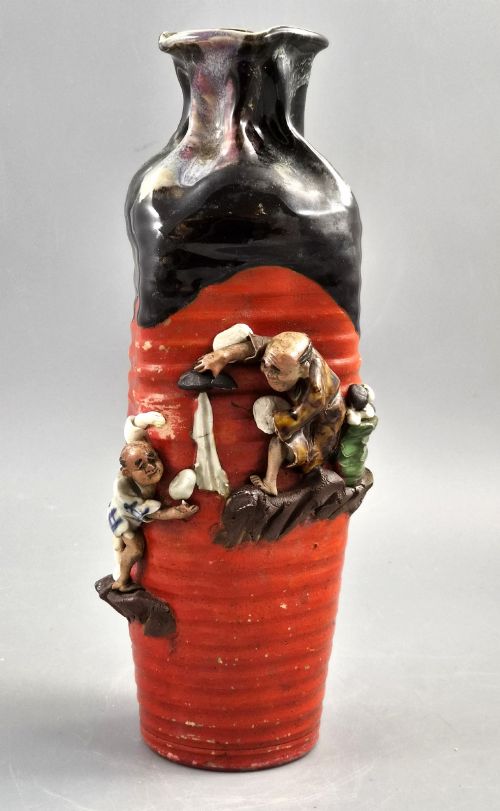
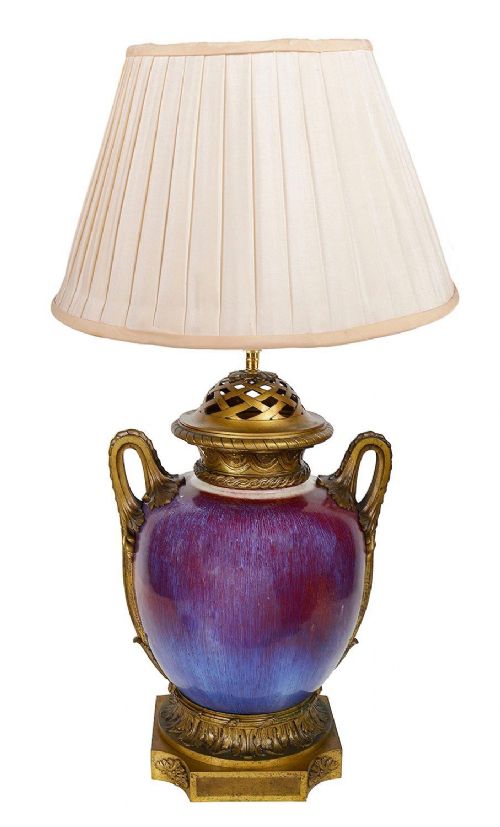
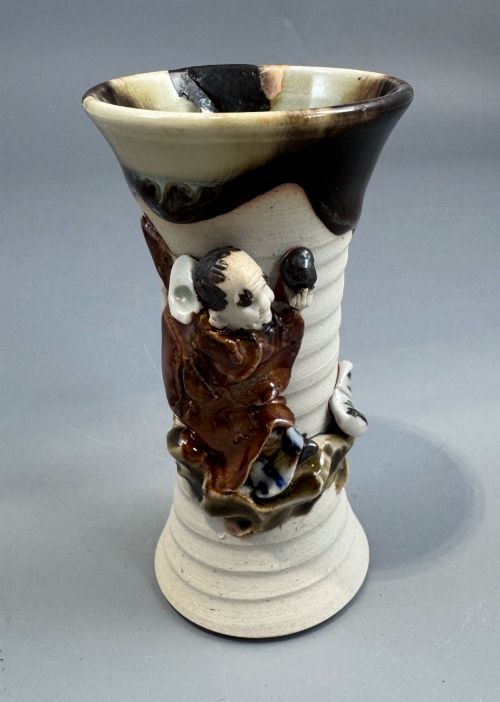
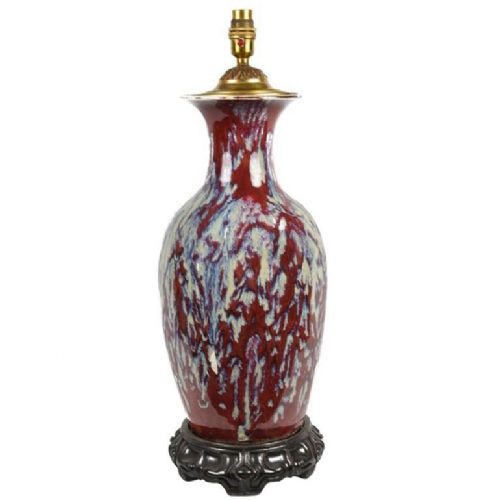
Japanese Sumida Gawa examples feature prominently, often displaying applied figures such as sages, children, or rakan climbing the exterior. Alongside these are Chinese porcelain and stoneware vessels finished in deep oxblood or sang de boeuf tones.
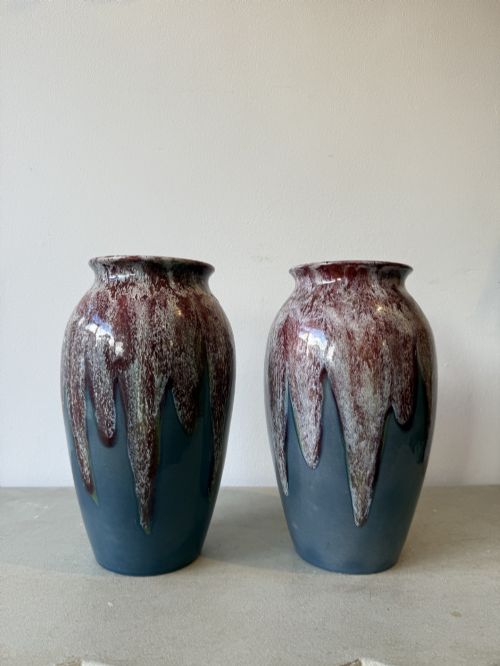
European makers such as Moorcroft contribute heavily to the historical record with bulbous earthenware shapes decorated with botanical motifs like anemone, clematis, and slipper orchid beneath mottled crimson surfaces.
How they were made
Potters built these bodies using earthenware, stoneware, terracotta, or porcelain, shaping them into baluster, jar, and vase forms. Applied elements like figures or foliage were hand-modelled separately and fixed to the damp clay body before firing.
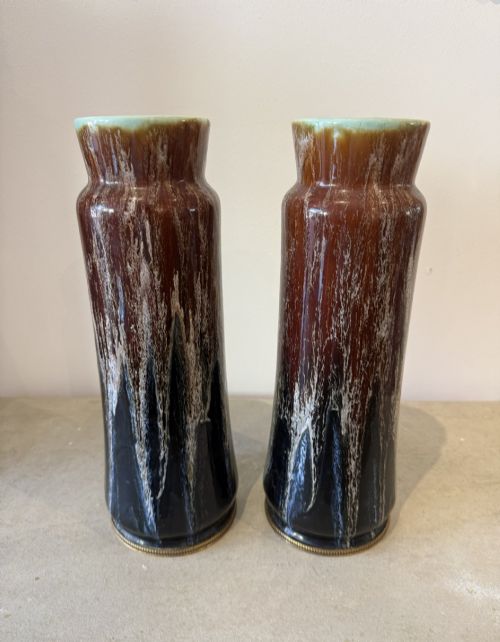
The characteristic finish relies on copper and other metallic oxides applied within the glaze layer. Subjecting the kiln to a reduction atmosphere caused these minerals to melt, streak, and pool unevenly, ensuring no two surfaces developed identical patterns.
Materials span earthenware, stoneware, terracotta, porcelain, and brass fittings across periods from the eighteenth century to the twentieth.
What varies in quality
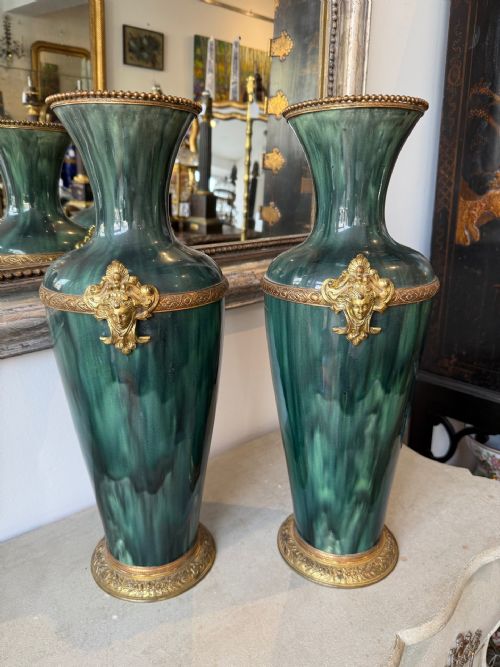
The success of a flambe glaze vase rests upon the depth, control, and separation of colour achieved in the kiln. Superior examples display vibrant oxblood crimson, lavender, and blue tones that merge organically without muddying the underlying form.
Execution of the modelled elements distinguishes standard production from exceptional artistry. On figural Japanese wares, crisp facial expressions and detailed hand-sculpted drapery elevate the piece, while factory-turned European pottery relies on the precision of tube-lined botanical relief.
Inoue Ryosai·Boch Freres·Moorcroft·Ban-ni·Hiroshi
The Flambe Glaze Vase Glossary
- Flambe glaze
- A glossy, unpredictable ceramic finish created by reduction firing metallic oxides, yielding streaked reds, purples, and blues. This technique originated in Chinese kilns before being adopted by European and Japanese potteries.
- Sang de boeuf
- A French term translating to oxblood, describing a deep red copper-based glaze. This rich monochromatic finish appears frequently on Chinese porcelain and stoneware vessels.
- Sumida Gawa
- A style of Japanese art pottery associated with Tokyo riverbanks, characterised by heavy drip glazes over textured surfaces. These pieces often incorporate high-relief figures climbing the exterior walls.
- Rakan
- A depiction of an enlightened disciple of Buddha, commonly modelled in high relief on Japanese ceramics. These figures add narrative depth to textured earthenware vases.
- Earthenware
- Porous pottery fired at lower temperatures, commonly used as a base for heavy decorative glazes. It provides a sturdy foundation for applied sculptural elements.
Flambe Glaze Vase: Frequently Asked Questions
What is a flambe glaze vase?
A flambe glaze vase is a ceramic vessel coated in metallic oxide glazes that react unpredictably during high-temperature kiln firings. This process produces dramatic, striated colour transitions ranging from deep oxblood reds to vivid purples and blues.
Potters across China, Japan, and Europe adopted this technique to create decorative works where chemical reactions dictate the final surface pattern, making every piece visually unique.
Are these vases waterproof?
Many older art pottery and earthenware vessels are porous beneath their glaze or feature open-bottomed construction for lamp conversions. It is safest to place a small glass or plastic liner inside if you intend to use them for fresh flowers.
Stoneware and porcelain bodies from the selection are generally denser, but inspecting the interior beforehand prevents unexpected moisture seepage on antique surfaces.
How do I date a Sumida Gawa vase?
Dating these Japanese pieces typically relies on stylistic indicators and signatures spanning the Meiji and Taisho periods. Early examples often bear incised artist signatures or stamps alongside hand-modelled figures.
The specific composition of the drip glaze and the weight of the stoneware body also help place production between the late nineteenth and early twentieth centuries.