
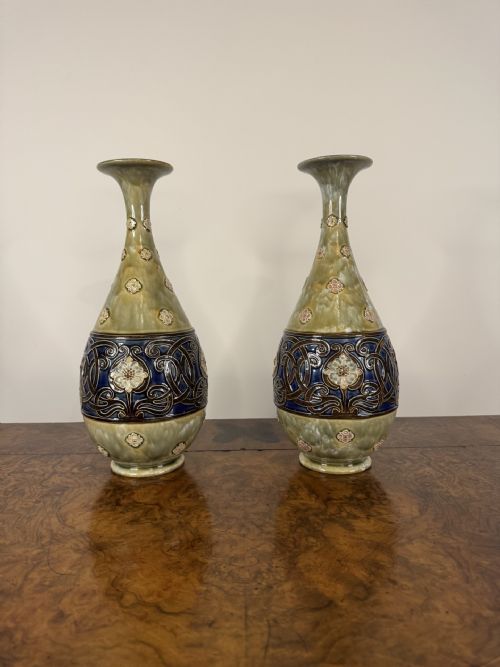


Decorative Stoneware Vessel
A decorative stoneware vessel brings tactile weight and rich surface pattern to a room, offering enduring craft from the nineteenth and twentieth centuries.
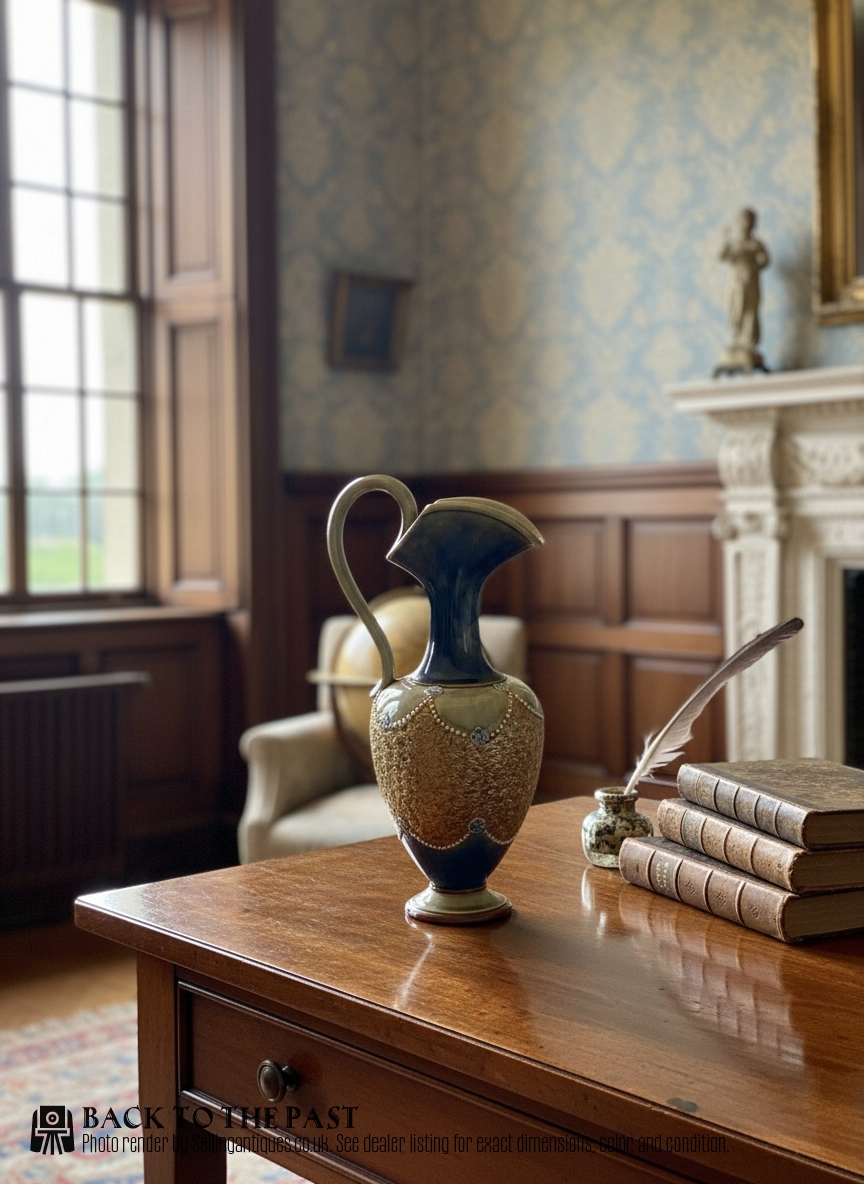
Decorative Stoneware Vessel
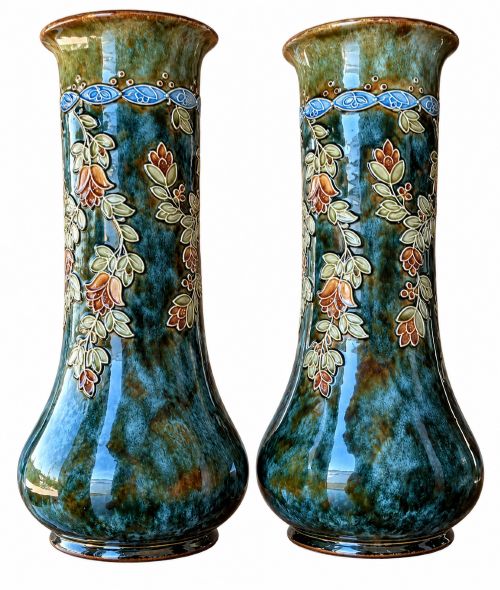
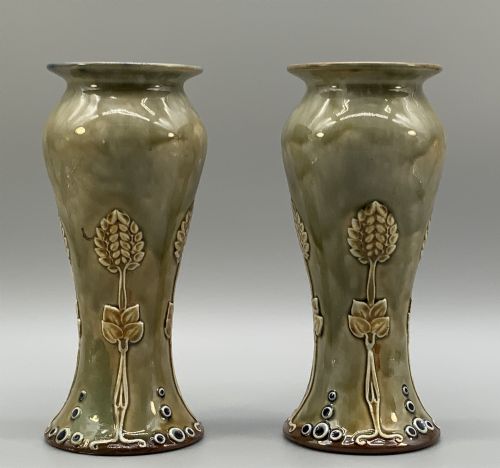
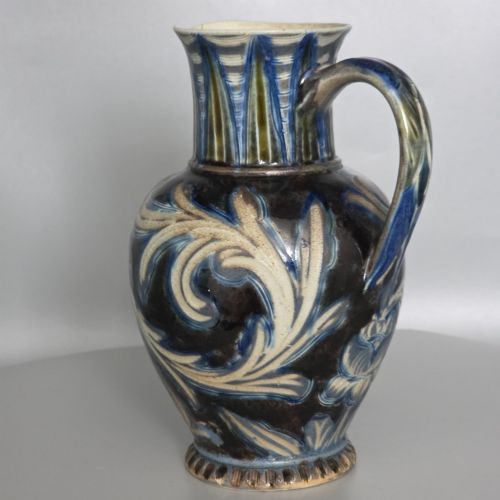
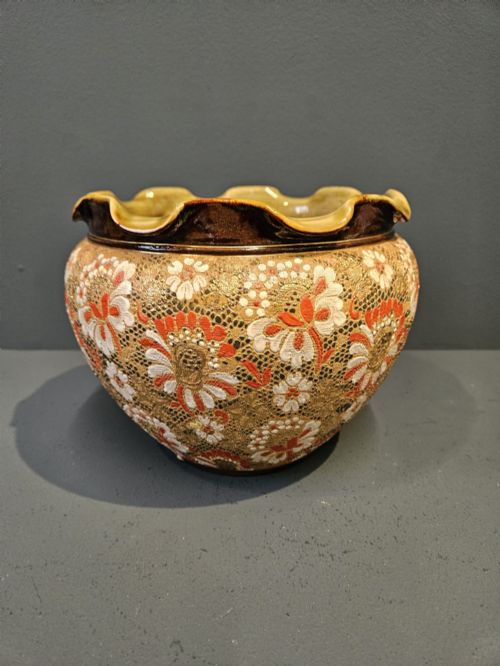
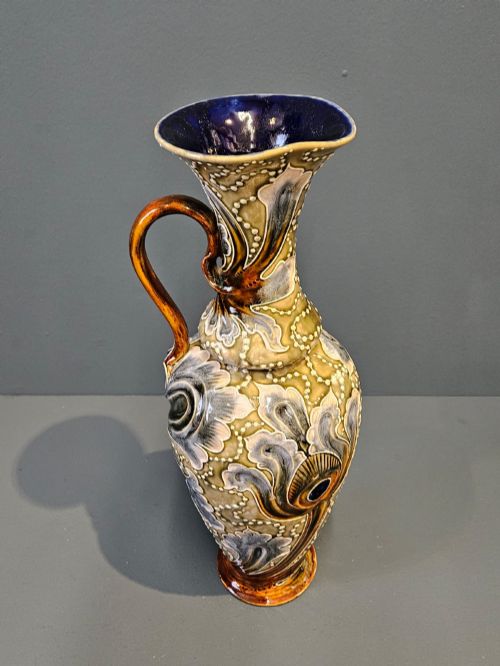
When you search for a decorative stoneware vessel, you encounter a diverse range of ceramics spanning the Victorian era through the early twentieth century. The selection leans heavily towards British production, particularly Doulton Lambeth pieces decorated with incised patterns, enamel floral motifs, and glazed finishes.
Beyond British pottery, the inventory includes continental examples from Germany and France, alongside Japanese and Chinese ceramic forms such as jardinieres and jars. These objects take the shape of baluster vases, jugs, pitchers, ewers, and loving cups originating from periods between 1870 and 1930.
How they were made
Makeries shaped these pieces using dense clay bodies like stoneware and earthenware, frequently applying specialised glazes, enamel, and occasional gold leaf to the surfaces. Techniques included incising decorative patterns directly into the damp clay before firing and utilising patented methods like Slaters Patent for textured backgrounds.
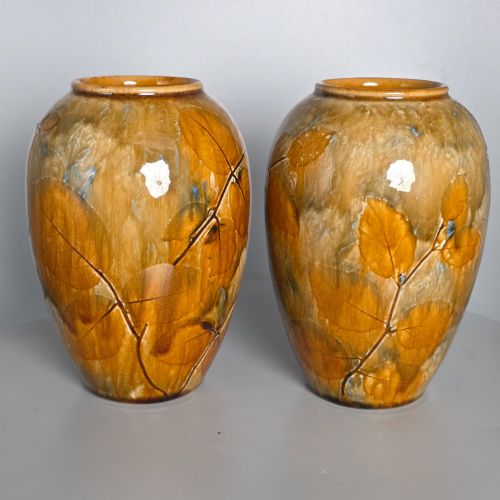
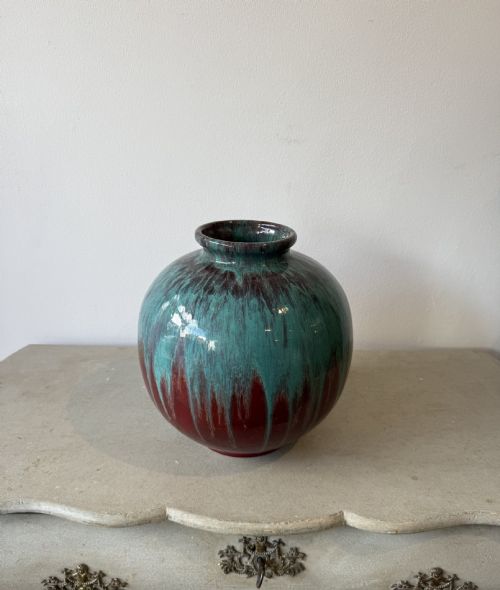
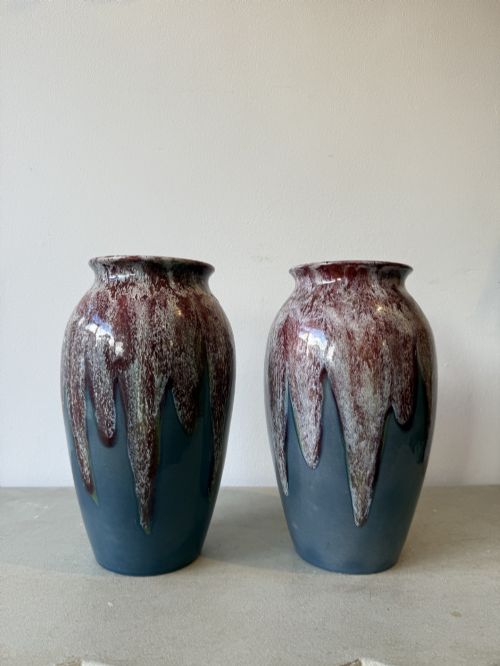
Potters formed vessels on the wheel or in moulds to achieve balanced baluster, pear, and cylindrical profiles. Kiln firings set the vitrified bodies and fixed the coloured glazes, sometimes incorporating drip glaze effects or intricate painted floral decorations.
Materials recorded across the inventory include glazed stoneware, earthenware, celadon, and enamel highlights.
What varies in quality
Distinctions in quality rest upon the crispness of the incised ornament and the control evident in the glazed surfaces. Pieces decorated by named artists display superior hand-finishing and deliberate compositional care compared to standard production wares.
The complexity of the form and the ambition of the surface decoration dictate distinction across the range. Elaborate enamel work, multi-fired glazes, and well-executed relief patterns separate ordinary utilitarian vessels from accomplished studio and factory art pottery.
Royal Doulton Lambeth·Makuzu Kozan II·Roger Guerin·Carter Stabler Adams
The Decorative Stoneware Vessel Glossary
- Stoneware
- A robust ceramic category fired at high temperatures until vitrified and impermeable to liquids. It forms a dense, durable body suitable for rich glaze treatments.
- Jardiniere
- An ornamental ceramic receptacle designed to hold a potted plant. These vessels typically feature wide rims and decorated bodies meant for display on tables or stands.
- Baluster
- A vase profile characterised by a rounded lower body that tapers upward to a narrow neck. This classic shape provides a stable base for detailed surface ornamentation.
- Ewer
- A large jug featuring an indented spout and a curved handle, traditionally used for pouring water. In decorative contexts, it serves as a sculptural vessel with roots in historical forms.
Decorative Stoneware Vessel: Frequently Asked Questions
How do I identify a Doulton Lambeth piece?
Examine the base for factory stamps, impressed monograms, and artist initials that denote individual decorators.
These pieces typically combine heavy stoneware bodies with distinctive incised or enamelled ornamentation characteristic of late nineteenth-century British workshops.
What is the difference between stoneware and earthenware?
Stoneware is fired at higher temperatures until the clay body becomes vitrified and non-porous, offering greater durability than earthenware.
Earthenware remains more porous and requires a glazed surface to hold liquids effectively, appearing lighter in physical weight.
How were these vessels used historically?
Many acted purely as ornamental objects for display on mantelpieces, sideboards, and pedestals within Victorian and Edwardian interiors.
Others served functional roles as pitchers, ewers, or jardinieres designed to hold cut flowers or potted plants in domestic settings.
How do I care for antique ceramic vessels?
Dust the surfaces gently with a soft, dry cloth to prevent accumulation in incised patterns and textured glaze crevices.
Avoid submerging pieces with applied gold leaf or enamel in water, and protect them from sudden temperature changes.